
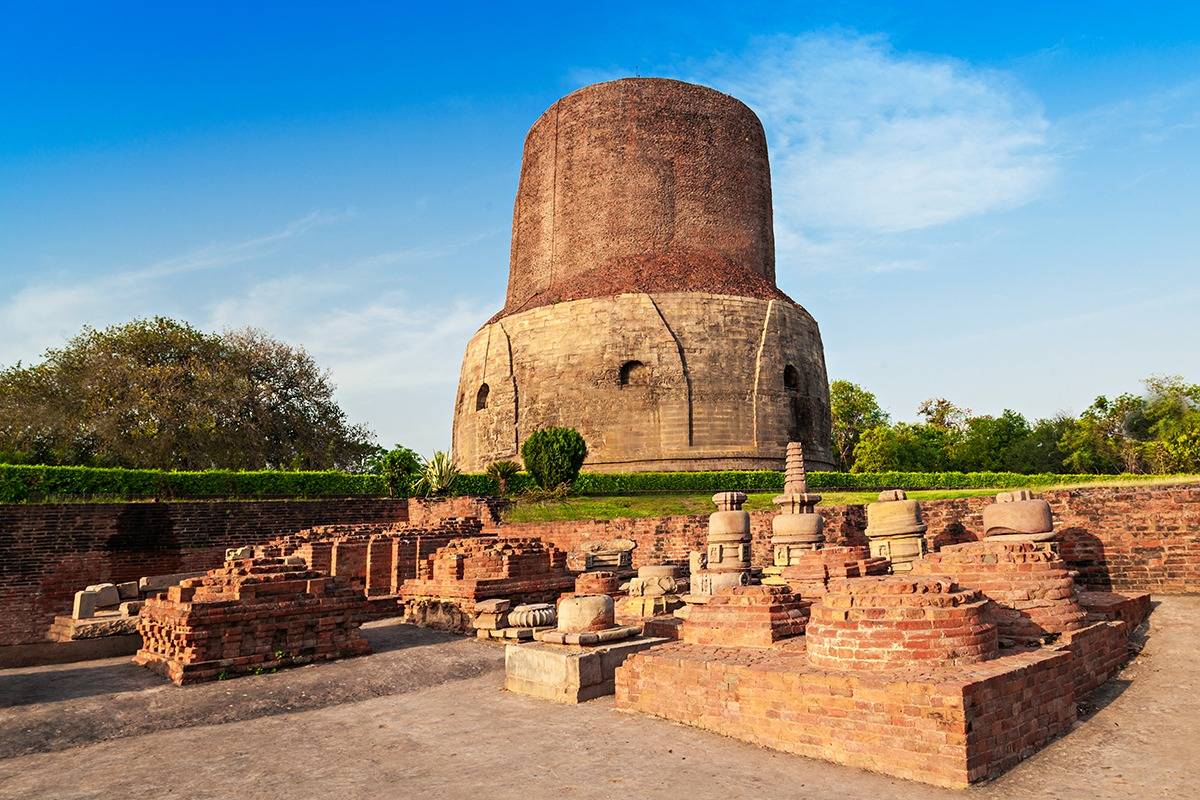
Sarnath Dhamek Stupa
Dhamek, Varanasi, India
You've probably got Sarnath pencilled in as a half-day box to tick. A stupa, some ruins, a quick trip out of Varanasi between temples. But here's the thing nobody tells you: this quiet site on the edge of Varanasi is where the Buddha is traditionally believed to have delivered his first sermon after enlightenment — the moment that set the teachings of Buddhism in motion. Walk through it as a rushed photo stop and you'll see a large brick stupa and some ruins. Walk it with a little context, in the early morning, and the significance of the place becomes much easier to understand.
Let's fix that. Here's how Sarnath actually works, and how to get it right the first time.
Why the morning, and not the middle of the day
Sarnath is about 10 km from central Varanasi and usually takes around 30 to 40 minutes by road, depending on traffic. The mistake is visiting in the harsh middle of the day, squeezed between other sightseeing stops.
Much of the archaeological area is open and exposed, with limited shade. By noon, the heat can become uncomfortable and tour groups are more likely to arrive.
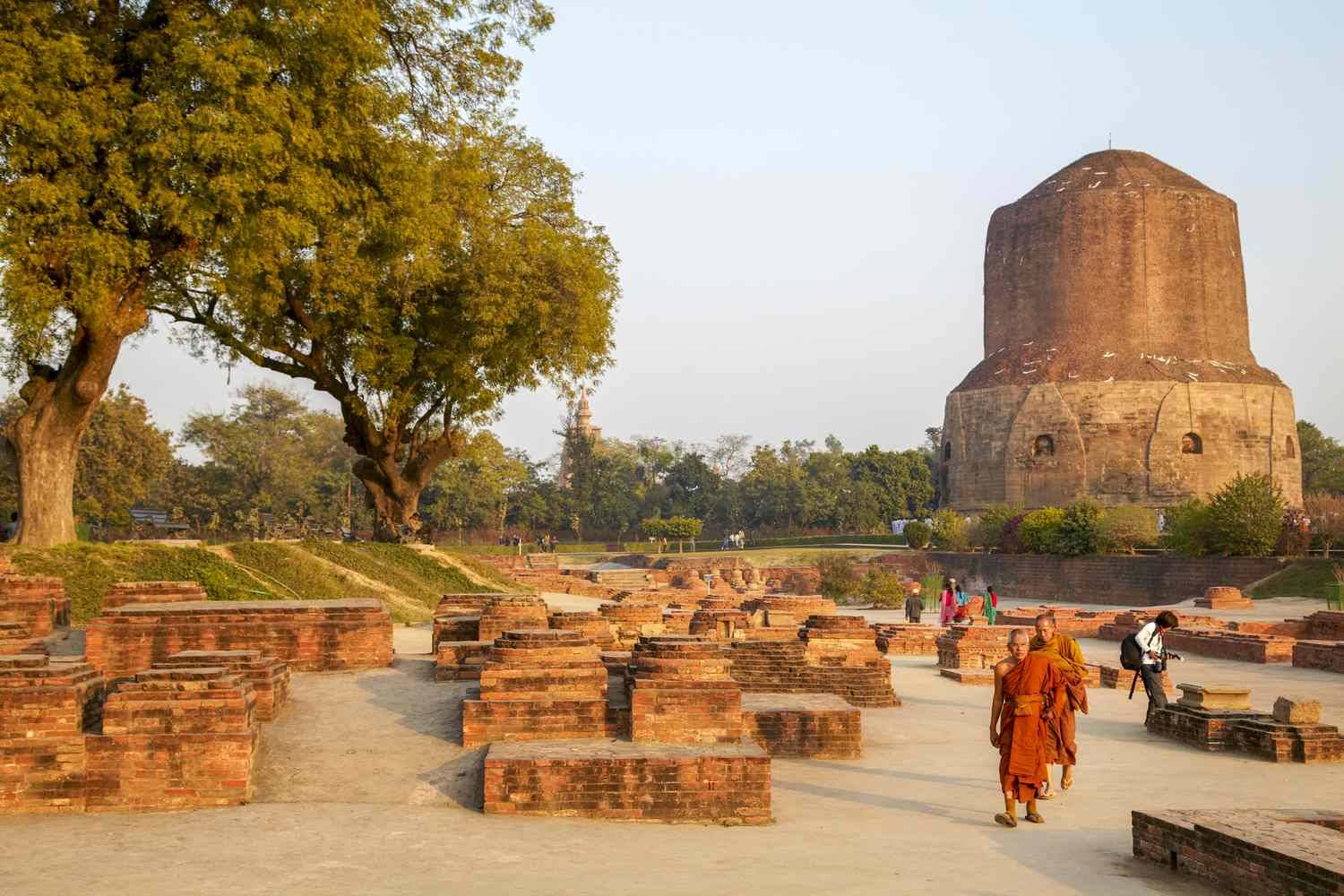
Go early instead, soon after the site opens. The morning light falls beautifully across the Dhamek Stupa, the grounds are quieter, and you can explore the ruins without the intensity of the midday heat.
An unhurried early morning visit feels completely different from a quick afternoon stop.
What you'll actually see
Sarnath is a collection of important Buddhist and archaeological sites rather than a single monument. Give yourself around two to three hours:
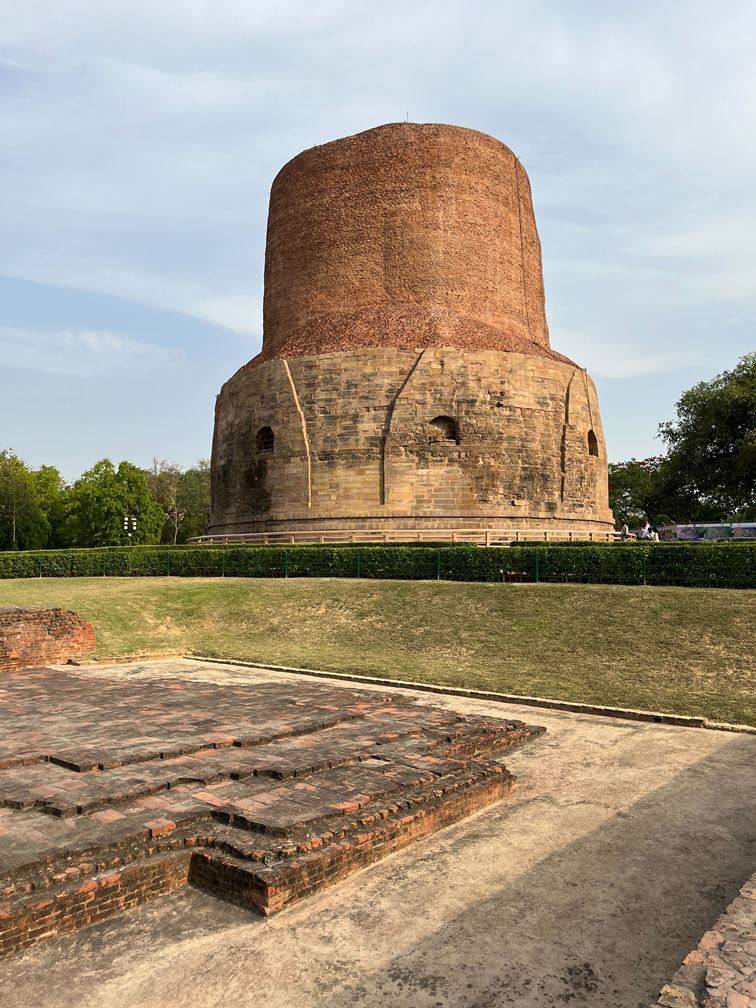
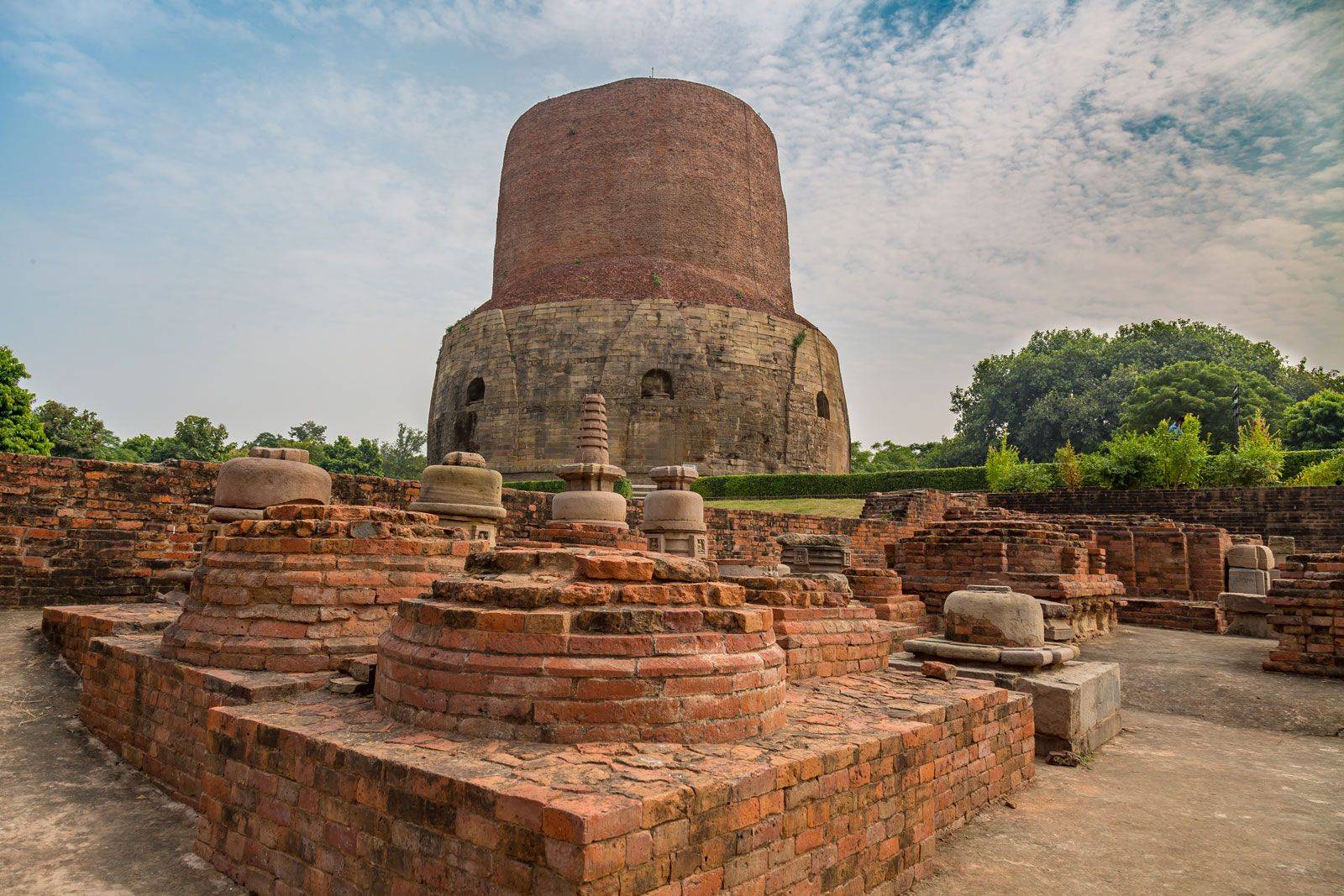
The Dhamek Stupa — the enormous cylindrical stupa traditionally associated with the location of the Buddha's first sermon. Its lower stonework features intricate carved designs.
The Archaeological Ruins — excavated monastery foundations, ancient structures and the remains of several stupas that reveal how important Sarnath became as a Buddhist centre.
The Ashoka Pillar remains — the remains of the 3rd-century BCE pillar commissioned during Emperor Ashoka's reign.
The Archaeological Museum — home to the famous Lion Capital of Ashoka, which became India's national emblem. Photography is restricted inside the museum.
Mulagandha Kuti Vihara — a modern Buddhist temple known for its large interior paintings and religious atmosphere.
The Deer Park — the area associated with the ancient Deer Park mentioned in Buddhist tradition.
Dress comfortably and modestly, and wear shoes that are easy to remove if you plan to enter the temple. Carry water and sun protection because parts of the archaeological grounds have limited shade.
And when you reach the Dhamek Stupa, don't immediately pull out your phone and move on. Spend a few minutes simply looking around. The significance of Sarnath isn't contained in a photograph. The quiet grounds, Buddhist pilgrims, monks and ancient ruins make more sense when you understand what traditionally happened here.
Inside the museum, follow the photography rules and give the Lion Capital your full attention. It is one of the most important surviving symbols from ancient Indian history.
Pro tip: Don't skip the Archaeological Museum. Many visitors spend most of their time photographing the Dhamek Stupa and leave without seeing the Lion Capital of Ashoka.
Visit early to avoid the strongest heat and larger tour groups. If possible, read a little about the Buddha's first sermon before arriving or hire a knowledgeable guide. Without context, the archaeological remains can look like scattered brick foundations; with context, the same ruins become much easier to understand.
The mistakes that ruin it
Most first-timers make the same few mistakes. They arrive around midday and struggle with the heat. They photograph the Dhamek Stupa, skip the museum and miss the Lion Capital. Or they arrive without knowing why Sarnath matters and experience it simply as another archaeological site.
The easy fix is to come early, understand the story before you arrive, and give both the archaeological site and museum enough time. Sarnath rewards curiosity and context far more than a quick photo stop.