


What to Eat in Ayodhya: Sattvic Food & Sweets
Kachori mornings, a winter-only milk dessert sold at dawn, and the community
kitchens most pilgrims eat in — what to actually eat in Ayodhya.
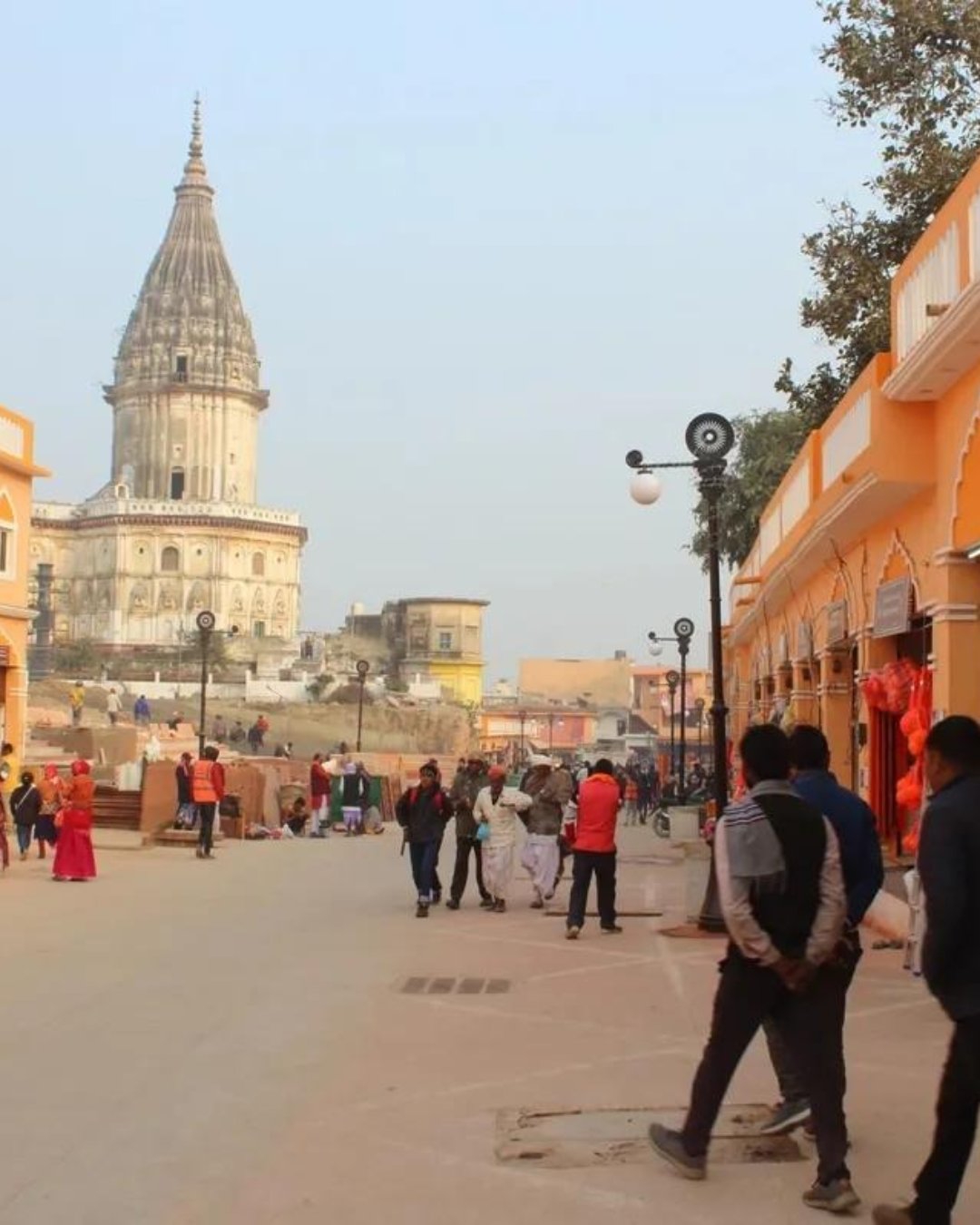
Your food journey in Ayodhya begins long before the main crowds arrive. Start your morning with a hot kachori-sabzi and jalebi, eaten fresh while the old market lanes are waking up around the temple areas. As you move between Ram Janmabhoomi, Hanuman Garhi, Ram Path and the older bazaars, you will find simple vegetarian breakfasts, tea stalls and small local eateries that fit naturally around your darshan schedule. Here, eating is less about finding a fashionable restaurant and more about knowing what to eat, where to find it and at what time of day.
If you visit during the colder months, look for malai makhan, the delicate, airy milk-based winter sweet that is best experienced fresh and in season. It is the kind of local speciality you can easily miss if you arrive outside its season or only follow the usual sightseeing route. Along the way, explore Ayodhya's sweet shops for peda, laddoo, jalebi, imarti and other traditional mithai, some of which can also become part of your temple offering or prasad experience. You will discover that sweets here are not simply something to finish a meal with—they often travel with pilgrims as something to take home.
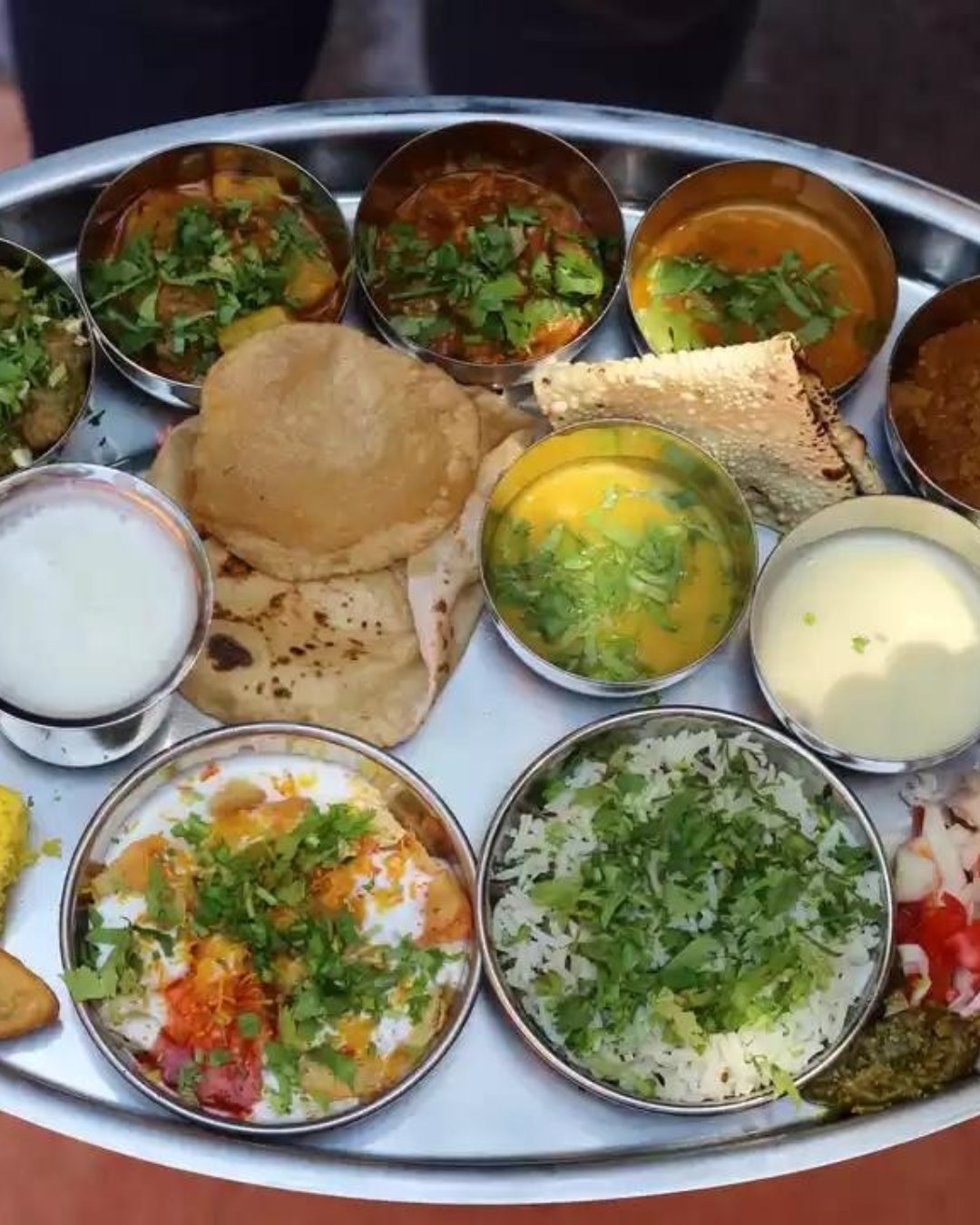
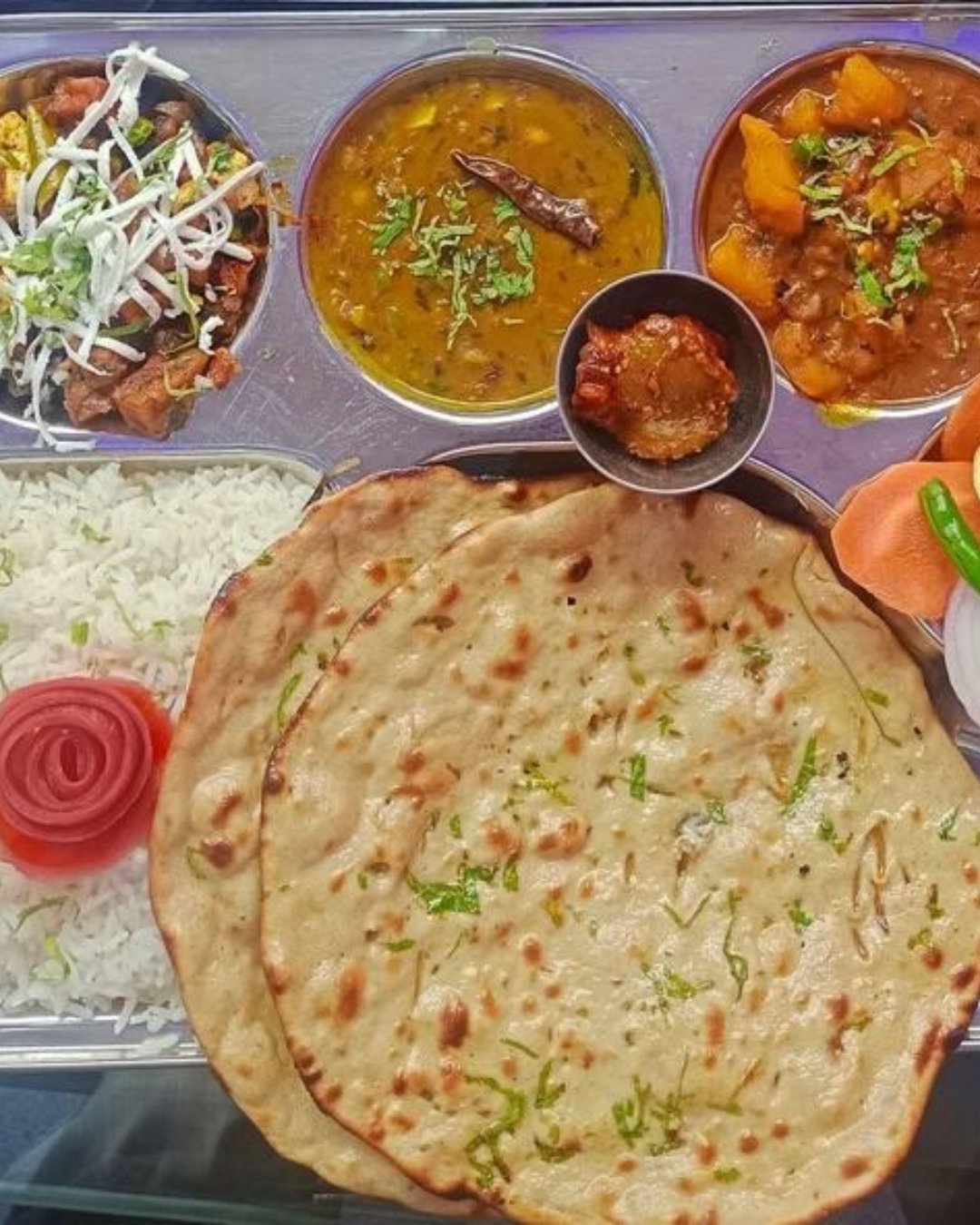
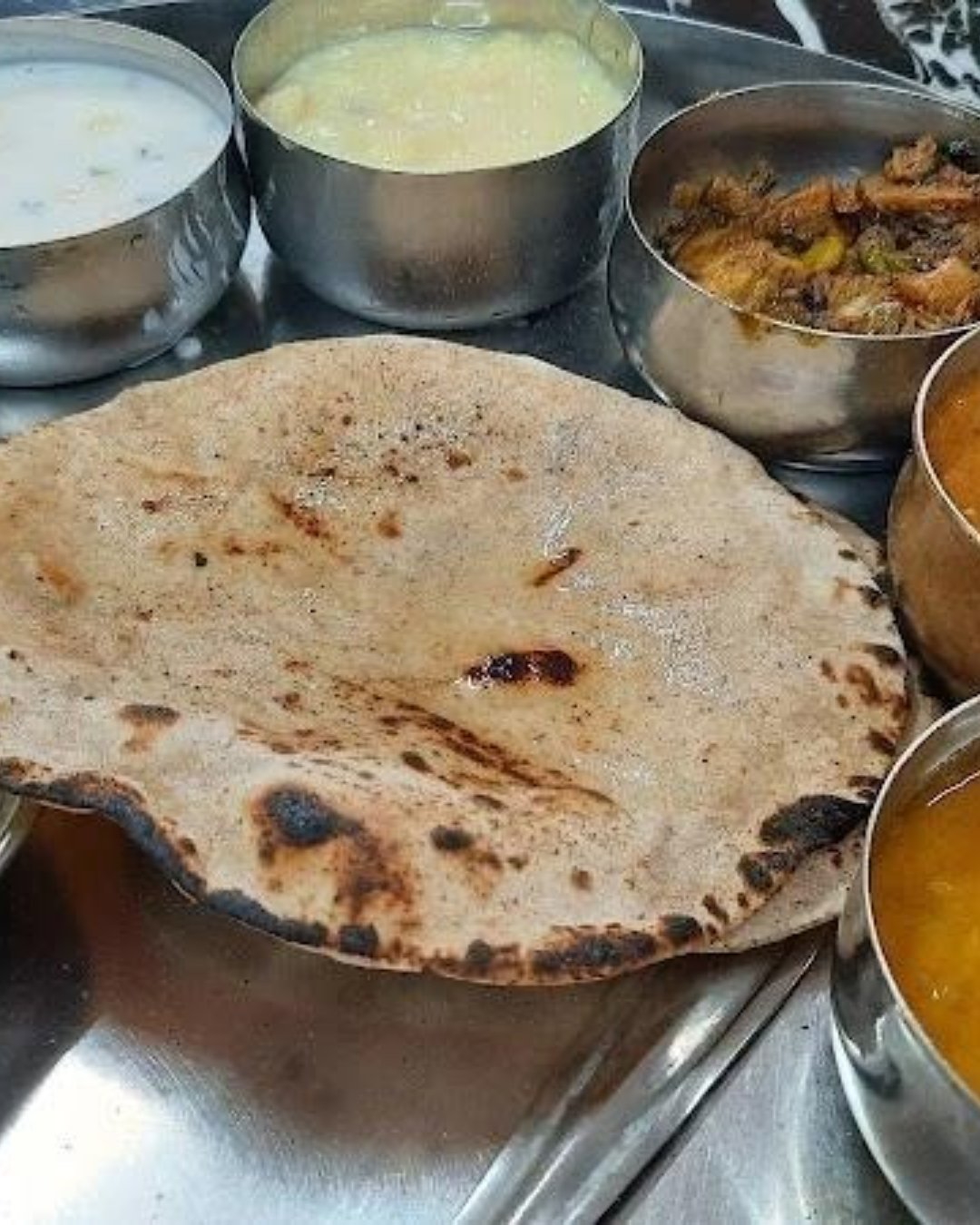
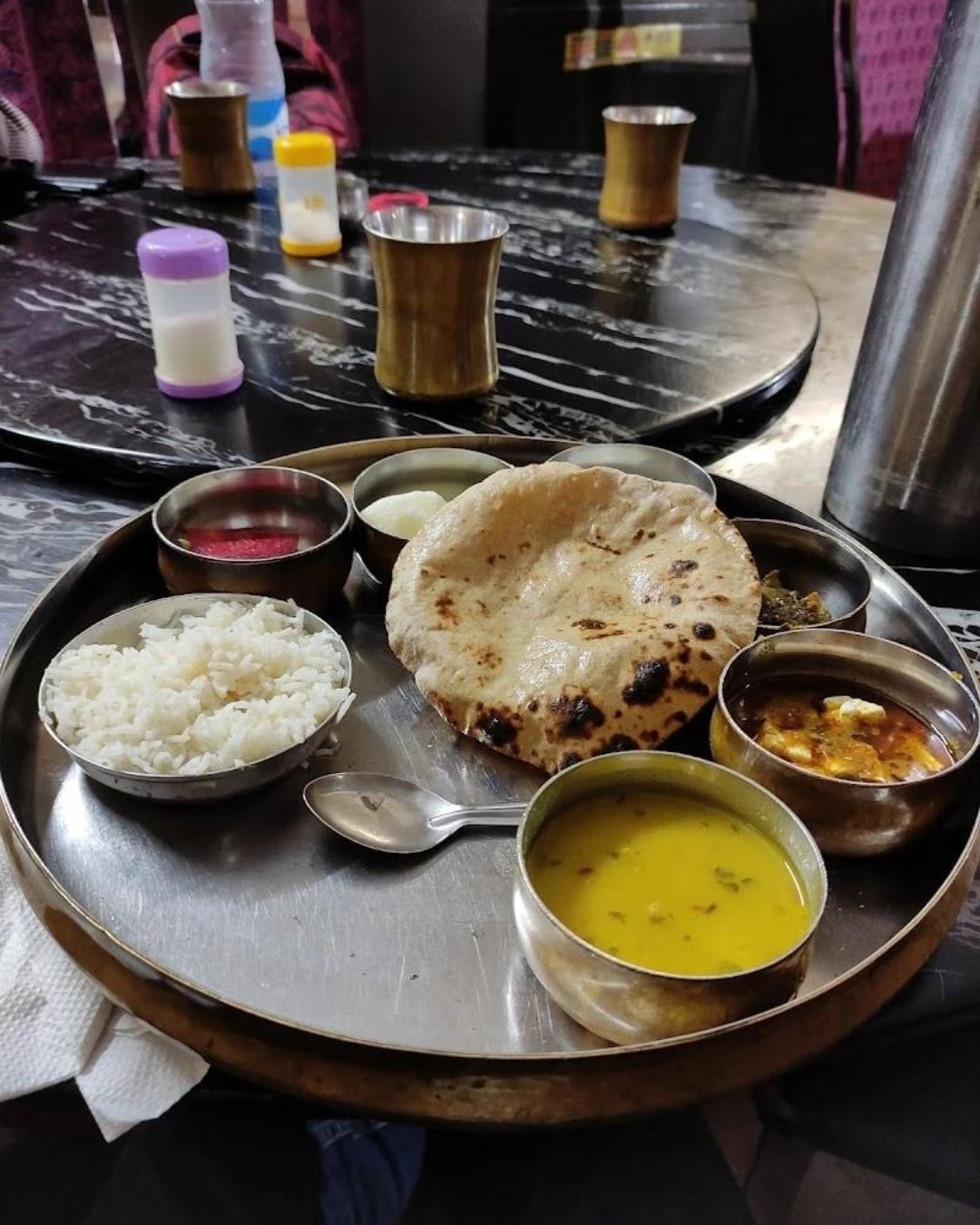
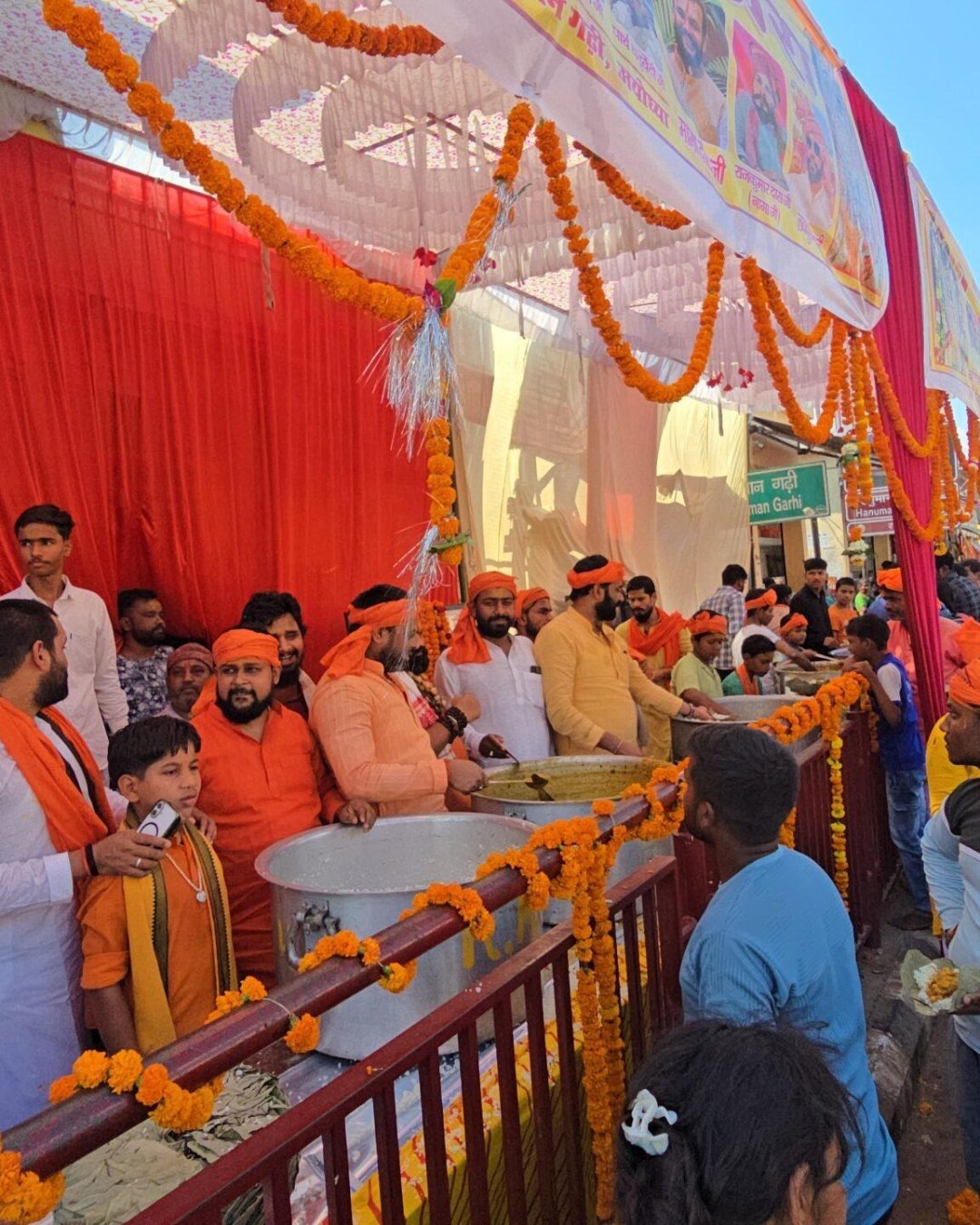
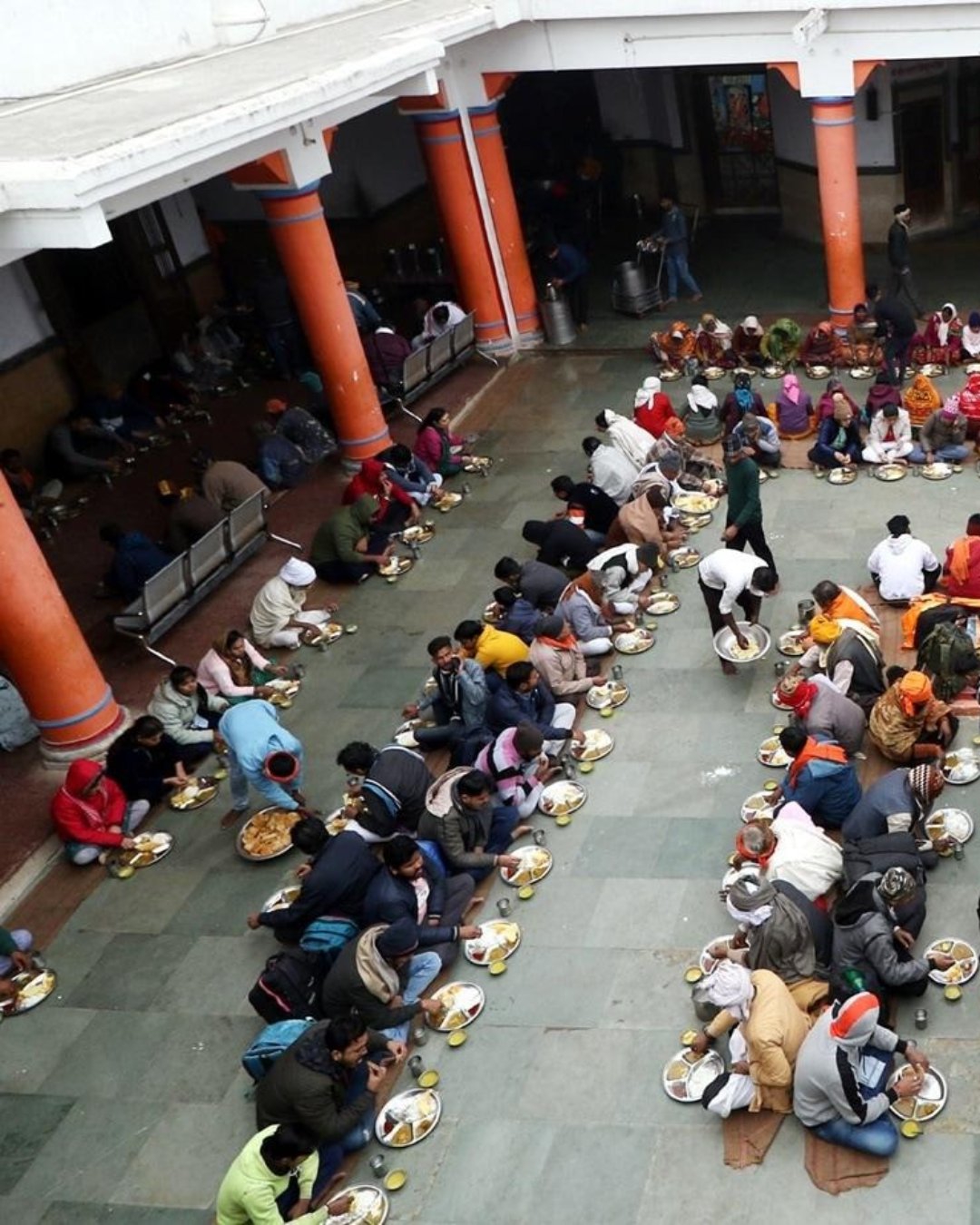
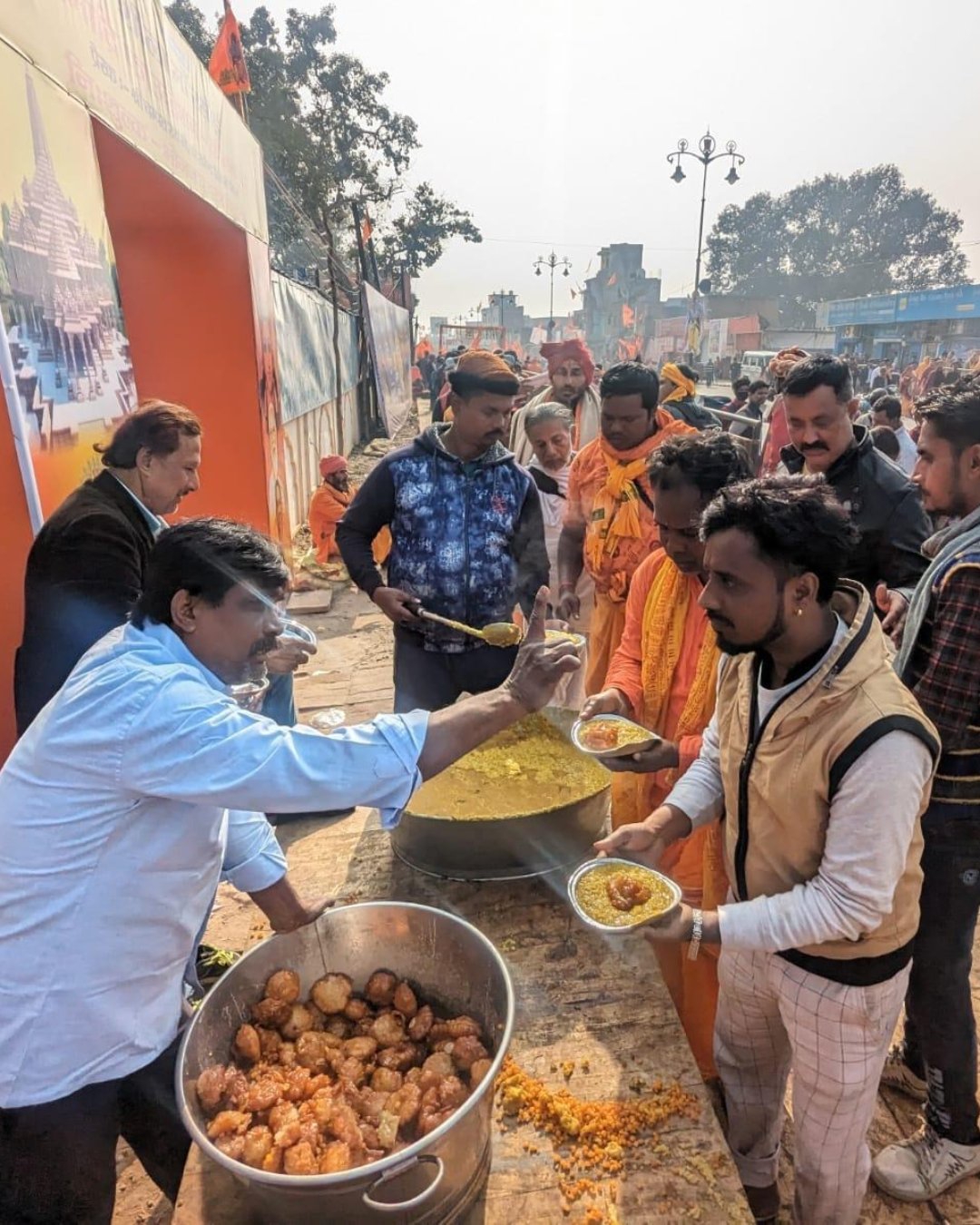
Your meals also connect closely with Ayodhya's spiritual character. Around the temple and pilgrimage areas, you can choose simple sattvic vegetarian food, including dal, seasonal vegetables, roti, rice, curd and other uncomplicated preparations; individual kitchens may follow different rules about onion, garlic and other ingredients. You can also encounter bhojanalayas, temple-linked kitchens and bhandaras, where the atmosphere is far more communal than a conventional restaurant. Bhandara availability and timings can vary, so treat them as something to discover locally rather than something to depend on for a fixed meal.
The easiest way to experience Ayodhya's food is to eat around the darshan clock: breakfast early, keep lunch flexible after your temple visits, and save your evening for sweets, chai and lighter snacks before heading towards Saryu and Ram Ki Paidi. That rhythm lets you taste the city without turning every meal into another destination. From a crisp kachori at sunrise to a seasonal bowl of malai makhan, a simple sattvic thali and sweets carried home as prasad, this journey lets you experience Ayodhya through the foods that naturally belong to its pilgrimage, seasons, markets and daily life.
Stops
Home
MomentRam Path Road, Ayodhya
Sattvic, and What It Actually Changes
Ayodhya cooks without onion or garlic in most kitchens, and that changes the food far more than the absence of meat does.
•Sattvic cooking leaves out onion and garlic as well as meat, which removes the base that most North Indian food is built on.
•What replaces them is asafoetida, cumin, fennel, ginger and fresh coriander, so the flavours run cleaner and lighter than you expect.
•It is why a thali here tastes noticeably different from the same thali in Lucknow, two hours away.
•Many restaurants follow it by default, and ashrams and temple kitchens follow it strictly.
•If you keep strict dietary rules, it is worth confirming when you order rather than assuming.
•The rules about what is and is not served in Ayodhya are covered separately and are worth reading before you arrive.
Pro tip: Order one sattvic thali early in your trip and pay attention to what is missing. Once you have noticed the absence of onion and garlic, the rest of the food in town makes sense.
The mistakes that ruin it:
•Assuming sattvic simply means vegetarian.
•Ordering the same dishes you would elsewhere and wondering why they taste different.
21
MomentRam ki Paidi, Ayodhya
The Kachori Morning
Breakfast is the best meal in Ayodhya, and the queue at the temple decides when you get to eat it.
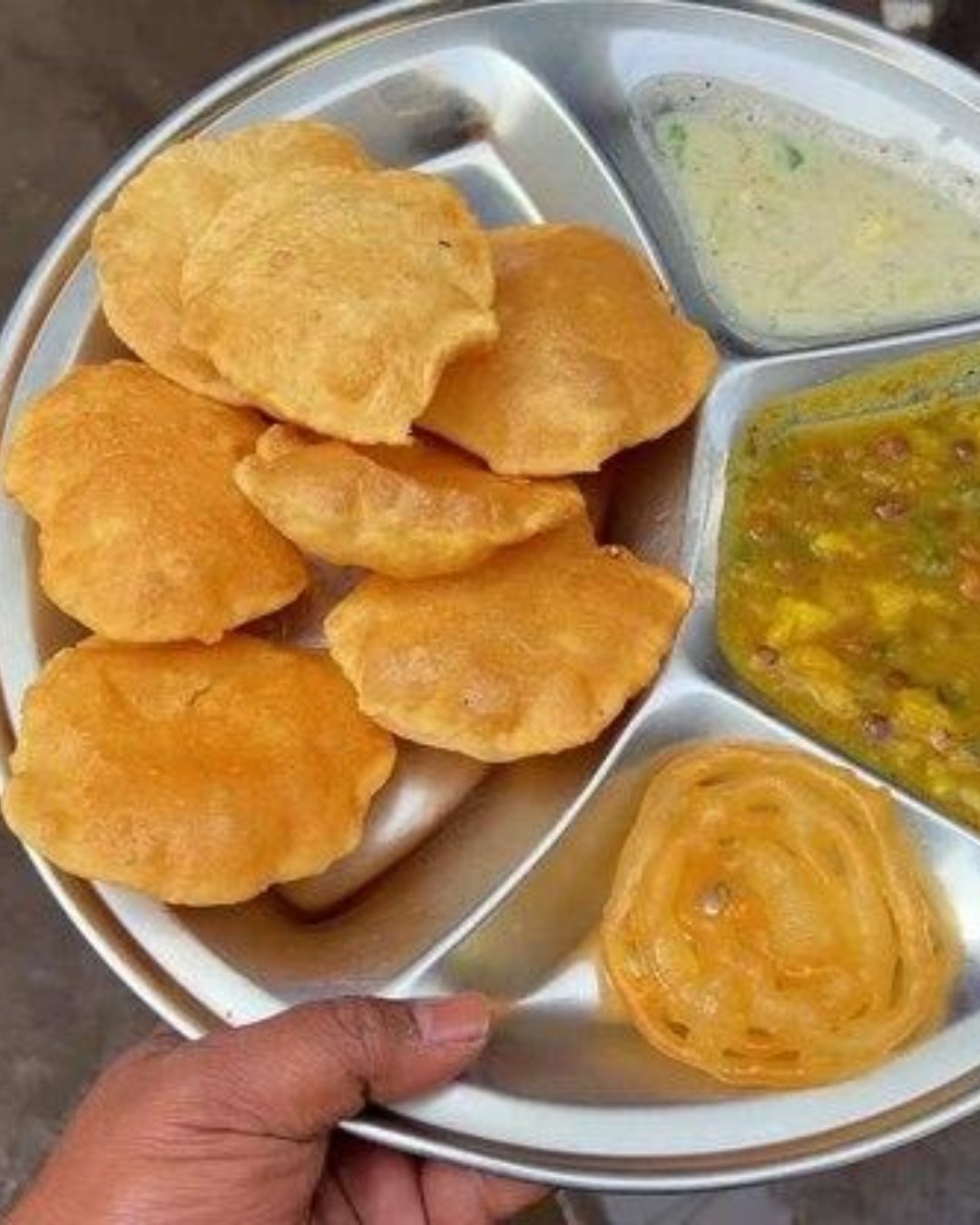
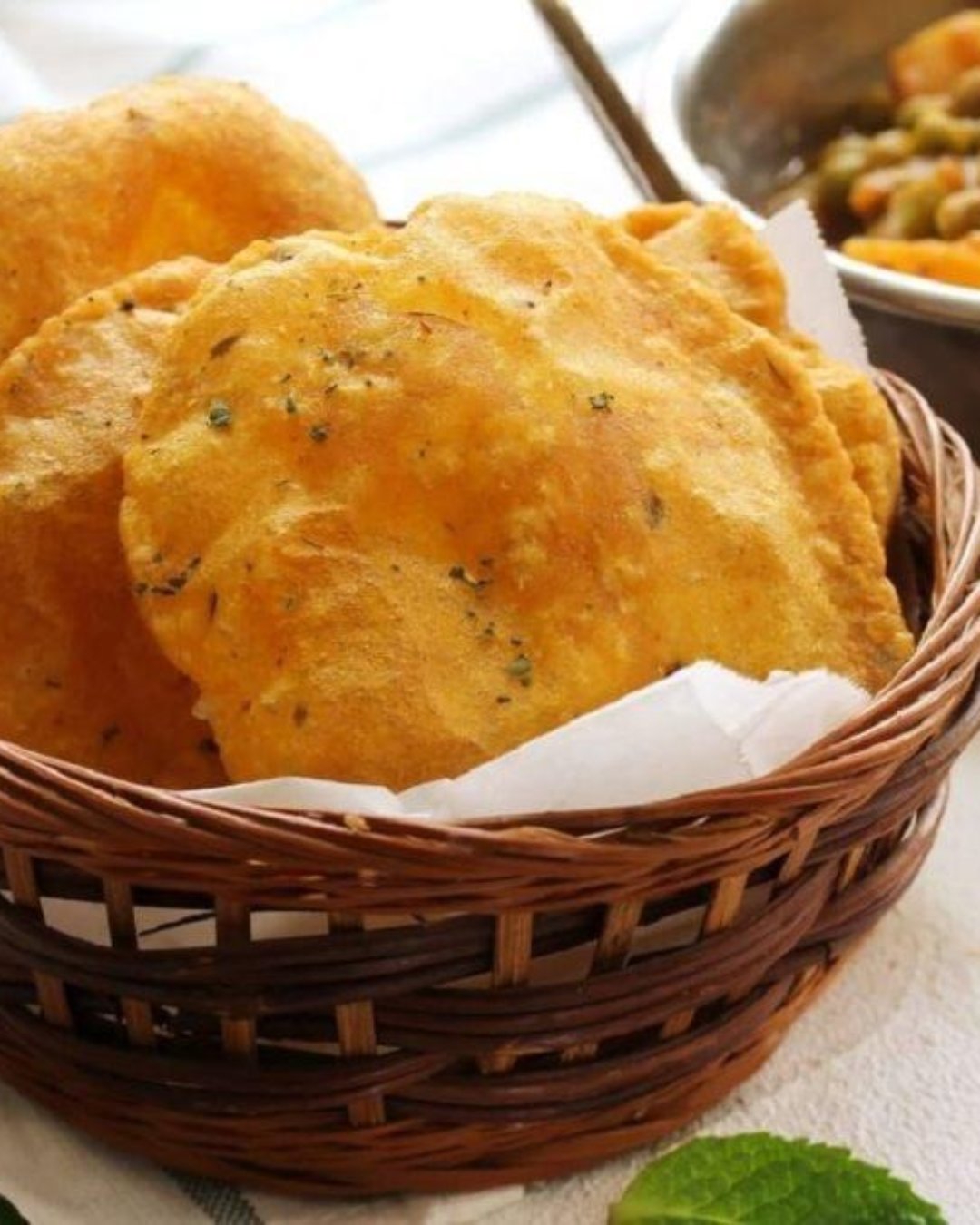
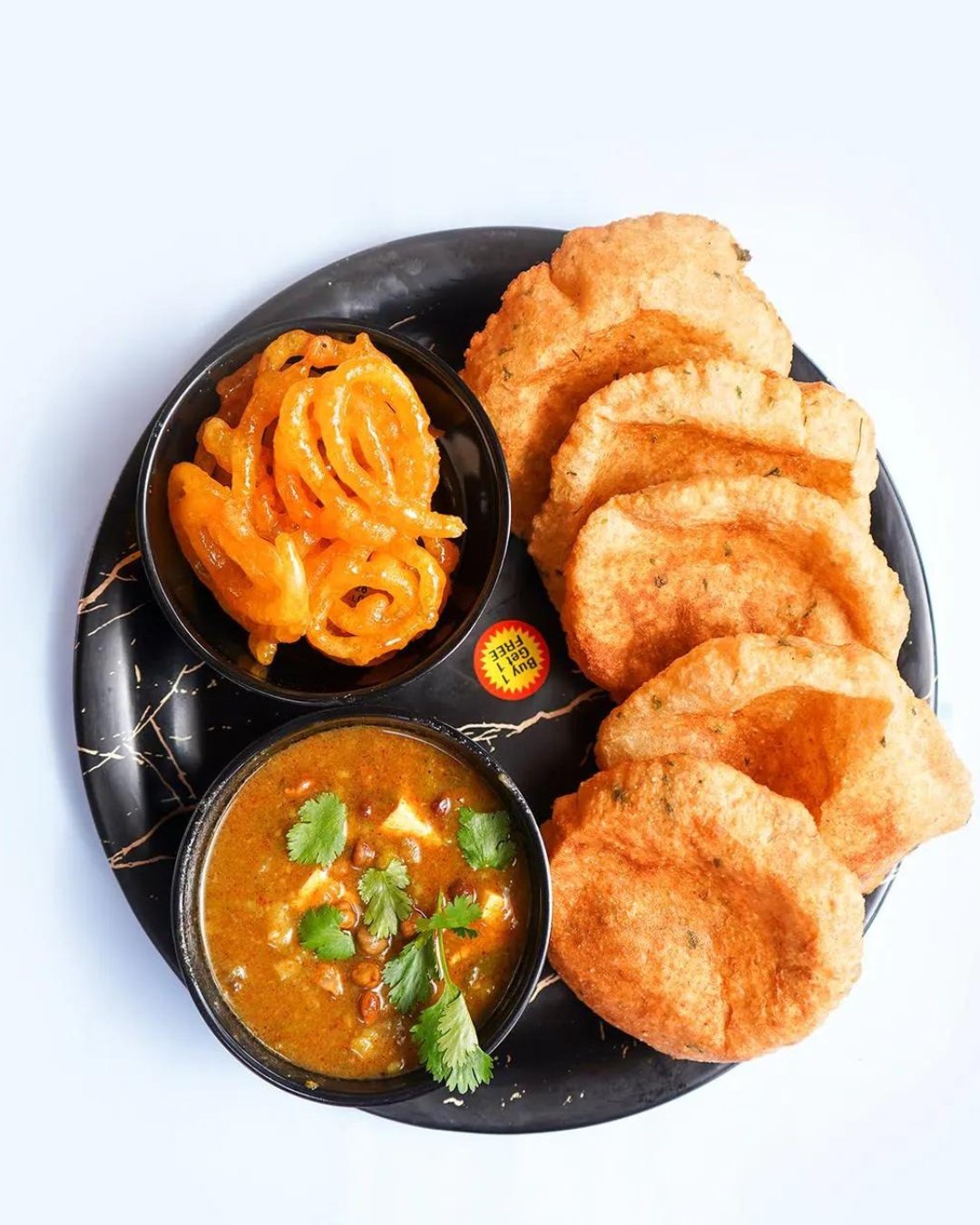
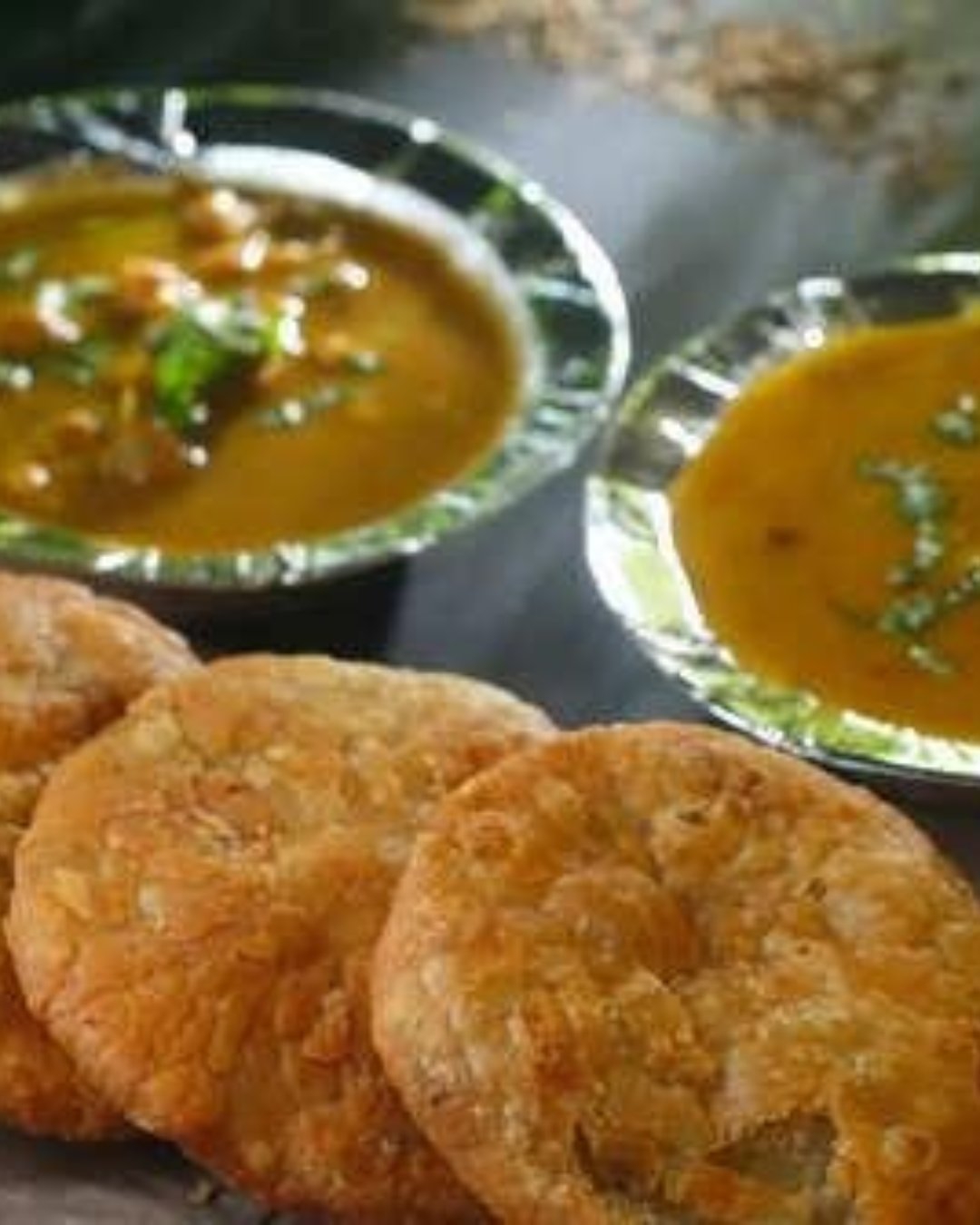
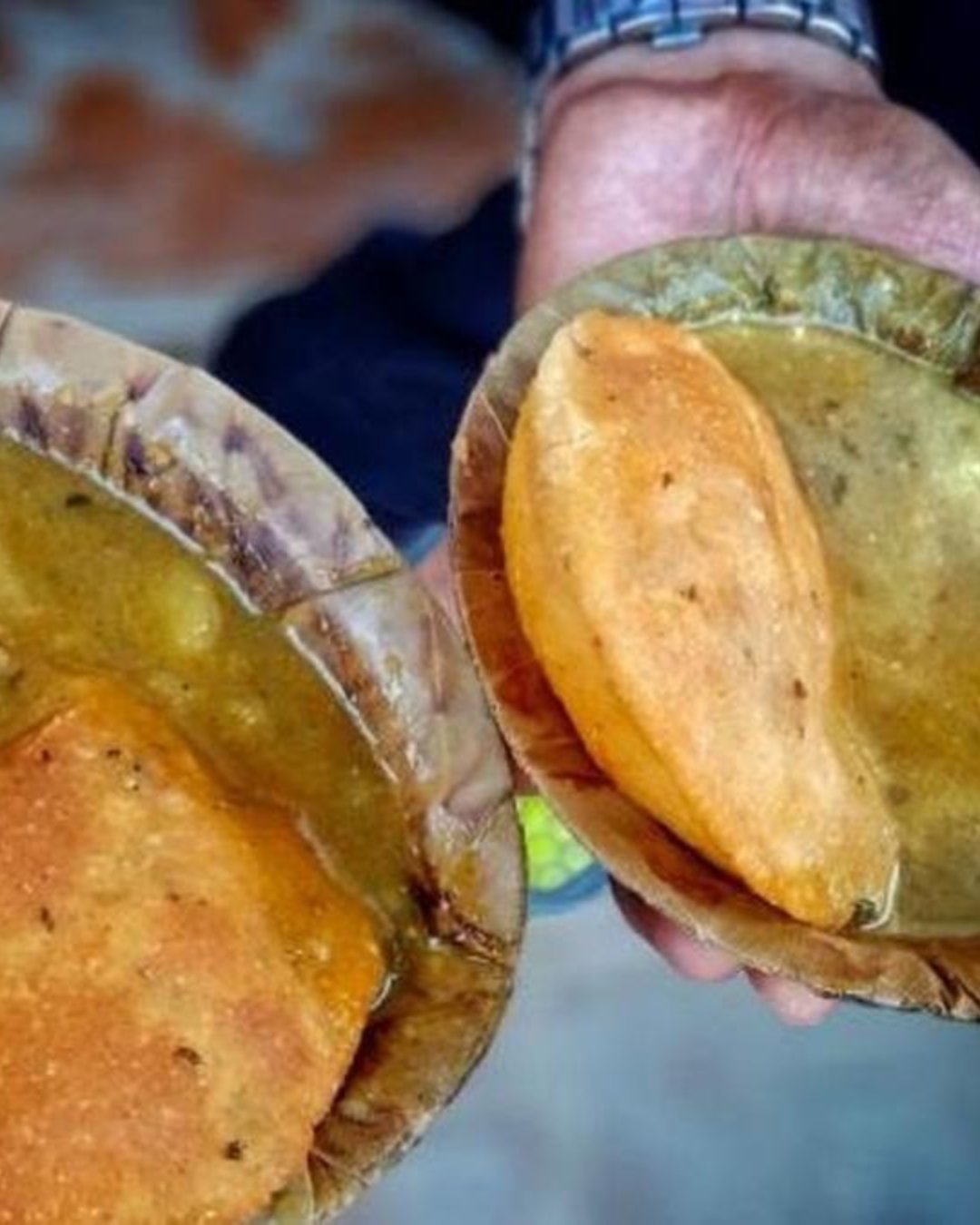
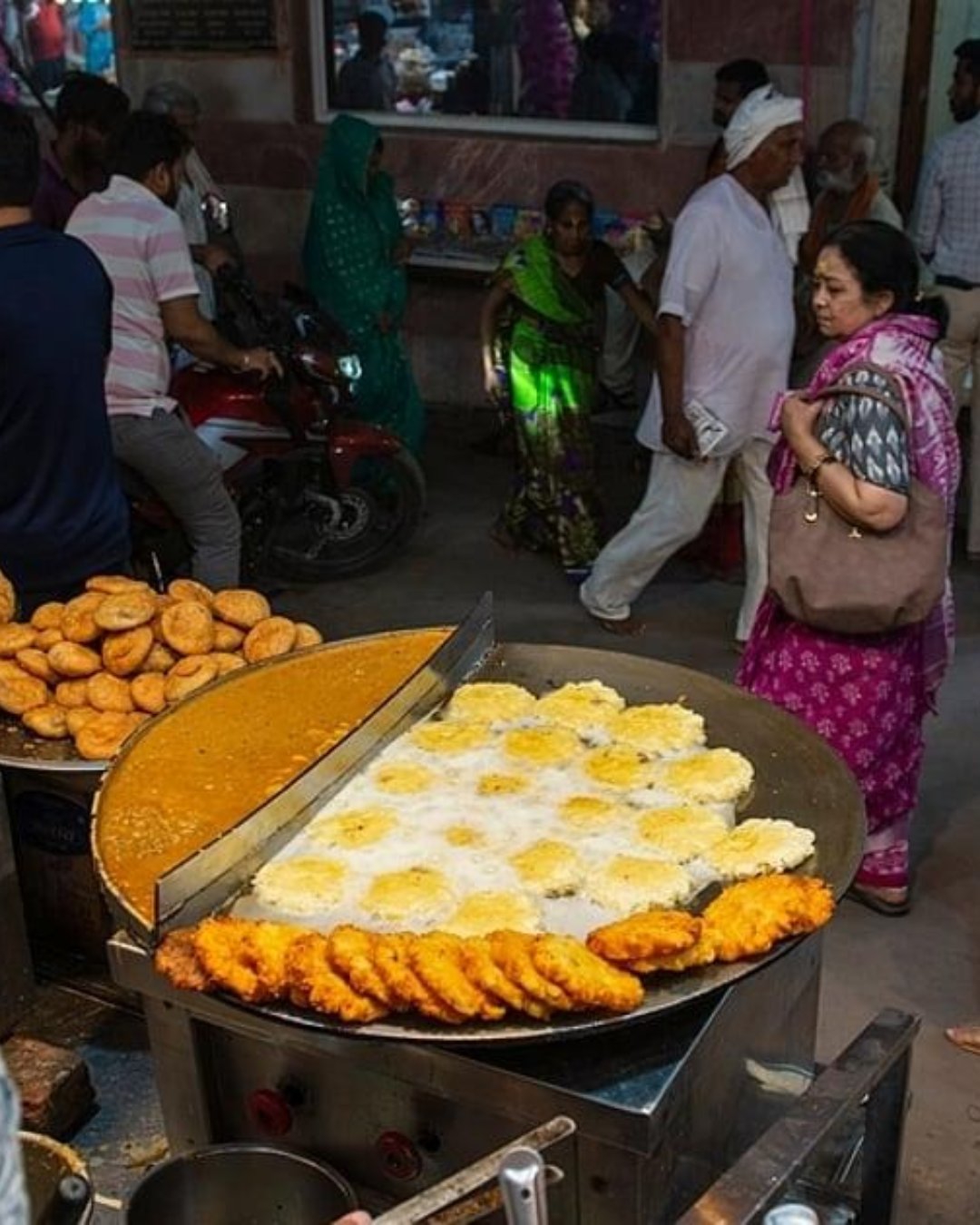
•Kachori with aloo sabzi is the town’s breakfast, sold hot from stalls along the temple approach roads from early morning.
•Bedai poori is the version worth seeking out — a dal-stuffed poori made with urad or moong, spiced with red chilli, cumin, fennel and asafoetida, served with a hot potato sabzi.
•Jalebi is eaten alongside rather than afterwards, straight from the pan.
•Puri sabzi and chole bhature are the other standard morning plates.
•The stalls are busiest immediately after the morning darshan window, when everyone comes out at once.
•Most of this is cooked fresh in batches, so what you get at seven in the morning is not what is sitting there at eleven.
Pro tip: Eat after your darshan, not before. The stalls are at their best early, you are not rushing a queue, and the morning window is the one thing in Ayodhya you cannot get back.
The mistakes that ruin it:
•Skipping breakfast to make the queue and eating a reheated plate at midday.
•Looking for a sit-down breakfast when the good food is at the stalls.
15
MomentRam Path Road, Ayodhya
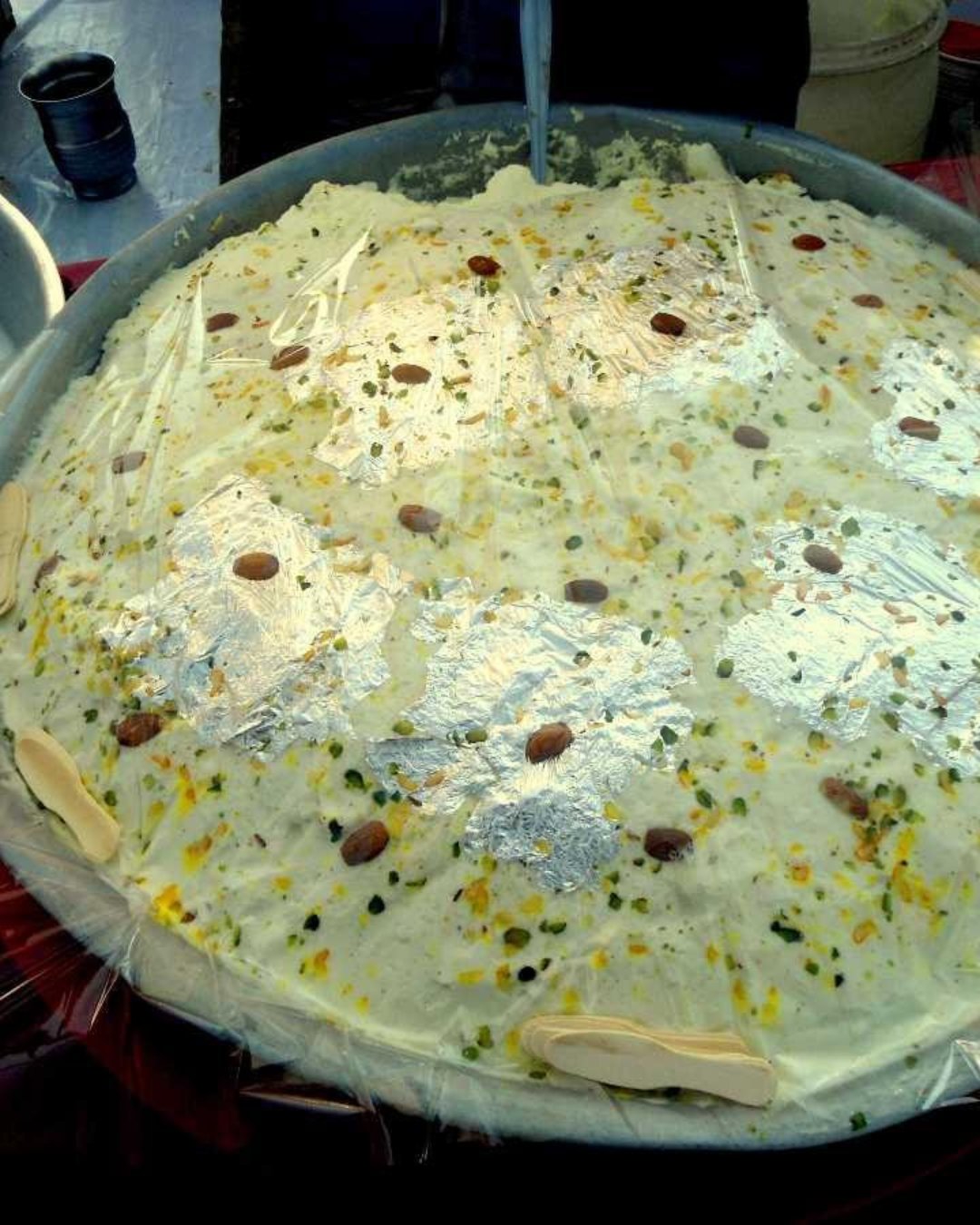
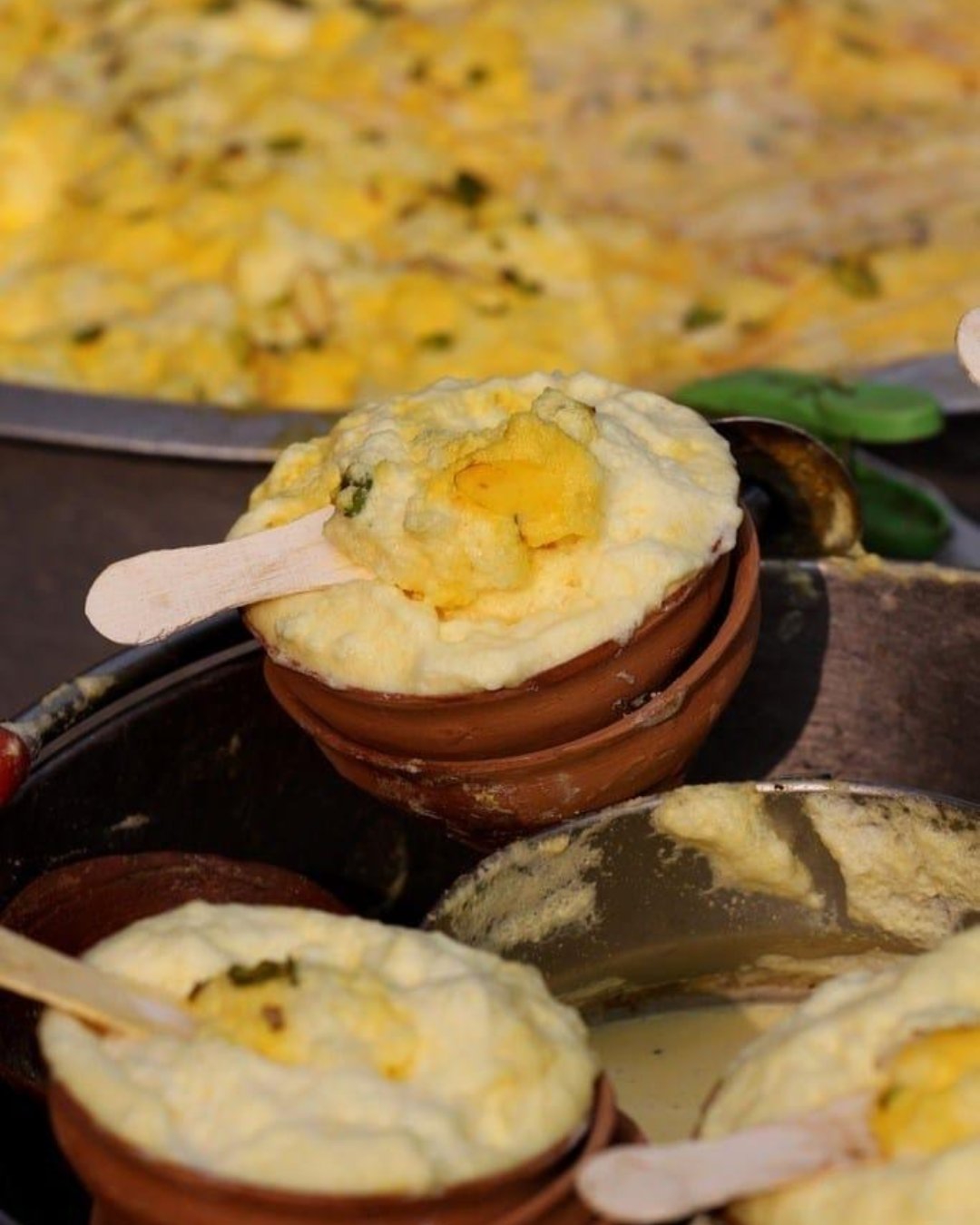
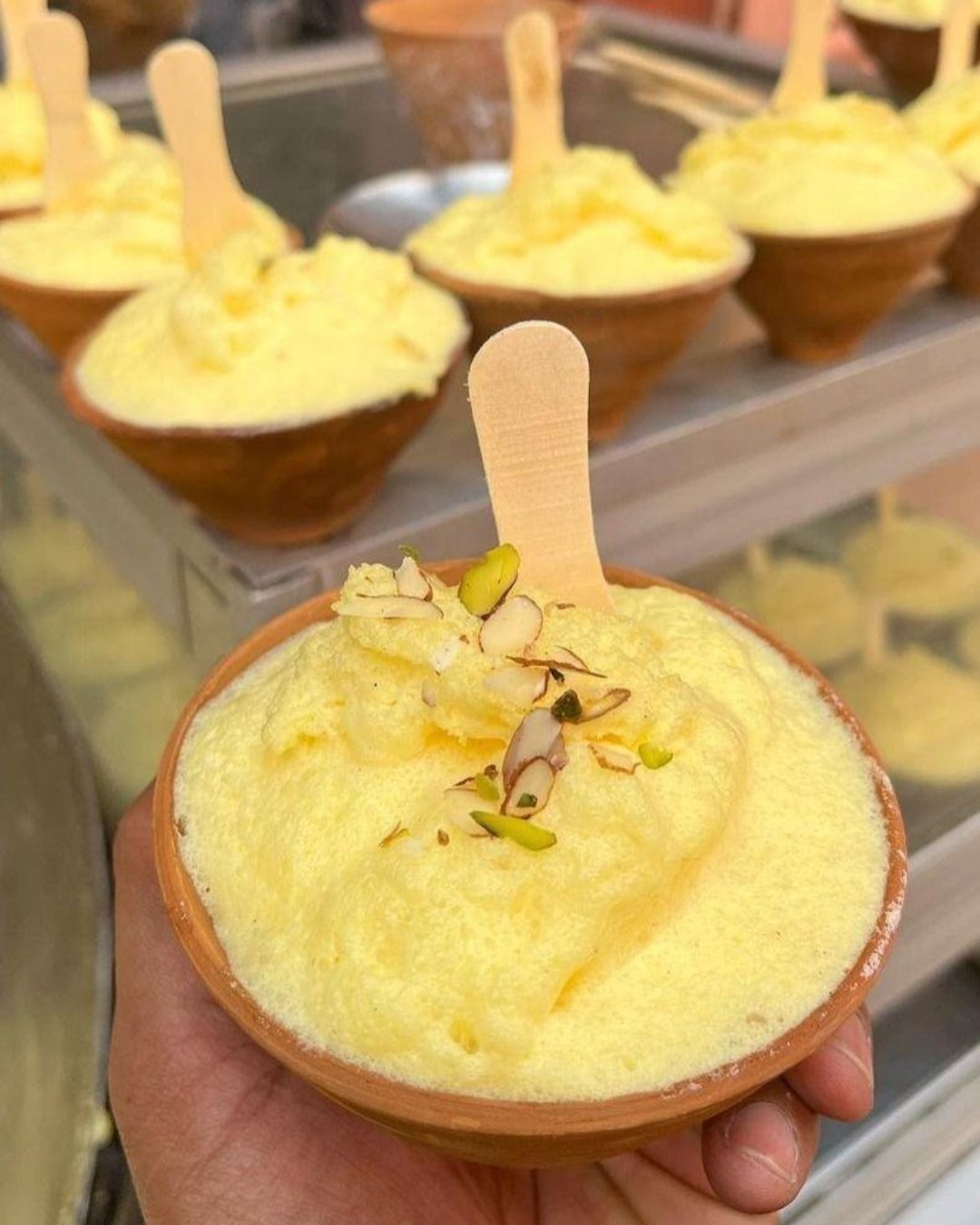
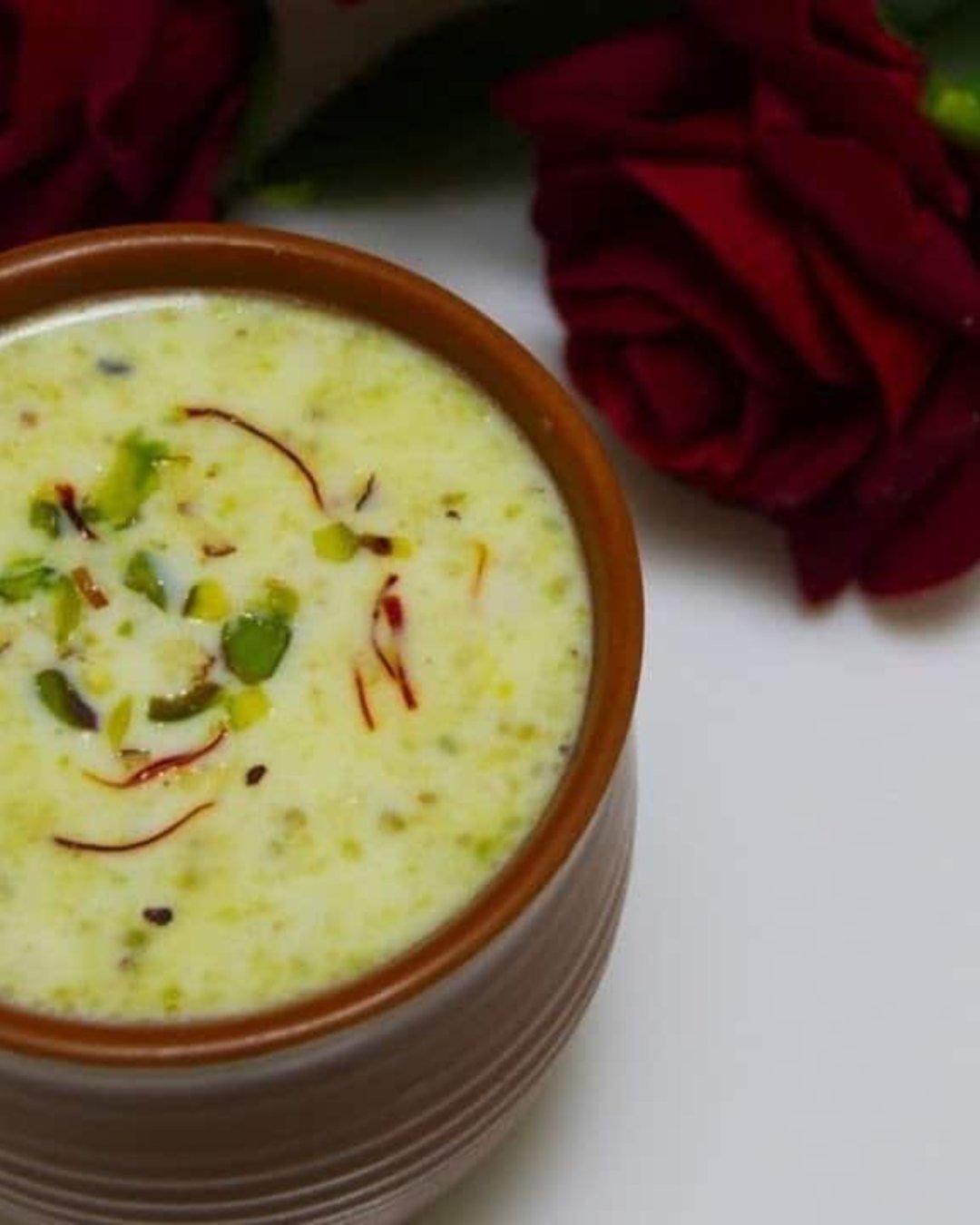
Malai Makhan, and the Things That Only Exist in Season
One of the best things to eat in Ayodhya exists for a few hours a day, for a few months a year.
•Malai makhan, also called nimish, is a frothy, airy milk dessert flavoured with saffron and cardamom and topped with nuts.
•It is made overnight in the cold and collapses as the day warms, so it is a winter dish sold in the early morning and gone by mid-morning.
•Vendors around the Chowk area and near Ram Ki Paidi start selling it from around six in the morning.
•Thandai, flavoured with fennel, rose and dry fruit, works the opposite way and belongs to the hot months and to Mahashivratri.
•Kheer, malpua and gujiya appear around festivals rather than year-round, and malpua is particularly associated with Holi.
•Chappan bhog, the fifty-six offerings, is a festival tradition you will only encounter at the right time of year.
Pro tip: If you are in Ayodhya between November and February, get up for malai makhan before your darshan. It is the one thing in this town you genuinely cannot get later in the day.
The mistakes that ruin it:
•Looking for malai makhan in summer, or after about nine in the morning.
•Expecting the festival sweets to be available outside their season.
21
MomentShri Hanuman Garhi Mandir, Ayodhya
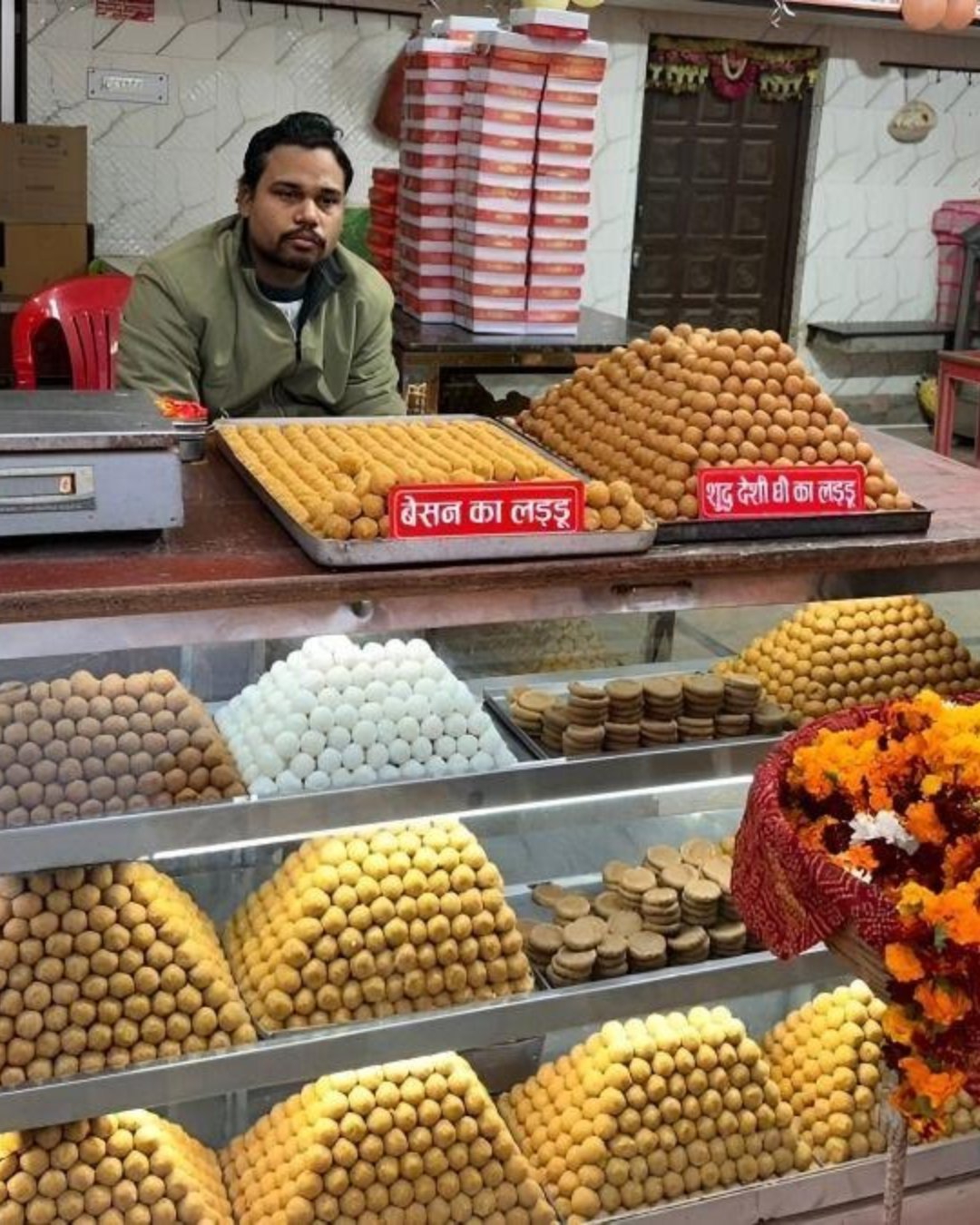
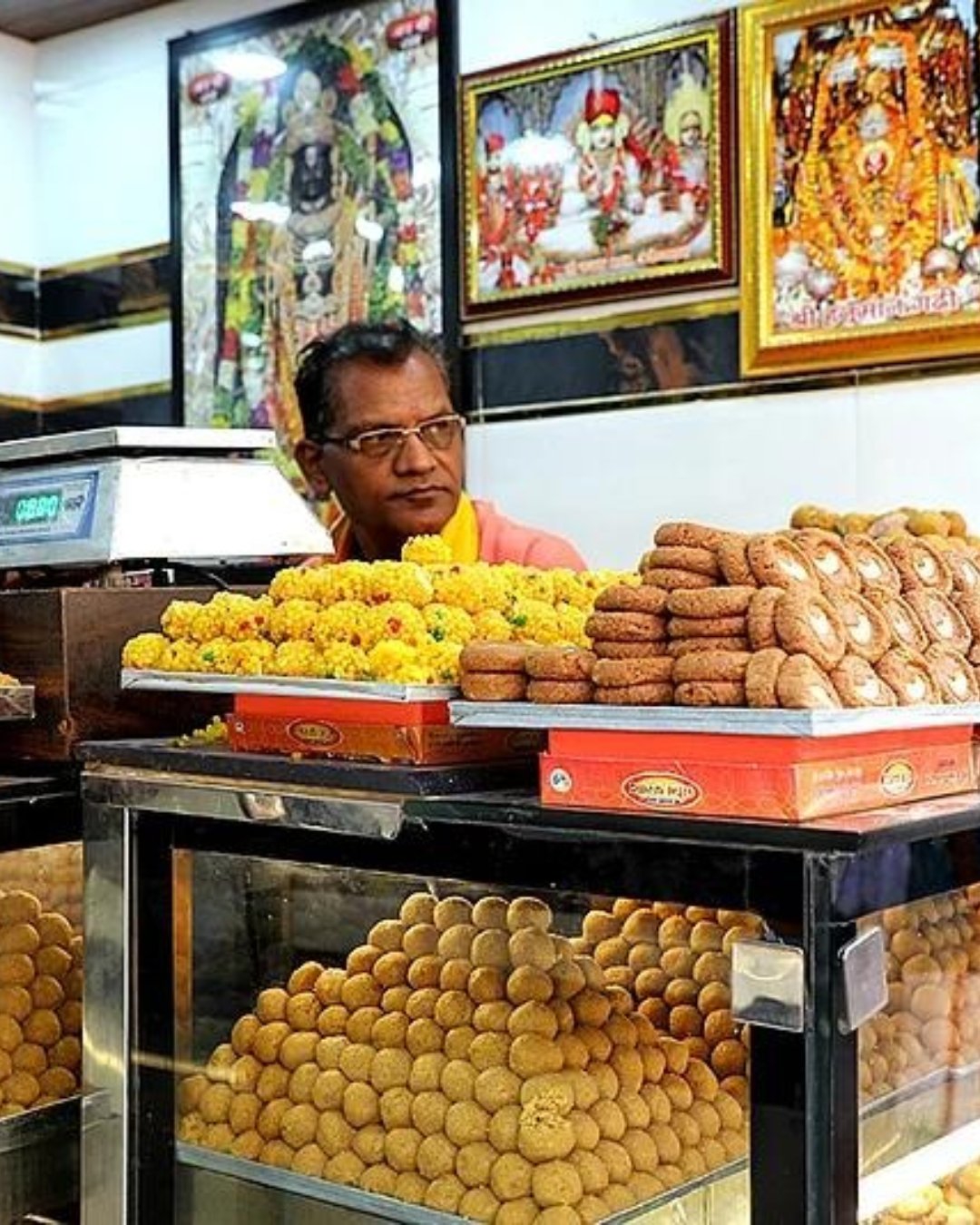
The Sweet Shops, and What Doubles as Prasad
In Ayodhya the sweet shop and the prasad counter are frequently the same thing.
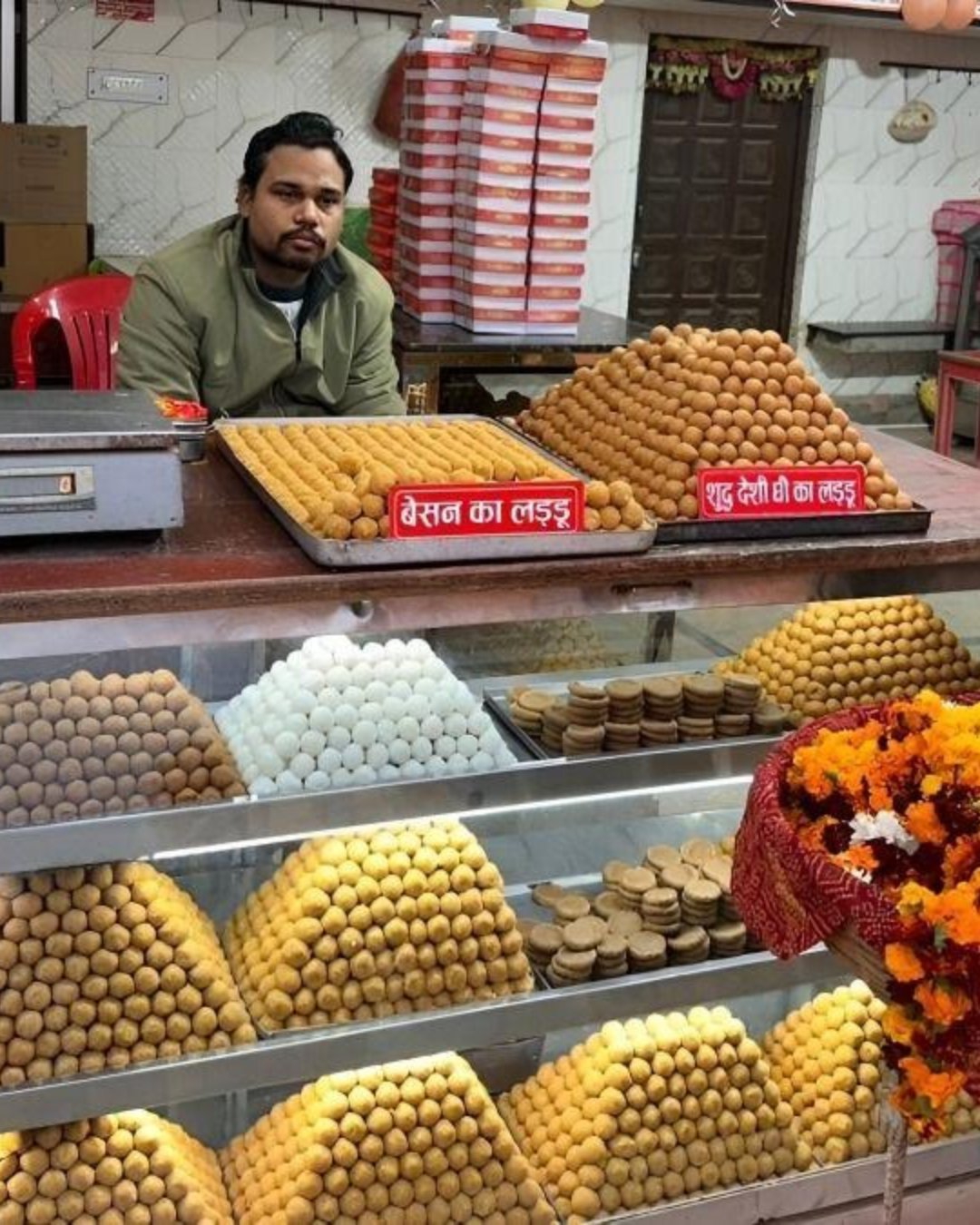
•Peda is the sweet most associated with the town — condensed milk, topped with nuts, often finished with silver leaf, and the default offering at temples.
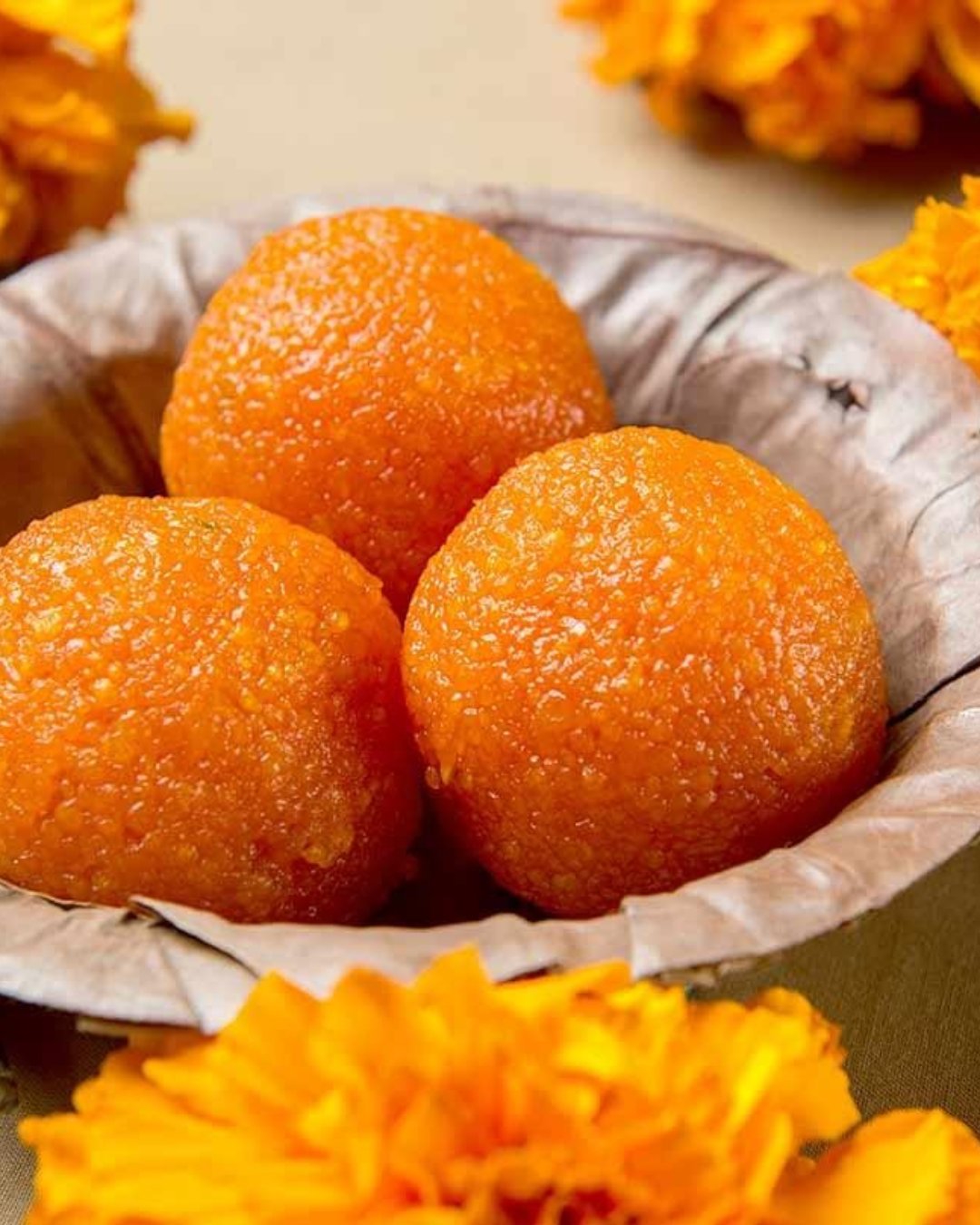
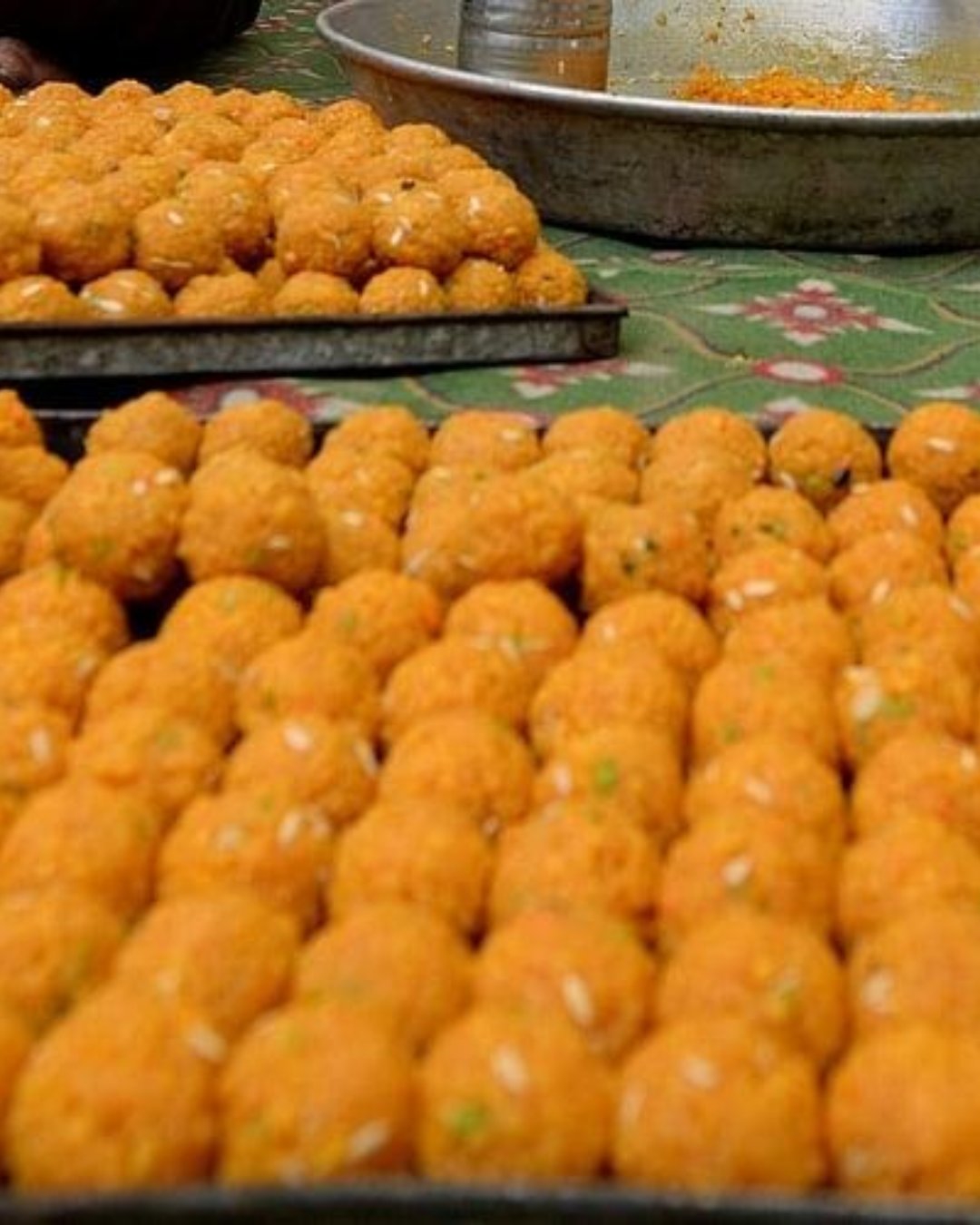
•Laddoo comes in several forms here: boondi, motichoor, besan and atta, each with a different texture.
•Rabri, thickened slowly from milk and scented with saffron and cardamom, is the richer option and is often eaten with jalebi.
•Thekua, balushahi and ghewar turn up in the same shops, the last two more around festivals.
•Sweets bought as prasad are usually sold packaged and sealed, which matters if you have a long journey home.
•The shops cluster along the temple approach and around the main ghats, and they are busiest immediately after each darshan window.
Pro tip: Buy sweets on your way out of the temple rather than on your way in. Bags cannot go inside, so anything bought first has to go into a locker and come back out again.
The mistakes that ruin it:
•Buying fresh rabri or unpackaged sweets with a long train journey ahead.
•Shopping before darshan and then queueing twice for the locker.
17
MomentKanak Bhawan, Ramkot
Bhojanalayas, Bhandaras and Eating as Part of the Pilgrimage
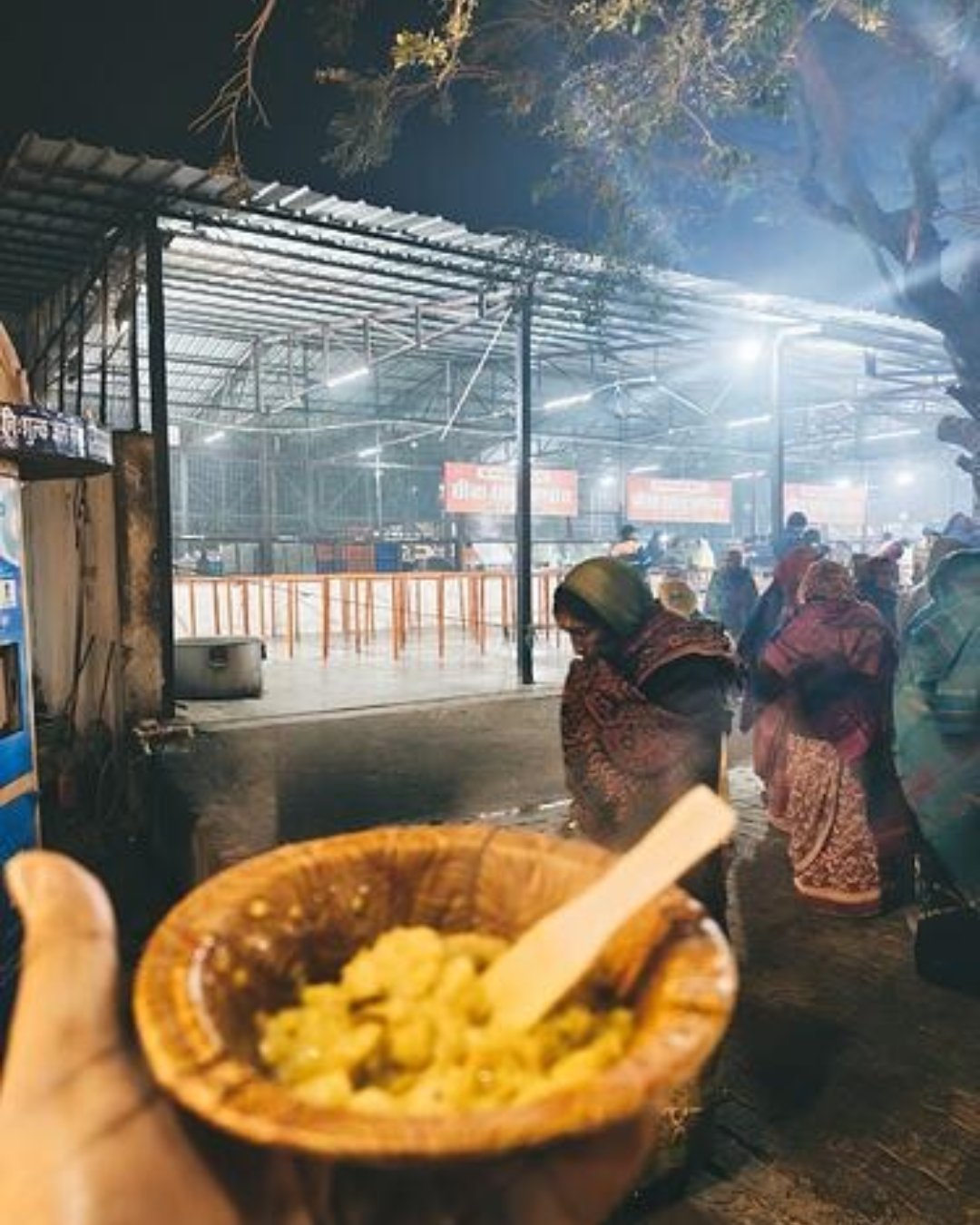
Most pilgrims in Ayodhya do not eat in restaurants, and the system they use is barely written about.
•Bhojanalayas are simple vegetarian dining halls, many attached to trusts and ashrams, serving fixed thalis rather than menus.
•A typical Ayodhya thali runs to puri, aloo sabzi, dal, rice and a sweet, cooked sattvic and served until you stop eating.
•Several of the larger trusts and dharamshalas run their own kitchens, so where you sleep often determines where you eat.
•Bhandaras — free or donation-based community meals — are served near the major temples, and the food is prepared and treated as prasad.
•They are open to anyone, and during festivals they feed very large numbers.
•Basic etiquette applies: wash your hands first, sit quietly, take only what you will finish, and never waste prasad.
•Many of these places, and most street stalls, take cash only.
Pro tip: Carry cash and eat at least one meal in a bhojanalaya rather than a restaurant. It costs a fraction as much, and it is the closest thing to how the town actually eats.
The mistakes that ruin it:
•Assuming a card or UPI will work at a stall or a bhojanalaya.
•Treating a bhandara as a free buffet rather than as prasad.
•Taking more than you can finish.
22
MomentRam ki Paidi, Ayodhya
Eating Around the Darshan Clock
•An early darshan means leaving before most places open, so breakfast belongs after the morning window rather than before it.
•The midday temple closure is when the town eats, which makes it both the natural lunch hour and the busiest one.
•The evening aarti at the ghats falls close to dinner time, so eat early or eat late around it.
•Almost everything shuts early. A late dinner is a hotel proposition rather than a street one.
•Some accommodation will lay on an early or packed breakfast if you ask the night before.
•Carry water. The approach walk and the queue are long and largely open, particularly between April and June.
Pro tip: Treat the midday temple closure as your main meal of the day. Everything is open, the crowd is inside the temple, and you lose nothing from your darshan time.
The mistakes that ruin it:
•Planning a late dinner.
•Trying to eat before an early darshan and finding nothing open.
•Missing the ghats at sunset because you booked a table.
Destination
Ayodhya, Uttar Pradesh, India
Common questions
01Question
What food is Ayodhya famous for?
Kachori with aloo sabzi is the town's breakfast, eaten with jalebi straight from the pan. Bedai poori, a dal-stuffed version spiced with fennel and asafoetida, is the one worth seeking out. For sweets, peda and several kinds of laddoo dominate, and in winter there is malai makhan, a frothy milk dessert sold at dawn.
02Question
What is sattvic food and why does it matter in Ayodhya?
Sattvic cooking leaves out onion and garlic as well as meat, and most kitchens in Ayodhya follow it. Asafoetida, cumin, fennel and ginger take their place, so the food tastes cleaner and lighter than the same dishes
elsewhere in Uttar Pradesh. Ashrams and temple kitchens follow it strictly.
03Question
What is malai makhan?
A frothy, airy milk dessert flavoured with saffron and cardamom and topped with nuts, also known as nimish. It is made overnight in the cold and collapses as the day warms, so it exists only in winter and only in the early morning. Vendors near Chowk and Ram Ki Paidi sell it from around six.
04Question
What is a bhojanalaya?
A simple vegetarian dining hall, often attached to a trust or ashram, serving a fixed sattvic thali rather than a menu — usually puri, aloo sabzi, dal, rice and a sweet. It costs a fraction of a restaurant meal and is how a large share of pilgrims in Ayodhya actually eat. Most take cash only.
05Question
Can anyone eat at a bhandara in Ayodhya?
Yes. Bhandaras are free or donation-based community meals served near the major temples, and they are open to anyone. The food is prepared and treated as prasad, so the etiquette matters: wash your hands first, sit quietly, take only what you will finish, and never waste what you are given.
06Question
When should I eat in Ayodhya?
Around the temple, not around the clock. Breakfast belongs after the morning darshan window rather than before it, the midday temple closure is the natural lunch hour, and the evening aarti falls close to dinner time. Almost everything shuts early, so a late dinner means eating at your hotel.
More to explore
Go further into one part of this trip.