
Why Is Kashi So Powerful? Shiva, Ganga & Moksha Explained
Discover why Kashi is considered one of the world’s most sacred cities — through the stories of Shiva, the Ganga, death, liberation, and spiritual awakening.
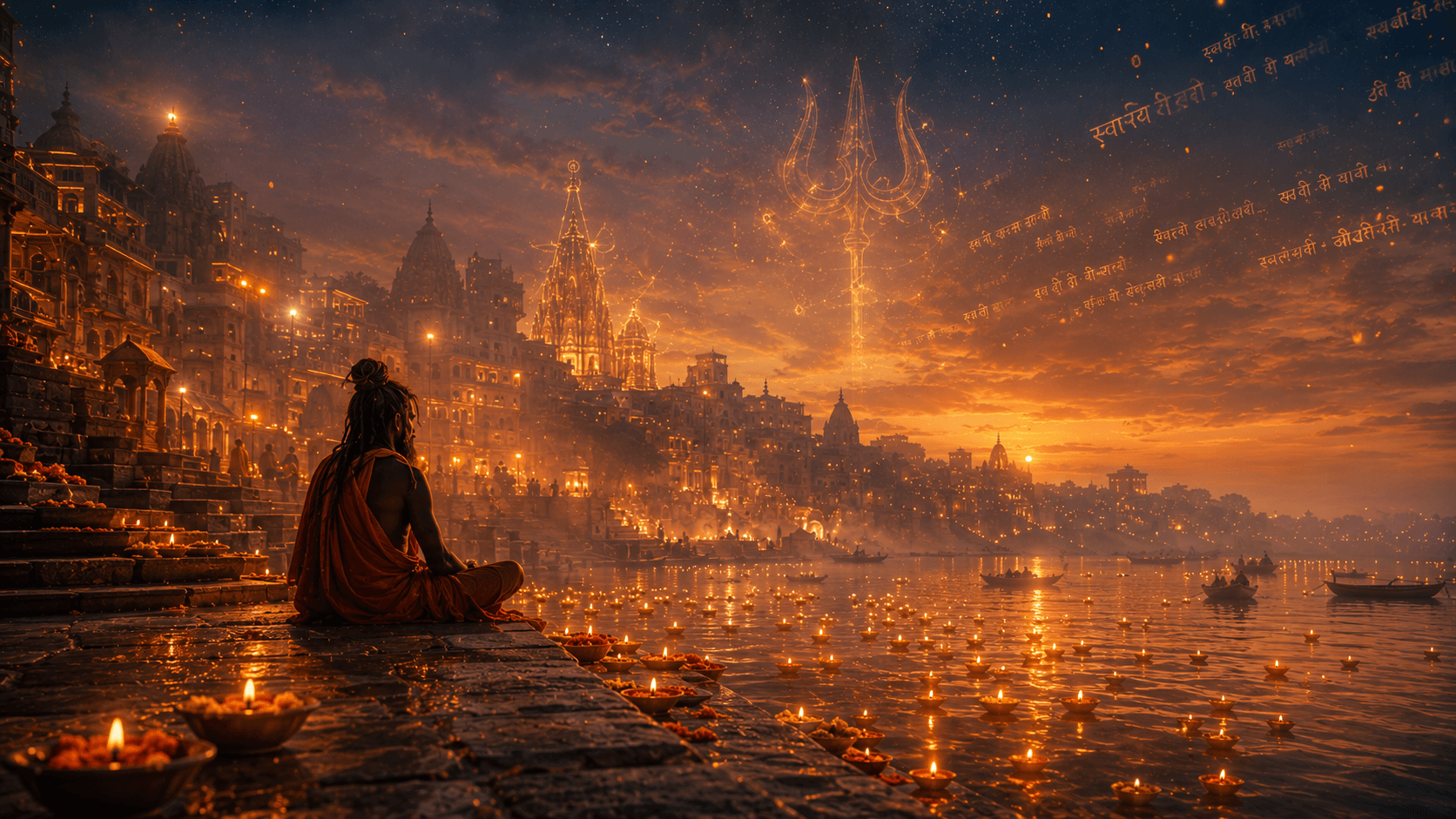
You arrive in Varanasi.
The city feels chaotic at first. Narrow lanes. Temple bells. Smoke rising near the ghats. People chanting "Har Har Mahadev."
Cows in the alleys. Marigold petals on the stones. Boats cutting slow lines across the Ganga.
And then something strange happens.
Even in all the chaos… the city feels deeply still.
That's when the question comes.
Why is Kashi famous? Why do people travel across the world just to sit by the Ganga here? Why is Kashi so powerful that even people who don't follow any religion say they feel something shift inside them?
This story is my attempt to explain that. Slowly. Honestly. Without pretending to know everything.
If you want to keep going after this, you can discover Varanasi through more of our travel stories.
Why Is Kashi Famous?
Kashi is famous for a few reasons that, together, make it feel unlike anywhere else on earth.
- It's one of the oldest living cities in the world. People have lived, prayed, and died here for thousands of years.
- It's the city of Lord Shiva. In Hindu belief, Shiva isn't just worshipped here. He lives here.
- It's seen as a center of spirituality and liberation. Pilgrims come for the Ganga, for the Kashi Vishwanath Temple, and for moksha.
That's the surface answer. But the real reason why Kashi is sacred is harder to put into words. You feel it when the morning fog lifts off the river. You feel it when an old man whispers a mantra and then smiles at no one in particular.
Kashi's importance isn't built on monuments. It's built on continuity. The same chants. The same rituals. The same river. For generation after generation.
Feel the pull of Kashi? Plan your Varanasi trip.

Why Is Kashi Called the Eternal City?
There's a beautiful idea in Kashi mythology. It says the city doesn't sit on ordinary land.
Old texts say Kashi rests on the tip of Shiva's trident. When the world ends, when everything else dissolves, Kashi remains.
That's where the phrase "eternal city" comes from.
You'll hear locals say it casually. "Kashi kabhi nahi mitti." Kashi never disappears.
Whether you take it literally or as symbolism, the meaning is the same. Kashi is meant to stand outside time. Empires came and went. Rulers built and destroyed. The ghats stayed. The river stayed. The chants stayed.
That's the spiritual symbolism. A city that survives change because its core isn't made of stone. It's made of devotion.
Lord Shiva and the Soul of Kashi
You can't talk about Kashi without talking about Shiva. He isn't a guest here. He's the host.
Hindu mythology says Shiva chose Kashi as his earthly home. He loved this place so much that even after Parvati pulled him away to the mountains, he kept returning. Some stories say Kashi is where Shiva's consciousness rests on earth.
The heart of this belief is the Kashi Vishwanath Temple. It's one of the twelve Jyotirlingas — sacred sites where Shiva is said to have appeared as a column of light.
When you stand outside Vishwanath, you notice something. People don't just visit. They come home. They cry. They smile. They press their forehead to the stone like greeting an old friend.
That's the Kashi Vishwanath importance you can't fully read about. You have to stand there.
And it's why Kashi is often called the shiva city. Not because Shiva is one of many gods worshipped here, but because the entire city is built around his presence.
The Spiritual Significance of the Ganga in Varanasi
If Shiva is the soul of Kashi, the Ganga is its breath.
In Hindu belief, the Ganga isn't just a river. She's a goddess. A mother. A purifier. People say she carries away not just dirt but karma.
You'll see this every morning. Pilgrims stepping into cold water. Folded hands. Closed eyes. A quiet dip and a long pause.
They're not just bathing. They're asking the river to hold them for a moment.
Then there's the evening. The famous Ganga Aarti. Priests stand on platforms with huge lamps. Bells ring. Conch shells blow. Hundreds of people watch from the steps and from boats. The fire moves in slow circles against the dark river.
You won't need anyone to explain what's happening. The atmosphere does it for you. The spiritual energy of Varanasi at that moment is almost physical. Devotion turns into collective energy.
That's what people mean when they say the Ganga purifies. It's not about magic. It's about surrender. You let go of something heavy into the water, and the water keeps moving.
Why Do People Come to Kashi for Moksha?
This part can be uncomfortable for outsiders. Stay with me. It's important.
Manikarnika Ghat is one of the main cremation grounds in Varanasi. The fires here are said to have burned without stopping for centuries.
In Hindu belief, dying in Kashi brings moksha — liberation from the cycle of birth and death. The soul, freed from samsara, doesn't need to return.
That's why elderly people sometimes travel to Kashi to spend their final days. It's not morbid for them. It's hopeful. It's the last pilgrimage.
What surprises most travelers is the openness. Death here isn't hidden behind walls. It happens by the river, in public, with wood, fire, chants, and family.
It can feel intense. It should. But it isn't a spectacle. It's a ritual, and it deserves respect.
What Manikarnika quietly teaches is something most cities never say out loud — that death isn't separate from life. It's part of it. And maybe being close to that truth is why people leave Kashi feeling lighter.
Kal Bhairav — The Guardian of Kashi
There's an old belief that you can't truly enter Kashi without permission from Kal Bhairav.
Kal Bhairav is a fierce form of Shiva. He's the kotwal — the guardian — of Kashi. He keeps order. He protects pilgrims. And he decides who walks through these lanes.
That's why many devotees visit the Kal Bhairav temple soon after arriving. They tie a black thread on the wrist. It's a small gesture, but it carries weight.
You'll notice this idea everywhere in Kashi mythology. Even in a city of devotion and liberation, there's a guardian standing at the gate. A reminder that spiritual order isn't soft. It has structure.
Kal Bhairav links the protective and the spiritual. He's the reminder that liberation isn't escape. It's discipline.
What Makes Kashi Feel Different From Other Cities?
You can list the temples. You can map the ghats. But that doesn't explain why Kashi feels the way it does.
So let me try with what I've actually seen and heard.
- At sunrise on Assi Ghat, you'll hear Vedic chants while the sky turns pink. A few yogis sit on woven mats. Boats slip by. Nothing is performed. It just happens.
- In the narrow lanes, you'll hear temple bells from at least three directions at once. Someone is always ringing one somewhere.
- You'll hear "Har Har Mahadev" a hundred times a day. From shopkeepers. From boatmen. From strangers who pass you without looking.
- You'll smell incense, river water, fried kachori, and wood smoke within the same breath.
- You'll watch a wedding procession move past a funeral procession. Both will keep walking. Neither will stop the other.
That's the thing. In most cities, life is sorted into zones. Here, it isn't. Birth and death, festivals and grief, devotion and ordinary work — all share the same lane.
That overlap is the spiritual energy of Varanasi. It's not in any one place. It's in the layering.
Is Kashi Powerful Even for Non-Religious Travelers?
I've met travelers who came to Kashi with zero religious interest. Photographers. Backpackers. Scientists. Skeptics.
Almost all of them said the same thing afterward.
"I don't know why, but I felt something."
That makes sense if you think about it.
You don't need to believe in mythology to feel the weight of a three-thousand-year-old city. You don't need to be religious to feel emotion at a riverbank where families say goodbye to their loved ones. You don't need to follow any tradition to notice the depth of human ritual.
Kashi works on more than one level. There's the religious layer, yes. But underneath, there's a deeply human layer. Memory. Time. Love. Loss. Devotion to something larger than yourself.
Even if you only see the surface, the surface alone is profound.
Ready to experience it? Book your Varanasi journey.
Pro Tips for Experiencing the Spiritual Side of Kashi
If you want to feel Kashi, not just sightsee it, try this:
- Wake up before sunrise. Walk to Assi Ghat or Dashashwamedh Ghat. The city is quietest then. The light is softest. The chants are the clearest.
- Attend Ganga Aarti mindfully. Don't just film it. Watch a full cycle without your phone. You'll catch the rhythm.
- Sit quietly by the ghats. Pick a step. Don't talk for thirty minutes. Just watch. Kashi tells you things if you let it.
- Avoid rushing temple visits. Long darshan lines are part of the experience. Use the wait as a pause, not a problem.
- Listen more than you speak. Boatmen, priests, chaiwalas, and old residents carry generations of stories. Most are happy to share if you ask gently.
- Eat simply. Try kachori-sabzi in the morning and malaiyo in winter. Food here is part of the rhythm.
- Respect rituals you don't understand. If something feels heavy, especially near Manikarnika, lower your camera and your voice.
Common Misunderstandings About Kashi
A few quick clarifications, because Kashi often gets flattened in travel content.
- "Kashi is only about death rituals." No. Death is part of it, yes. But Kashi is also weddings, music, food, boating, learning, festivals, and daily prayer. Life is louder here than death.
- "Kashi will feel peaceful and silent." Not always. The city is busy. Crowded. Loud in parts. The stillness you're looking for usually lives in small moments — a corner of a ghat, an early-morning lane, a quiet aarti.
- "Spirituality here is just superstition." That's an easy thing to say and a hard one to defend after a few days here. Mythology, belief, and lived experience aren't the same thing. Kashi blends them. It doesn't ask you to agree. It just asks you to look honestly.
- "You need to be Hindu to feel it." You don't. The atmosphere is open. The ghats are open. The river is open. Respect is the only entry fee.
Frequently Asked Questions
Why is Kashi famous?
Kashi is famous as one of the oldest continuously inhabited cities in the world, the spiritual home of Lord Shiva, and a place where millions come for the Ganga, the Kashi Vishwanath Temple, and the search for moksha.
Why is Kashi so powerful?
Its power comes from its unbroken history, its central role in Shiva mythology, the Ganga, and the way life and death exist openly side by side. Few places in the world layer all of that at once.
What is the spiritual significance of Varanasi?
The spiritual significance of Varanasi is tied to liberation. It's a city where bathing, praying, and dying are all believed to carry spiritual weight, and where the line between the material and the sacred feels thin.
Why is Lord Shiva connected to Kashi?
Hindu mythology says Shiva chose Kashi as his earthly home. The Kashi Vishwanath Temple is one of the twelve Jyotirlingas, and traditions describe Kashi as resting on Shiva's trident, outside ordinary time.
Why do people seek moksha in Kashi?
Many Hindus believe that dying in Kashi, with rites performed near the Ganga at Manikarnika Ghat, helps the soul reach moksha — freedom from the cycle of birth and death.
Is Kashi different from Varanasi?
Kashi and Varanasi are the same city. Kashi is the older spiritual name. Varanasi is the modern administrative name. Banaras is a third common name used locally.
Is Kashi worth visiting if I am not religious?
Yes. Even without a religious lens, the history, atmosphere, and human depth of Kashi often leave non-religious travelers deeply moved. The city speaks in more than one language.
Final Thoughts
If you ask why is Kashi famous, you'll get a list. Oldest city. Shiva's home. Vishwanath. Ganga. Moksha. Manikarnika. Kal Bhairav.
All of that is true. But it isn't the whole answer.
Kashi isn't powerful because it's perfect. It's powerful because life, death, devotion, chaos, and peace all exist together here. They don't cancel each other out. They sit on the same step, watching the same river.
You'll leave with dust on your shoes and something quieter in your chest. You may not be able to name it. That's okay. Kashi rarely explains itself.
Come with open eyes. Walk slowly. Let the city do the rest.
Ready to see Kashi for yourself?
Get tailored quotes from verified operators on WhatsApp — or explore the full journey first.

Keep Reading
Can You Touch the Shivling in Kashi Vishwanath? Rules Explained
Planning a Kashi Vishwanath visit? Here’s what devotees should know about touching the Shivling, darshan etiquette, temple rules, and respectful conduct.
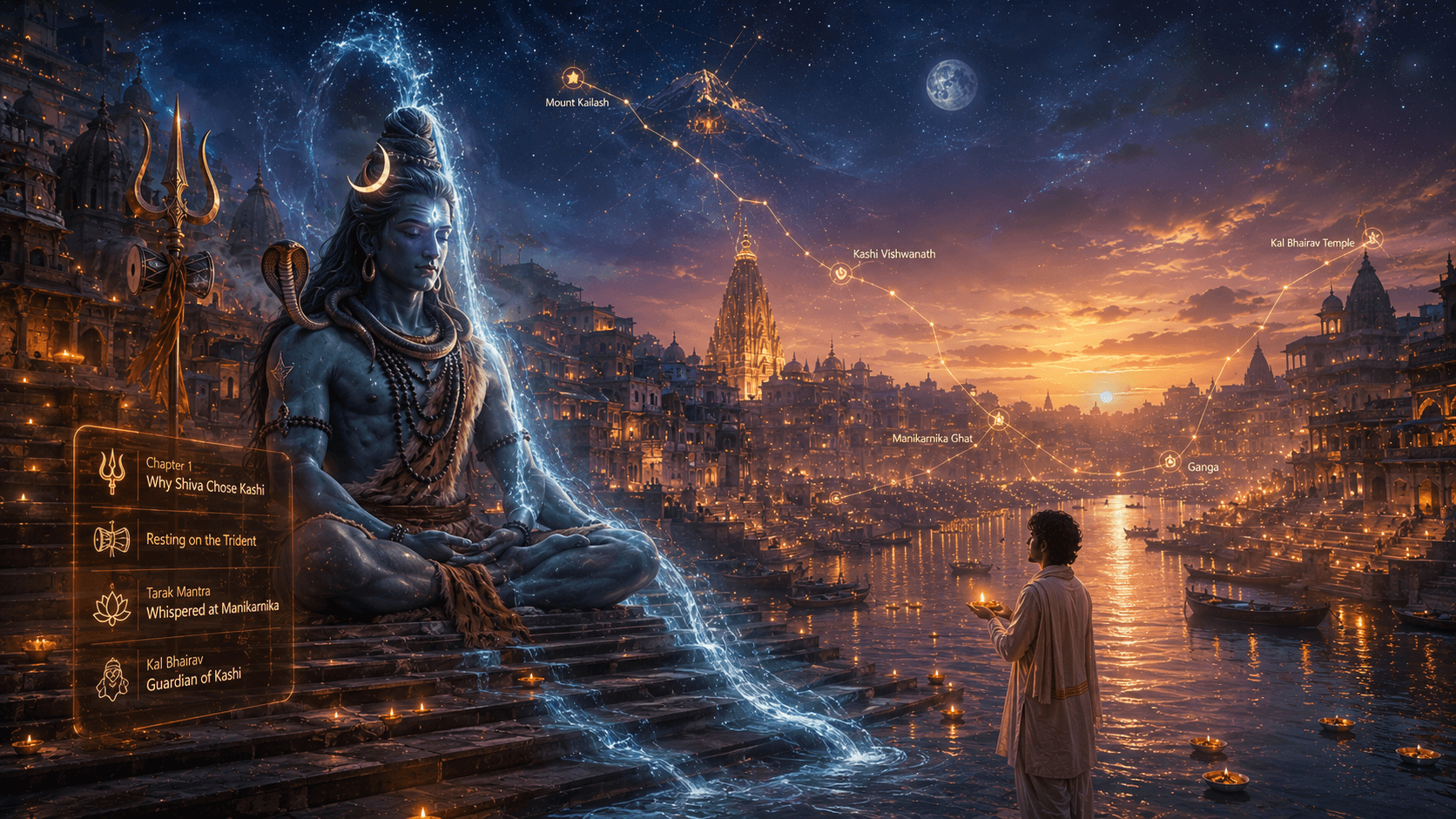
Why Is Shiva in Kashi? The Sacred Story of Varanasi
Discover why Lord Shiva chose Kashi as his eternal city — the legends of Kashi Vishwanath, Kal Bhairav, Ganga, and moksha.