
Ganga Aarti Varanasi Timing, Best Spot & What to Expect
A real traveler guide to ganga aarti varanasi timing - exact evening hours, best ghat to watch from, what to expect, and honest tips for first-timers. Explore real travel moments from Varanasi.
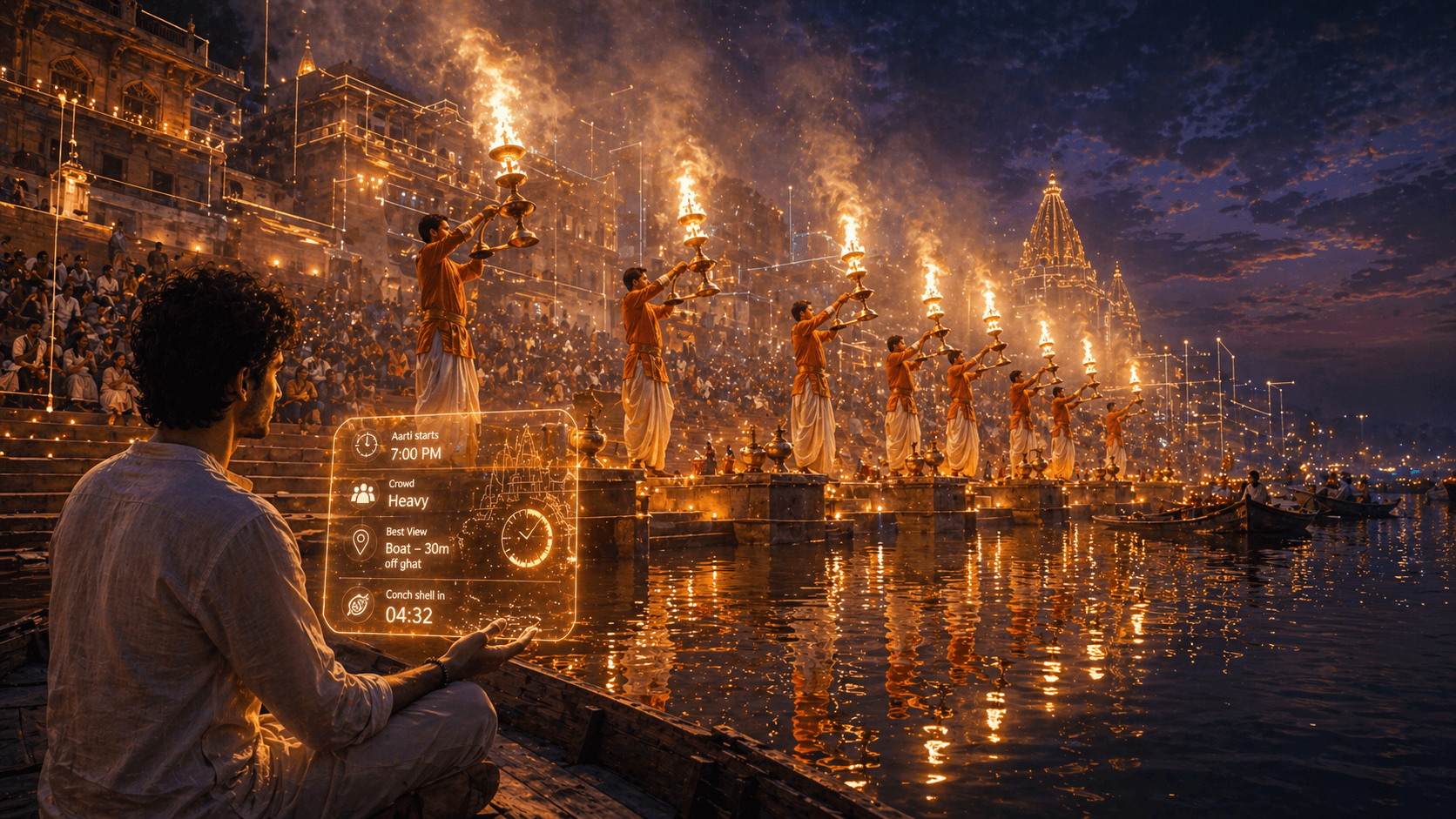
You're in Varanasi.
Everyone tells you the same thing.
"Don't miss the Ganga Aarti."
Then the questions start.
What time does it actually begin? Where should you sit? Is it better from the ghat or a boat? And what is the right ganga aarti varanasi timing if you're visiting in summer vs winter?
I had the same questions on my first trip. I reached too late. I sat in the wrong spot. I spent the whole aarti trying to see over heads.
This guide fixes all that. You'll get the exact ganga aarti varanasi timing, the best spot to watch from, what really happens during the ritual, and the small things nobody tells first-timers. By the end, you won't just watch the aarti - you'll feel it.
Ganga Aarti Varanasi Timing (Quick Answer)
Let's get the most asked question out of the way. Here's the real, current ganga aarti varanasi timing across the main ghats.
- Dashashwamedh Ghat - Evening Aarti (Winter, Oct-Mar): ~6:45 PM, lasts about 45 minutes.
- Dashashwamedh Ghat - Evening Aarti (Summer, Apr-Sep): ~7:00 PM, lasts about 45 minutes.
- Assi Ghat - Morning Aarti (Subah-e-Banaras): ~5:00 AM daily, around 45 minutes.
- Assi Ghat - Evening Aarti: ~6:30 PM (winter) / ~6:45 PM (summer).
- Ideal arrival time: 60-90 minutes before the main aarti at Dashashwamedh; 30-45 minutes at Assi Ghat.
One quick note. Timings shift slightly with the season and during big festivals like Dev Deepawali and Mahashivratri. Always check ganga aarti timing today on the day of your visit if you're going on a special date.
Where Does Ganga Aarti Happen in Varanasi?
Most travelers assume the aarti happens at one place. It doesn't. Several Varanasi Ghats host their own version of the evening aarti - but only two really matter for first-time visitors.
Dashashwamedh Ghat - Main Aarti
This is the big one. The famous one. The Dashashwamedh Ghat aarti time you've seen on every travel reel.
Seven priests in saffron robes. Tall brass lamps. Synchronized chanting. Bells. Conch shells. Smoke curling up into the night sky. The energy here is intense - partly because the crowd is massive, partly because the ghat sits right below the famous Kashi Vishwanath Temple corridor.
If you only have one evening in Varanasi, this is the aarti to watch.
Assi Ghat - Calmer Experience
Assi Ghat sits at the southern end of the city. The evening aarti here uses fewer priests (usually three to five). The crowd is much smaller. You can find a good spot 20 minutes before the start.
If you don't like jostling, or if you've already seen the Dashashwamedh aarti and want a softer evening, head to Assi Ghat. The morning aarti here, called Subah-e-Banaras, is also worth waking up early for - the river feels still, and the crowd is mostly locals doing their daily prayers.
Best Spot to Watch Ganga Aarti
The ganga aarti experience changes completely based on where you sit. Three main options. Each with its own trade-offs.
From the Ghat (Steps Seating)
Sit on the stone steps directly facing the priests. You'll be close enough to see every gesture, hear every chant, and feel the heat of the lamps.
- Pros: Free. Most immersive sound. Easy to leave when you want.
- Cons: Crowded. You may sit on hard, slightly damp stone. View blocked if you're behind tall standing tourists.
Best for: travelers who want to feel the aarti as a participant, not a spectator.
From a Boat on the Ganga River
A small wooden boat anchored a few meters out, facing the ghat. The view is wide. You can see all the priests at once, the entire row of lamps, and the lit-up ghat behind them.
- Pros: Clear, panoramic view. No crowd pushing. Cinematic photos.
- Cons: Costs Rs 150-Rs 500 per person (shared) or Rs 800-Rs 1,500 (private). Sound feels distant. You can't easily move around.
Tip - bargain politely. Boatmen quote higher rates near aarti time. Walk 50 meters away from the main steps for better prices.
VIP Seating Areas
Some operators set up small platforms with chairs near the aarti area. You'll pay anywhere from Rs 300 to Rs 1,000.
- Pros: Guaranteed seat. Slightly raised view.
- Cons: Most "VIP" tickets are upsells. Quality varies wildly. Avoid agents who approach you on the street.
Honestly, I'd skip VIP unless you're traveling with elderly family who can't sit on stone steps. For everyone else, the steps or a boat give a better experience.
What to Expect During the Ganga Aarti
Let me describe what actually happens. Not the polished travel video version - the real one.
About 30 minutes before the start, you'll notice the platforms being prepared. Marigold flowers, brass plates, oil lamps, and tall multi-tiered fire lamps lined up neatly. The smell of incense starts to drift across the steps.
Then the priests arrive. Saffron robes, white dhotis, fresh tilak on their foreheads. They walk in calmly, like they've done this 10,000 times - because they have.
The first conch shell blows. It's loud. Long. It cuts through the crowd noise. That's your cue - the evening aarti varanasi has officially begun.
Bells start. The chanting follows. The priests move in perfect sync - every lift of the lamp, every circle in the air, mirrored across all platforms. The fire reflects on the Ganga River. If you're on a boat, the reflections move with the water.
For about 45 minutes, the air feels different. Smoky. Alive. There's no easy word for it. You'll understand when you're there.
How Early Should You Reach?
Short answer - earlier than you think.
For Dashashwamedh Ghat, reach at least 60 minutes before the start on weekdays. On weekends, full-moon nights, and during festivals, push it to 90 minutes. The good steps fill up fast.
For Assi Ghat, 30 to 45 minutes is usually enough. The crowd is smaller, and seating is more spread out.
Strategy - walk down to the ghat early, claim a step, sit there with a bottle of water. Don't chase a "better" spot once you're settled. People who keep moving usually end up standing at the back.
Step-by-Step Experience of the Aarti
Here's how the ritual unfolds, in order. So you know what's coming and can actually enjoy each part.
- Setup (T-30 min): Platforms get arranged. Lamps lit. Priests do quick preparations. Crowd builds steadily.
- Conch shells & opening chants (T-0): The aarti formally starts. A long conch blow, then synchronized invocations.
- Lamp raising (T+5 to T+25): Priests lift increasingly larger fire lamps, circle them in the air, bow towards the Ganga. This is the visually stunning part.
- Bell & chant peak (T+25 to T+35): The chanting gets faster. Bells ring continuously. The crowd often claps along. Goosebumps moment.
- Closing (T+35 to T+45): Final offerings to the river. Marigold petals are floated. The priests bow. People light their own little leaf-boats with a candle and float them on the Ganga.
After it ends, don't rush out. Sit for five extra minutes. The crowd thins, the lamps still glow, and that's actually the most peaceful moment.
Pro Tips for Watching Ganga Aarti
A few things I wish someone had told me before my first aarti. These small habits will make or break your experience.
- Reach early. 60-90 minutes before. No exceptions on weekends.
- Carry minimal belongings. Phone, small wallet, water. Leave your big bag at the hotel.
- Avoid agents selling "VIP tickets". Most are scams or low-value upsells.
- Try the boat view at least once. Even a shared 30-minute ride is worth the Rs 150-Rs 300.
- Respect the ritual. Stand up when locals stand. Don't shove for photos. Phones at chest level only.
- Wear easy clothes. You'll be sitting on stone for an hour or more. Loose pants help.
- Carry a thin scarf or stole. Useful in winter and as a clean surface to sit on.
- Cash, not cards. Donations, small snacks, and boats are all cash-based.
One more - don't try to record the entire 45 minutes. You'll watch the aarti through your phone screen and remember almost nothing. Record the first 5 minutes, then put the phone away.
Common Mistakes Tourists Make
I've seen these on every visit. Don't be that traveler.
- Arriving late. Showing up 10 minutes before the start guarantees a back-row, head-blocked view. The aarti is non-negotiable on timing.
- Choosing the wrong ghat. If you want energy, go Dashashwamedh. If you want peace, go Assi Ghat. Picking based on your hotel's location is a mistake.
- Overpaying for boats. Quoted prices double right before aarti. Walk away from the first 2-3 boatmen. The fourth usually gives a fair rate.
- Expecting silence. This is not a quiet meditation. It's loud, public, busy, fragrant. If you want quiet, choose the morning aarti at Assi Ghat instead.
- Skipping it because of crowds. Yes, it's crowded. So is every great thing in India. Don't miss it for that reason alone.
Is Ganga Aarti Worth It?
Honest answer? Yes - almost always.
But "worth it" depends on what you're expecting. If you go expecting a silent, intimate spiritual moment, you may feel a little overwhelmed at Dashashwamedh. If you go expecting a powerful, collective, slightly chaotic ritual that grabs all your senses at once, you'll walk away stunned.
For first-timers, my honest recommendation is simple. Watch the main evening aarti varanasi at Dashashwamedh Ghat from a boat on day one. Then go again on day two - this time on the steps up close. They feel like two completely different experiences.
And if you can squeeze in the morning aarti at Assi Ghat, do that too. It's the best way to see how the same city worships the same river in completely different moods.
Want more first-hand stories from the city? You can Explore Varanasi Travelogues on Pinaak - real travelers, real evenings, real ghats.
Frequently Asked Questions
What is the timing of Ganga Aarti in Varanasi?
The main evening Ganga Aarti at Dashashwamedh Ghat starts around 6:45 PM in winter and 7:00 PM in summer. It runs for about 45 minutes. Assi Ghat hosts a smaller morning aarti at around 5:00 AM and an evening aarti shortly before the main one.
What is Dashashwamedh Ghat aarti time?
Dashashwamedh Ghat aarti time is generally 6:45 PM in winter (October to March) and 7:00 PM in summer (April to September). Reach 60-90 minutes early for a good spot, especially on weekends and festivals.
Which is the best place to watch Ganga Aarti?
For a cinematic, panoramic view, take a small wooden boat on the Ganga River. For an immersive, up-close experience, sit on the stone steps of Dashashwamedh Ghat directly facing the priests. For a calmer, less crowded version, go to Assi Ghat.
Is Ganga Aarti free?
Yes. Watching from the ghat steps is completely free. You only pay if you choose a boat (Rs 150 to Rs 500 per person) or a paid VIP seating arrangement (Rs 300 to Rs 1,000). Be careful - many "VIP tickets" sold by street agents are not officially organized.
How early should I reach Ganga Aarti?
Reach Dashashwamedh Ghat at least 60 to 90 minutes early on weekdays. Push it to 90+ minutes on weekends, full-moon nights, and festivals like Dev Deepawali and Mahashivratri. For Assi Ghat, 30 to 45 minutes is usually enough.
Is the Ganga Aarti the same every day?
The format is the same every day - same chants, same lamps, same priests in saffron. The energy shifts with festivals, full-moon nights, and weekends, when it feels noticeably bigger and louder. It's never the same twice in feel, even if the steps are the same.
Can I take photos and videos during Ganga Aarti?
Yes, photography and videography are allowed. Just keep your phone or camera at chest level, avoid blocking the people behind you, and put it down for at least the last 10 minutes. You'll remember the aarti far better through your eyes than through your screen.
Final Thoughts
Ganga Aarti is not just something you watch. It's something you feel. The ganga aarti varanasi timing tells you when to show up. Where you sit decides what you remember. And how early you arrive decides whether you leave with a story or just a few photos.
Get to Dashashwamedh Ghat early. Sit close. Try a boat ride at least once. Visit Assi Ghat for a quieter evening or a 5 AM morning aarti. Respect the ritual. Watch with your eyes more than your camera.
Do that, and your evening on the Ganga River will stay with you long after you leave the city.
Plan a deeper Varanasi trip
Want more honest, first-hand stories from the city - beyond just the aarti? Read real traveler journals, neighbourhood walks, and ghat-by-ghat experiences on Pinaak.

Keep Reading
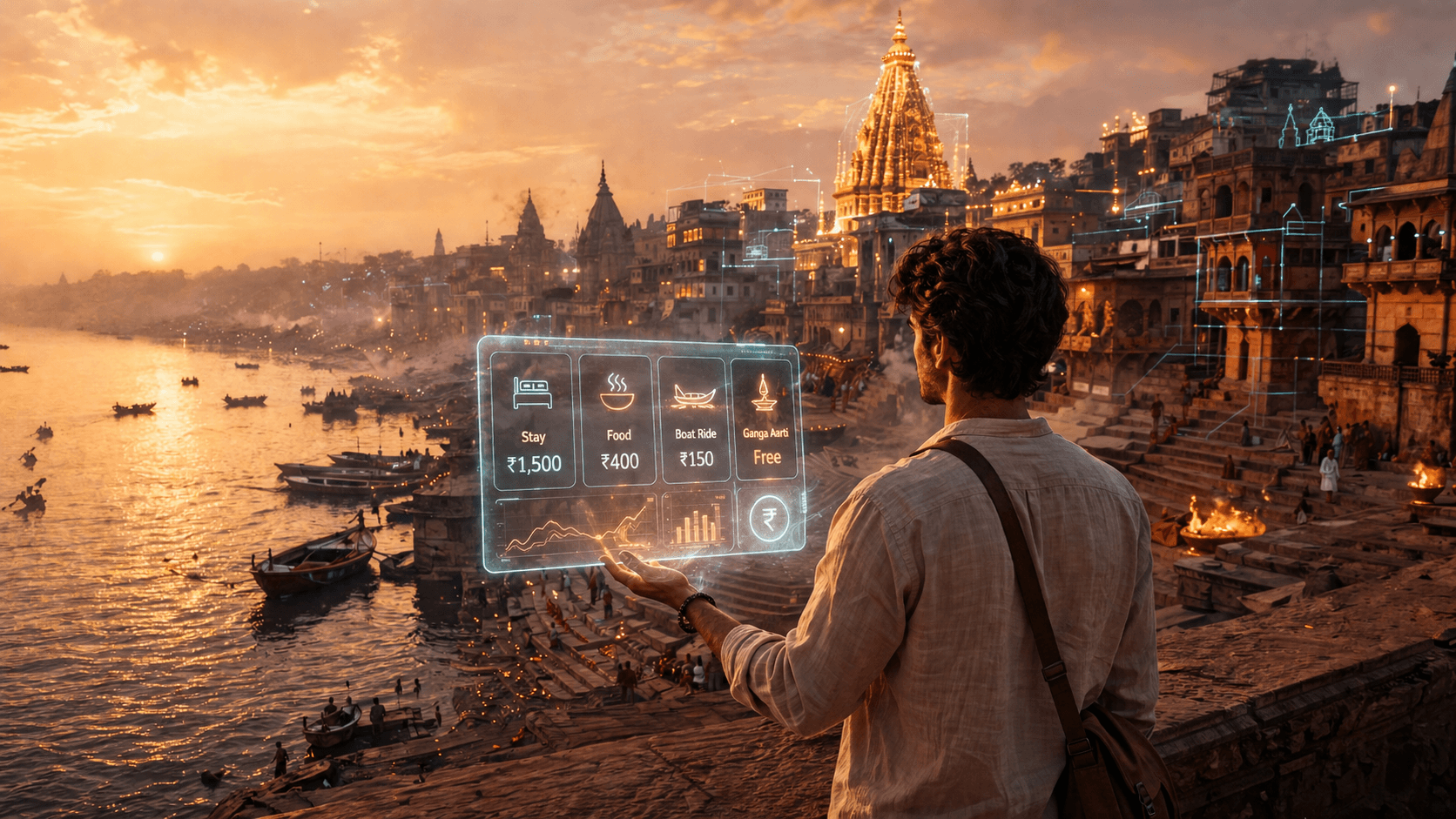
Varanasi Trip Budget: Cost Breakdown, Stay & Food
Plan your Varanasi trip budget with a realistic cost breakdown of flights, stays, food, and transport. Practical pricing for every traveler.
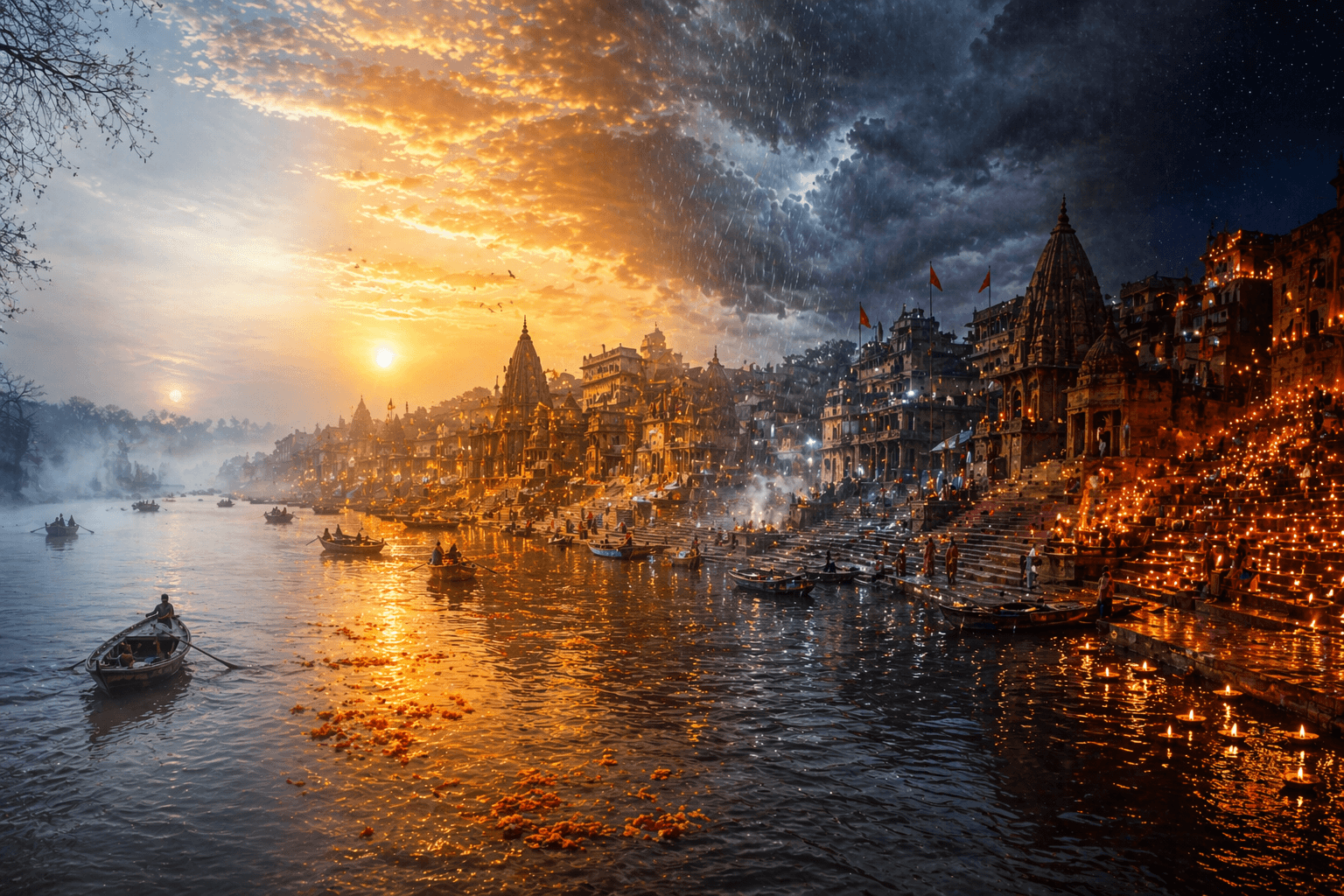
Best Time to Visit Varanasi: Month-by-Month Guide
Find the best time to visit Varanasi with a month-by-month breakdown of weather, crowds, and festivals. Plan your trip with practical insights.