

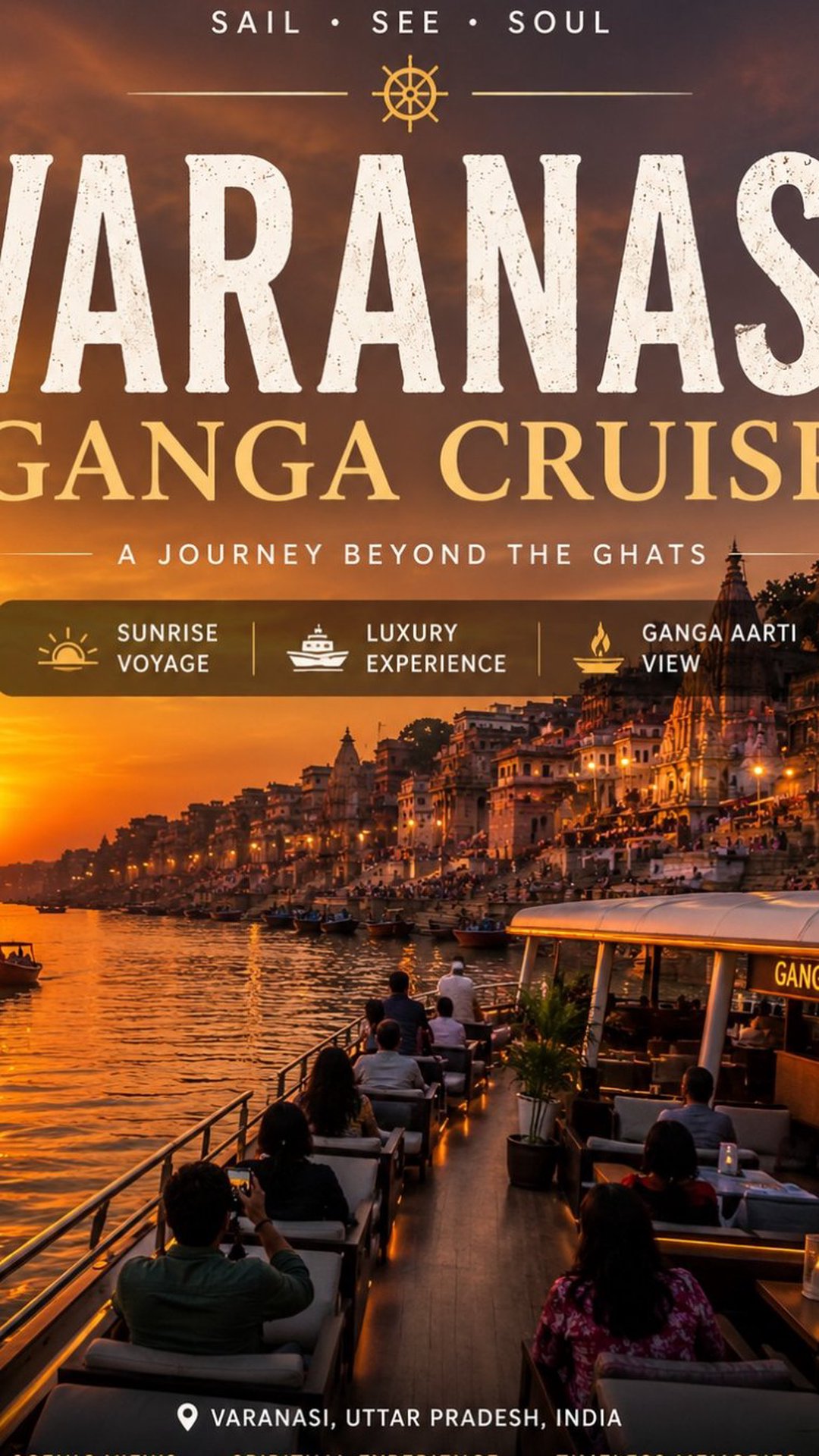
Varanasi Ganga Cruise
What a Varanasi Ganga cruise costs, where it actually boards, AC deck vs open deck, and when a rowboat is the better call. Honest 2026 guide.
A Varanasi Ganga Cruise sounds simple: board a larger boat, sail past the ghats and watch the city from the water. But the real experience depends on four things brochures often make less clear: what you pay, where you board, which deck you choose and whether a traditional rowboat would actually suit you better.
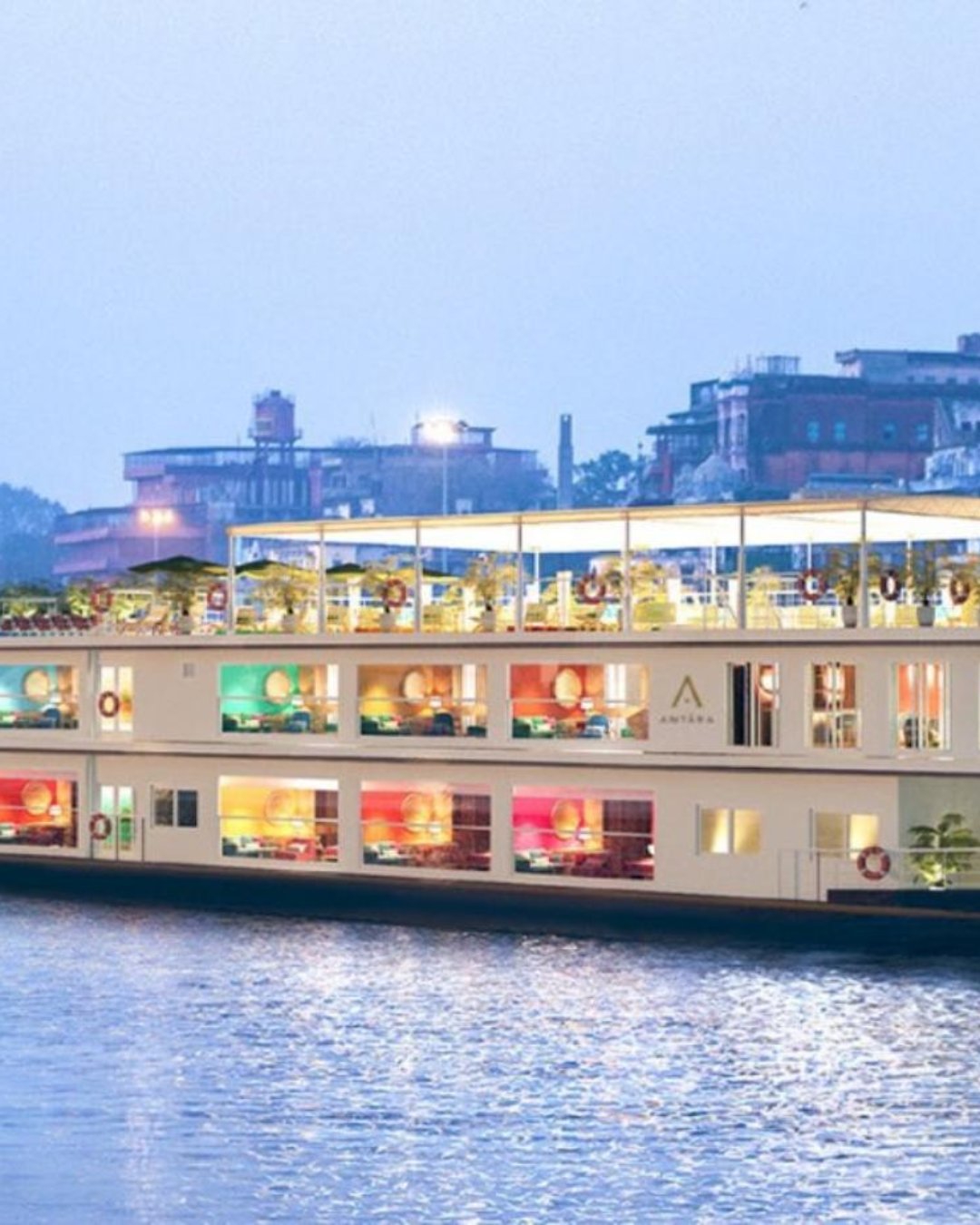
The journey begins with one important surprise: the boarding point may not be near the ghat you imagined. Depending on the operator and sailing, cruises can leave from dedicated jetties away from the central Dashashwamedh waterfront. Some services use boarding areas around Ravidas Ghat, so confirming your exact departure point before leaving your hotel is essential.
Cost is the next question, but there is no single fixed price that applies to every Varanasi cruise. Published prices can differ significantly and may become outdated as operators change routes, decks, timings and seasonal rates. A standard sightseeing or Aarti cruise generally falls within a broad market range, but any figure should be treated as indicative rather than guaranteed. The final fare can depend on the sailing, deck category, duration and season.
Deck class can make a major difference to both price and experience. An AC or enclosed deck offers comfort, shade and protection from heat or weather. An open deck gives you the wind, panoramic skyline and stronger photography opportunities. Food should never be assumed to be included unless the booking specifically says so. Before paying, confirm the deck, duration, boarding point and whether food is included in writing.
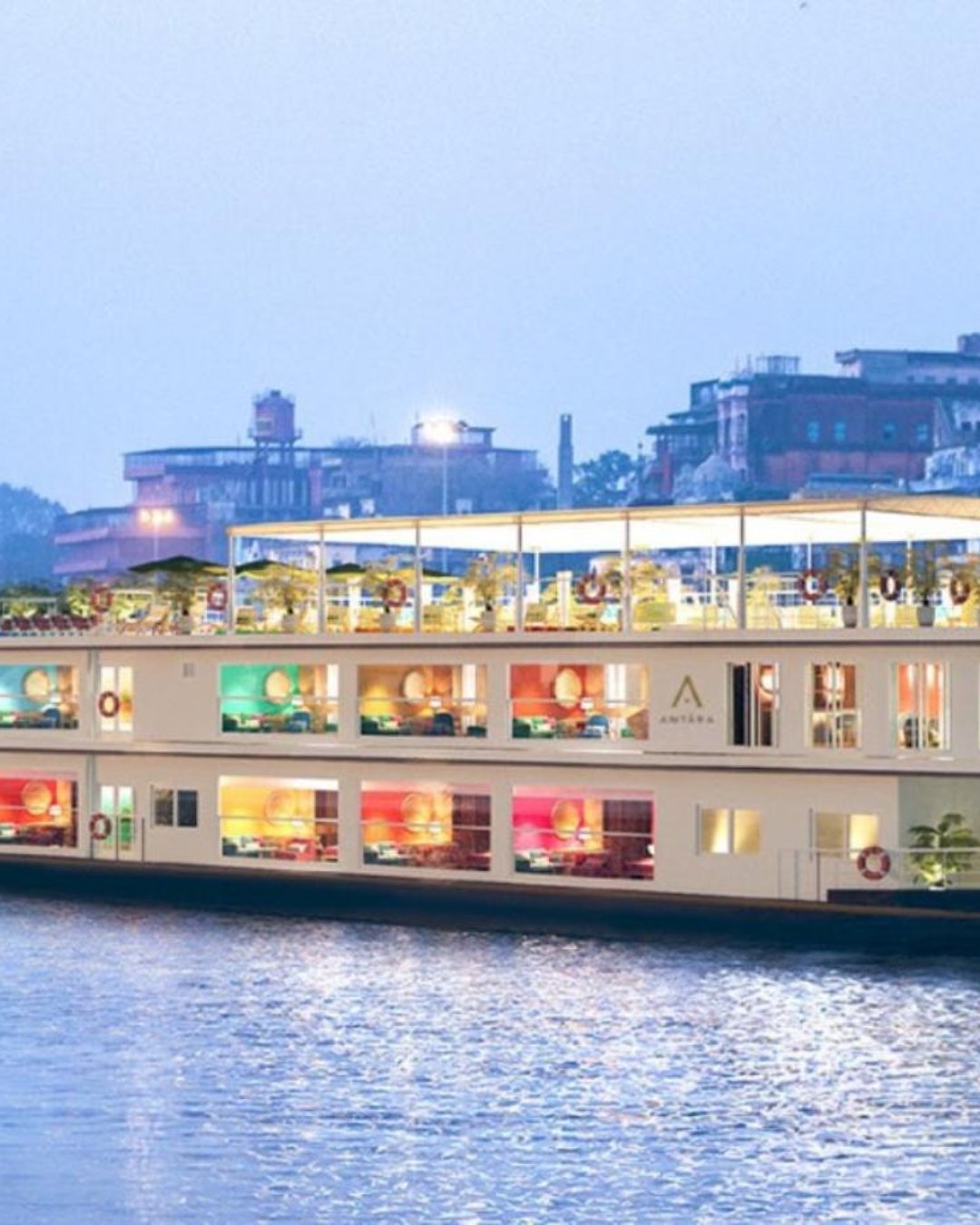
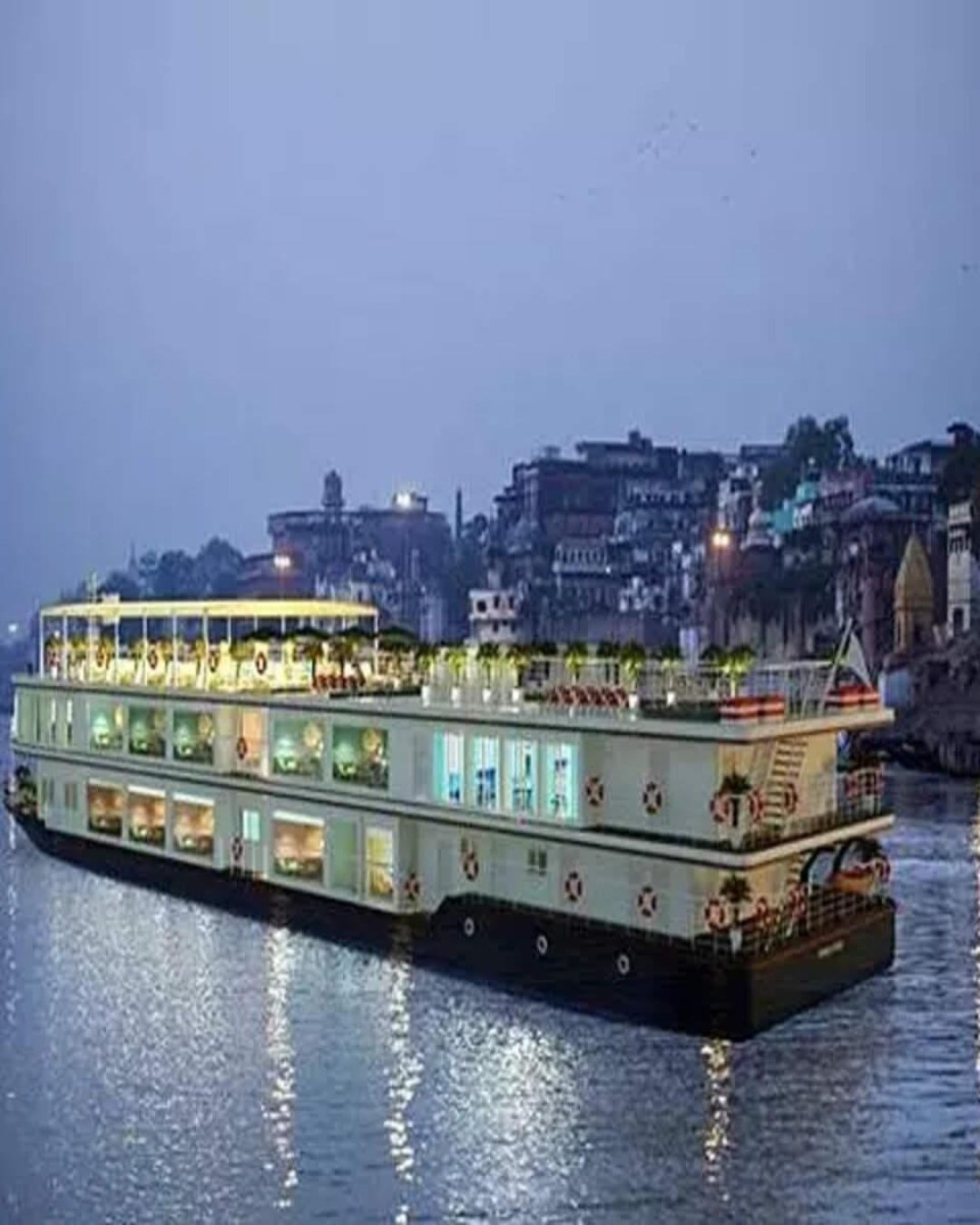
A cruise is ideal if you want organised boarding, comfortable seating, onboard facilities and a wide view of the Varanasi riverfront. Families, groups and travellers who prefer comfort may find it the easier option. But a bigger boat is not automatically a better boat.
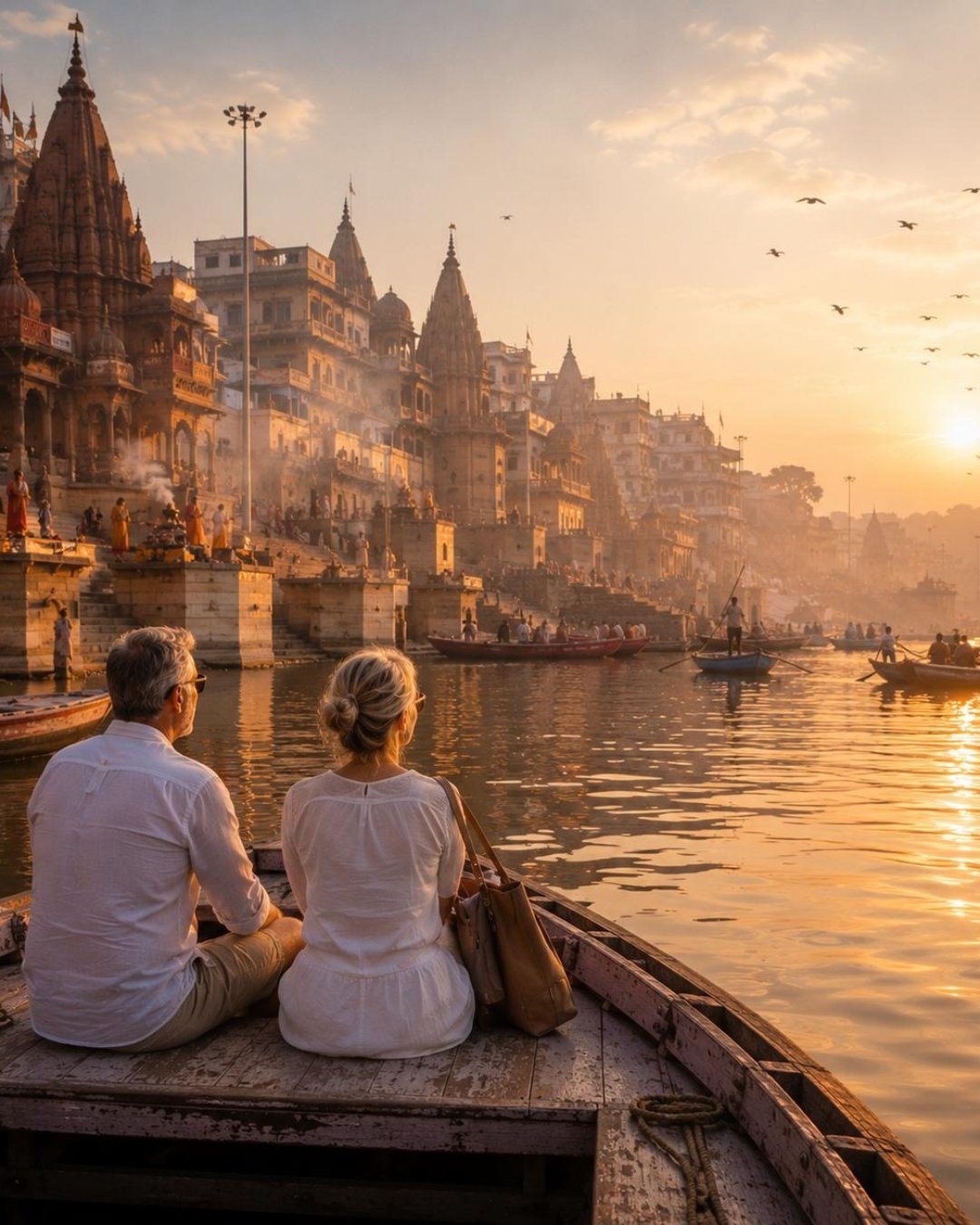
A traditional rowboat can be the better choice if you want to sit closer to the water, move quietly and experience the ghats at a slower, more intimate scale. It is especially appealing for sunrise, photography and travellers who value flexibility over onboard comfort.
The biggest mistakes are paying cash without a ticket showing your deck class, assuming onboard restaurants are included, or comparing a cruise ticket directly with a rowboat fare. They are different experiences, not interchangeable purchases.
Choose the cruise for comfort and scale. Choose the rowboat for silence, flexibility and intimacy. The best choice is the one that matches how you want to experience the Ganga.
Route
Home
MomentTulsi ghat B2, Varanasi
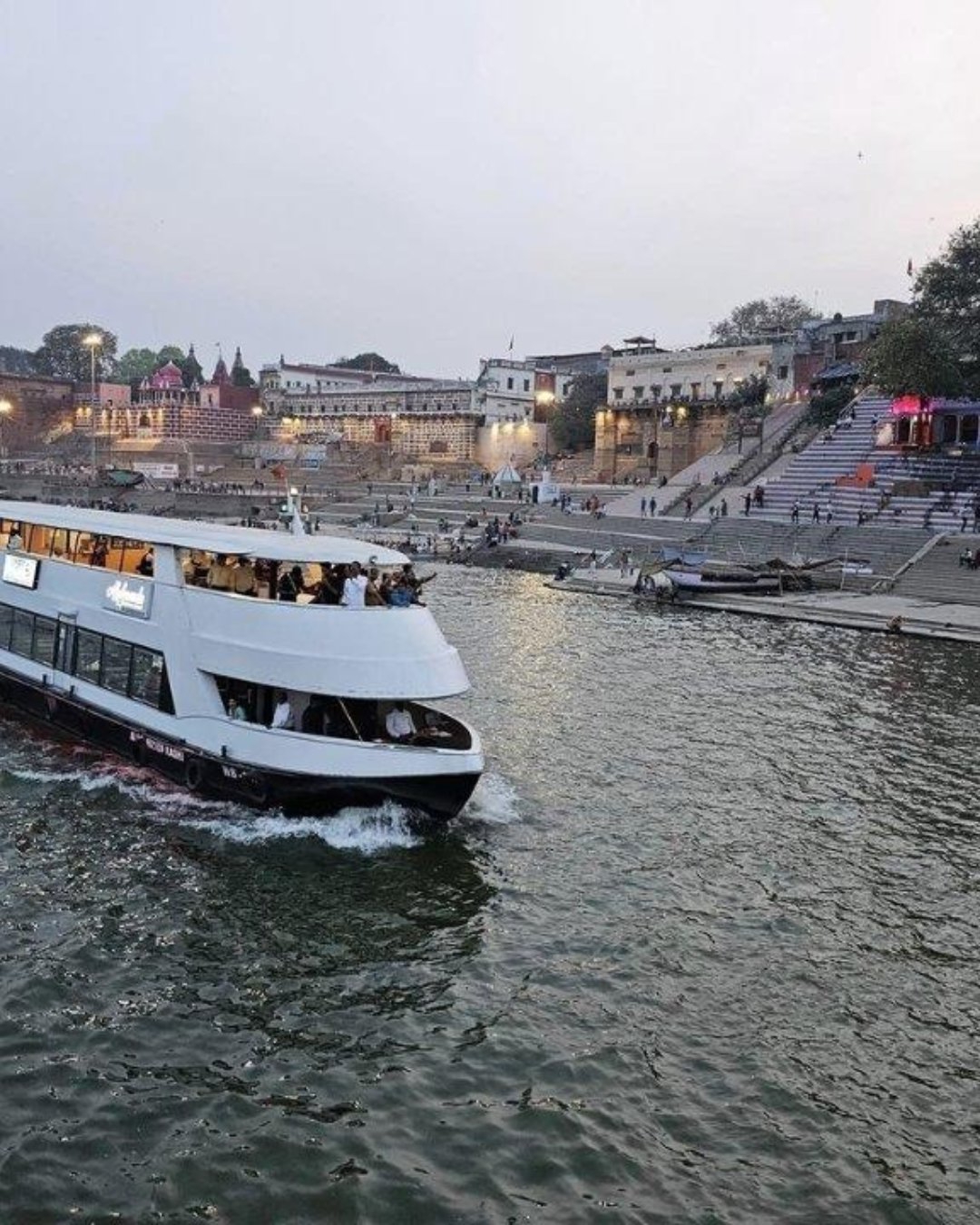
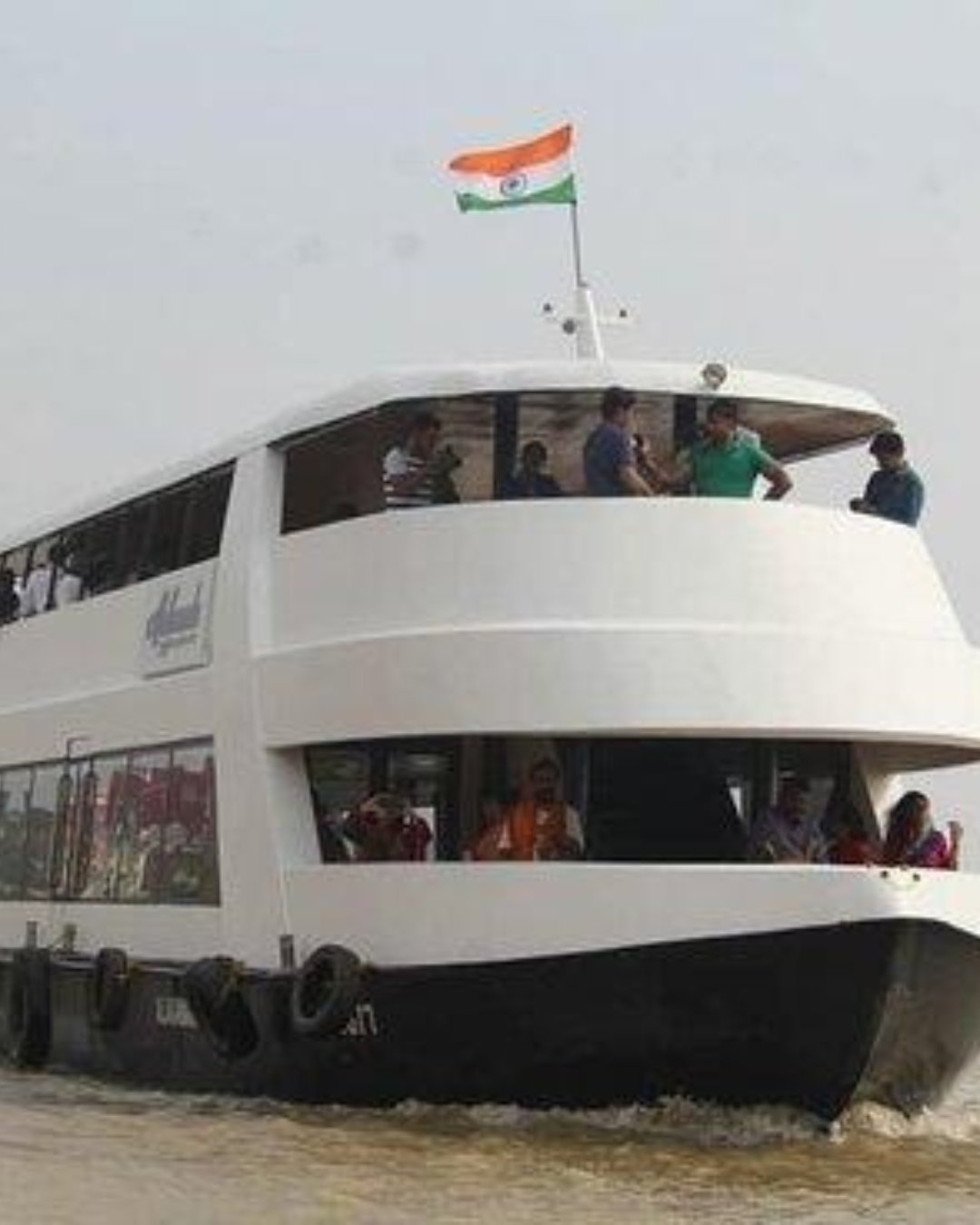
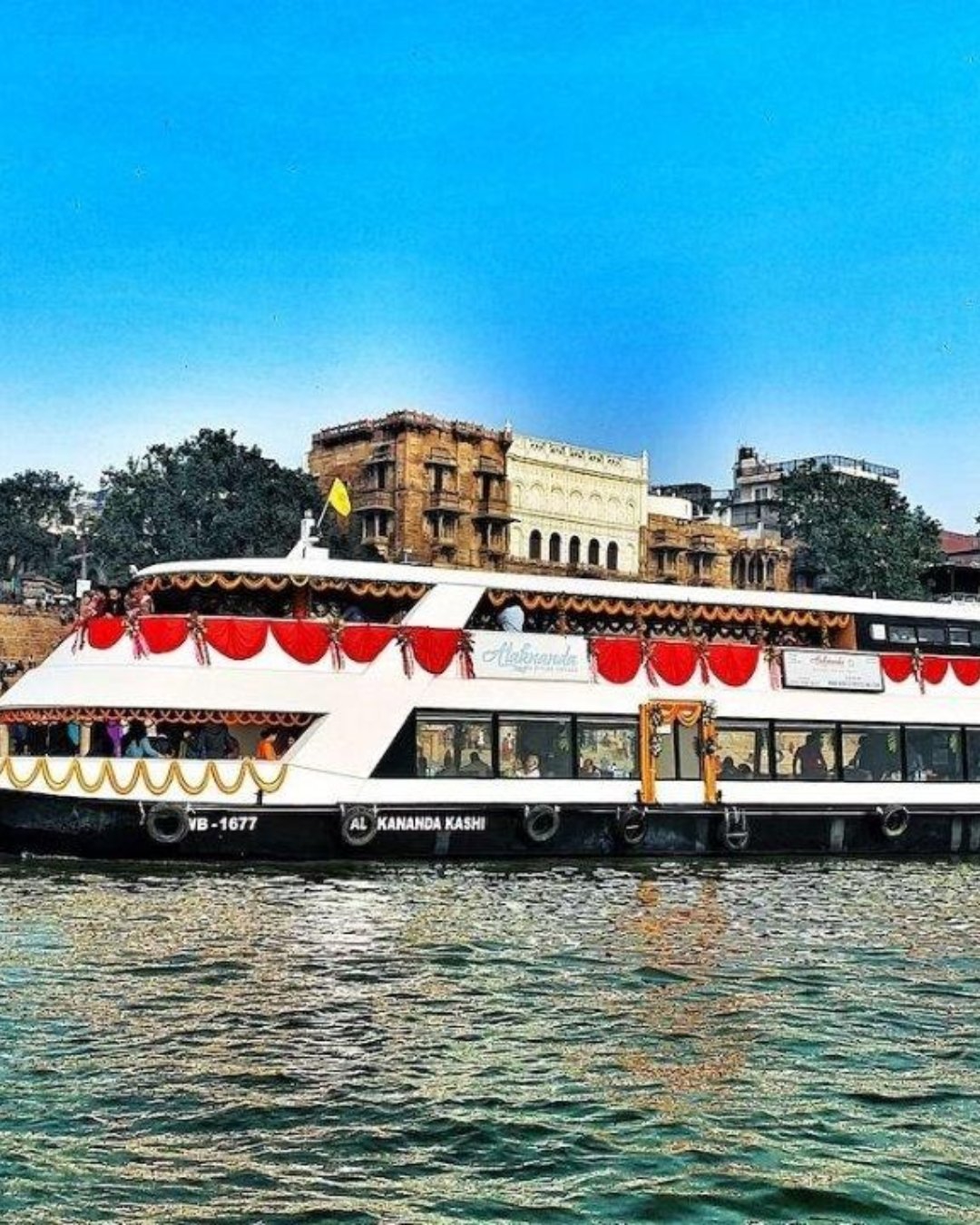
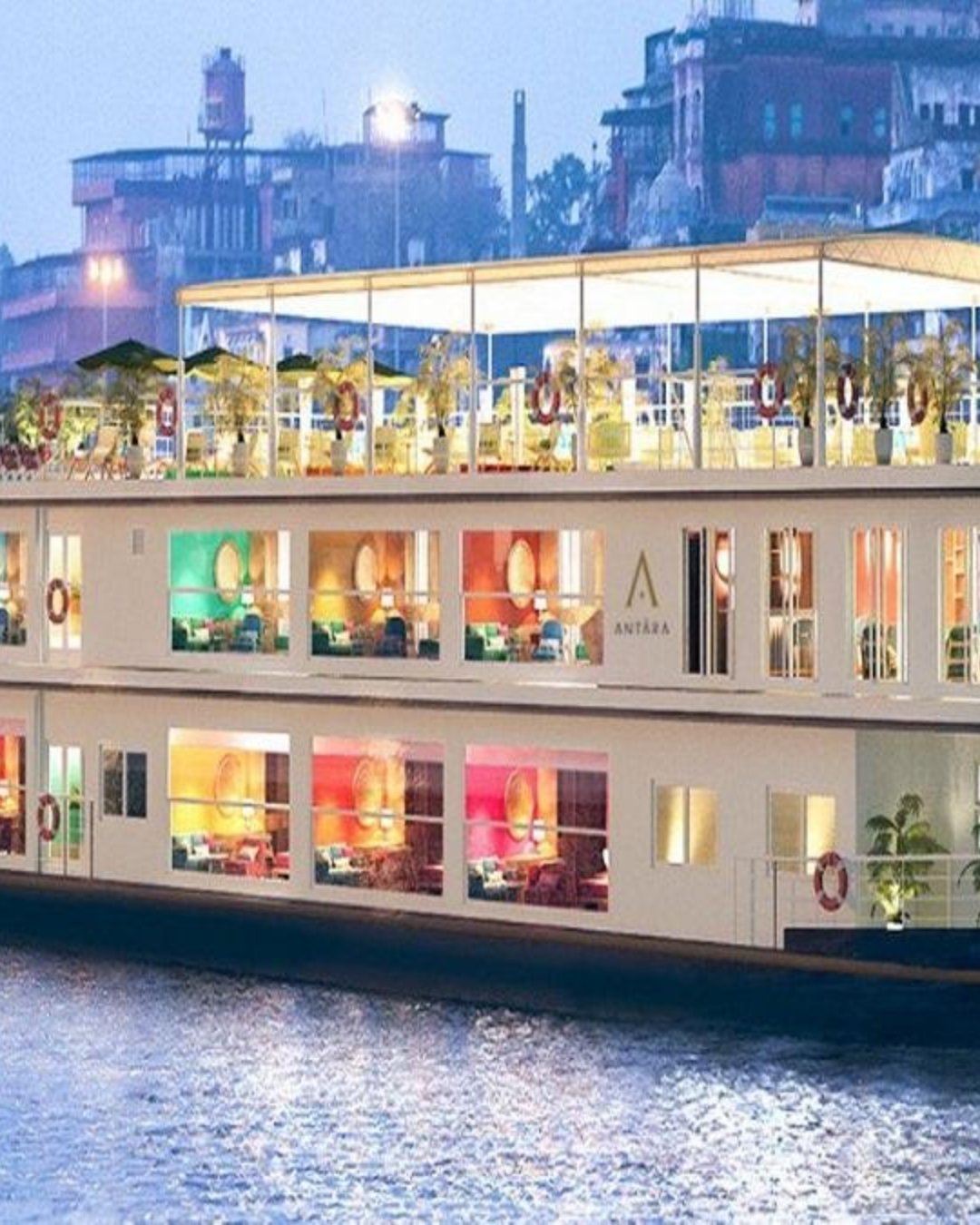
A Cruise Is Not Just a Bigger Boat
Two vessels leave the same river at the same hour and sell two completely different mornings.
●A rowboat puts you two feet above the water, close enough to the steps to see what people are holding. It stops where you ask. It is silent. It is also cramped, exposed to the weather, and entirely at the mercy of
whoever is rowing.
●A cruise puts you fifteen feet up on a steel deck with a railing, a seat, a roof, a toilet and a kitchen. You see the ghats as architecture — the whole sweep of them at once, in sequence, the way a plan drawing sees a building.
●What you gain is comfort, height, shade, safety and a fixed schedule you can actually plan a day around. What you lose is intimacy and control. A cruise cannot slip into a gap between boats, cannot hold position for four minutes while the light changes, and cannot pull over because you saw something.
●Neither is better. They answer different questions. If the question is "I want to understand the shape of this city from the river", it is a cruise. If the question is "I want to be inside the morning", it is a rowboat.
Pro tip: Do both, on different days, and do the cruise first. Seeing the full ghat line in sequence gives you a map in your head — and the rowboat morning afterwards makes far more sense because you know where you are.
The mistakes that ruin it:
●Booking a cruise expecting the postcard rowboat experience. They are not the same product and the reviews that call cruises disappointing are almost always this mistake.
●Booking a rowboat for six people with luggage and elderly parents in July. That is what the cruise is for.
●Assuming a cruise gets you closer to anything. It gets you higher, not nearer.
23
MomentSant Ravidas Ghat, Varanasi
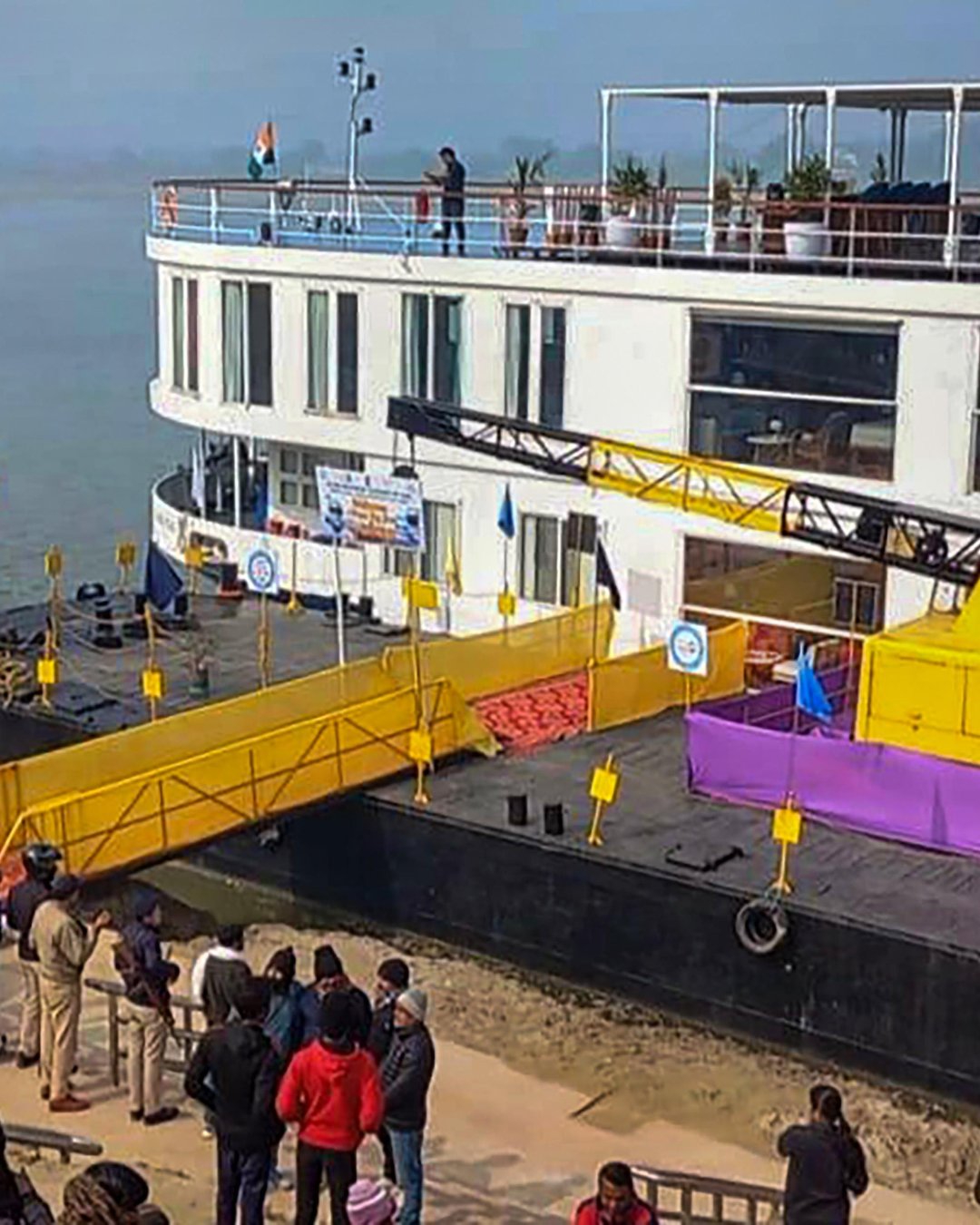
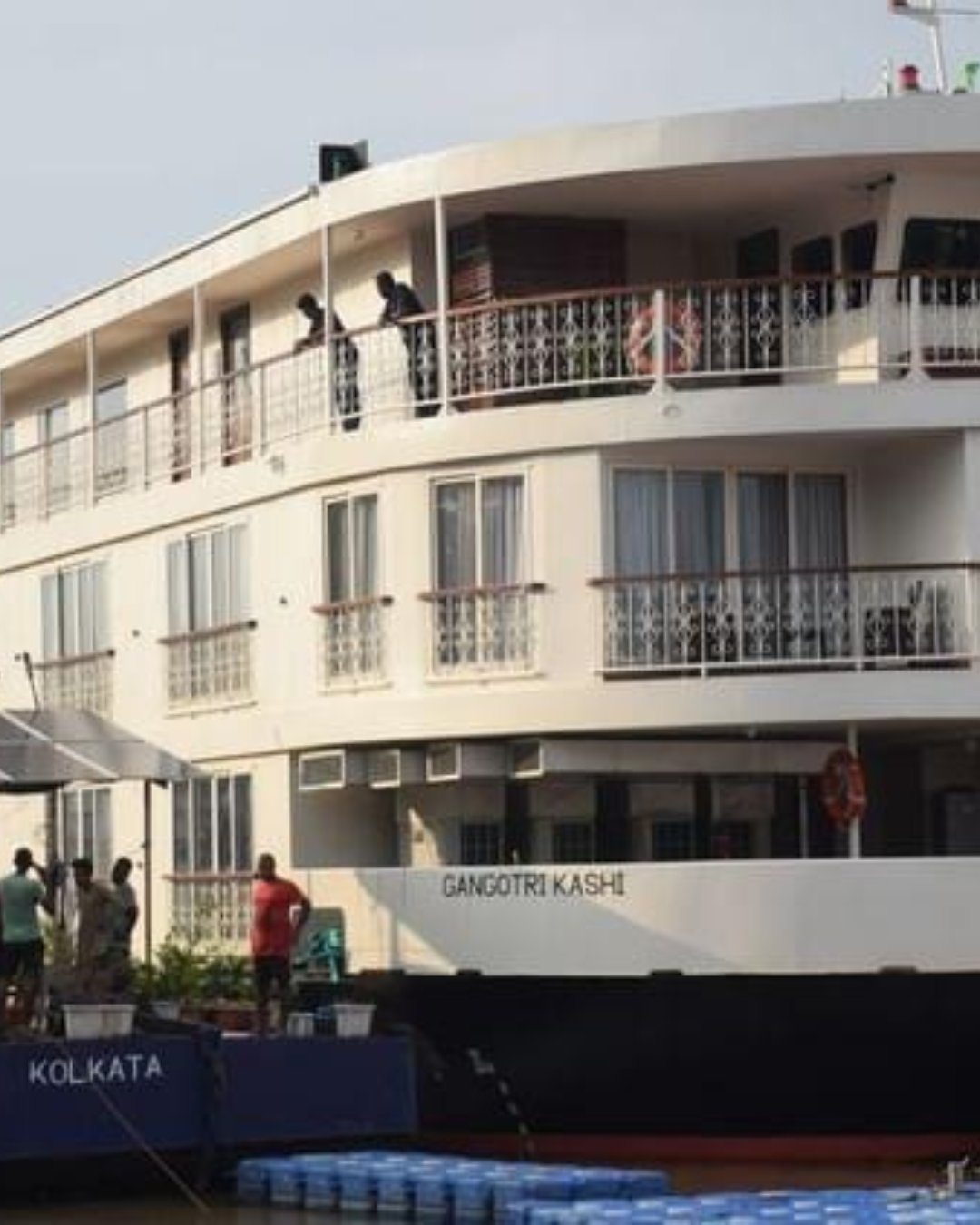
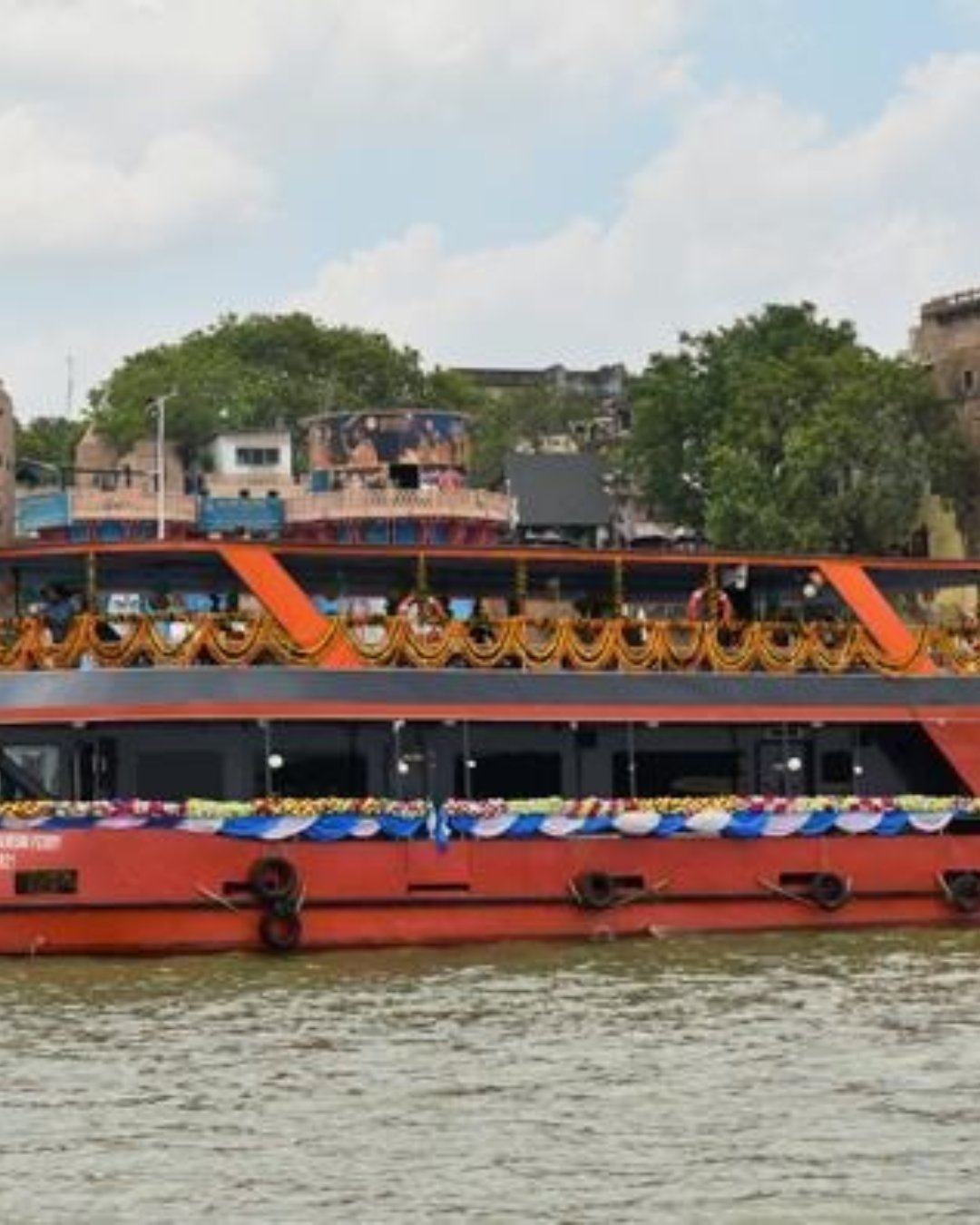
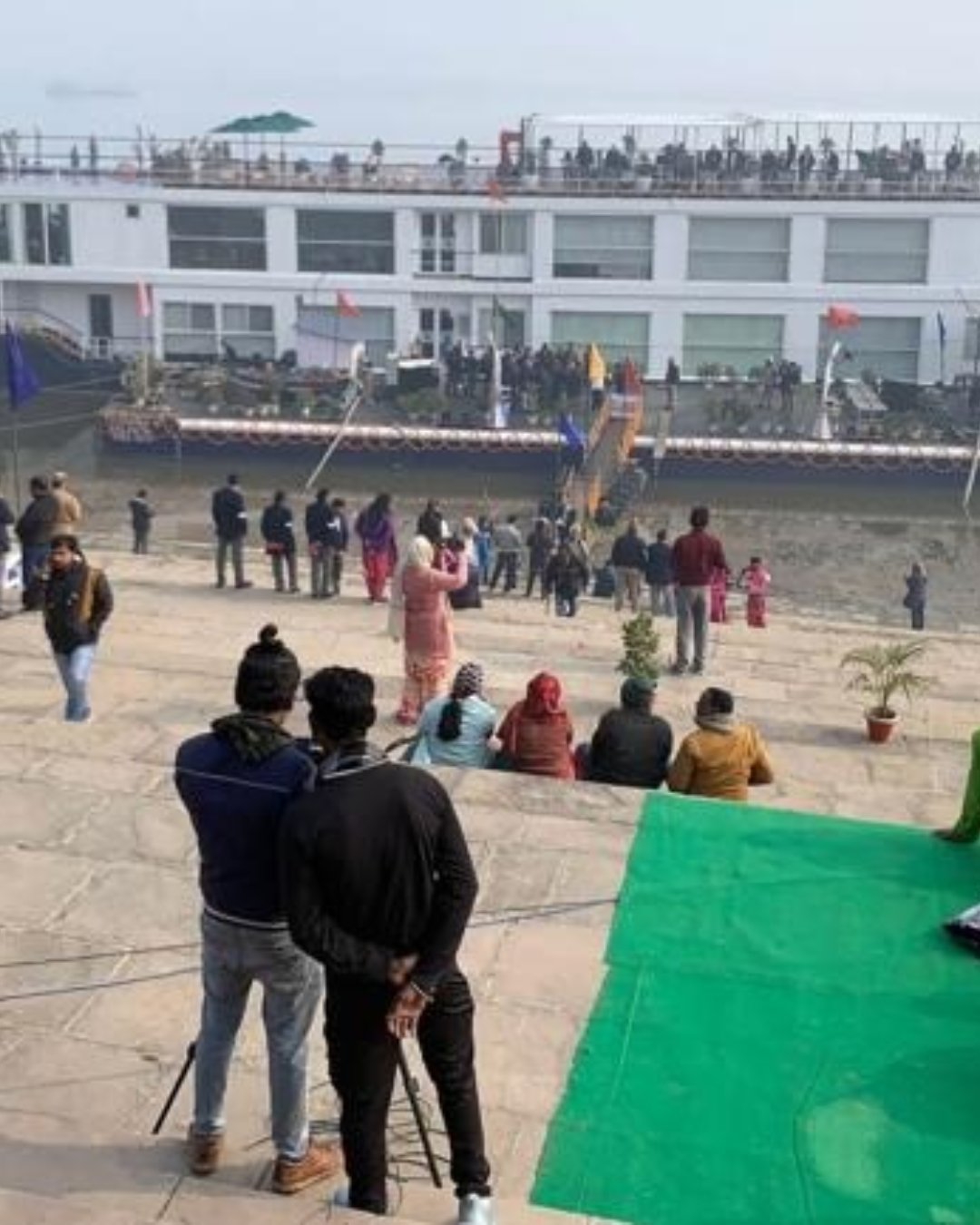
The Boarding Point Is Nowhere Near the Ghats You Pictured
Almost every cruise complaint starts in a rickshaw, not on the water.
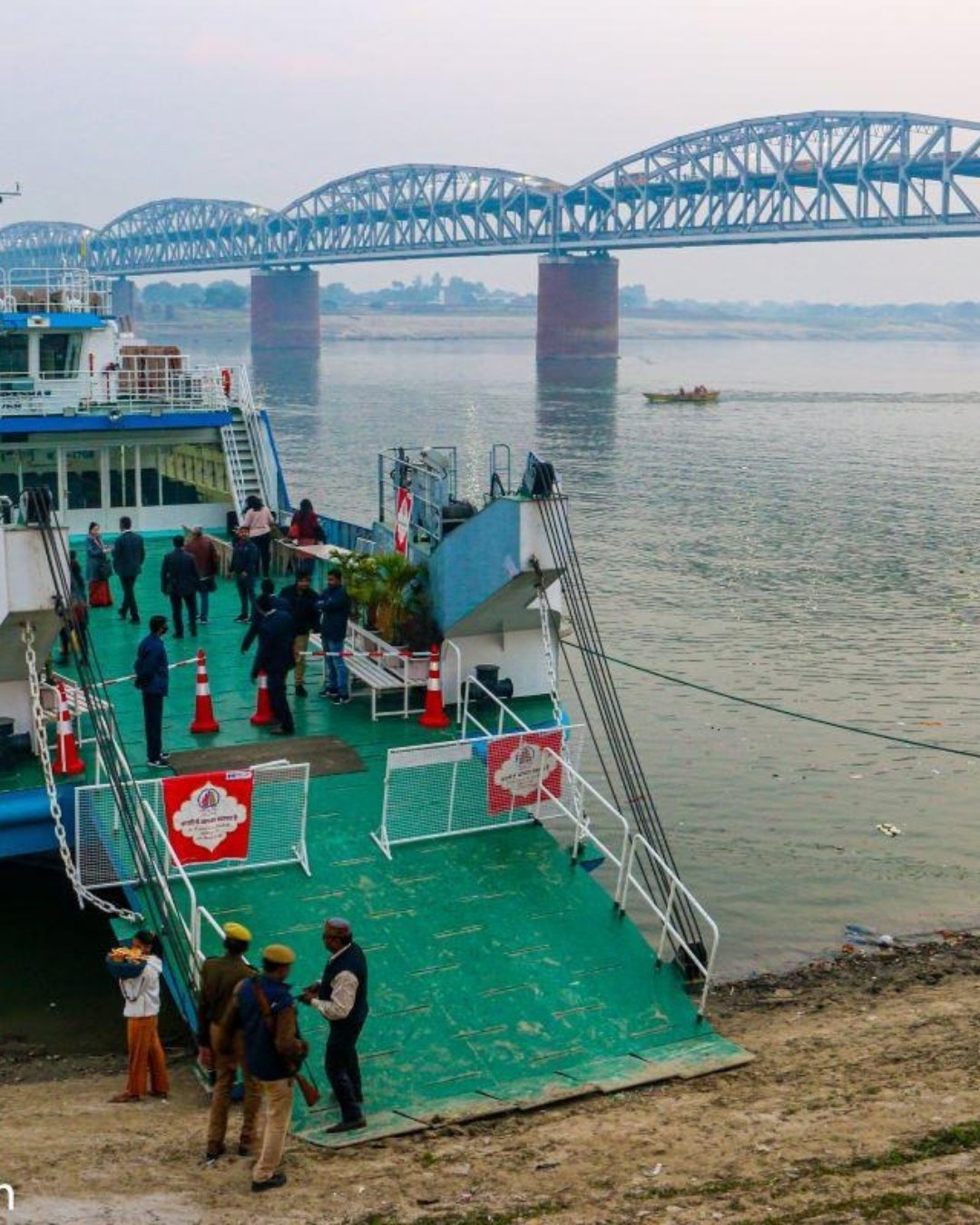
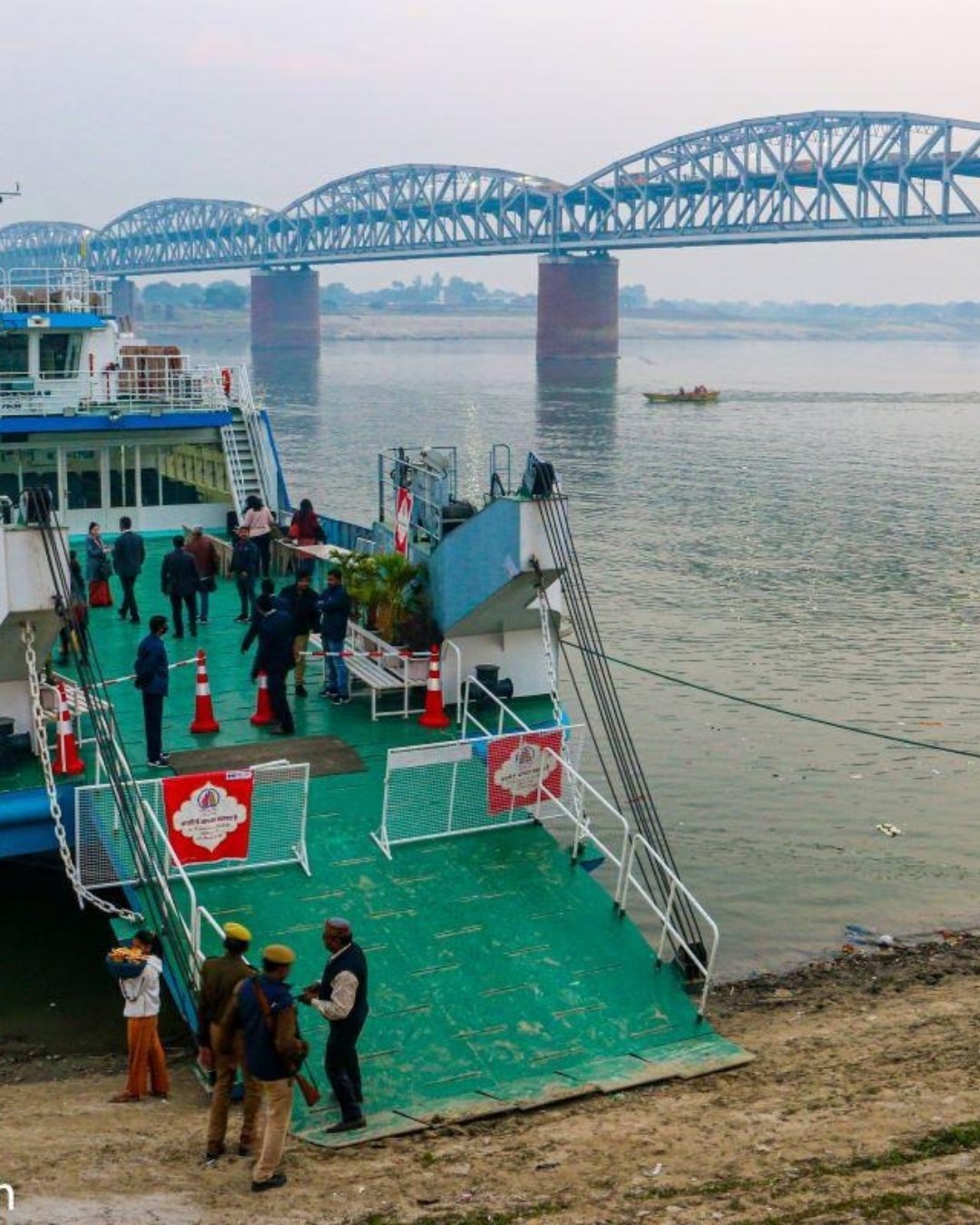
●The main cruise vessels board at Ravidas Ghat, at the Ravidas Park entrance in Nagwa, near Lanka — the
far southern end of the ghat line, past Assi. It is not Dashashwamedh, and it is not walkable from the old-
city hotels.
●From the Godowlia and Dashashwamedh area that is a 20 to 35 minute drive depending on traffic, and
Varanasi traffic in the hour before an evening aarti is its own weather system. From the Cantt station side,
budget longer.
●Vehicles can reach Ravidas Ghat directly, which is exactly why it is used — it is one of the few points on the river with real road access and parking. That is a genuine advantage if you have luggage, wheelchairs, or people who cannot manage steps.
●Arrive 30 to 45 minutes before departure. Cruises leave on a schedule and do not wait, and boarding a vessel with a hundred other people is not a two-minute process.
Pro tip: Book the ride to the pier before you book the cruise, and give it an extra 30 minutes on an evening sailing. Missing a fixed-departure cruise costs you the whole ticket; arriving early costs you a cup of chai.
The mistakes that ruin it:
●Assuming you will board where the rowboats leave from. You will not.
●Cutting it fine on an evening sailing. Traffic near the old city before aarti is genuinely unpredictable.
●Booking a cruise on your arrival day when the train is running late. Fixed departures and Indian Railways
are a bad combination.
19
MomentAssi Ghat, Varanasi
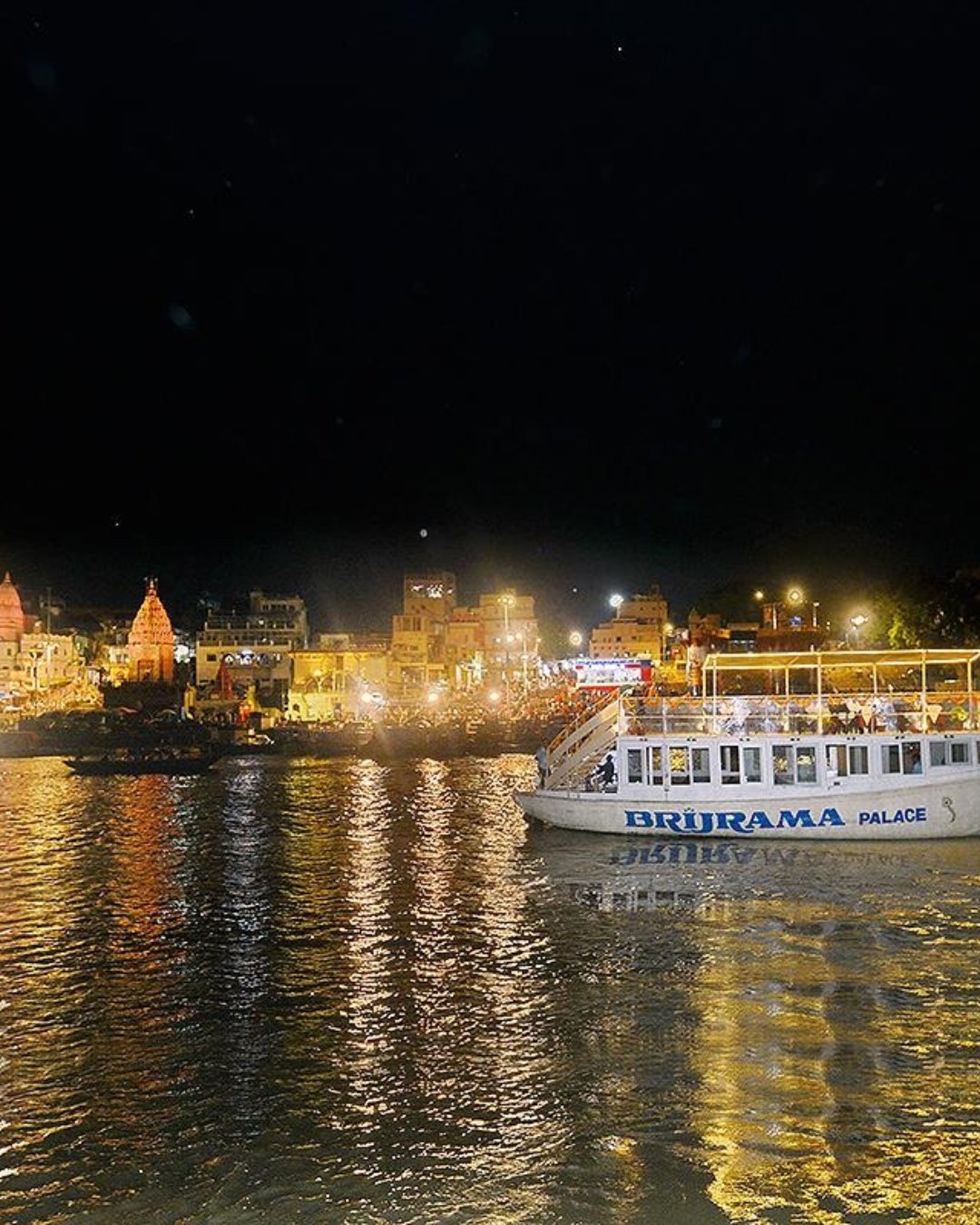
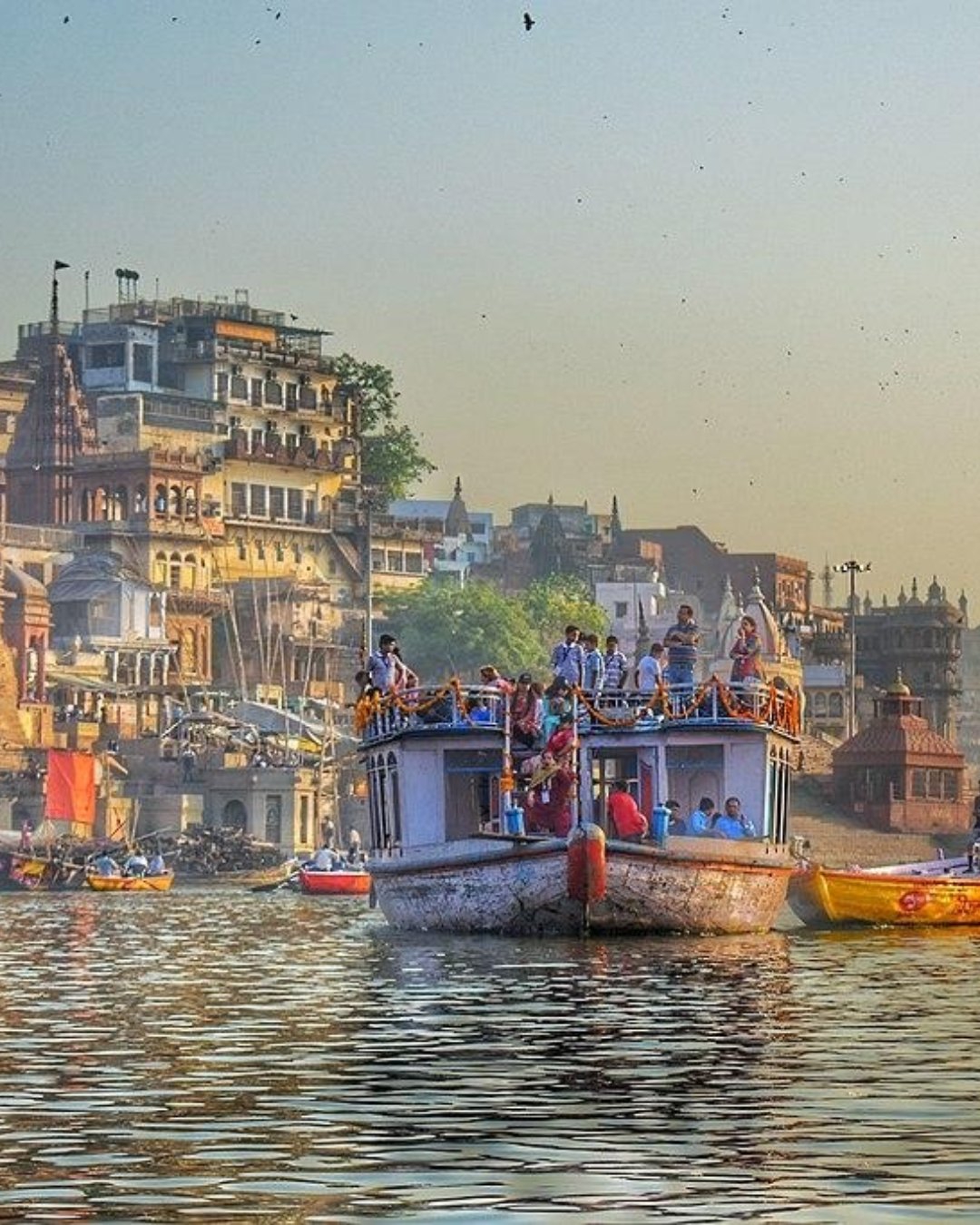
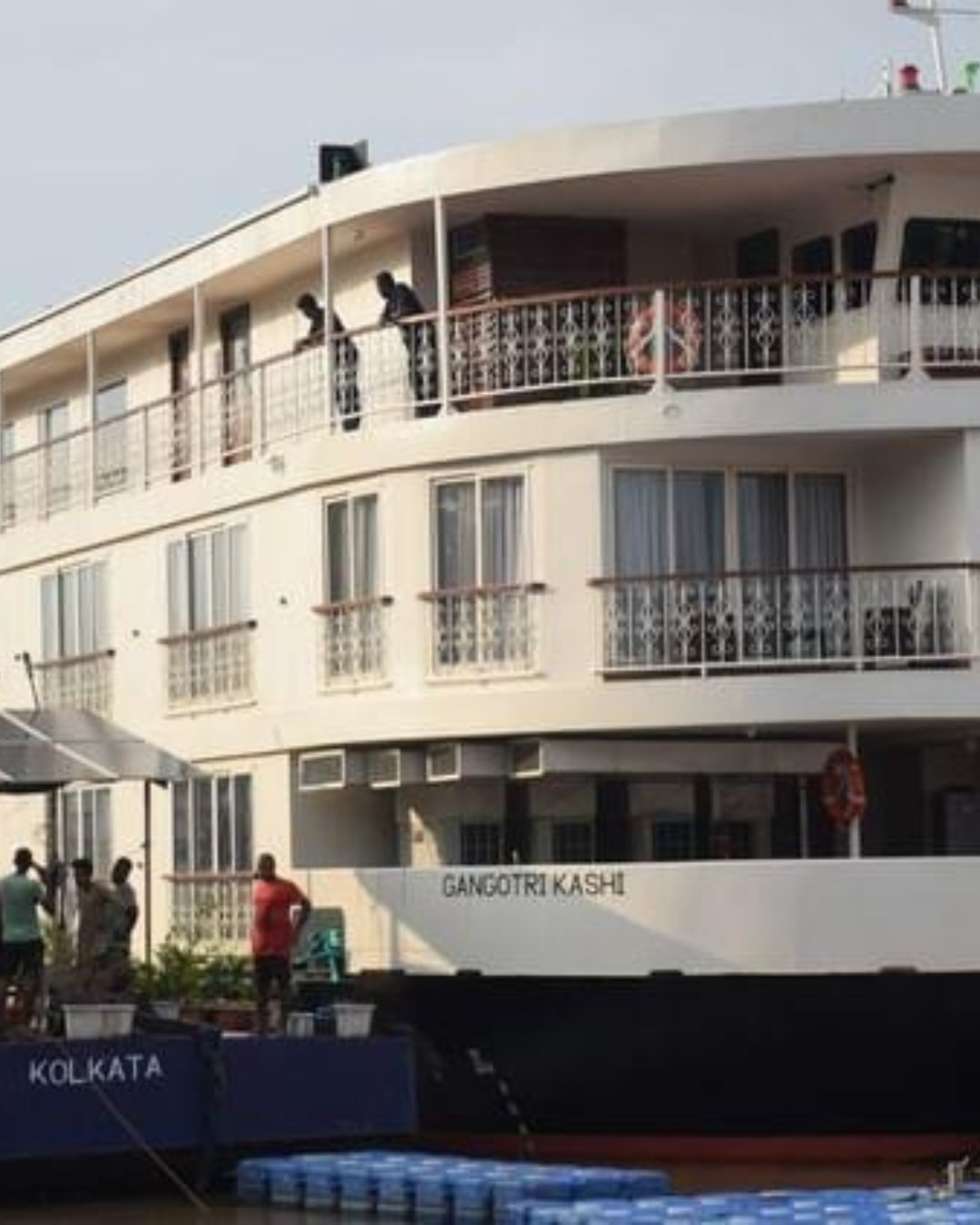
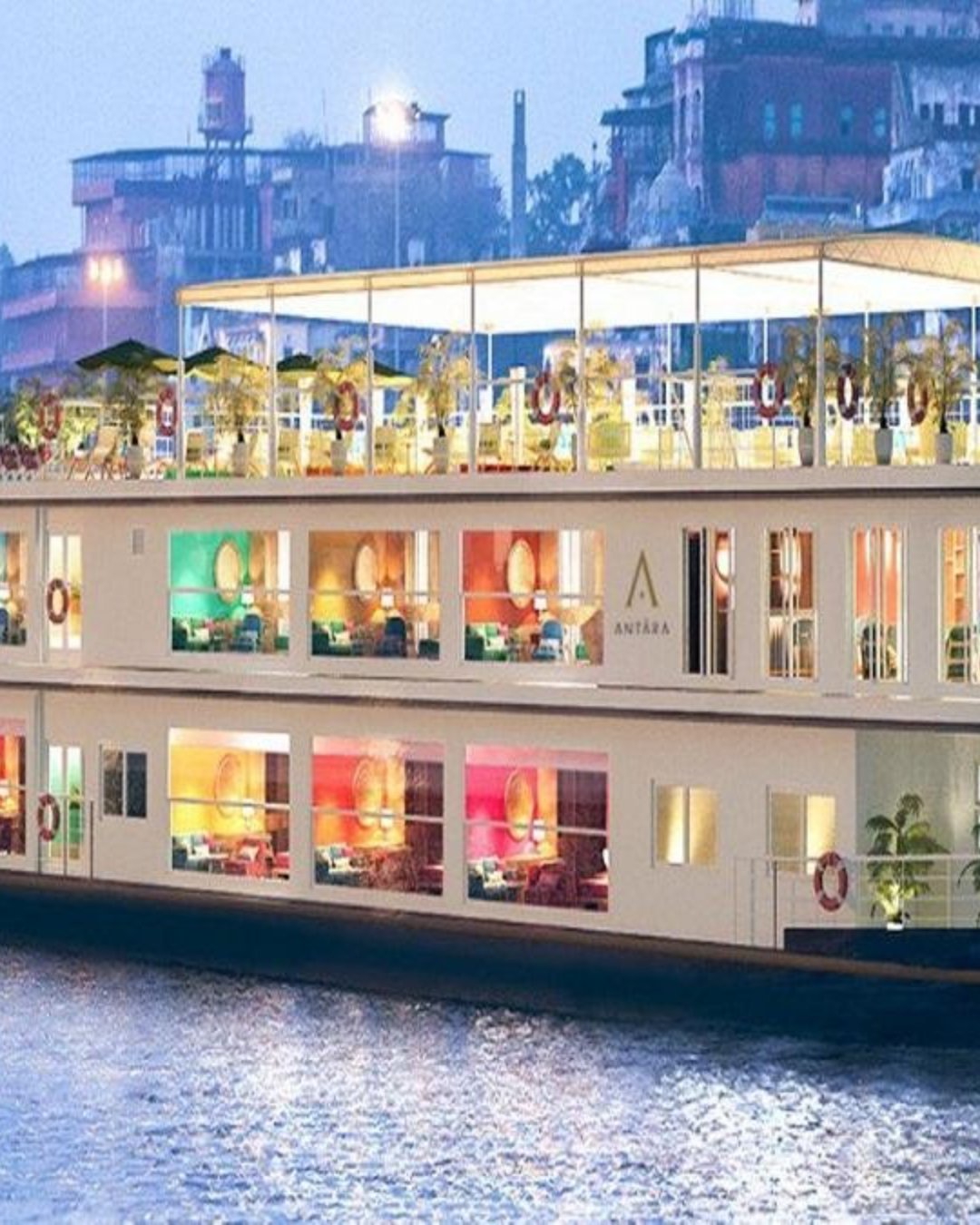
Morning Voyage or Evening Voyage — They Are Different Cities
The same vessel, the same route, twelve hours apart, and barely a shared photograph between them.
●The morning sailing is the heritage run. Low light, mist on the water in winter, the ghats waking up — bathers, laundry, yoga, priests setting up. Quiet on board. This is the one that shows you what the ghats
are for.
●The evening sailing is the aarti run. It ends holding position off Dashashwamedh while the ceremony is performed on the steps, with the vessel's own lights off and the ghat lit up. Louder, busier, more of an
event.
●The morning run is far less crowded and, for most people, the better cruise. The evening run is the one everyone books, which is precisely why it is the one that sells out.
●If you only have one evening in Varanasi, the honest advice is that the aarti is better seen from a rowboat or from the steps than from a cruise deck — you are further back. Take the cruise in the morning and see
the aarti another way.
Pro tip: Book the morning sailing and go to the aarti separately on foot or by rowboat. You get the better cruise and the better aarti, and they cost about the same combined as the evening cruise alone.
The mistakes that ruin it:
●Assuming the evening cruise is the premium option because it is the popular one. Popularity here is a crowding problem, not a quality signal.
●Booking the evening sailing as your only river experience of the trip.
●Skipping the morning sailing in December because it is cold. The winter mist is the single best thing the river does all year.
19
MomentDumraon Colony, Varanasi
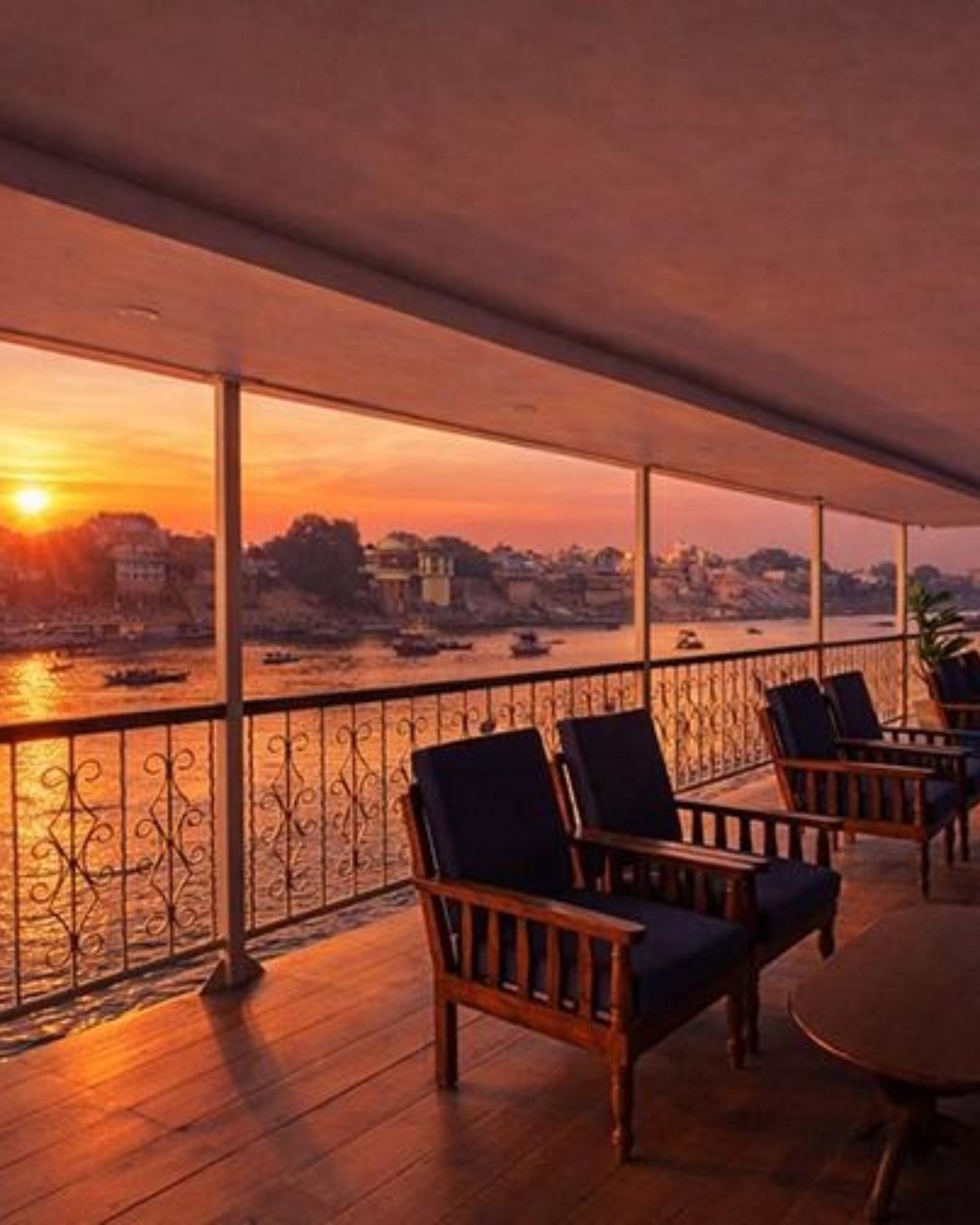
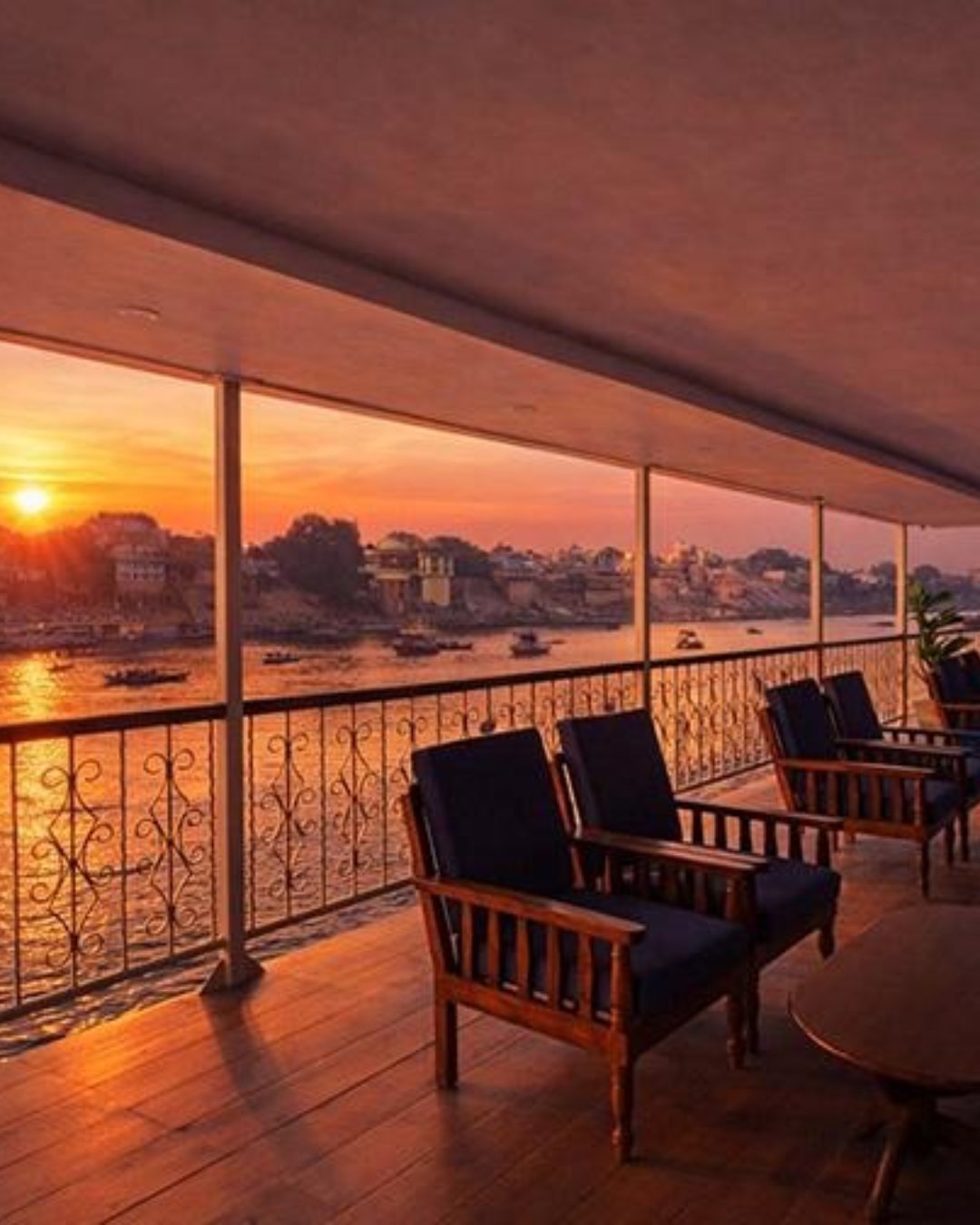
The Deck You Choose Decides the Whole Trip
There is one decision on a cruise booking that matters more than the operator, the date or the price.
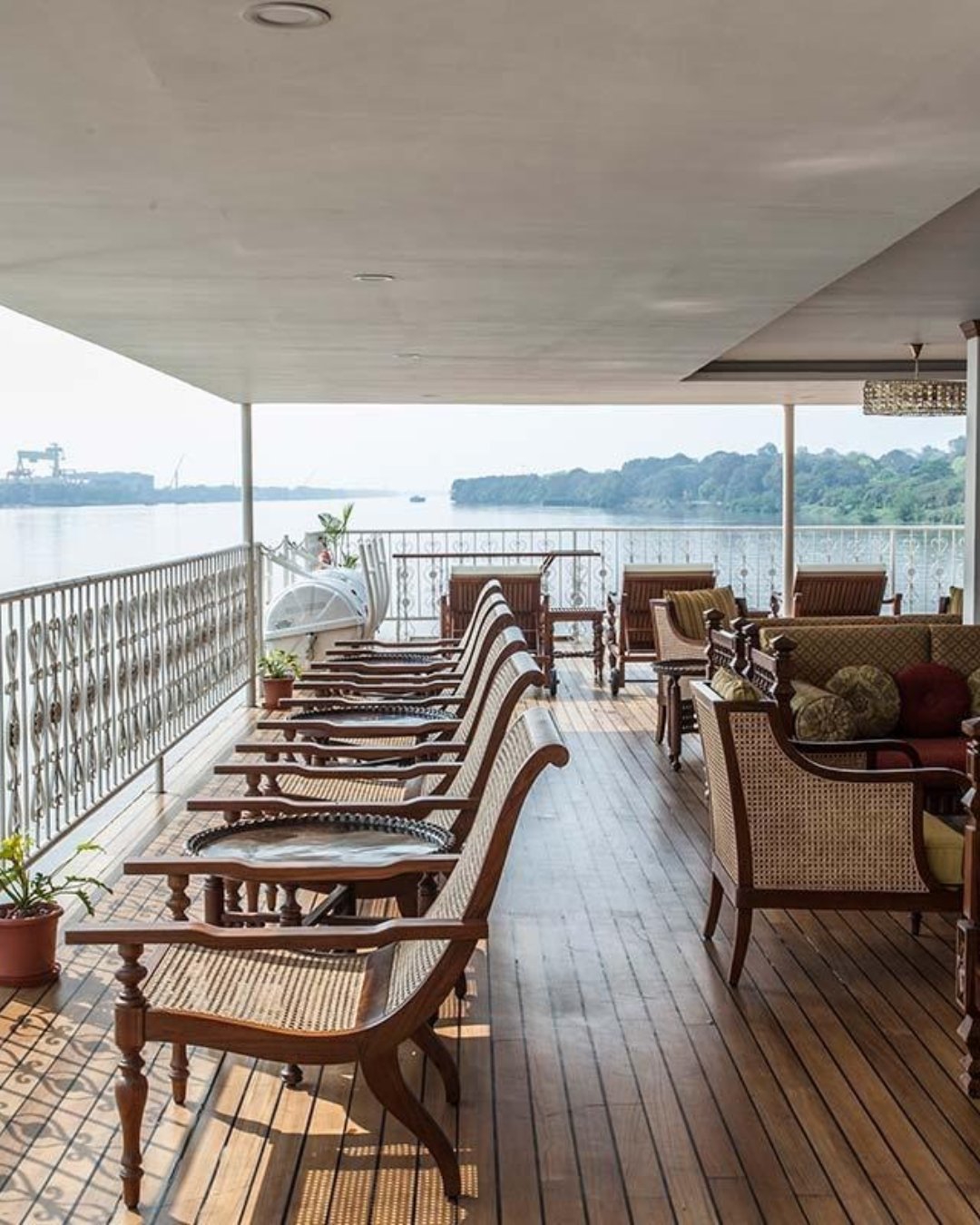
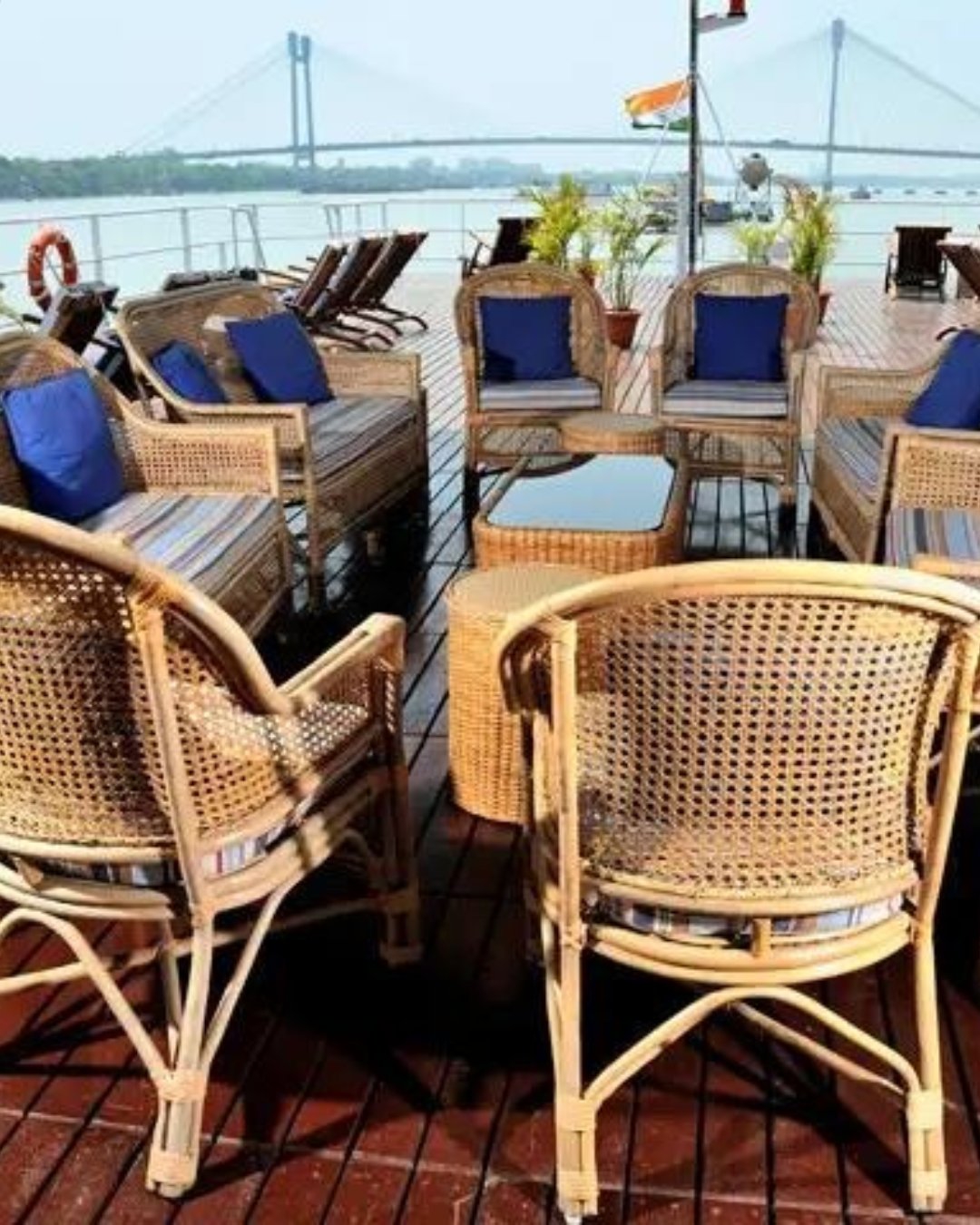
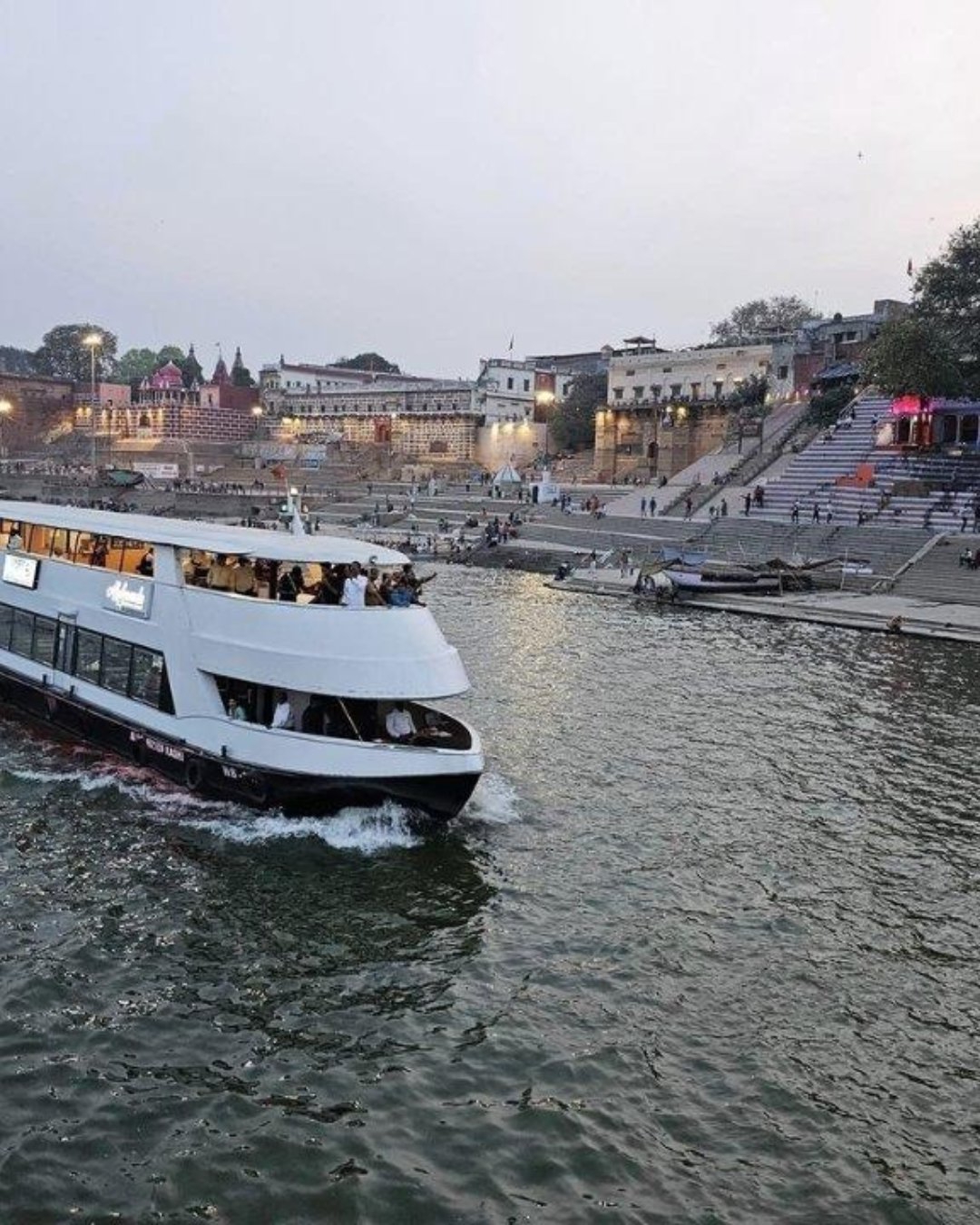
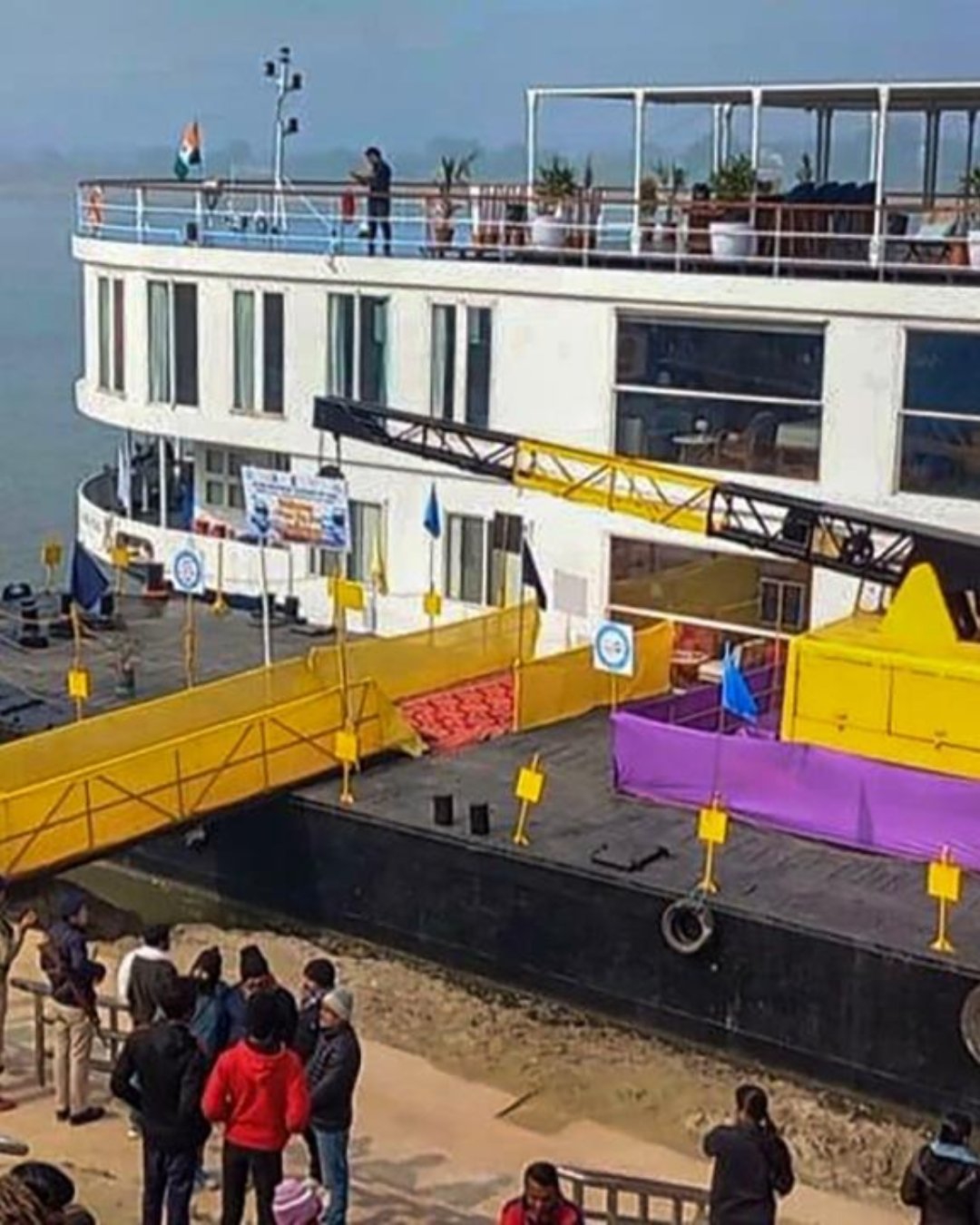
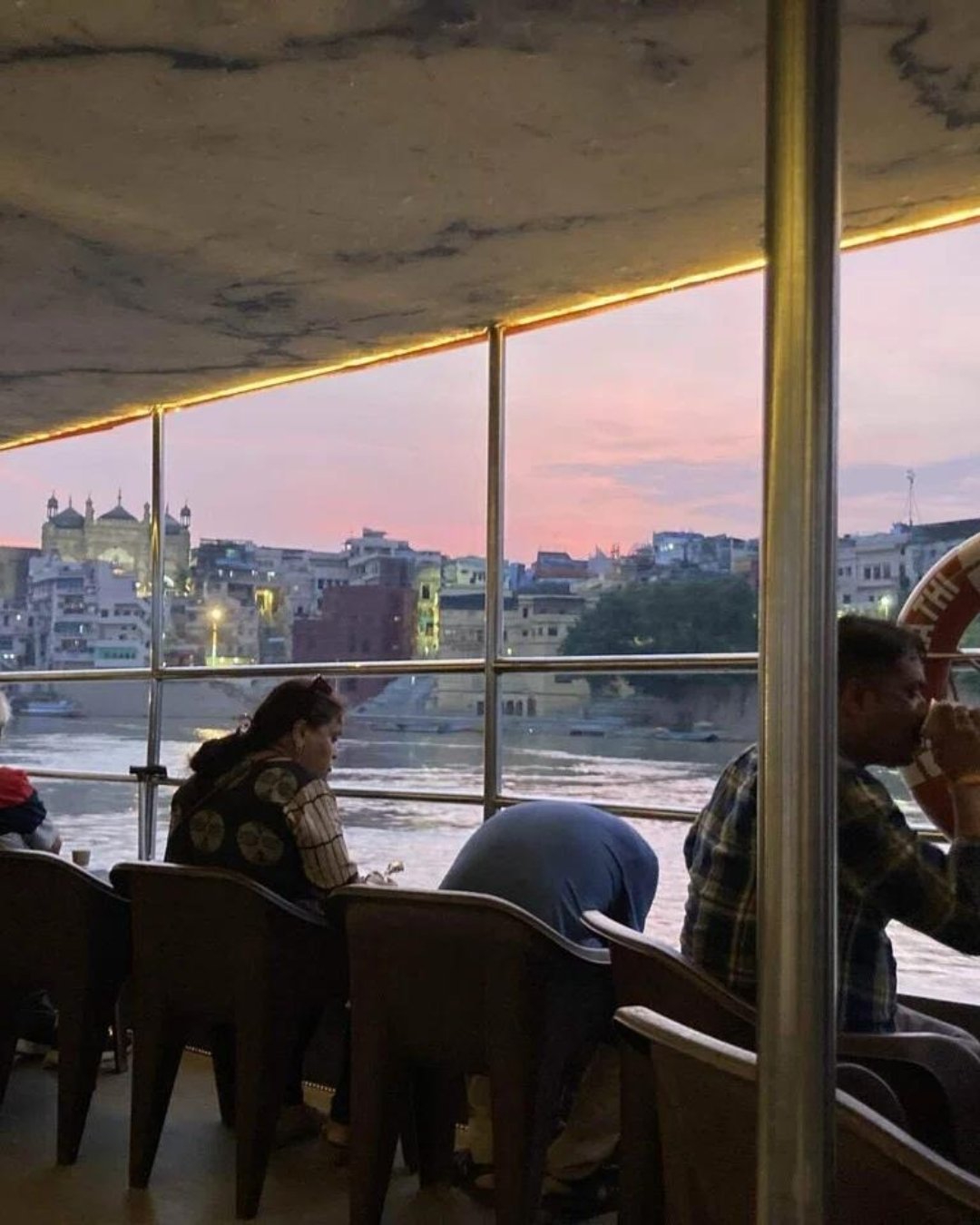
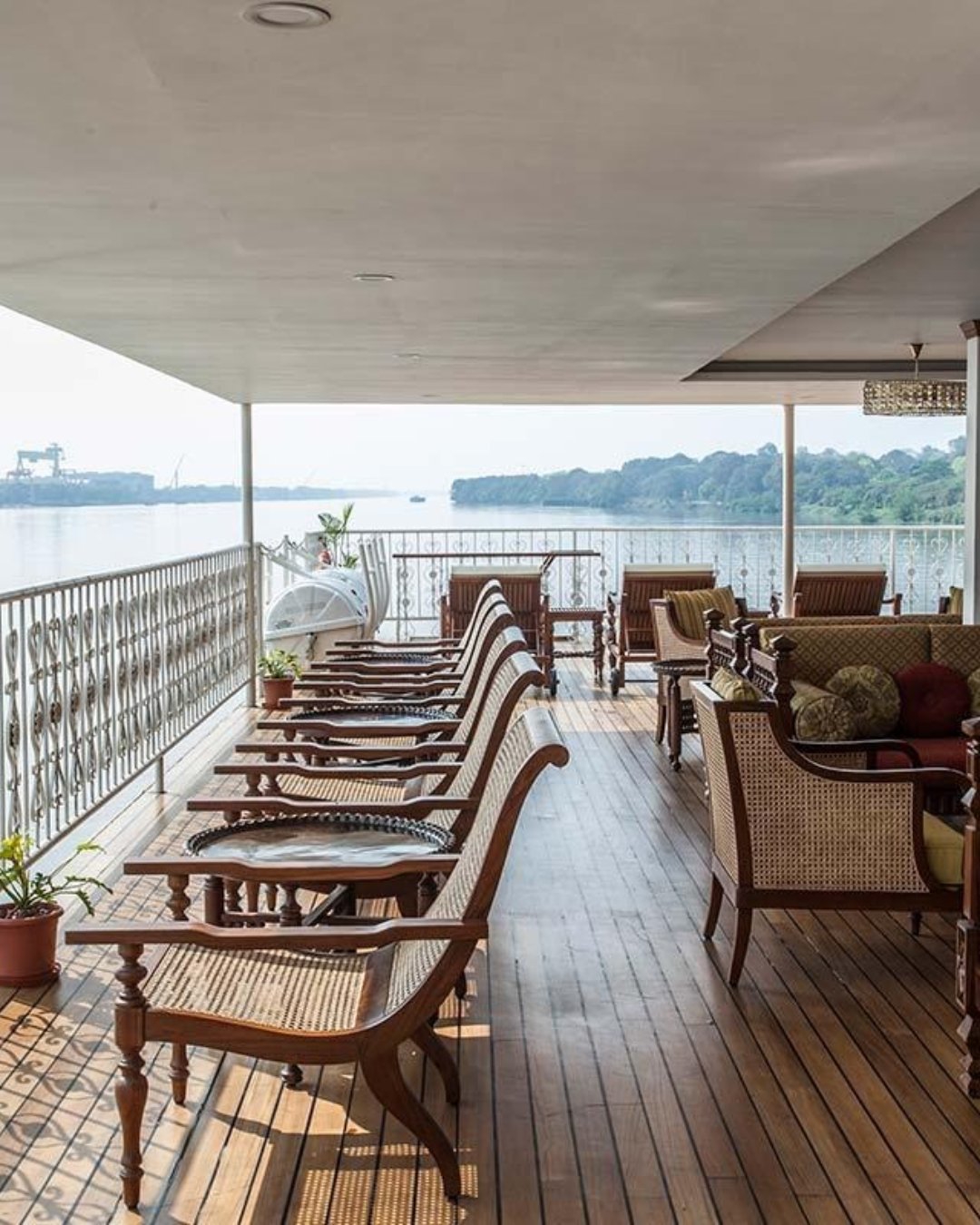
●The typical vessel is a double-decker. The lower deck is air conditioned and enclosed, with large windows and the bulk of the seating. The upper deck is open-sided, with a smaller seated area and, on some vessels, a small restaurant serving local plates.
●The lower deck is the right answer in May and June, when the heat on an open deck is genuinely punishing, and in heavy rain. It is the wrong answer if you came to look at anything properly. Glass reflects,
glass is never clean, and glass ends photography.
●The upper deck is the right answer in every other month and for anyone who wants to see or photograph the ghats. Open sides, unobstructed sightlines, moving air, and the height that makes the cruise worth taking in the first place.
●Upper-deck seating is limited and it fills first. This is the thing to secure at booking, not on arrival.
Pro tip: Ask for the upper deck explicitly at the time of booking, and confirm it is upper-deck seating rather than upper-deck access. On a full sailing, access without a seat means standing for ninety minutes.
The mistakes that ruin it:
●Paying extra for air conditioning in January. You will spend the sailing looking at your own reflection.
●Turning up expecting to move between decks freely on a full boat. Sometimes you can; on a sold-out evening sailing, often you cannot.
●Sitting on the shore side. The ghats are on one side of the vessel — ask which, and sit there.
17
MomentSant Ravidas Ghat, Varanasi
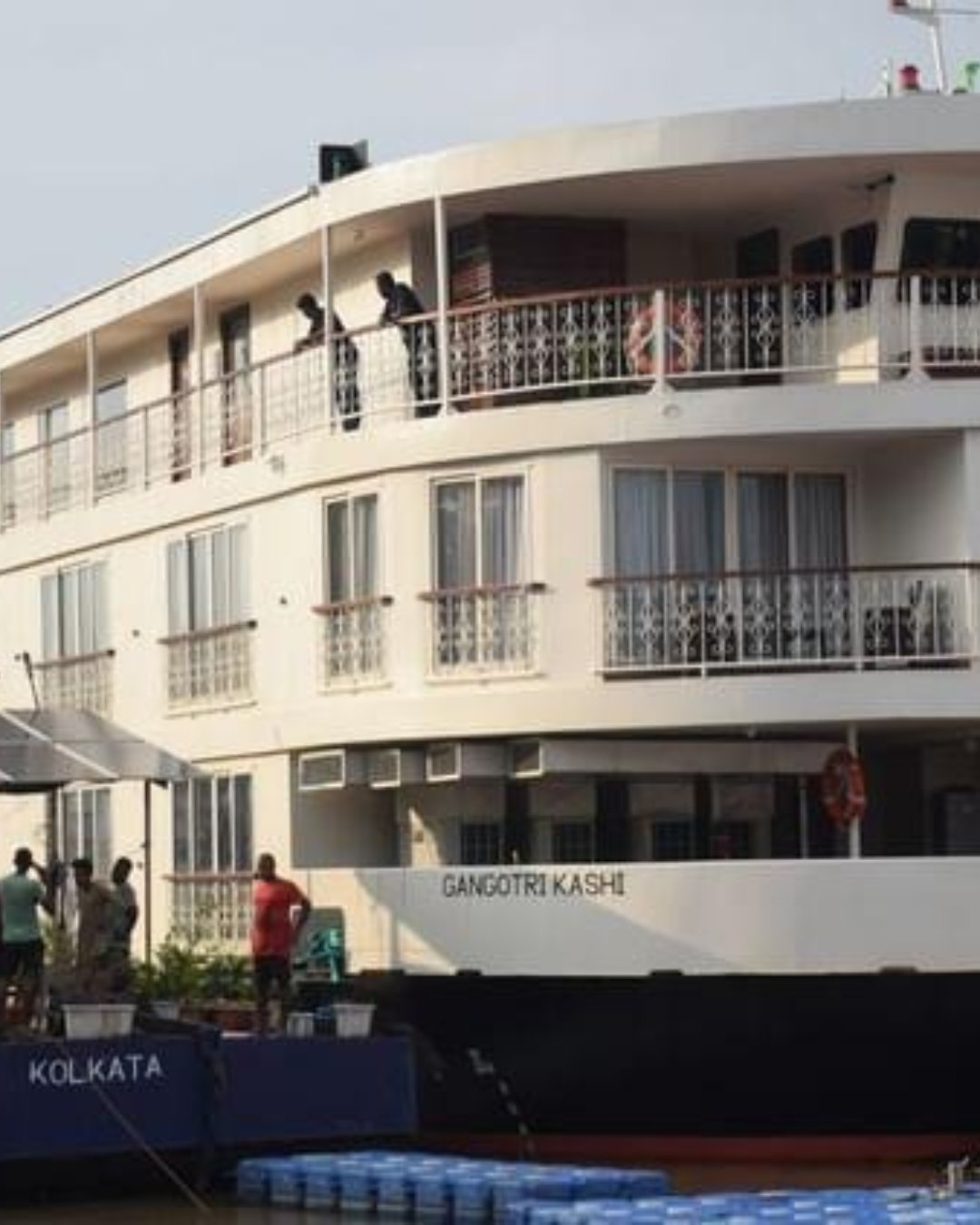
What It Costs, and What the Number Does Not Include
Published cruise prices for Varanasi disagree with each other by a factor of two, and all of them are out of date somewhere.
●A standard 90-minute sightseeing or Aarti cruise generally sits in the ₹750–₹1,500 per person band, varying by deck, sailing and season. Treat any single number you read online — including this one — as indicative, and confirm the final price at the point of booking.
●Deck class is usually the biggest single swing in the price. Food, if it is not stated as included, is not included.
●Day cruises to Chunar Fort are a different product entirely and priced accordingly — a full day, with meals on board and a guided fort visit. Multi-day voyages toward Vindhyachal and Prayagraj are cabin-based and priced per cabin per night.
●Agents frequently sell the same sailings at a discount to the published rate because they hold blocks. That is normal and legitimate here, but it also means the price you are quoted is a negotiation, not a fact.
●Children's pricing varies by operator and infants are often free. Ask rather than assume.
Pro tip: Get the deck, the duration, the boarding point and whether food is included confirmed in writing before you pay. Those four items are where every cruise dispute in Varanasi comes from.
The mistakes that ruin it:
●Paying in cash at the pier without a ticket showing the deck class.
●Assuming the upper-deck restaurant is included because it is on the same vessel.
●Comparing a cruise ticket to a rowboat fare as if they are the same purchase.
17
MomentDashashwamedh Ghat, Varanasi
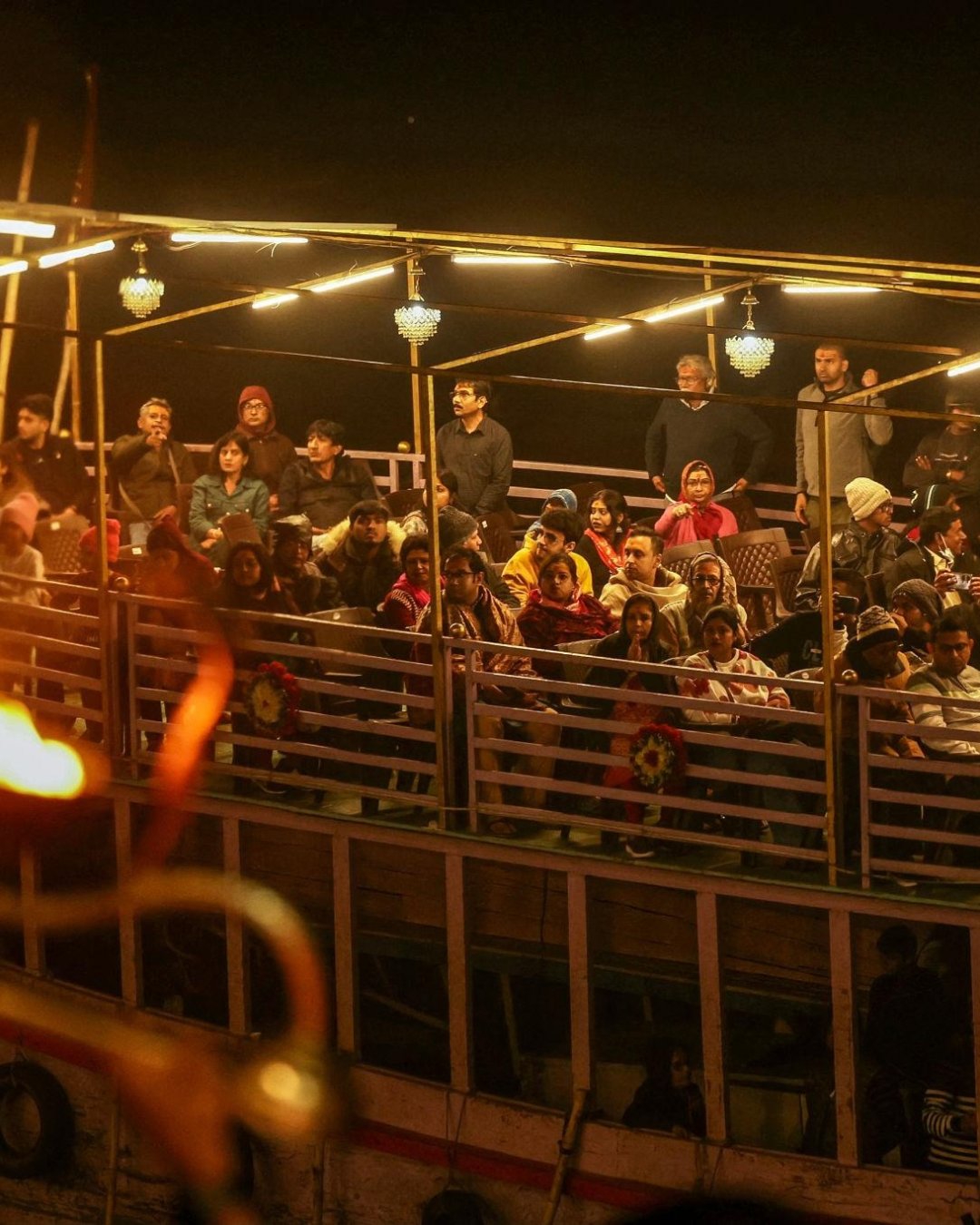
The Aarti From a Steel Deck
Everyone sells the aarti from the water. Very few tell you how far away the water is.
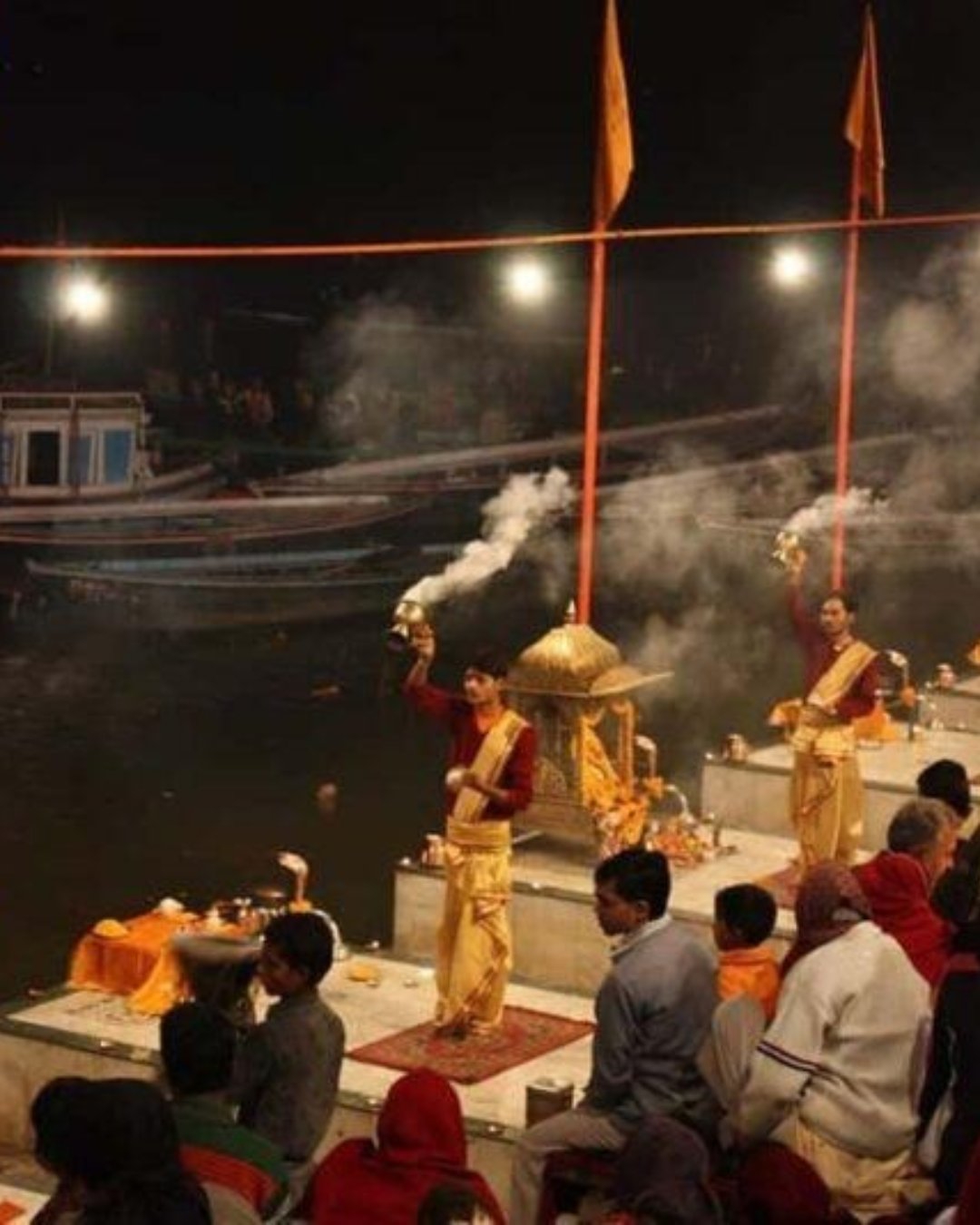
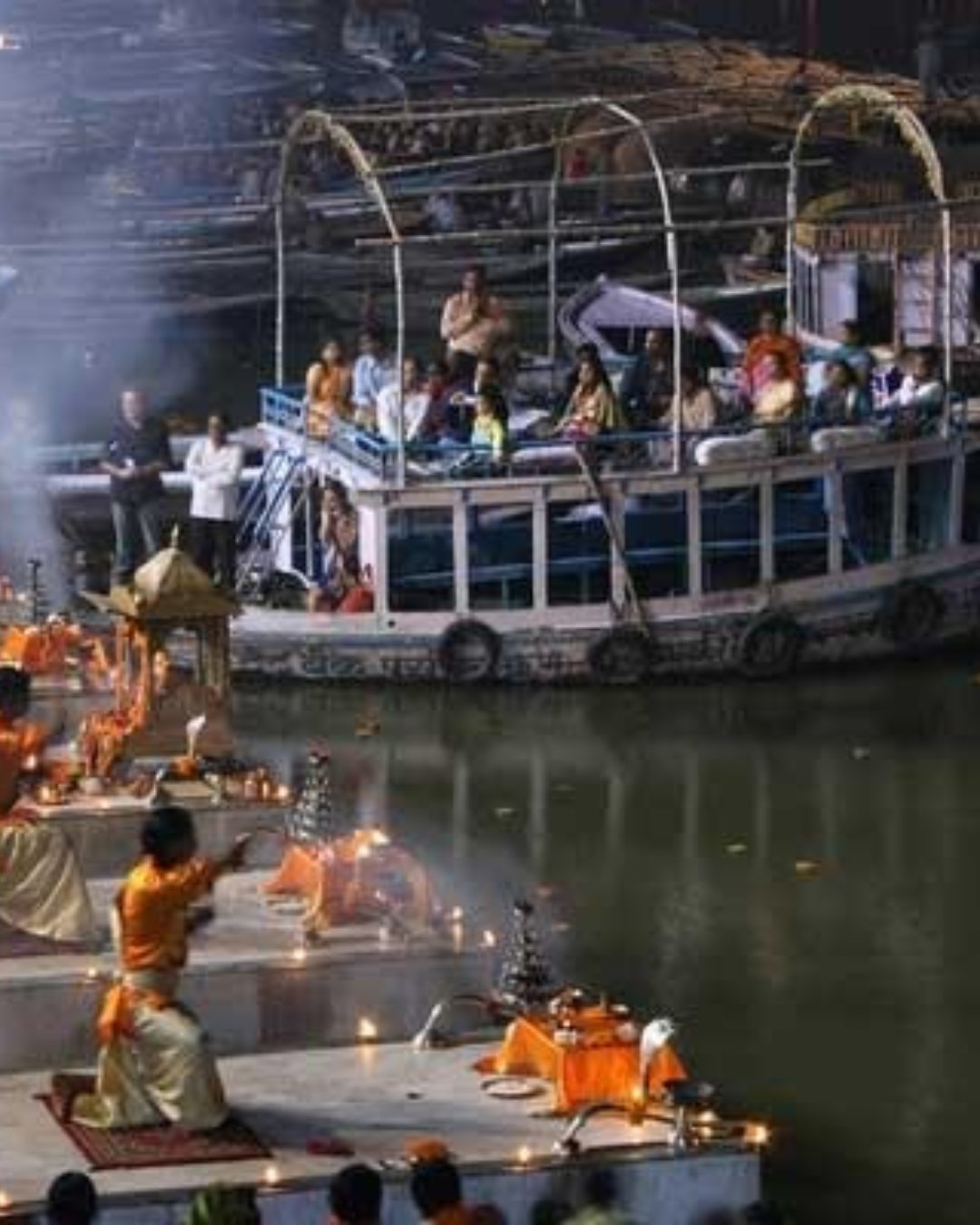
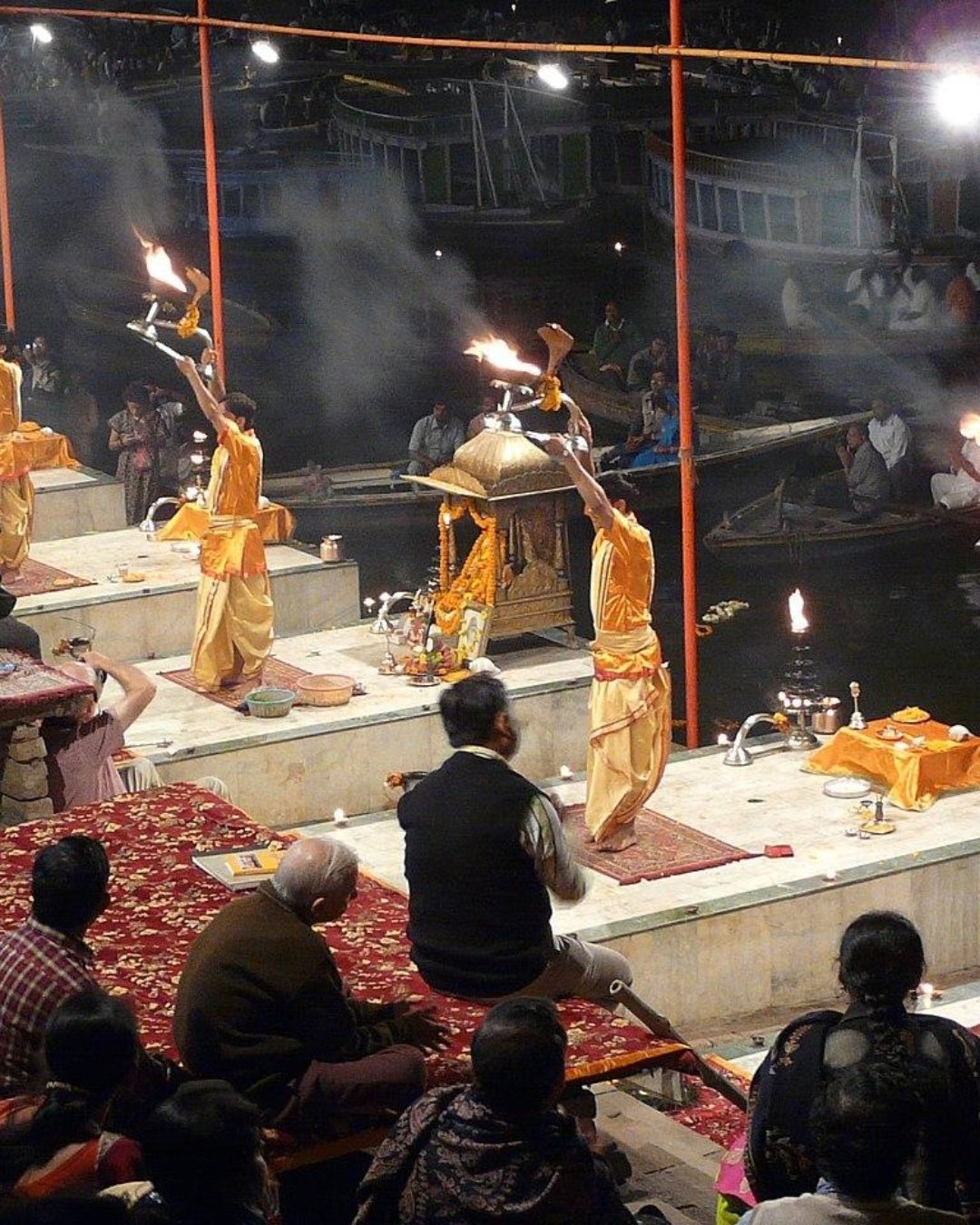
●The vessel holds position off Dashashwamedh with the ghat lit and the ceremony running on the steps. You see the whole tiered arrangement at once — the platforms, the priests in formation, the crowd banked behind them, the lamps moving in unison. It is a genuinely impressive composition.
●You are further back than the rowboats, which cluster in close along the water's edge. The lamps read clearly; individual faces and gestures do not. The chanting and bells carry across the water but arrive
thinned out.
●What a cruise gives you here is the full picture, safely, with a railing and a seat, and without negotiating a rowboat fare in the dark on a crowded ghat. What it does not give you is proximity.
●For families with small children, anyone with mobility limits, and anyone nervous about crowds or small boats after dark, that trade is clearly worth it. For photographers, it usually is not.
Pro tip: Get to the railing on the ghat side as the vessel turns to hold position, and stay there. Once the ceremony starts nobody moves, and the difference between the rail and the second row is the difference between the photograph and the back of a head.
The mistakes that ruin it:
●Expecting rowboat-level closeness from a vessel that carries a hundred people.
●Using flash across open water. It reaches nothing and ruins the view for everyone behind you.
●Booking the enclosed lower deck for an aarti sailing.
22
MomentDashashwamedh Ghat, Varanasi
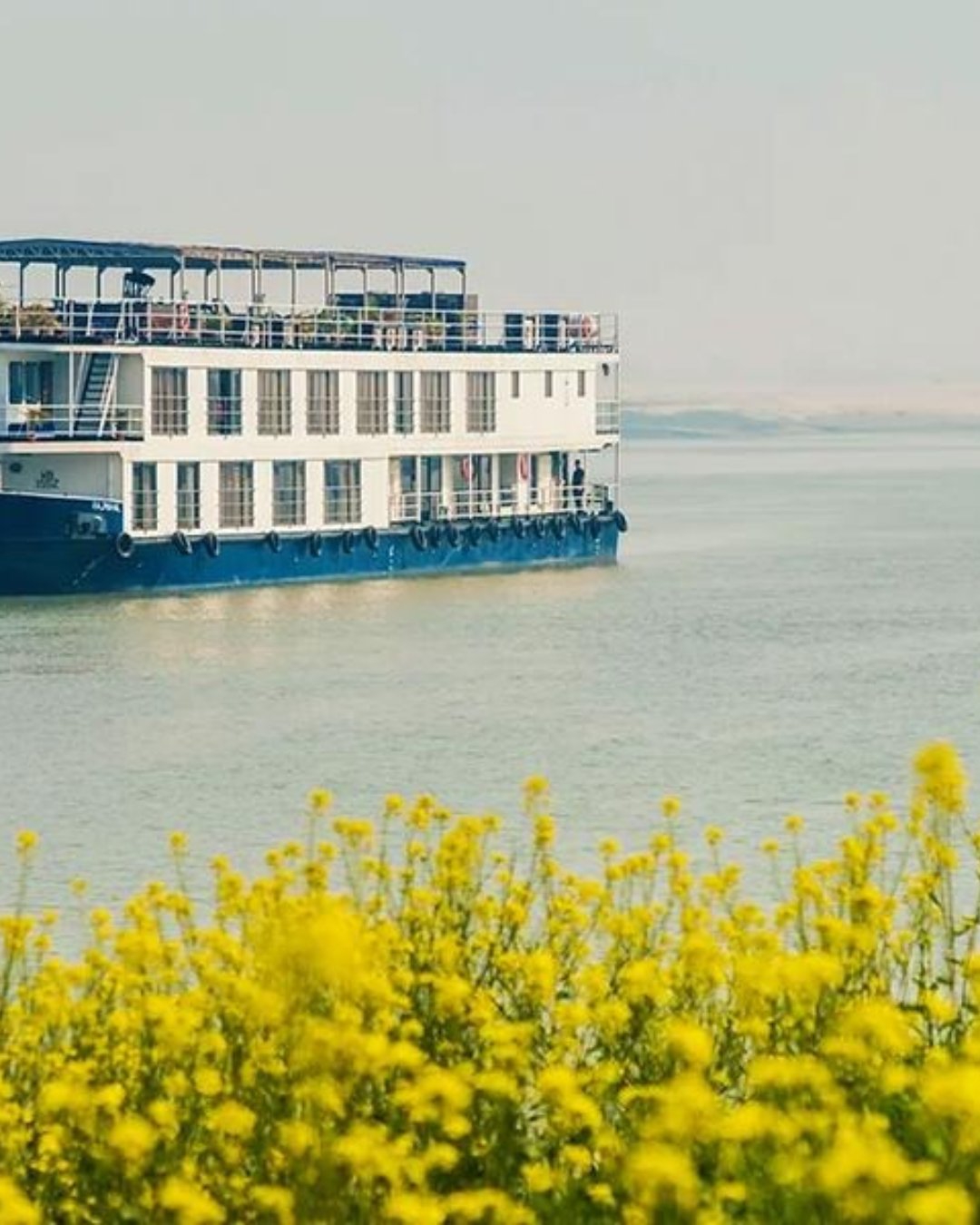
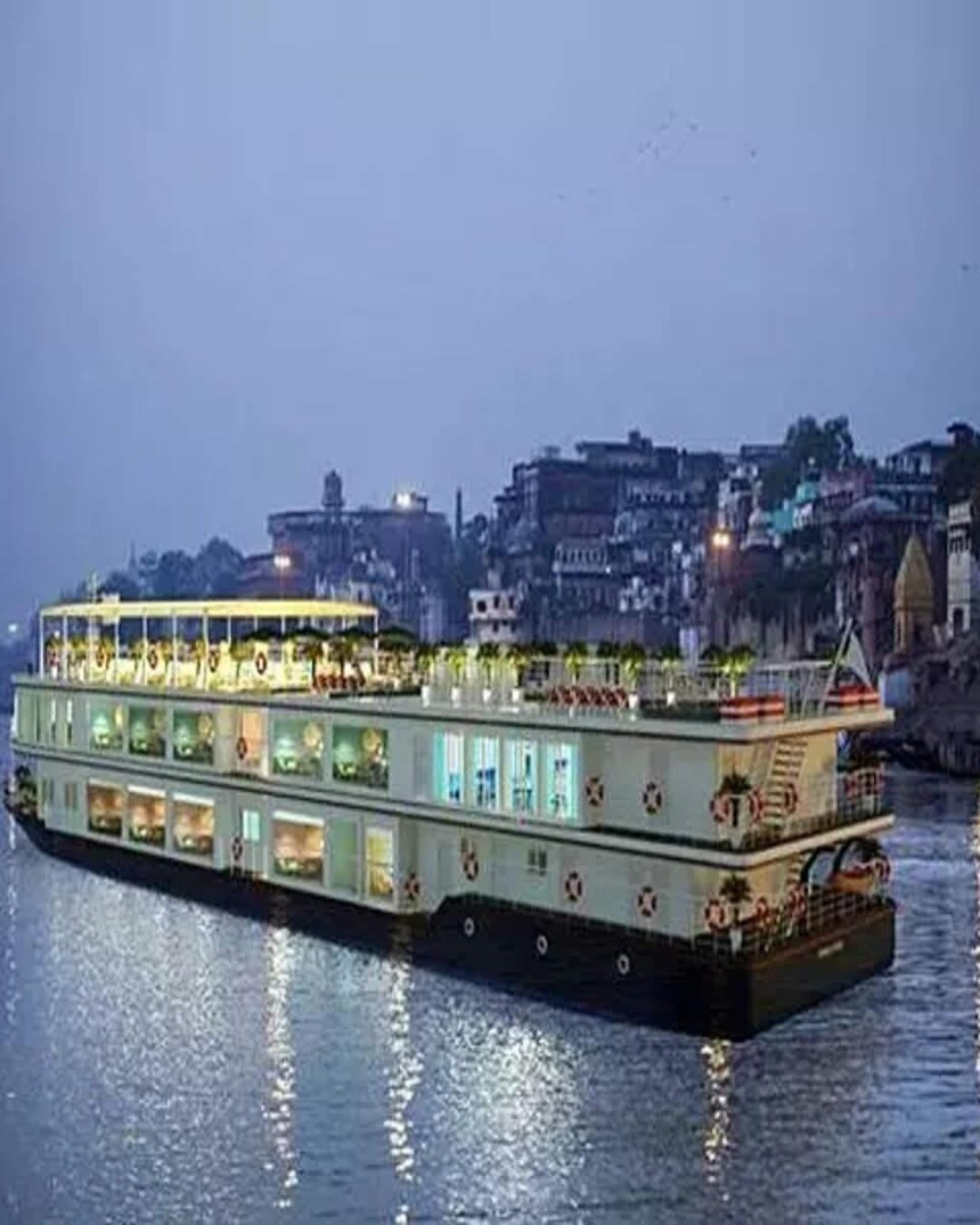
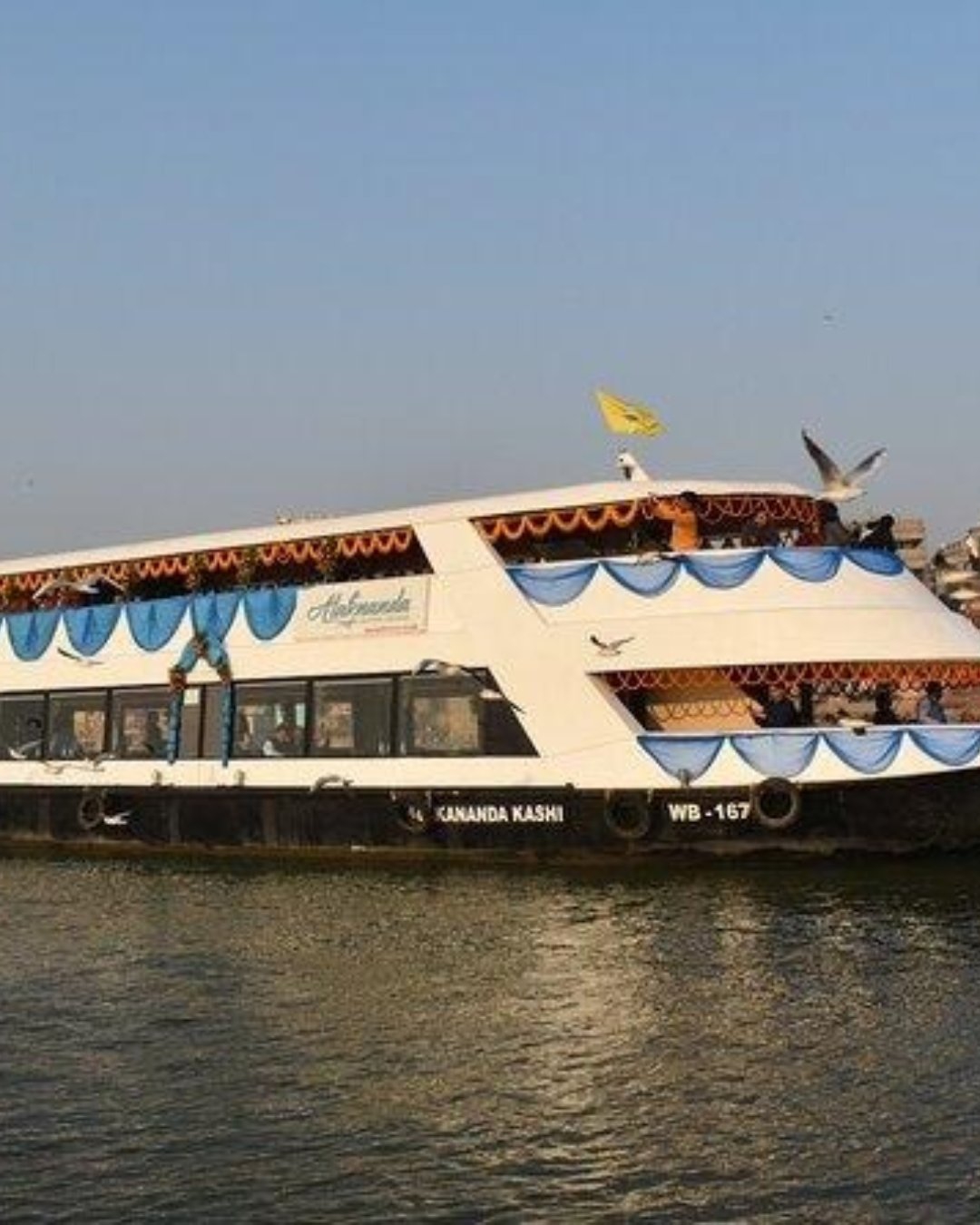
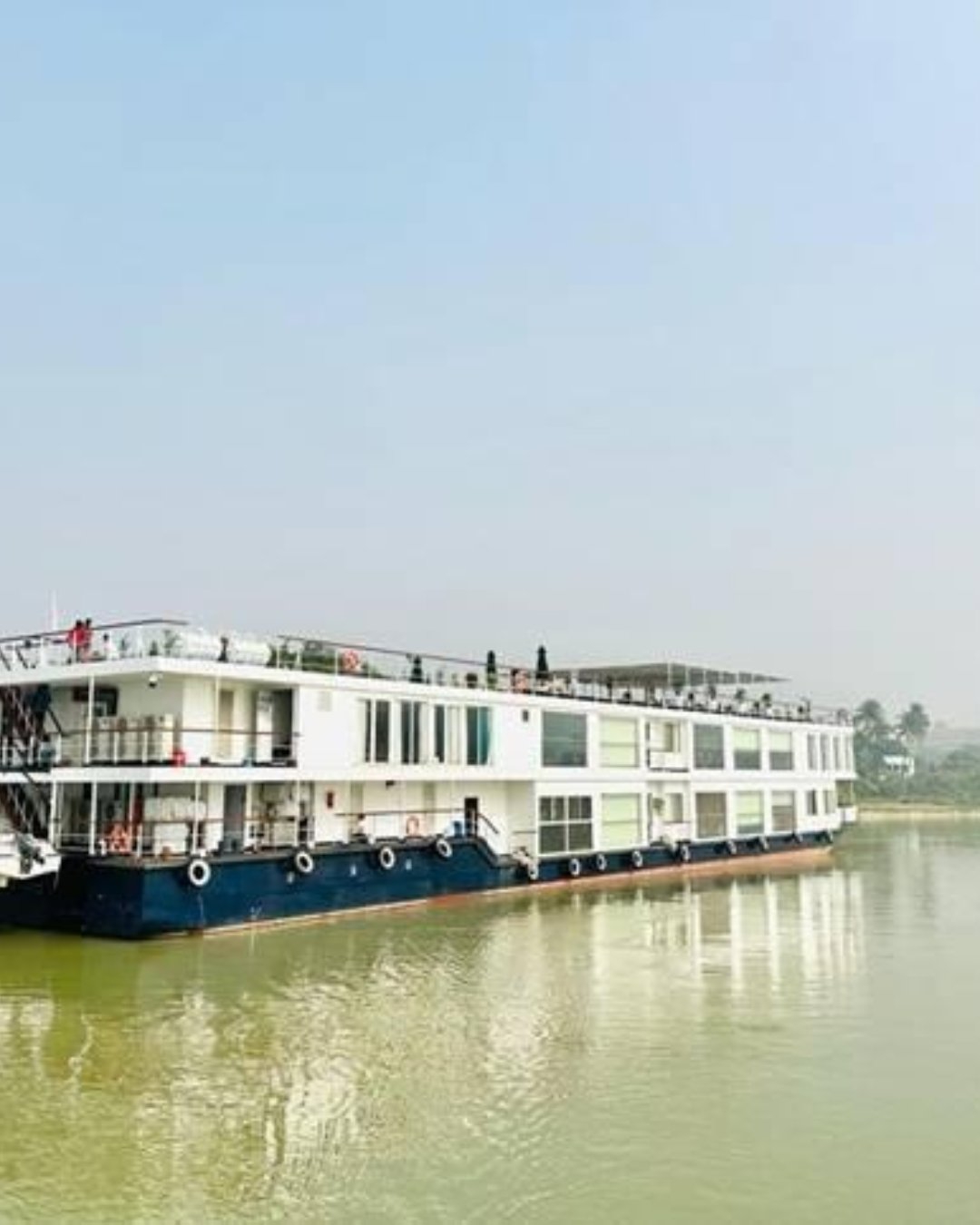
The Longer Voyages Nobody Books
Beyond the ninety-minute sightseeing run there is a whole tier of river travel that almost no visitor to Varanasi knows exists.
●A day cruise downriver to Chunar Fort turns the river into transport rather than a viewpoint. Meals on board, live music on some sailings, a couple of hours at the fort, and a return leg watching the Ganga's
rural bank go by — a completely different landscape from the ghats.
●Cabin-based vessels run multi-day itineraries linking Varanasi with Chunar, Vindhyachal and Prayagraj, with rooms, decks and full board. This is river travel proper, not a sightseeing lap.
●At the far end, long-haul Ganga river cruises run itineraries measured in weeks rather than hours, using Varanasi as a major stop rather than a base.
●These sail on fixed seasonal schedules with limited capacity and effectively cannot be booked on arrival. They are trip-shaped, not activity-shaped: you plan the trip around the sailing, not the sailing around the trip.
●Water levels govern everything. Monsoon and immediate post-monsoon conditions change what can run and where it can moor, and schedules shift accordingly.
Pro tip: If a longer voyage appeals, work backwards from the sailing calendar when you plan the trip. These are the one part of Varanasi you cannot improvise once you are there.
The mistakes that ruin it:
●Treating a multi-day voyage as something to sort out on arrival.
●Booking a Chunar day cruise on a tight itinerary — it consumes the entire day and it will not be rushed.
●Assuming schedules are stable year-round. They follow the river.
17
MomentB-2/63 B, Varanasi
Who Should Actually Take the Cruise
The most useful thing anyone can tell you about a Varanasi cruise is whether you are the person it was built for.
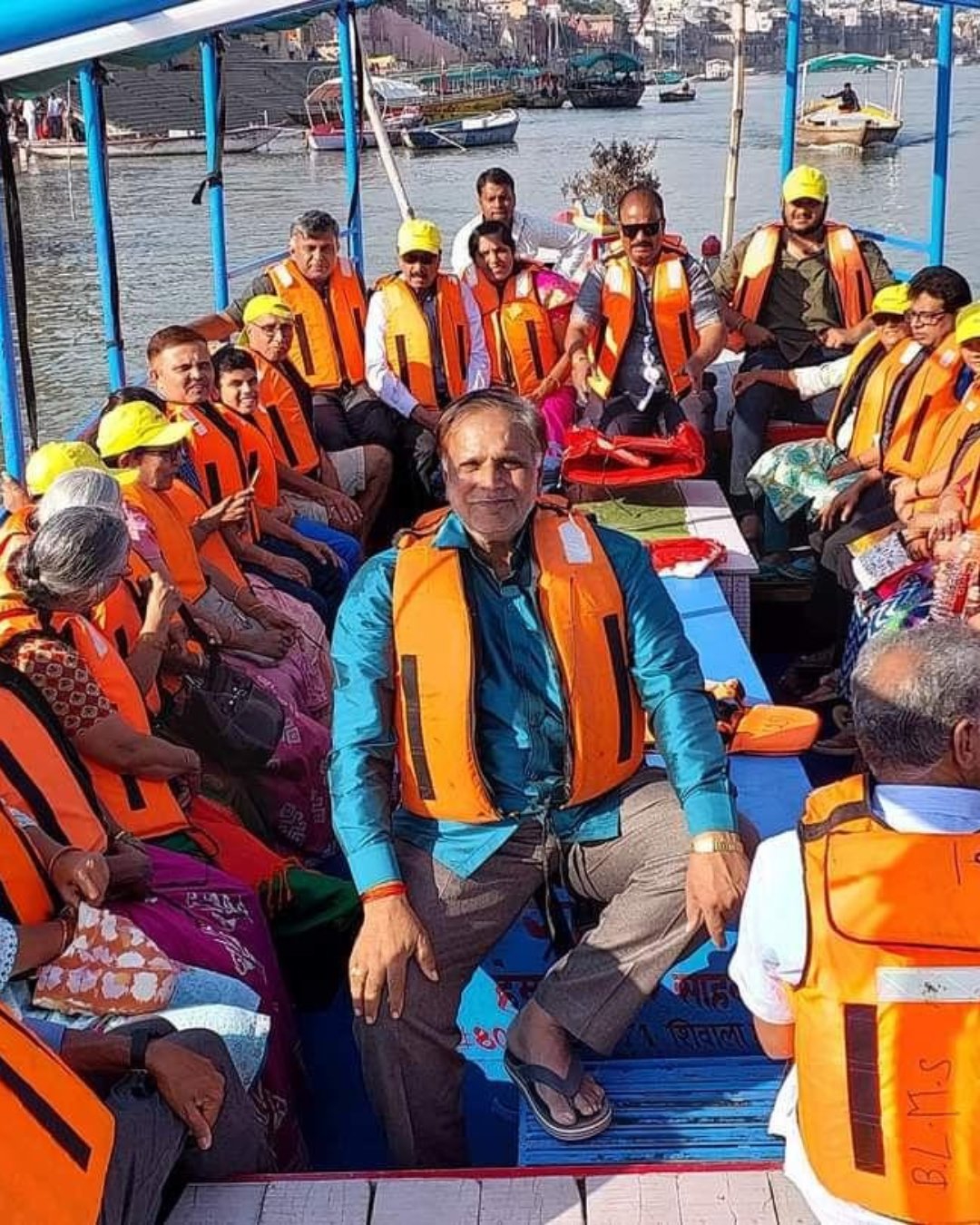
●It is the right call for multi-generational family groups, for anyone who cannot manage steep wet ghat steps, for wheelchair users and people with limited mobility, and for anyone travelling with small children.
Road access at the pier, a stable deck, a seat, a railing and a toilet solve real problems that a rowboat cannot.
●It is right in peak summer, when an hour on an open rowboat at midday is genuinely unpleasant, and in heavy rain when the small boats are miserable or not running.
●It is right for a first orientation on a short trip — one sailing gives you the shape of the whole riverfront in ninety minutes.
●It is the wrong call for photographers, for anyone chasing quiet, for solo travellers who want to be close to the ritual life of the steps, and for anyone whose one river experience of the trip it will be.
●It is also the wrong call if what you actually want is the picture you saw online. That picture was almost certainly taken from a rowboat.
Pro tip: If your group is mixed — some who want the intimacy and some who need the comfort — do the cruise together and let whoever wants the rowboat go out alone at dawn the next morning. Everyone gets the version they came for.
The mistakes that ruin it:
●Booking a cruise for a group of two who both wanted to be close to the water.
●Skipping the cruise on principle when a member of the group physically cannot do the steps.
●Treating the cruise and the rowboat as a choice when a two-day itinerary has room for both.
16
MomentB-2/63 B, Varanasi
The Trade-offs Nobody Lists in the Brochure
Every cruise listing in Varanasi reads the same, and none of them mentions the things you actually notice on board.
●It runs on a schedule and a route. There is no stopping for the light, no detour, no waiting. If something extraordinary happens on a ghat you are already past, you are past it.
●There is engine noise and vibration throughout. On a river whose main sensory quality is quiet at dawn, this is a real loss, and it is the thing rowboat passengers notice most when they switch.
●On a full sailing you are sharing the good side of the deck with everyone else who worked out which side the ghats are on. The railing is finite.
●The vessel keeps to the deeper channel, which in low-water months can be noticeably further out from the ghats than the photographs suggest.
●Announcements and commentary vary enormously by sailing. Some are genuinely informative; some are a loudspeaker over the top of the one hour of quiet you came for.
●None of this makes the cruise a bad choice. It makes it a specific choice, and going in knowing the trade is the difference between a good evening and a disappointed review.
Pro tip: Sit toward the bow, away from the engine at the stern. The vibration and noise difference across the length of the vessel is larger than most people expect.
The mistakes that ruin it:
●Booking the last sailing of the evening and expecting the ghats to still be busy.
●Expecting silence. It is a powered vessel carrying a crowd.
●Judging the whole river by the cruise. The Ganga at dawn from a rowboat is a different experience and it is the one this city is actually known for.
Destination
Varanasi, Uttar Pradesh, India
People also ask
01Question
How much does a Ganga cruise in Varanasi cost?
A standard 90-minute sightseeing or Aarti cruise generally sits in the ₹750–₹1,500 per person band, varying by deck, sailing and season. Treat any single number you read online — including this one — as indicative, and confirm the final price at the point of booking. Day cruises to Chunar Fort and multi-day cabin voyages are separate products at much higher prices. Confirm the current rate at the time of booking — published figures vary widely and date quickly.
02Question
Where does the Varanasi cruise depart from?
The main cruise vessels board at Ravidas Ghat, by the Ravidas Park entrance in Nagwa near Lanka, at the southern
end of the ghat line. It is not at Dashashwamedh and is not walkable from the old city — allow 20 to 35 minutes by
road from the Godowlia area, and more before an evening sailing. Ravidas Ghat is used because it has direct road
access and parking.
03Question
Is a Ganga cruise better than a boat ride in Varanasi?
Neither is better; they answer different questions. A cruise gives you height, comfort, shade, a seat, a toilet and a fixed schedule, and shows you the full sweep of the ghats as architecture. A rowboat gives you closeness, quiet and the ability to stop where you want. Cruises suit families, elderly travellers, mobility needs and hot or wet weather. Rowboats suit photographers and anyone who wants to be inside the morning.
04Question
Can you see the Ganga Aarti from a cruise?
Yes. The evening sailing holds position off Dashashwamedh Ghat during the ceremony and you see the entire
tiered arrangement — platforms, priests, lamps and crowd — at once. You are further back than the rowboats clustered near the steps, so lamps read clearly but individual faces do not, and the sound arrives thinned. It is the safest and most comfortable way to see the aarti, not the closest.
05Question
Should I book the AC deck or the open deck?
Open upper deck in every month except peak summer and heavy rain. The enclosed lower deck has large windows, but glass reflects, is rarely clean, and effectively ends photography. Choose the air-conditioned deck for May and June heat or for monsoon downpours. Upper-deck seating is limited and fills first, so request it at booking and confirm you have a seat rather than just deck access.
06Question
What is the best time for a Varanasi cruise, morning or evening?
The morning sailing is the better cruise for most people — low light, winter mist on the water, the ghats waking up,
and far fewer passengers. The evening sailing is the aarti run and is the one that sells out. If you only have one evening, the aarti is better seen from a rowboat or the steps, so take the morning cruise and see the ceremony separately.
07Question
How long is a Varanasi Ganga cruise?
The standard sightseeing and aarti cruises run roughly 90 minutes, with two sailings a day, morning and evening. Day cruises downriver to Chunar Fort take a full day including a guided fort visit and meals on board. Multi-day cabin voyages linking Varanasi with Chunar, Vindhyachal and Prayagraj run on fixed seasonal schedules and are
booked well in advance.
08Question
Is the Varanasi cruise suitable for elderly people and wheelchair users?
It is the most accessible river option in Varanasi. Ravidas Ghat has direct road access and parking, so there is no
long descent down wet ghat steps, and the vessel offers stable decks, fixed seating, railings and toilets. This is the main reason to choose a cruise over a rowboat. Confirm specific step-free boarding arrangements with the operator in advance, as these vary by vessel.
Experience layers
Go further into one part of this trip.