


Ayodhya Parikrama: The Three Sacred Circuits
Fifteen kilometres, forty, or two hundred and eighty — Ayodhya's three walking circuits, when they happen, and which one you can actually do.
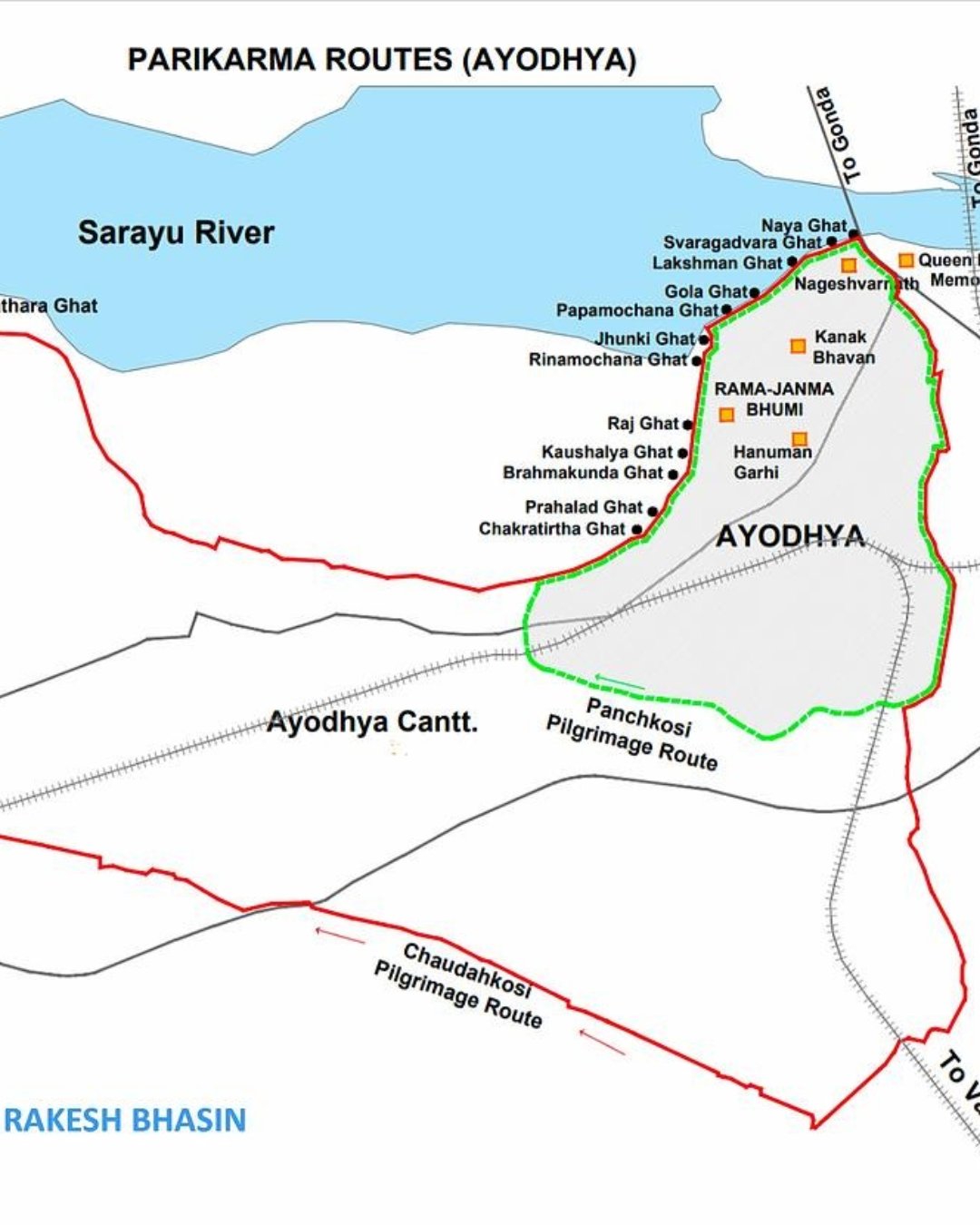
Ayodhya’s Parikrama is not one walk with three different names. It is a set of three traditional pilgrimage circuits that gradually expand the sacred geography around the city: Panchkosi, Chaudah Kosi and Chaurasi Kosi. In practical terms, you are looking at roughly 15 km, 42 km and around 275 km, although historical and local descriptions can vary slightly in their measurements. The important part is understanding what each circuit actually means before you decide to put it on your itinerary. Panchkosi keeps you close to the heart of Ayodhya, Chaudah Kosi takes you into a much wider boundary, and Chaurasi Kosi becomes a multi-day pilgrimage through the surrounding countryside.
The timing matters just as much as the distance. The major annual Parikrama observances are connected with the Kartik lunar calendar, so their dates move every year on the Gregorian calendar. The Chaudah Kosi Parikrama is traditionally associated with Kartik Shukla Navami, while the Panchkosi Parikrama is associated with Kartik Shukla Ekadashi. That means you cannot plan your trip by simply choosing the same November date every year; we would check the year's Hindu calendar and the locally announced arrangements before building your journey around the event. Outside the main observance, you can still experience portions of these sacred routes as a personal walking journey, but that should not be confused with participating in the formal mass Parikrama.
So, which one can you actually do? Panchkosi is the practical choice for most travellers who want to experience Ayodhya on foot without turning the entire holiday into an endurance expedition. At roughly 15 km, we can give you a dedicated walking day, start early, build in temple and rest stops, and leave the following part of your itinerary lighter. Chaudah Kosi is a different proposition: around 42 km, often undertaken during the major Kartik observance and capable of extending through the night, so we would organize your accommodation, hydration, meals and recovery around the walk rather than trying to fit sightseeing around it. The Chaurasi Kosi is on another scale entirely—official Ayodhya pilgrimage information describes a route of about 275 km, beginning at Makhauda Dham in Basti district and passing through a much wider landscape across five districts.
That is why we would design your Ayodhya Parikrama according to your available time, walking ability and the experience you want, rather than simply choosing the biggest number. If you have two or three days in Ayodhya, we would build a Panchkosi-style walking experience into the trip and keep your main temple visits around it. If you are deliberately arriving for Kartik and want to experience the enormous movement of pilgrims, we would make the annual Parikrama the centrepiece of your stay.
Stops
Home
MomentShree Ram Janmabhumi Temple ,Ayodhya
Three Circuits, and Kos Is Not a River
Ayodhya has three sacred walking circuits, and the difference between them is the difference between an afternoon and a fortnight.
•A kos is an old unit of distance, roughly three kilometres. The circuits are named for how many kos they run, not for anything they circle.
•Panchkosi is five kos — about fifteen kilometres, walked in a single day.
•Chaudah Kosi is fourteen kos — roughly forty kilometres, walked through the night.
•Chaurasi Kosi is eighty-four kos — somewhere between 240 and 280 kilometres depending on the route measured, walked over weeks.
•Each circuit traces a boundary of sacred Ayodhya, widening outward from the temple town to the edges of what tradition holds was the Kosala kingdom.
•Several guides describe these as circling a river. They do not. The name is a measurement, and getting that wrong is the quickest way to tell a careless source from a careful one.
Pro tip: Decide which circuit you are actually walking before you read anything else. Almost every practical question — season, footwear, food, sleep, time off work — has a different answer for each of the three.
The mistakes that ruin it:
•Assuming the three circuits are versions of the same walk.
•Reading “kosi” as a river and planning around the wrong thing entirely.
•Underestimating the fourteen-kos walk because the five-kos one sounded manageable.
28
MomentSaryu Ghat, Manjha Kala
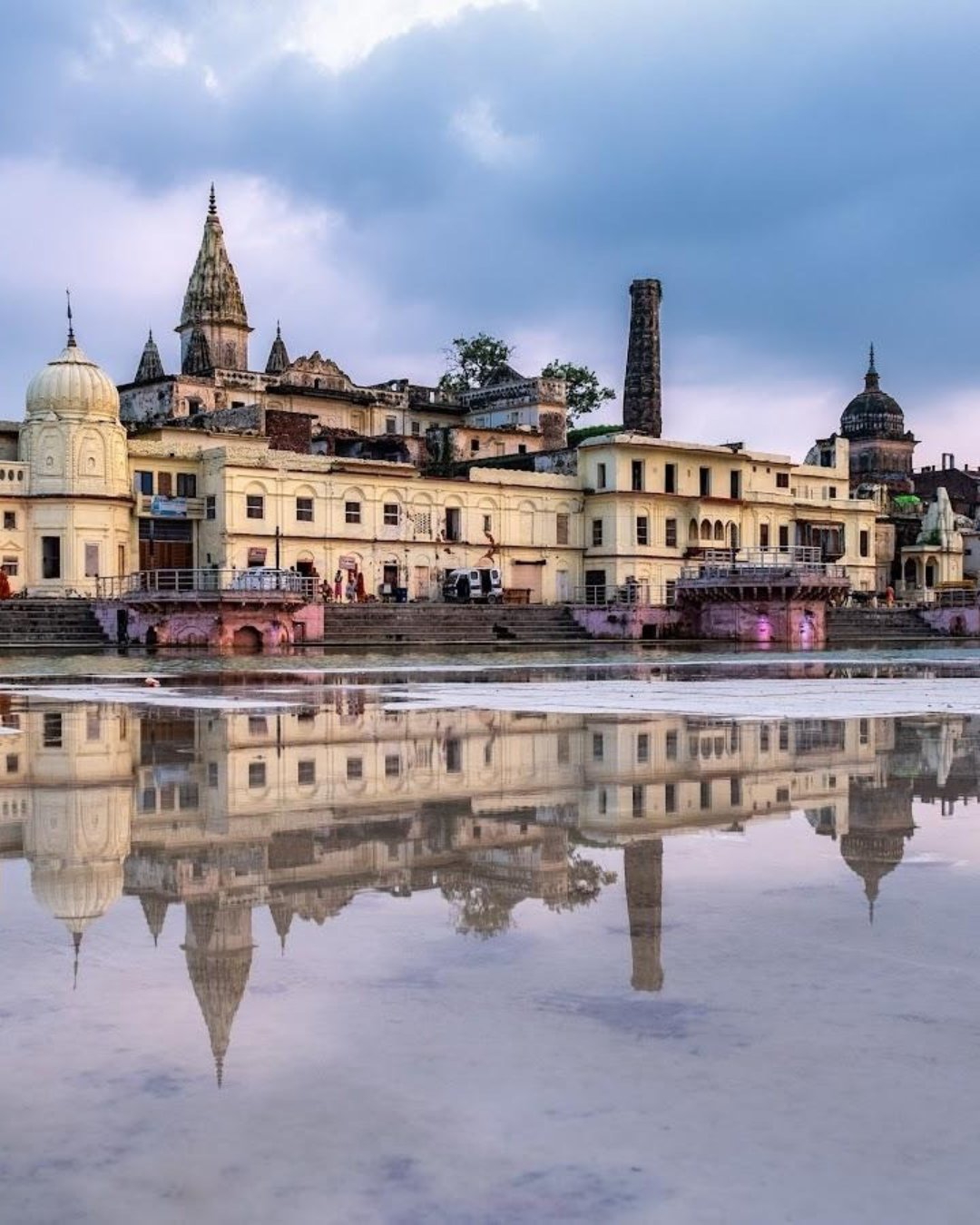
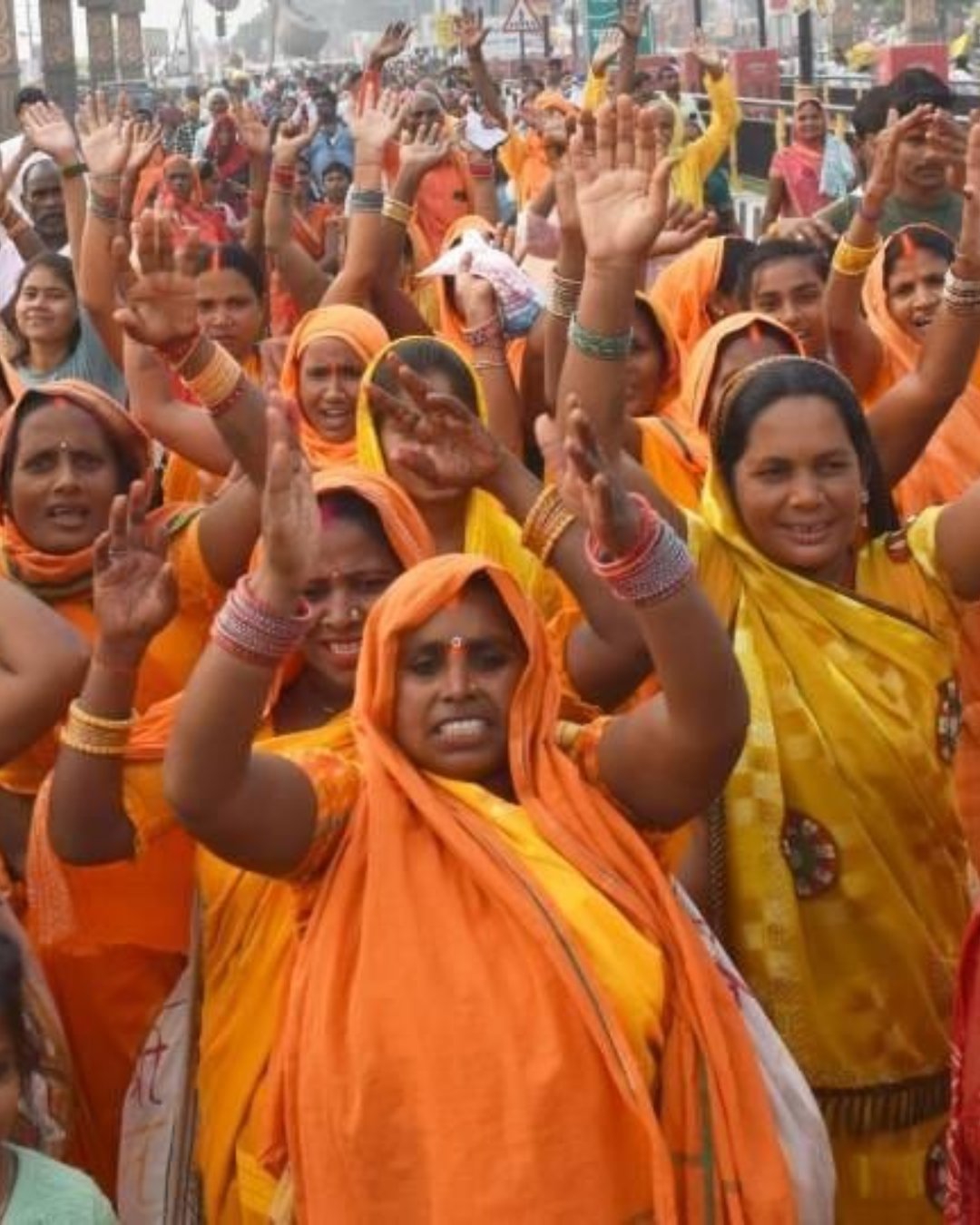
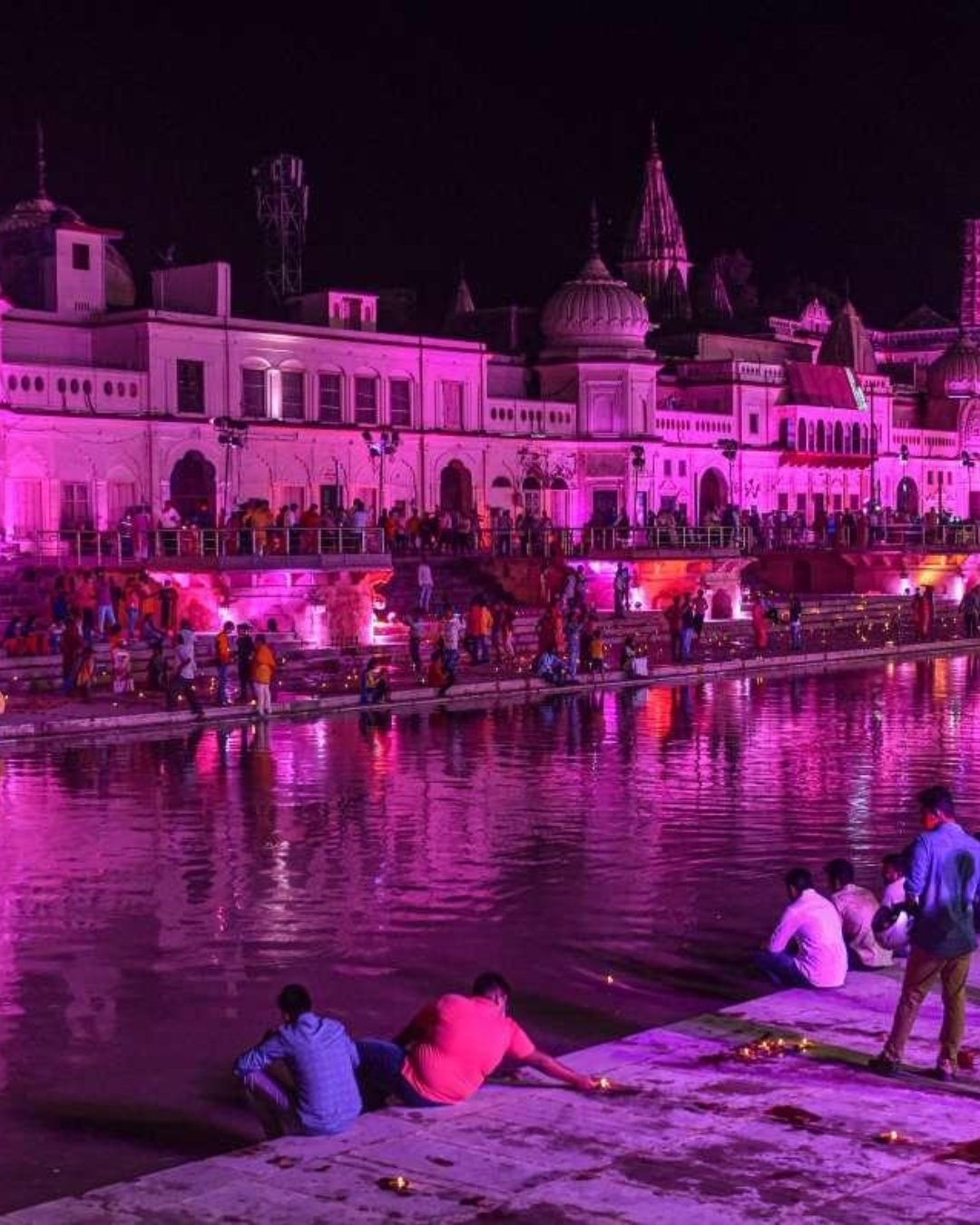
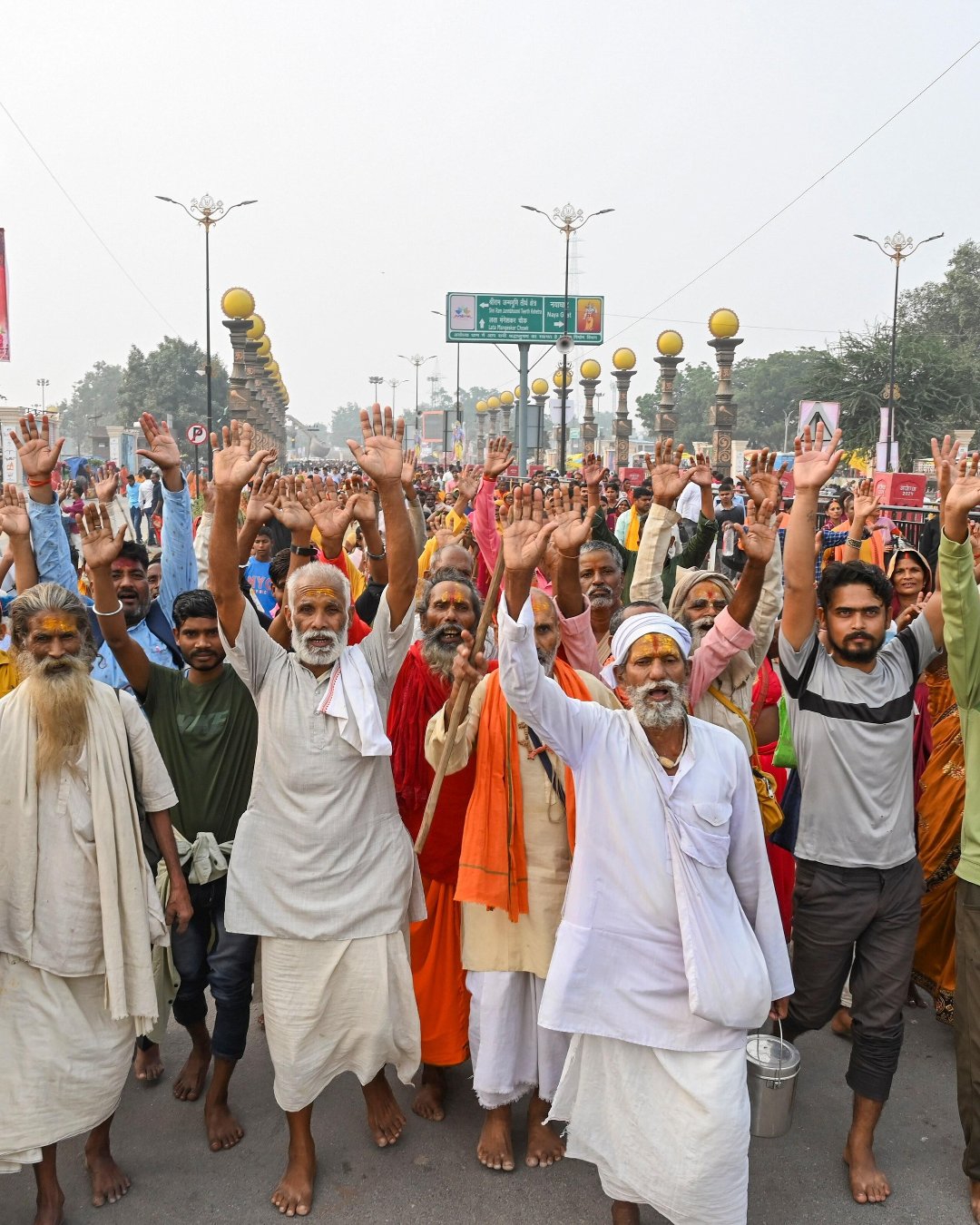
Panchkosi: Fifteen Kilometres, One Day
This is the one you can actually do, and most visitors never hear it exists.
•About fifteen kilometres, completed in a single day, tracing the inner boundary of sacred Ayodhya.
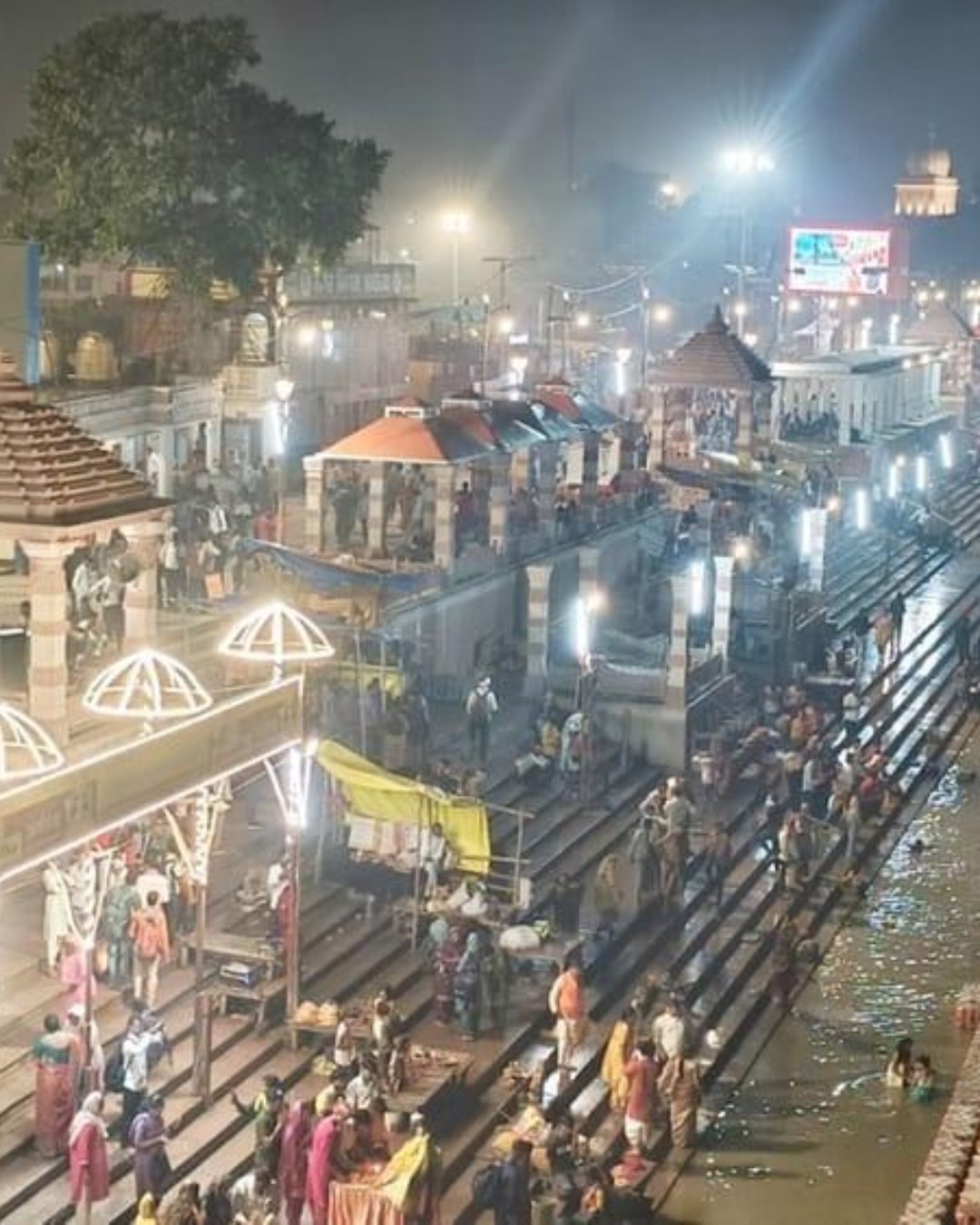
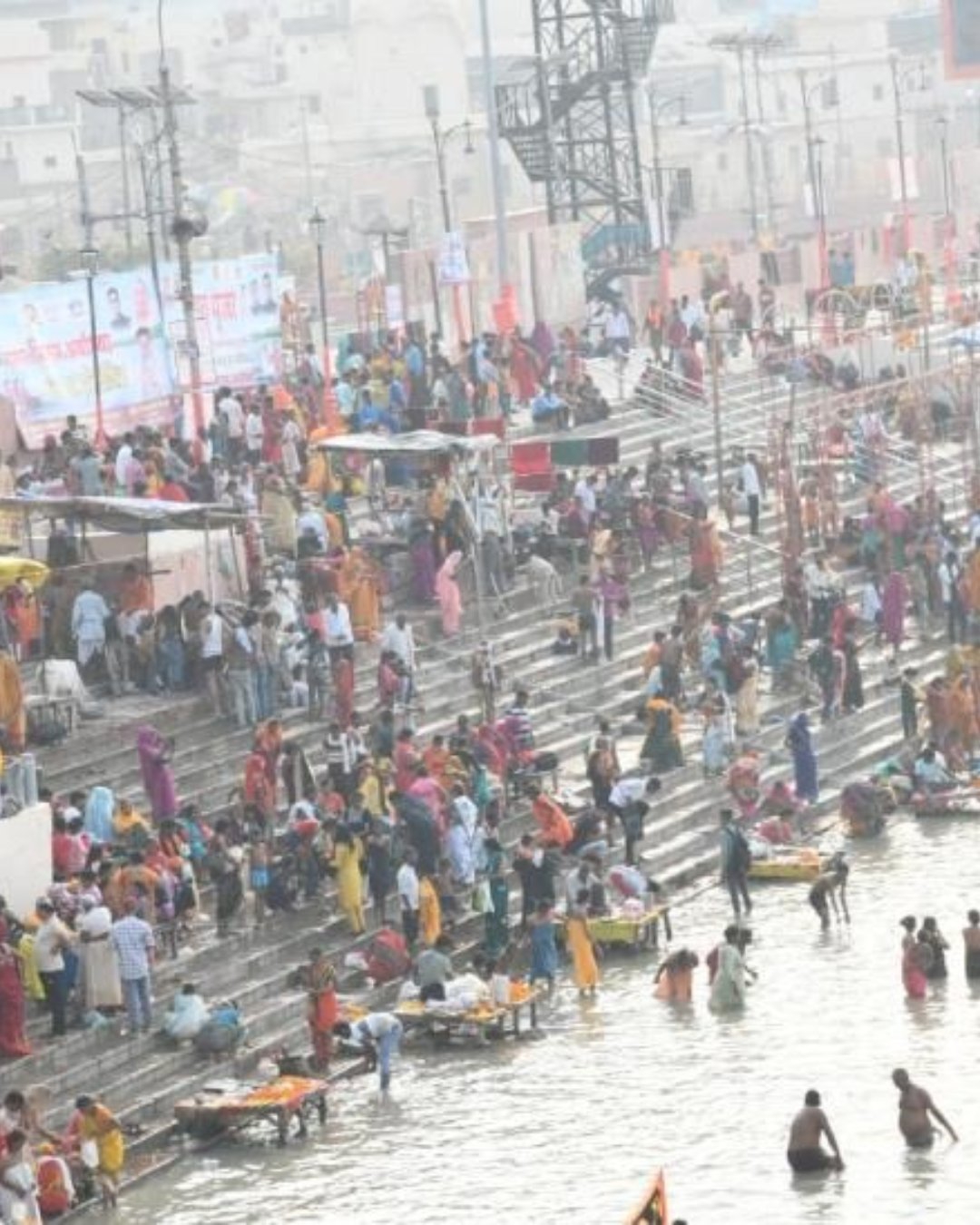
•The traditional starting point is Swargadwar, the Gate of Heaven, near the Saryu riverfront and close to Vasudev Ghat. Some pilgrims begin instead from the Ram Ki Paidi ghats.
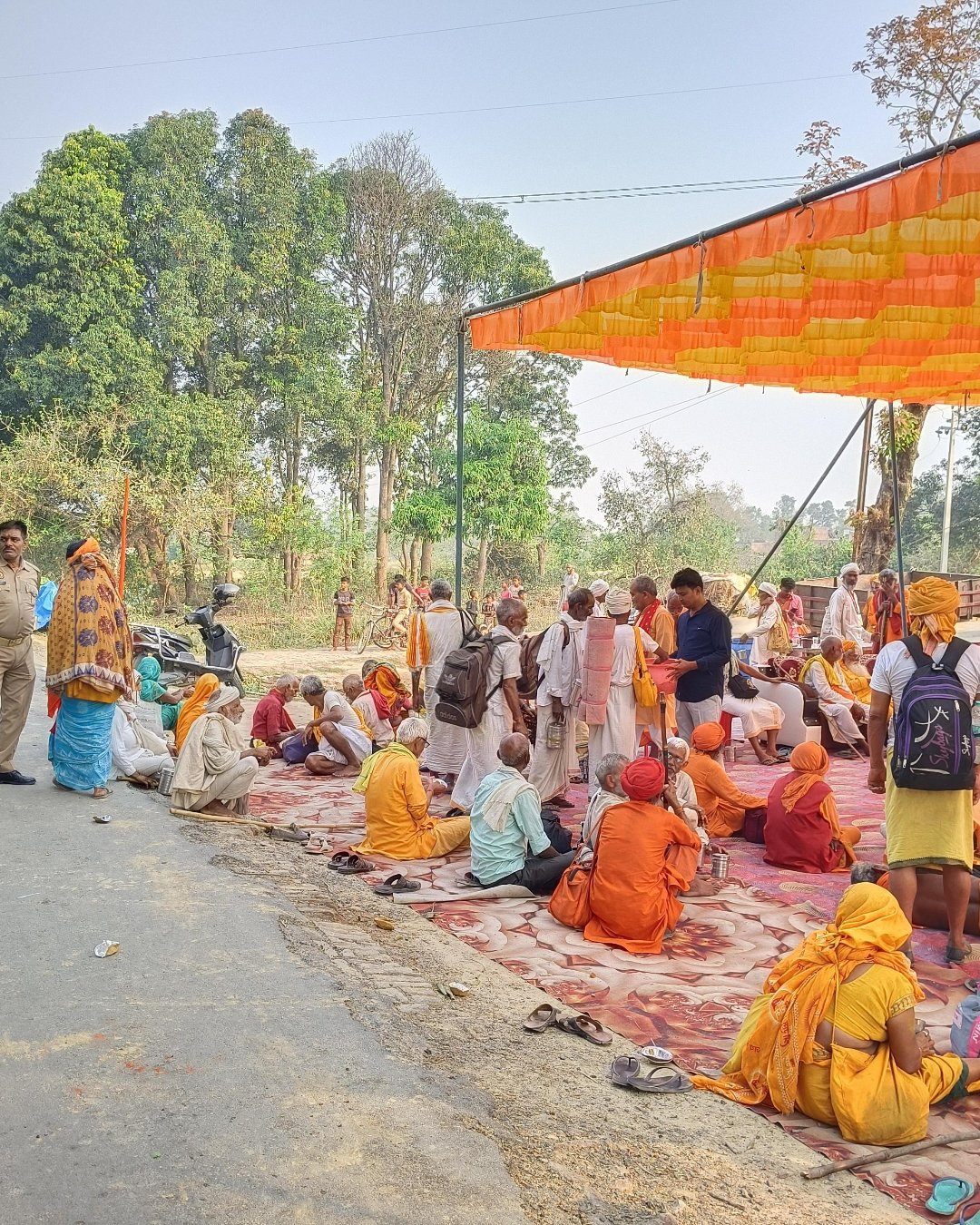
•The route passes temples, sacred kunds and ghats, with some stretches on quiet paths rather than roads.
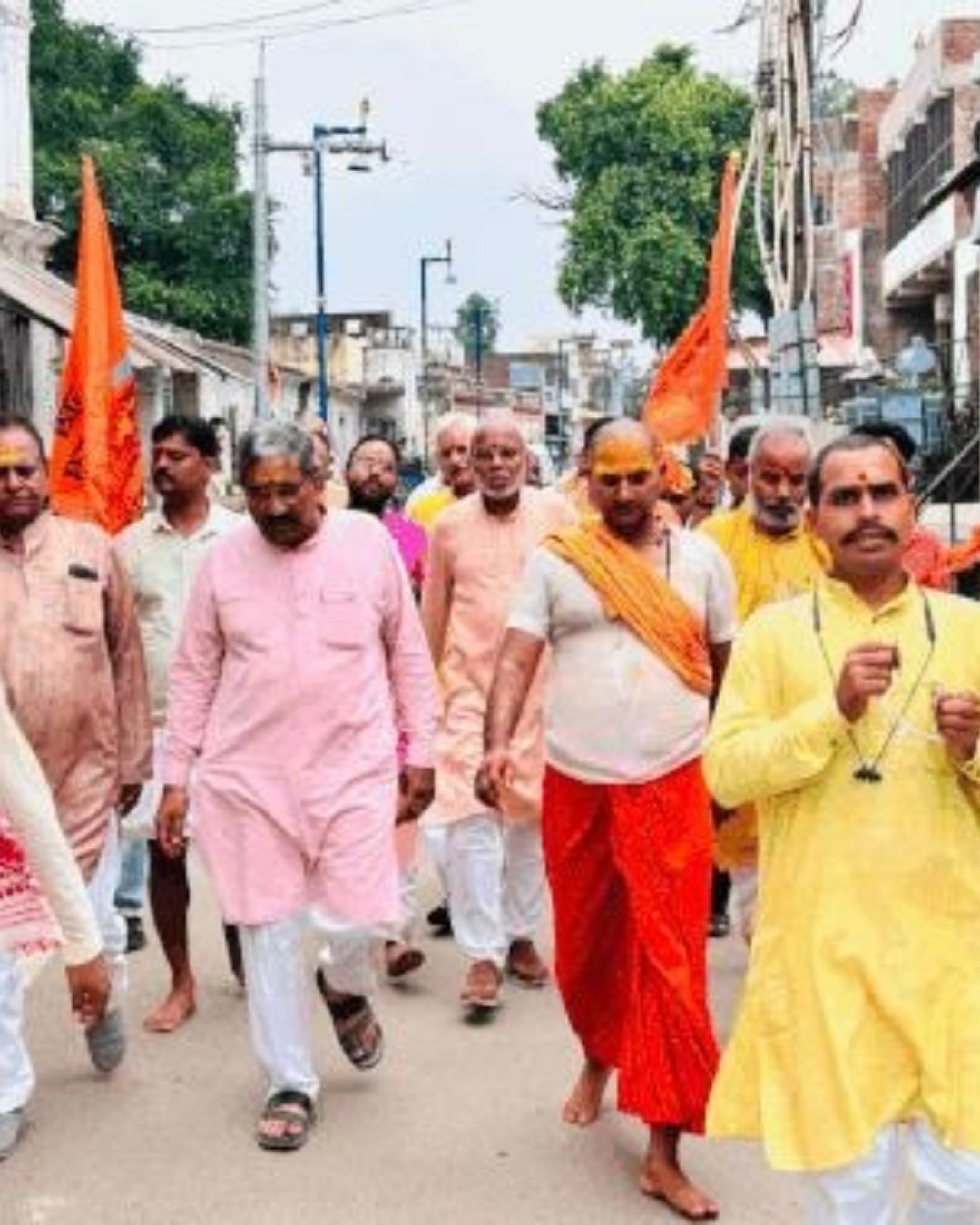
•Many devotees walk it barefoot. That is a choice rather than a requirement, and it changes the difficulty considerably.
•There is no entry fee, no booking and no pass. You start walking.
•Most walkers set out very early, both for the cool hours and to finish in daylight.
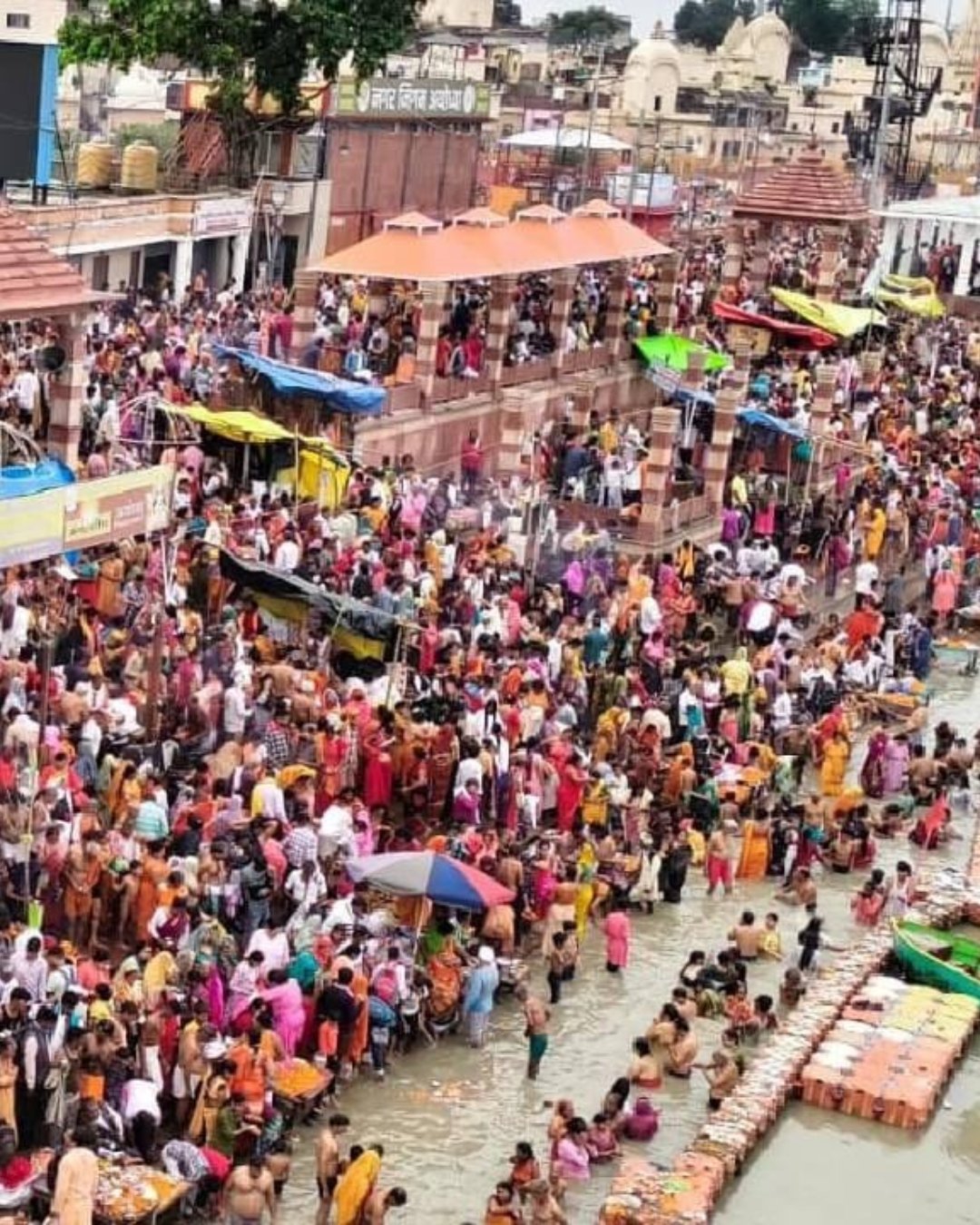
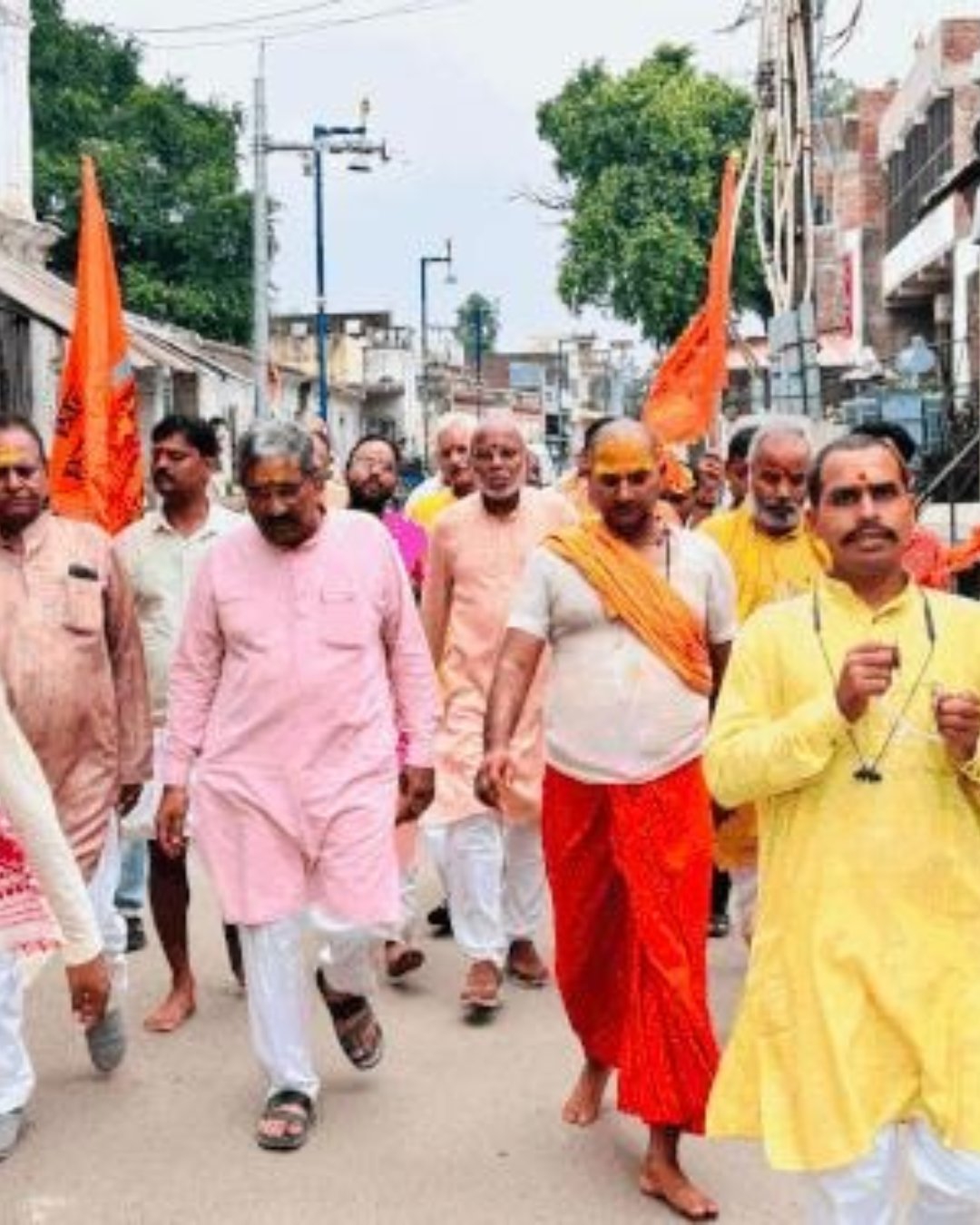
•Lakhs of pilgrims complete it during Kartik, but the route exists year-round and is quiet outside the festival
window.
Pro tip: Start before dawn and carry a torch for the first hour. The early section is the coolest and the quietest, and reaching the halfway point before the sun is high decides whether the second half is a walk or an ordeal.
The mistakes that ruin it:
•Starting mid-morning and walking the back half in full sun.
•Attempting it barefoot on a first visit without knowing the surface.
•Assuming it is a marked tourist trail. It is a pilgrimage route, used as one.
12
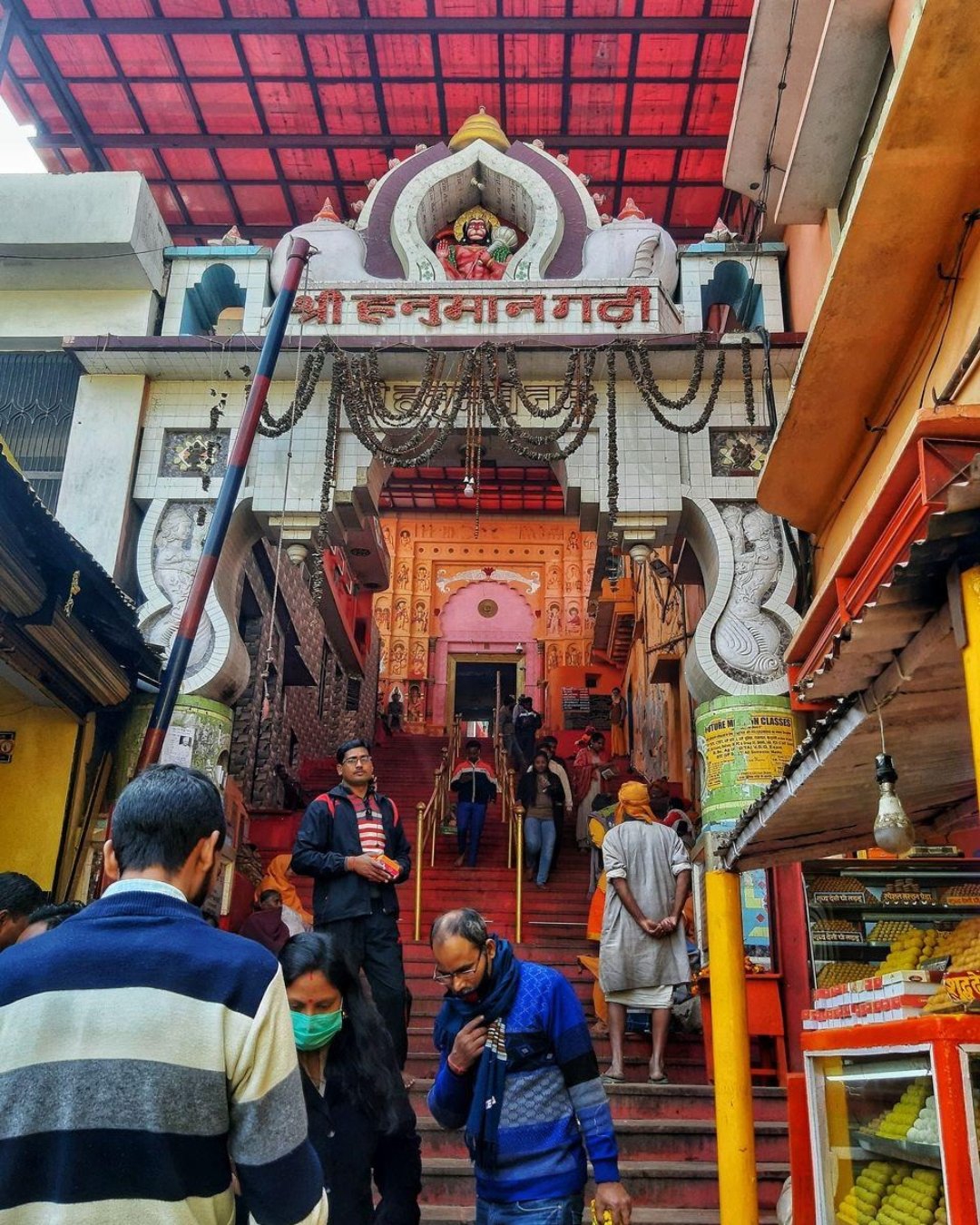
MomentShri Hanuman Garhi Mandir, Ayodhya
Chaudah Kosi: the Walk Through the Night
Three million people walk this one, through a single night, and almost nothing about it exists in English.
•Roughly forty kilometres, tracing a wider boundary than the Panchkosi route.
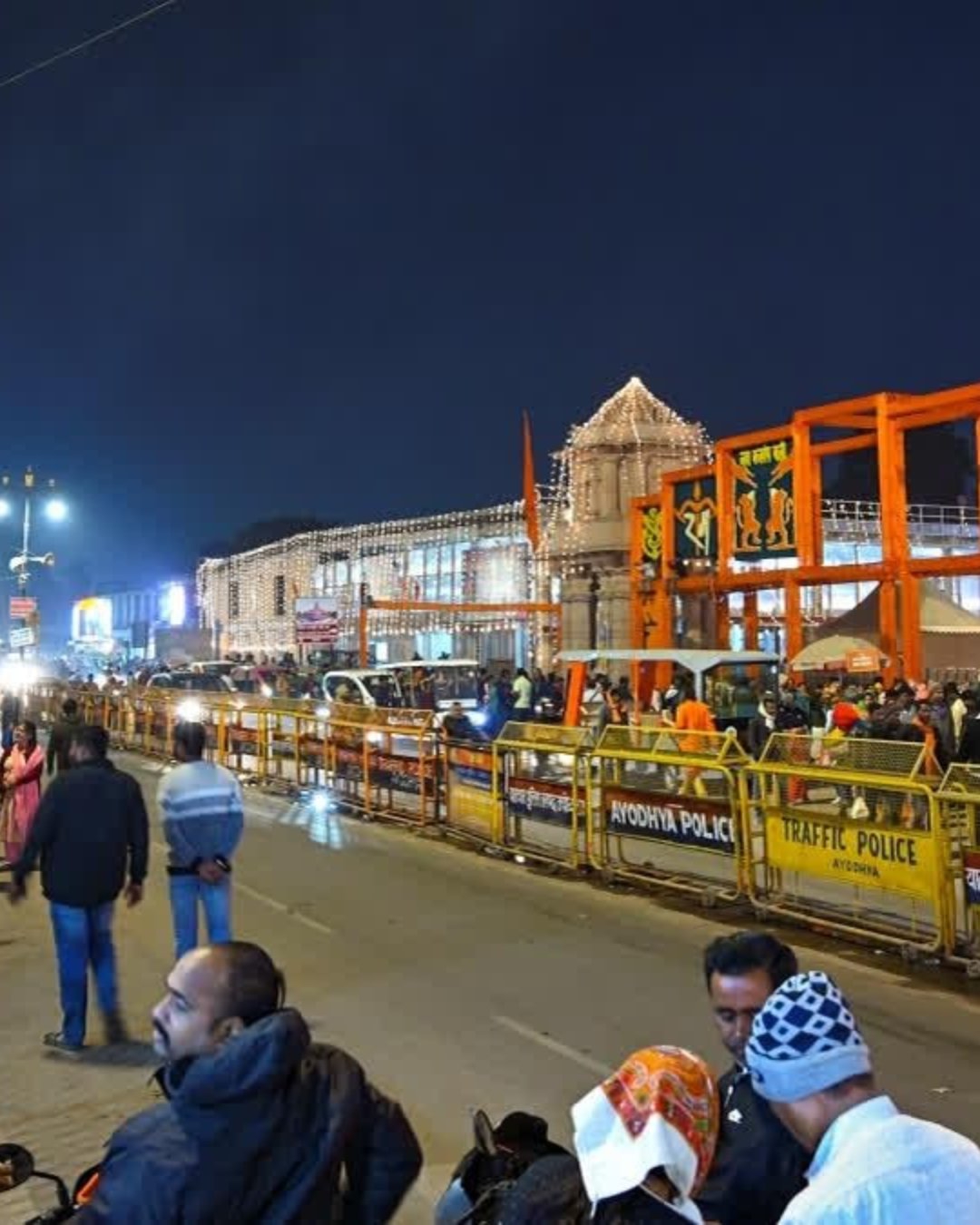
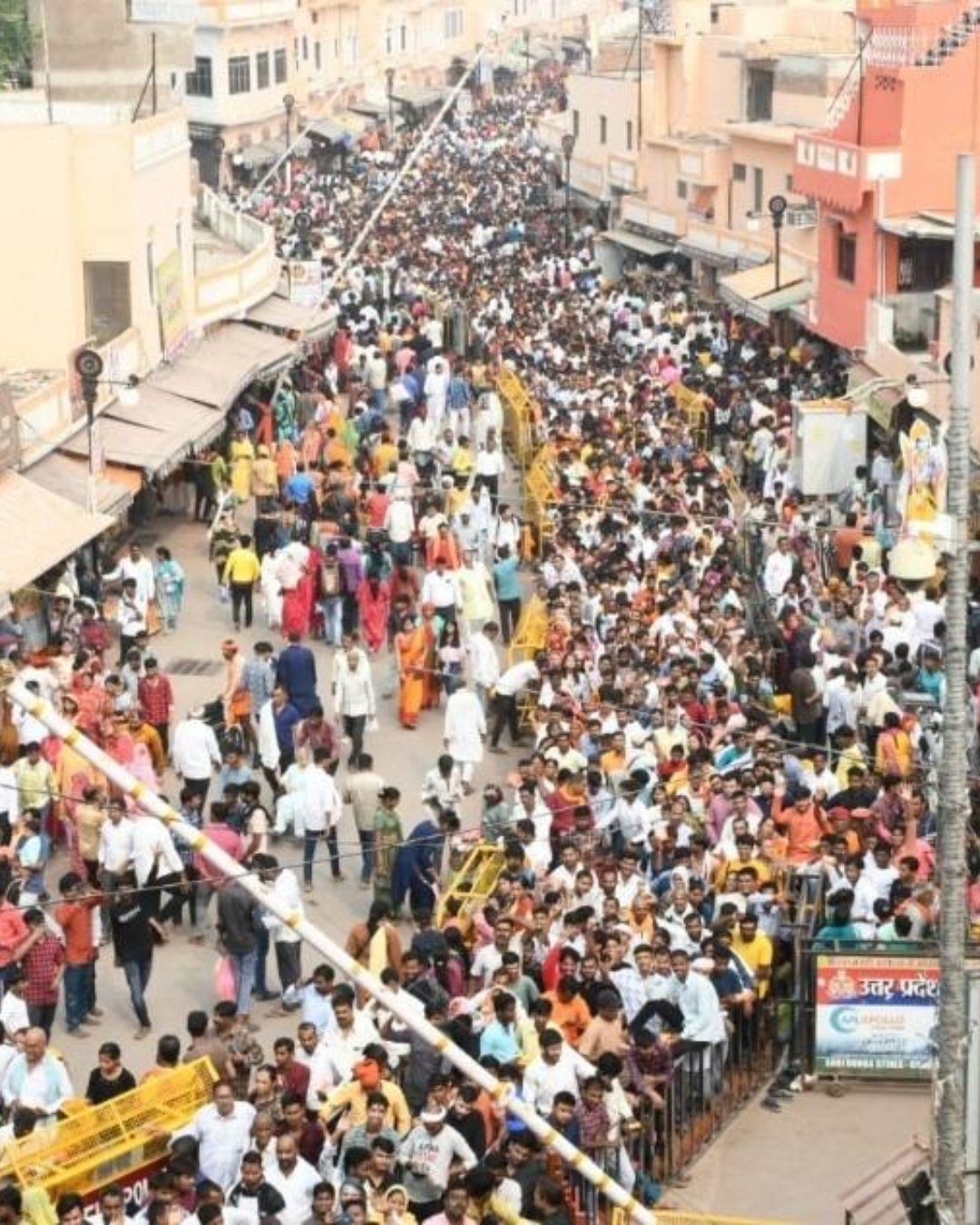
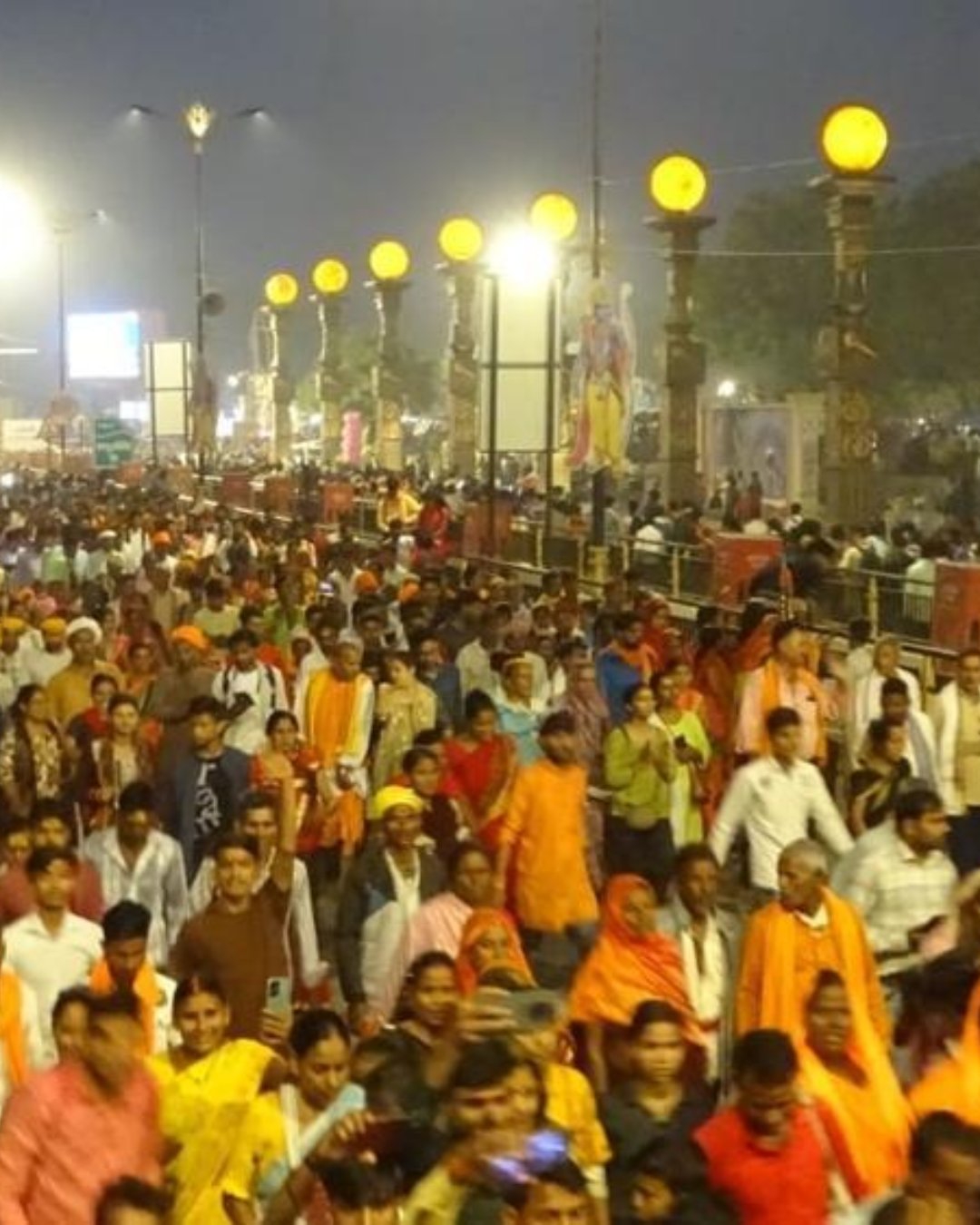
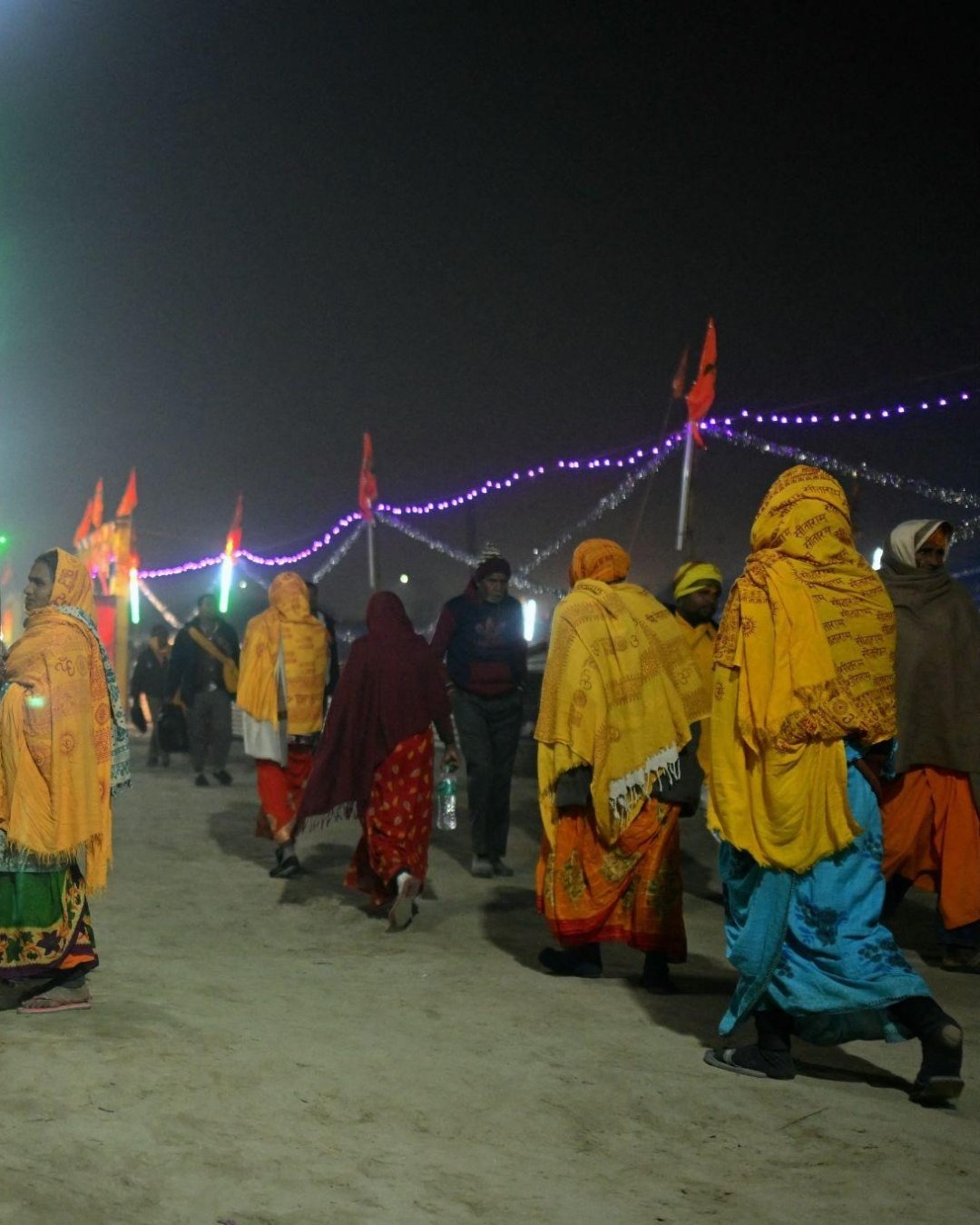
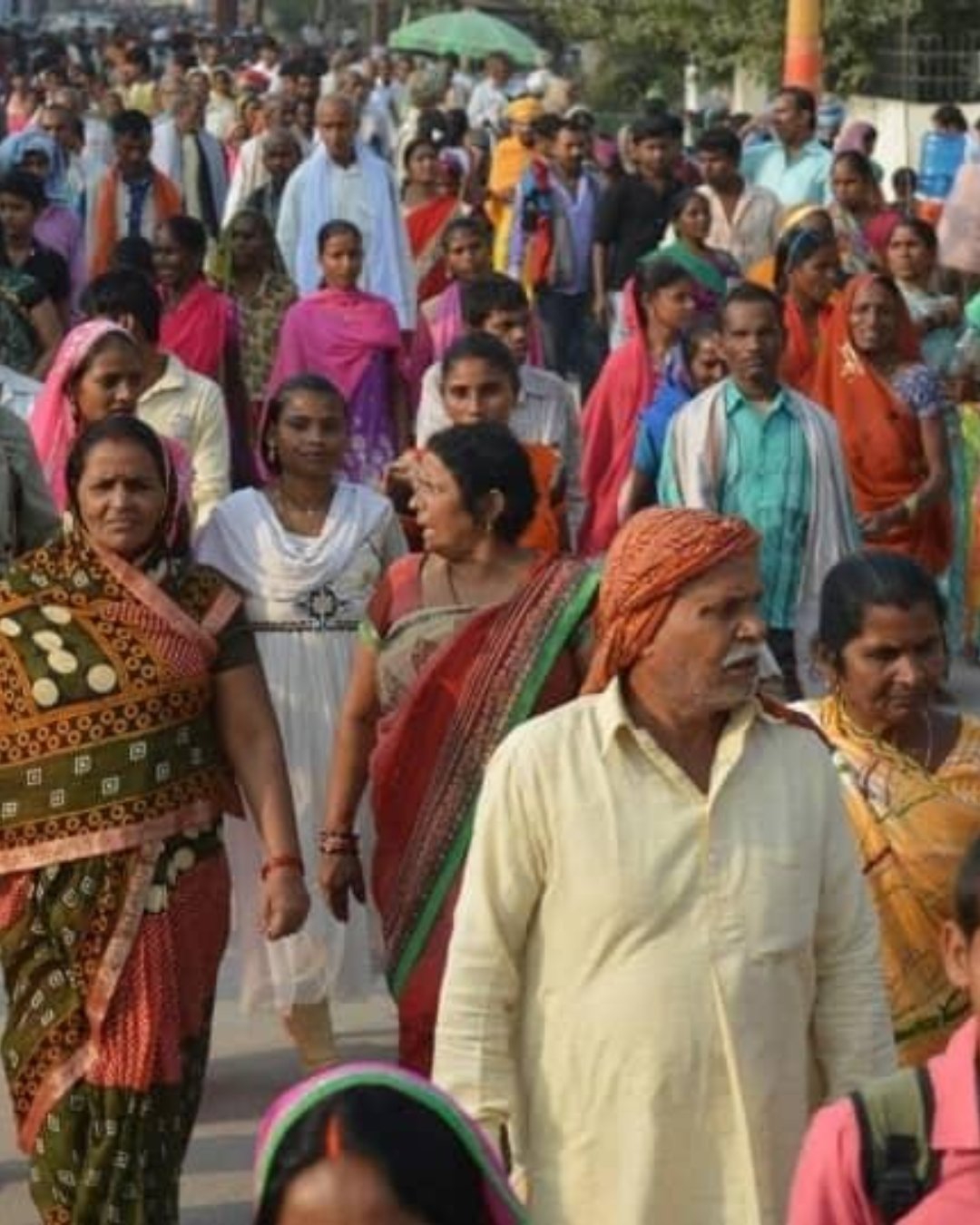
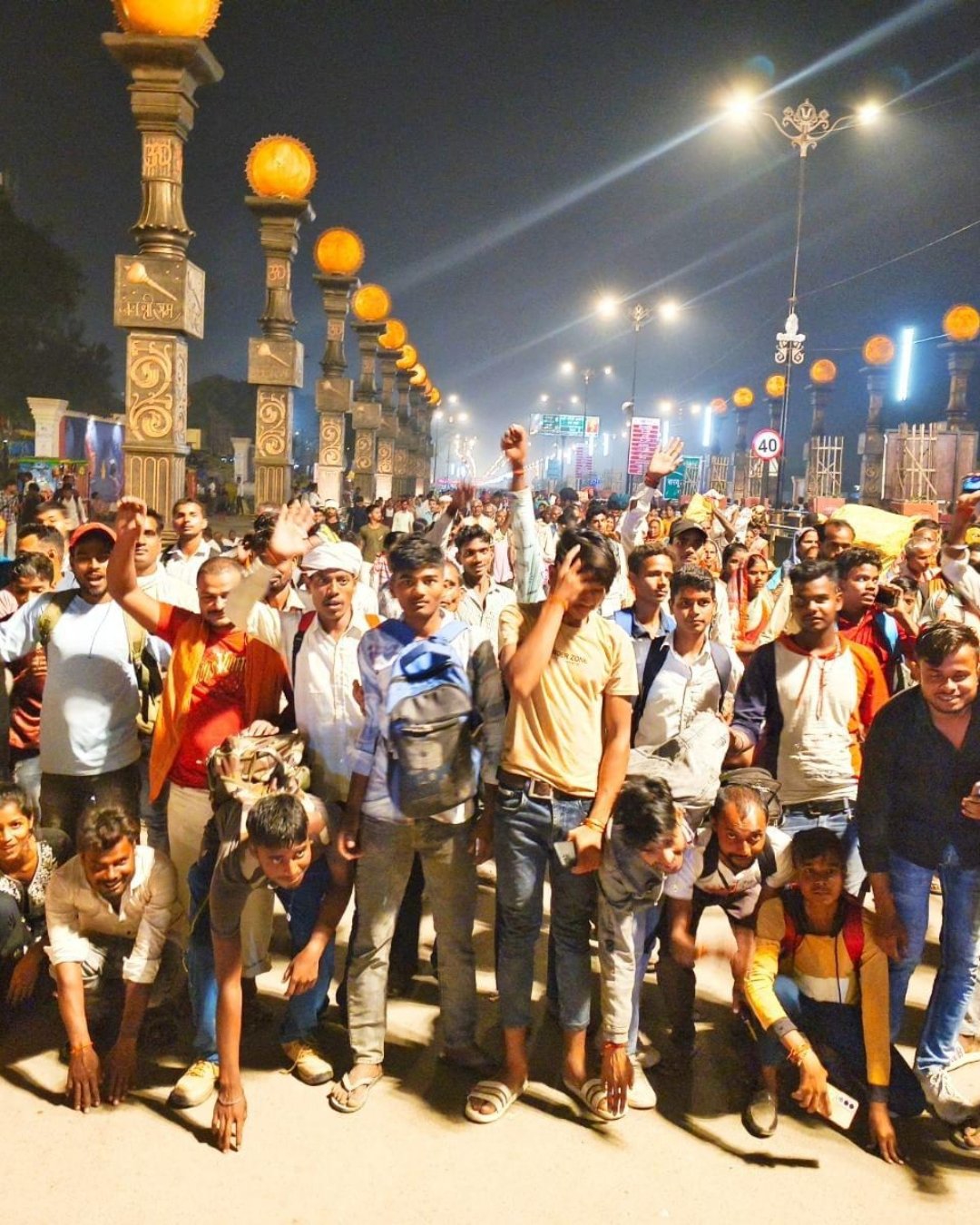
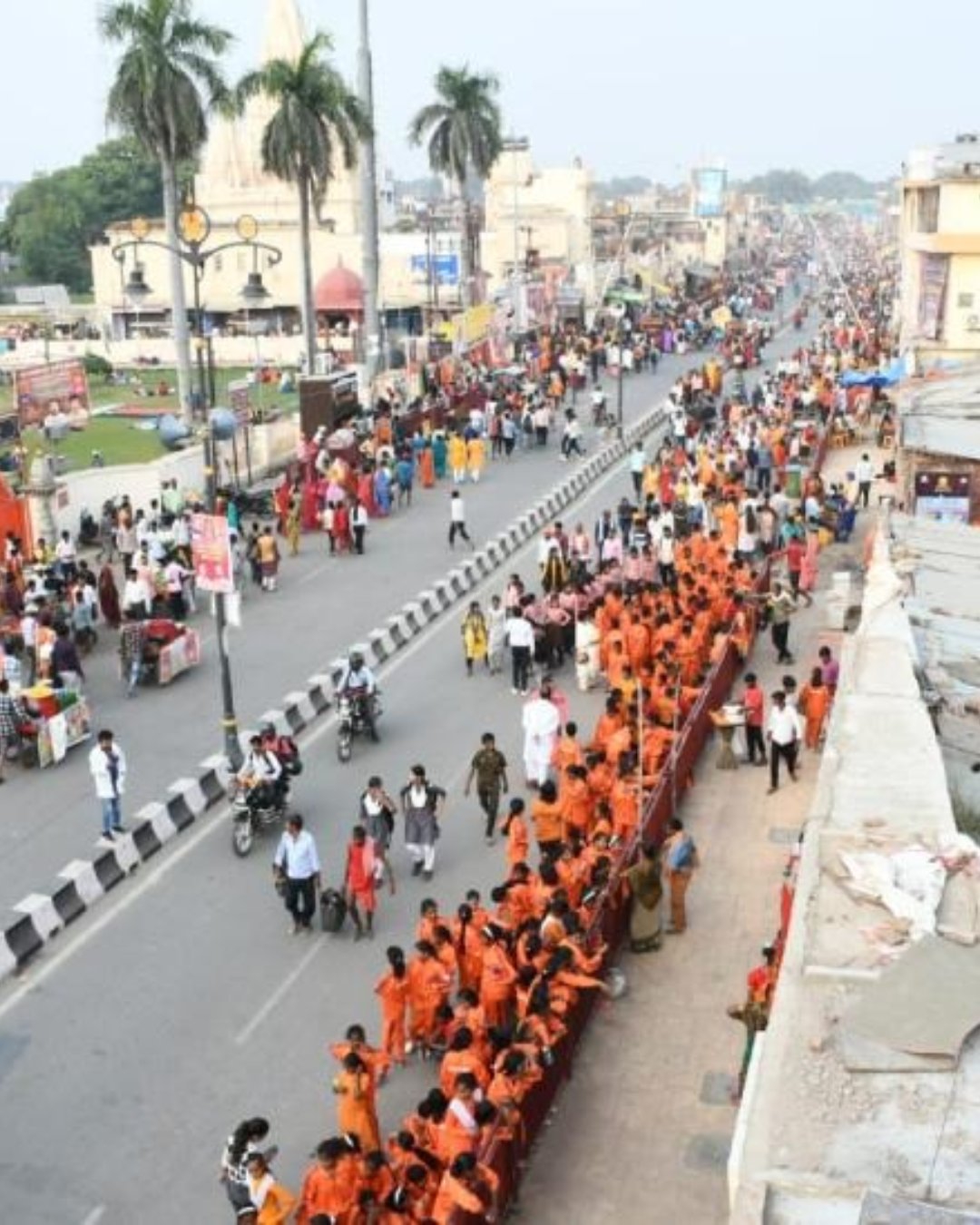
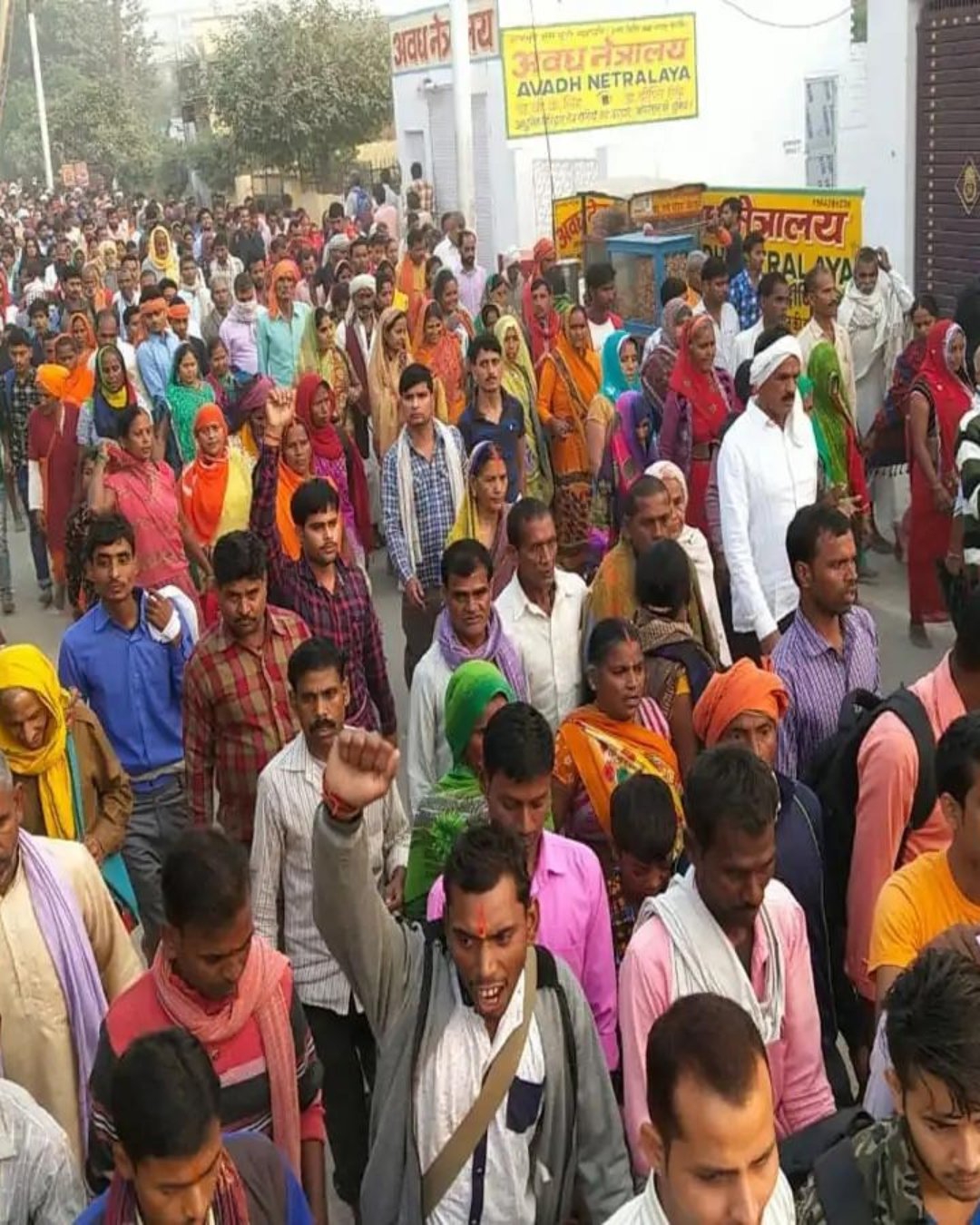
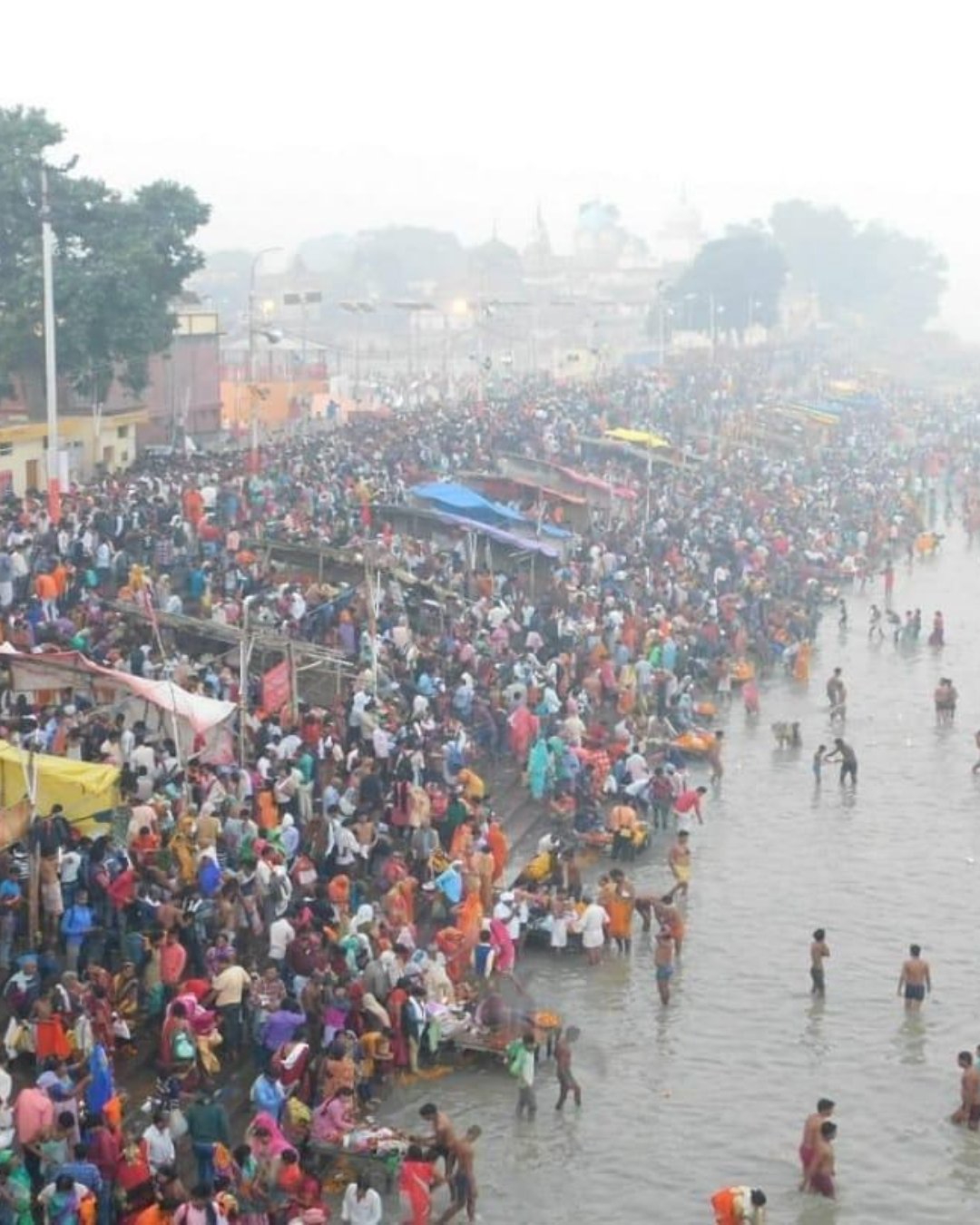
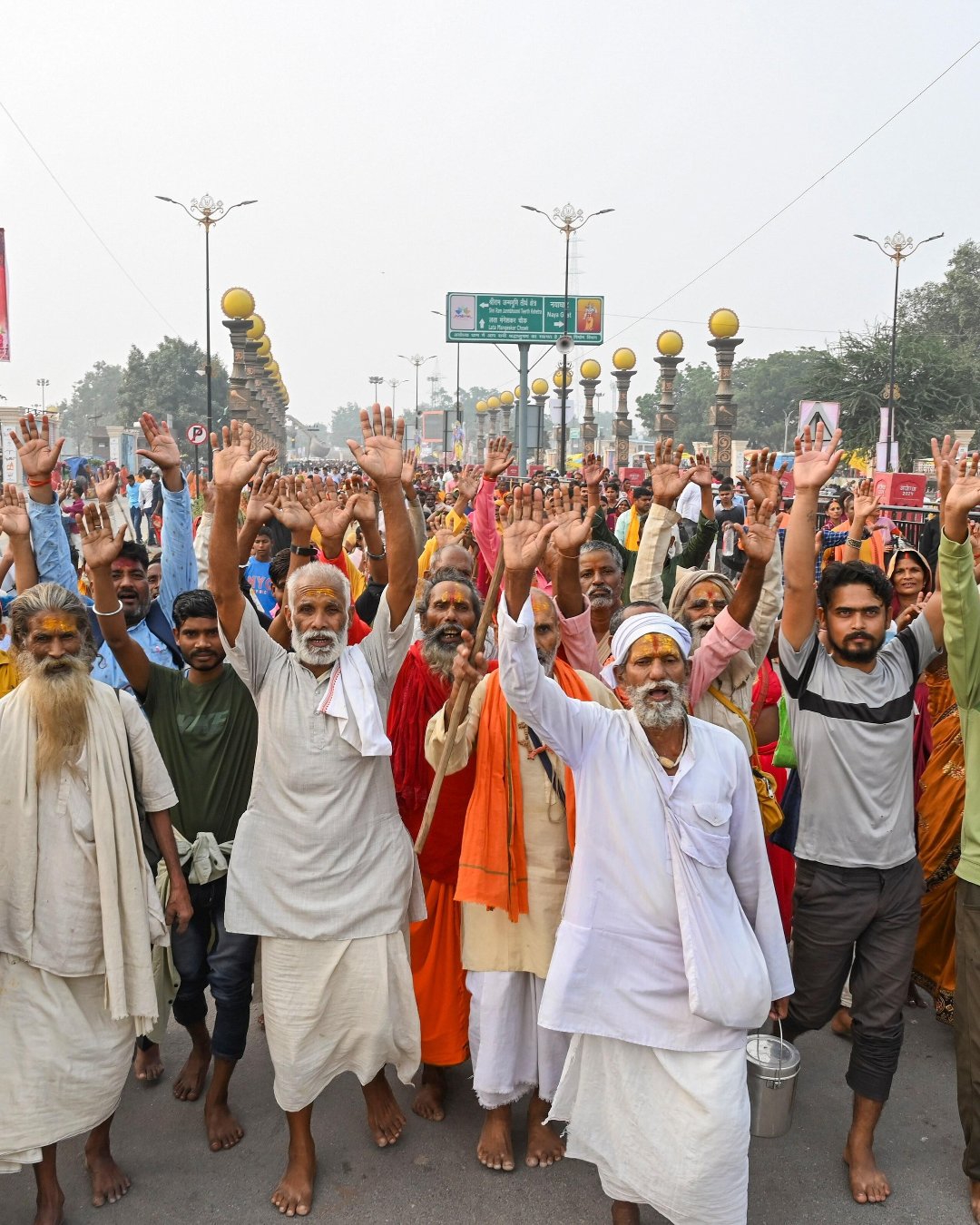
•It is walked on Kartik Akshaya Navami, and around thirty lakh — three million — devotees took part in a recent year.
•It happens inside a fixed ritual window whose start and end times are set by the calendar and announced each year, which is why it is walked overnight rather than whenever suits.
•Walkers continue on the route after the formal window closes, so the road stays full well beyond the official end.
•Traffic diversions, designated parking and hospital beds are arranged in advance by the district administration.
•This is not a walk you join casually alongside a sightseeing trip. It is the reason people travel to Ayodhya that week.
Pro tip: If you want to see this without walking it, stand on the route rather than in the temple queue. Three million people moving through one night is the single most extraordinary thing that happens in this town, and the temple will still be there the following morning.
The mistakes that ruin it:
•Planning an ordinary temple visit during the Chaudah Kosi window and expecting normal access.
•Treating a forty-kilometre overnight walk as an extended version of the fifteen-kilometre one.
•Arriving without accommodation booked. It is one of the busiest nights of the year.
14
MomentShri Hanuman Garhi Mandir, Ayodhya
Chaurasi Kosi: the One That Takes Weeks
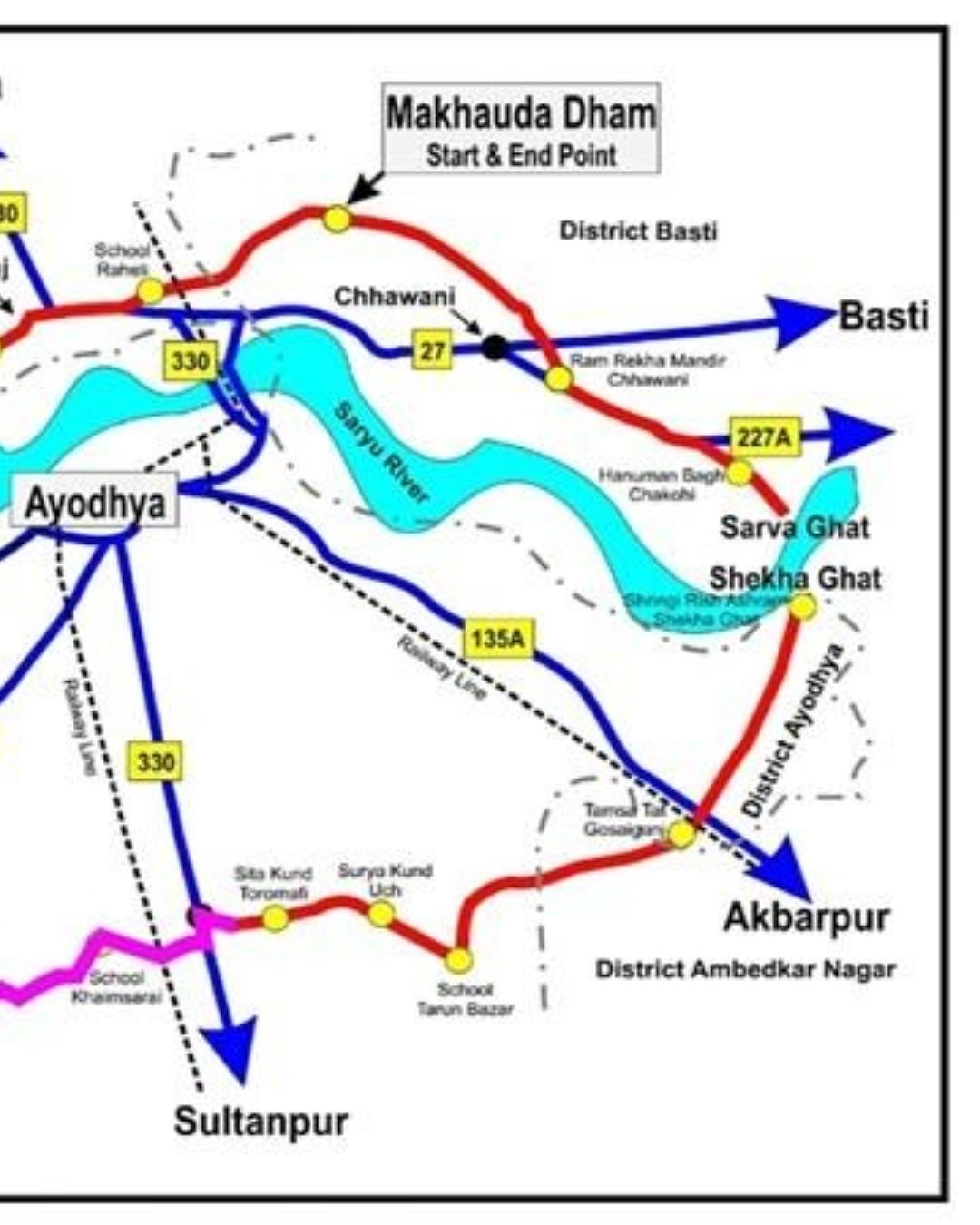
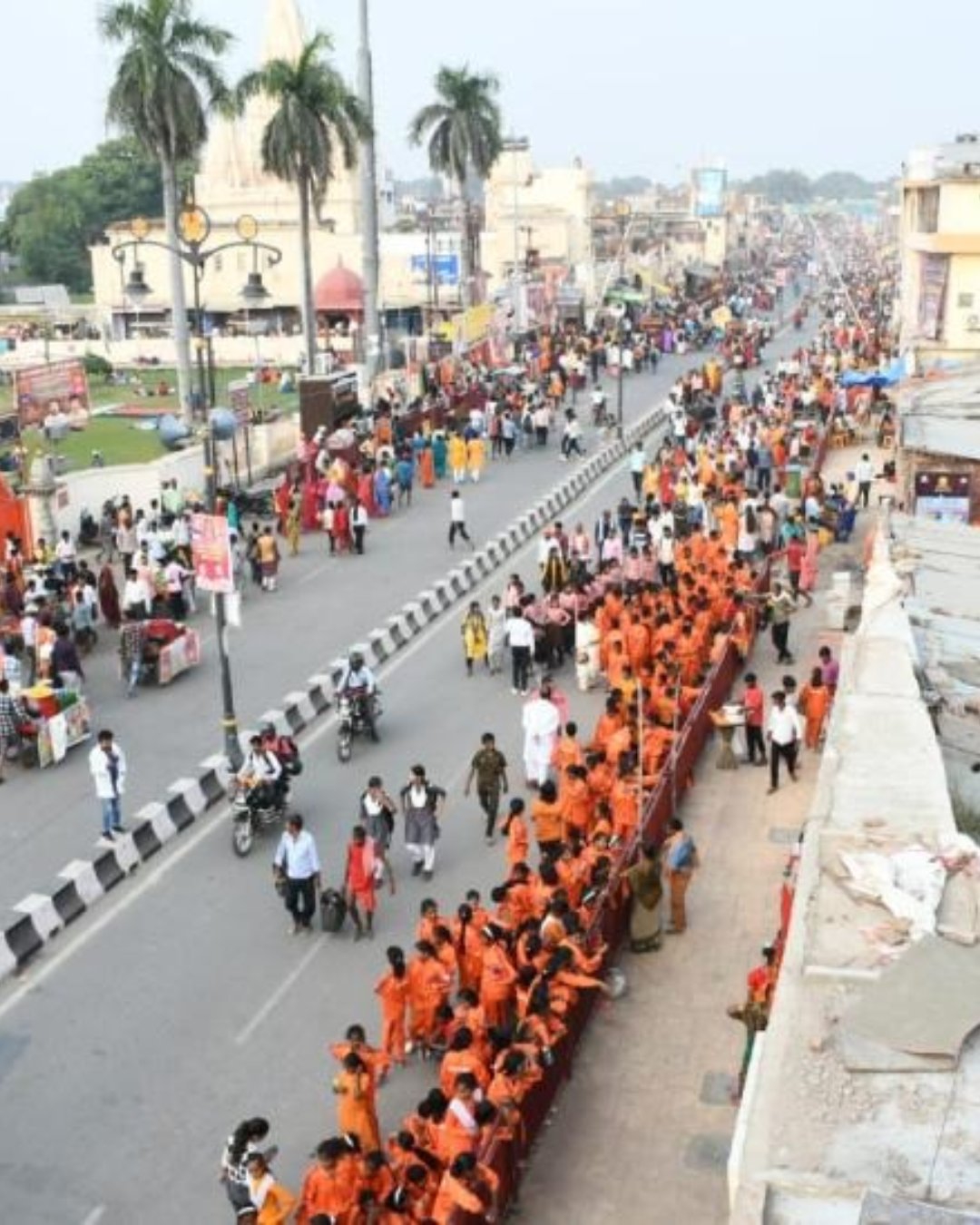
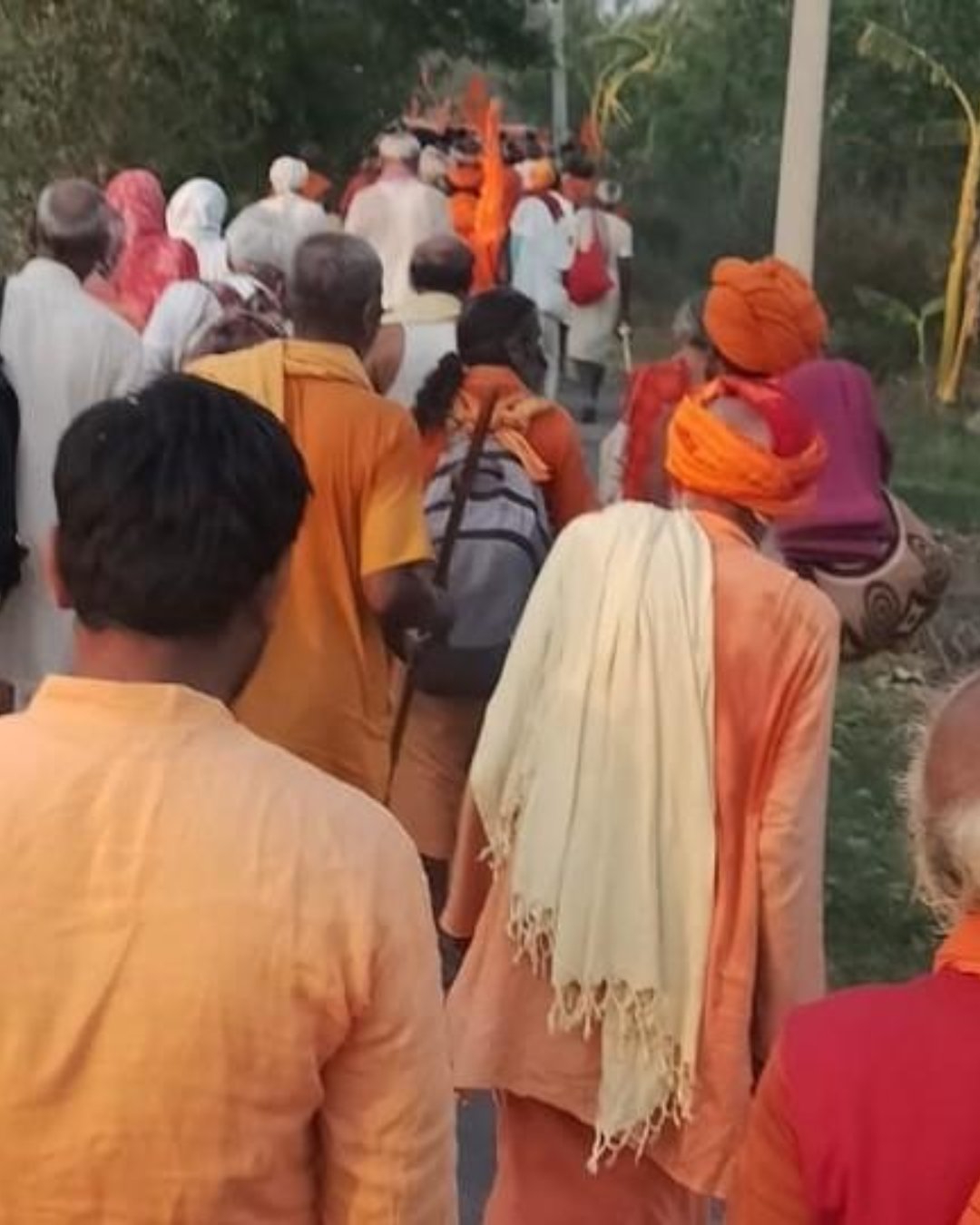
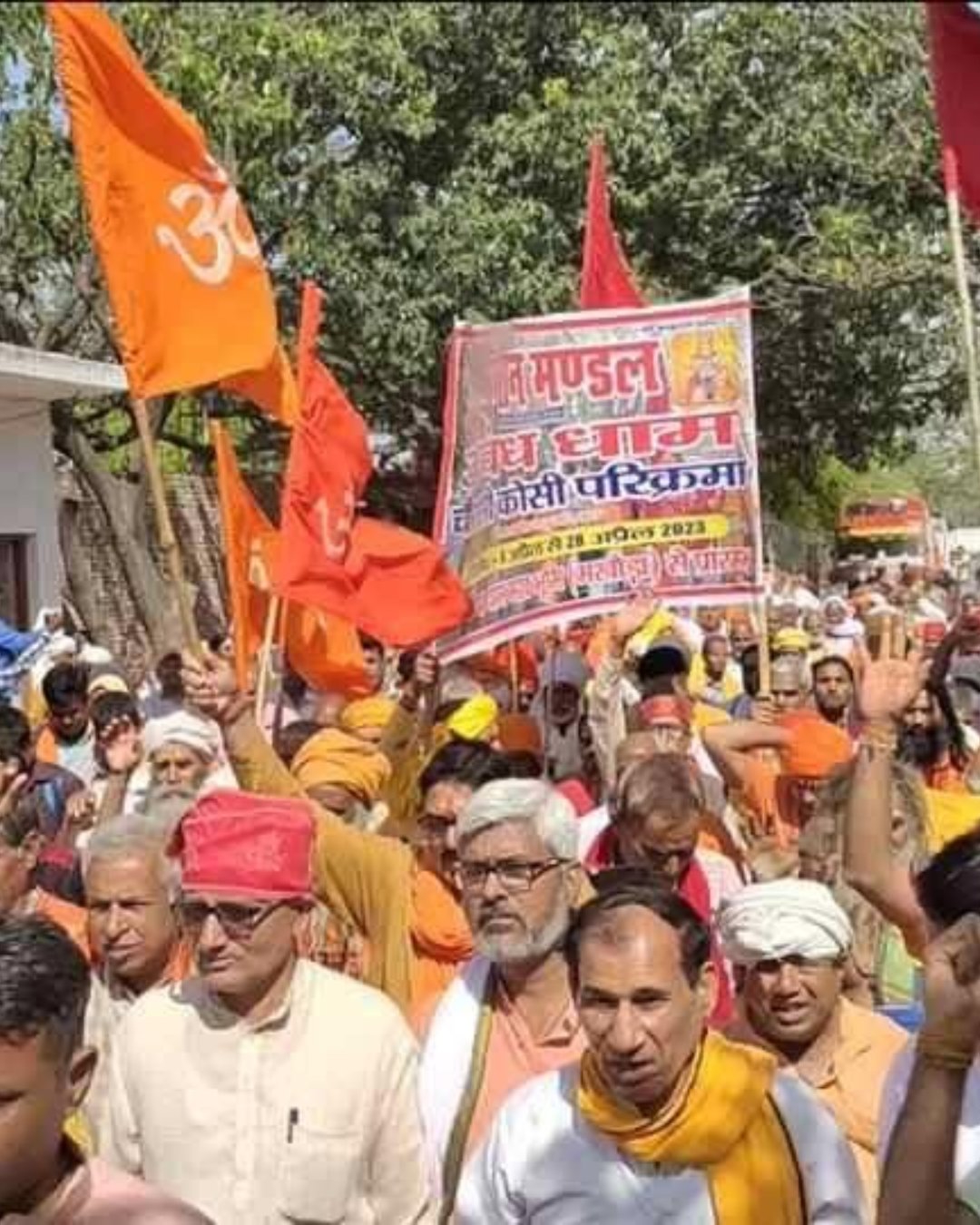
The largest circuit runs for weeks and crosses several districts, and it is currently being turned into a highway.
•Eighty-four kos — between roughly 240 and 280 kilometres, depending on which route measurement you follow — walked over weeks rather than days.
•It is held to trace the boundary of the ancient Kosala kingdom, and touches dozens of sacred sites, by some
counts as many as 148.
•The route has been designated as a national highway, NH 227B, and is being built and upgraded in sections.
•A development plan along it, the Sri Ram Avtaran Corridor, links twenty-one major Ram-related temples and ghats.
•Walking it is a serious undertaking with its own logistics — sleeping arrangements, food, and support along the way.
•Most visitors will encounter it as a road they drive a stretch of rather than a walk they complete, and that is a legitimate way to meet it.
Pro tip: If you have a car and a spare half-day, drive a section of the route rather than trying to see it all. The stretch between the sites gives you the scale of the thing in a way that a description cannot.
The mistakes that ruin it:
•Assuming it can be shortened into a few days.
•Expecting a continuous finished highway — it is being built in packages.
•Setting out without arranged support.
20
MomentShree Ram Janmabhumi Temple ,Ayodhya
Kartik, and Why the Dates Move Every Year
All three circuits have their season, and it lands on a different set of dates every year.
•The parikrama season falls in the lunar month of Kartik, which sits somewhere between October and November in the Gregorian calendar.
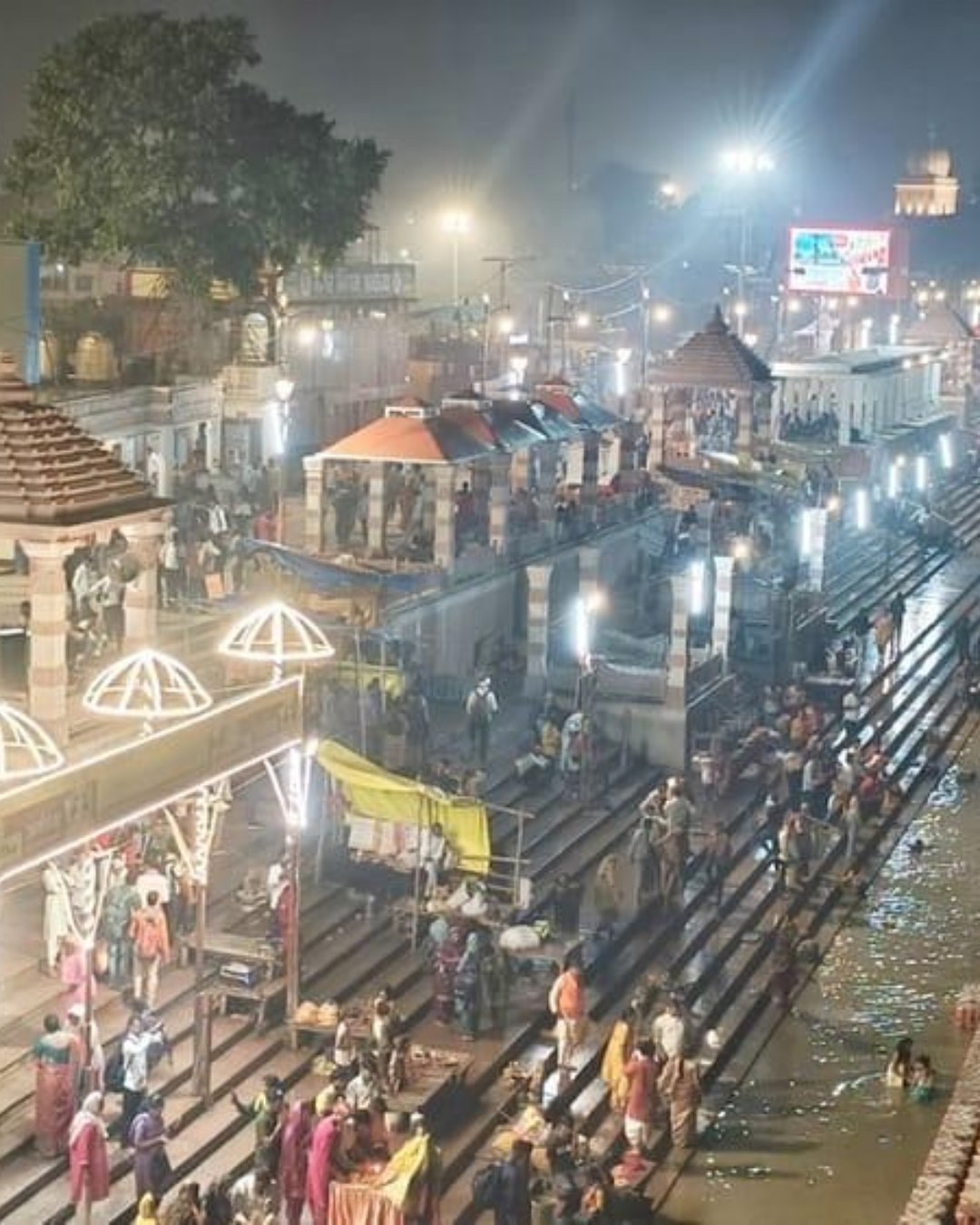
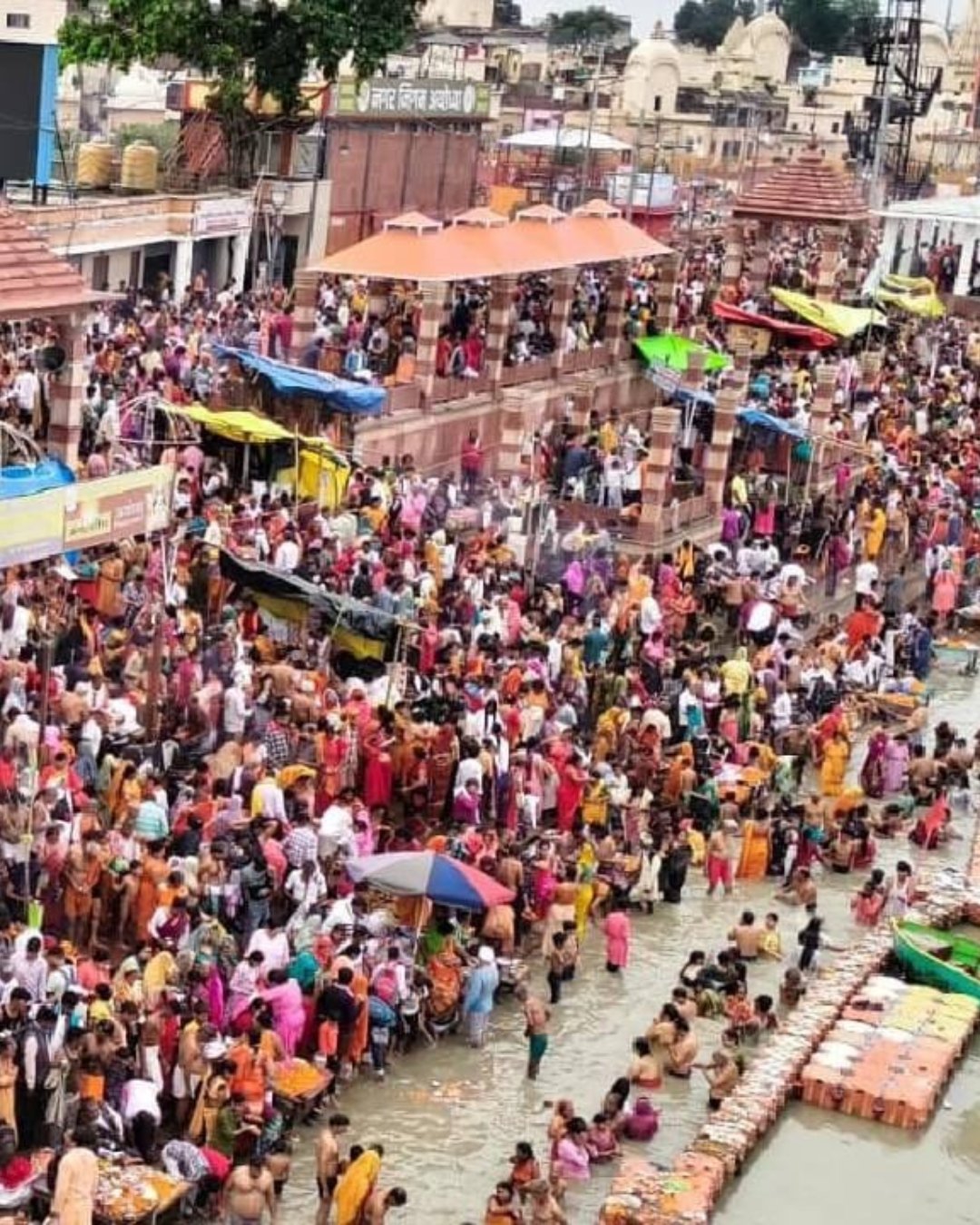
•Chaudah Kosi is walked on Kartik Akshaya Navami. Panchkosi follows a few days later, and Kartik Purnima Snan — the ritual bathing in the Saryu — closes the season.
•Start and end times are fixed by the calendar to the minute and announced ahead of each year, which is why you cannot plan from last year's dates.
•Other auspicious days for walking the Panchkosi route include Kartik Purnima, Sharad Purnima, Ram Navami, Vivah Panchami and Ekadashi.
•Accommodation across the town is booked out across this window, and road access near the routes is managed.
•Check the current year's announced timings before booking anything. This page should be updated each year with them.
Pro tip: Book accommodation for the Kartik window months ahead, and confirm the announced timings before you finalise travel. The dates shift by weeks year to year, and the town fills around them.
The mistakes that ruin it:
•Planning from a previous year's dates.
•Booking travel before the timings are announced.
•Assuming the routes are quiet in Kartik because they are quiet the rest of the year.
18
MomentParikrama Marg, Ayodhya
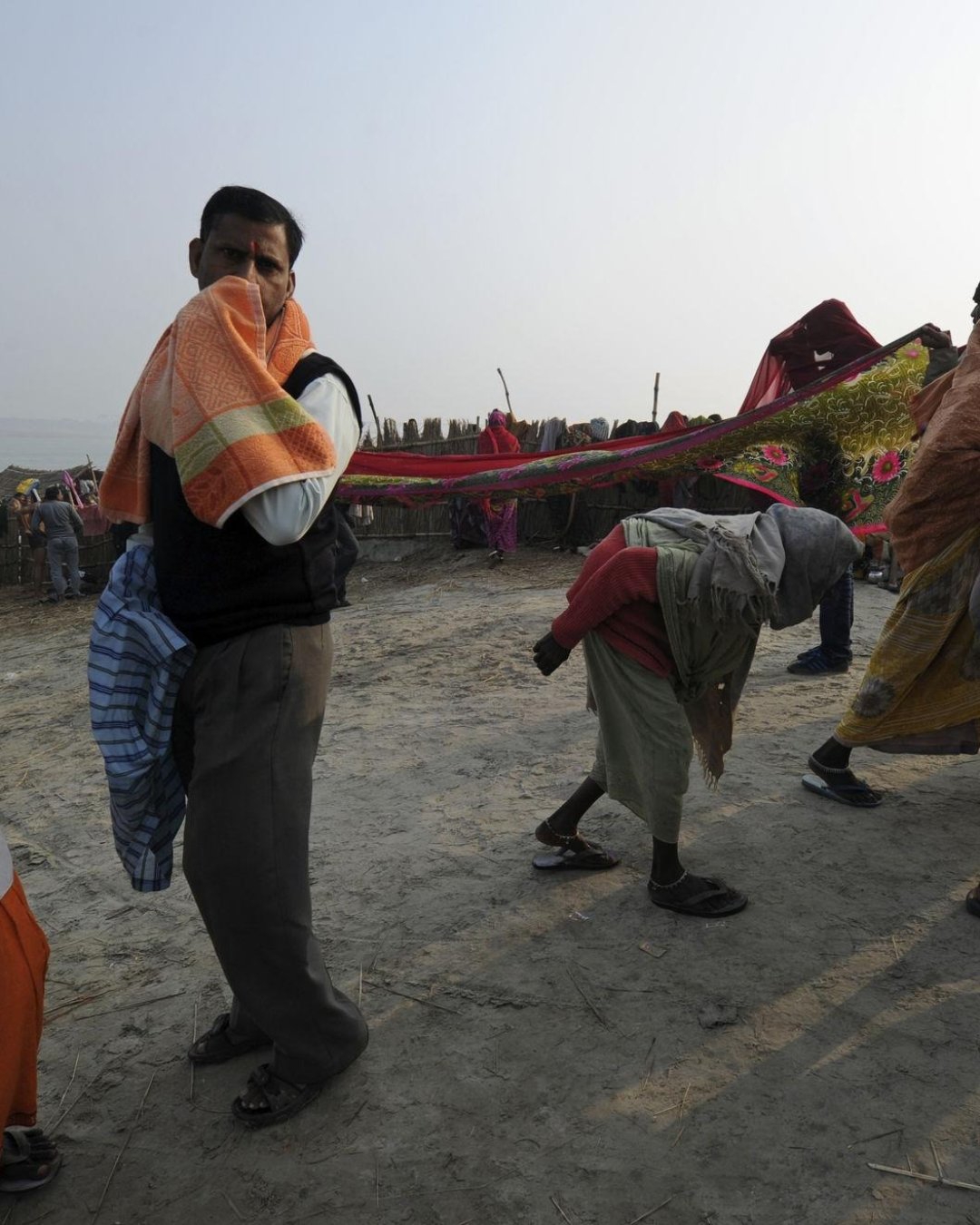
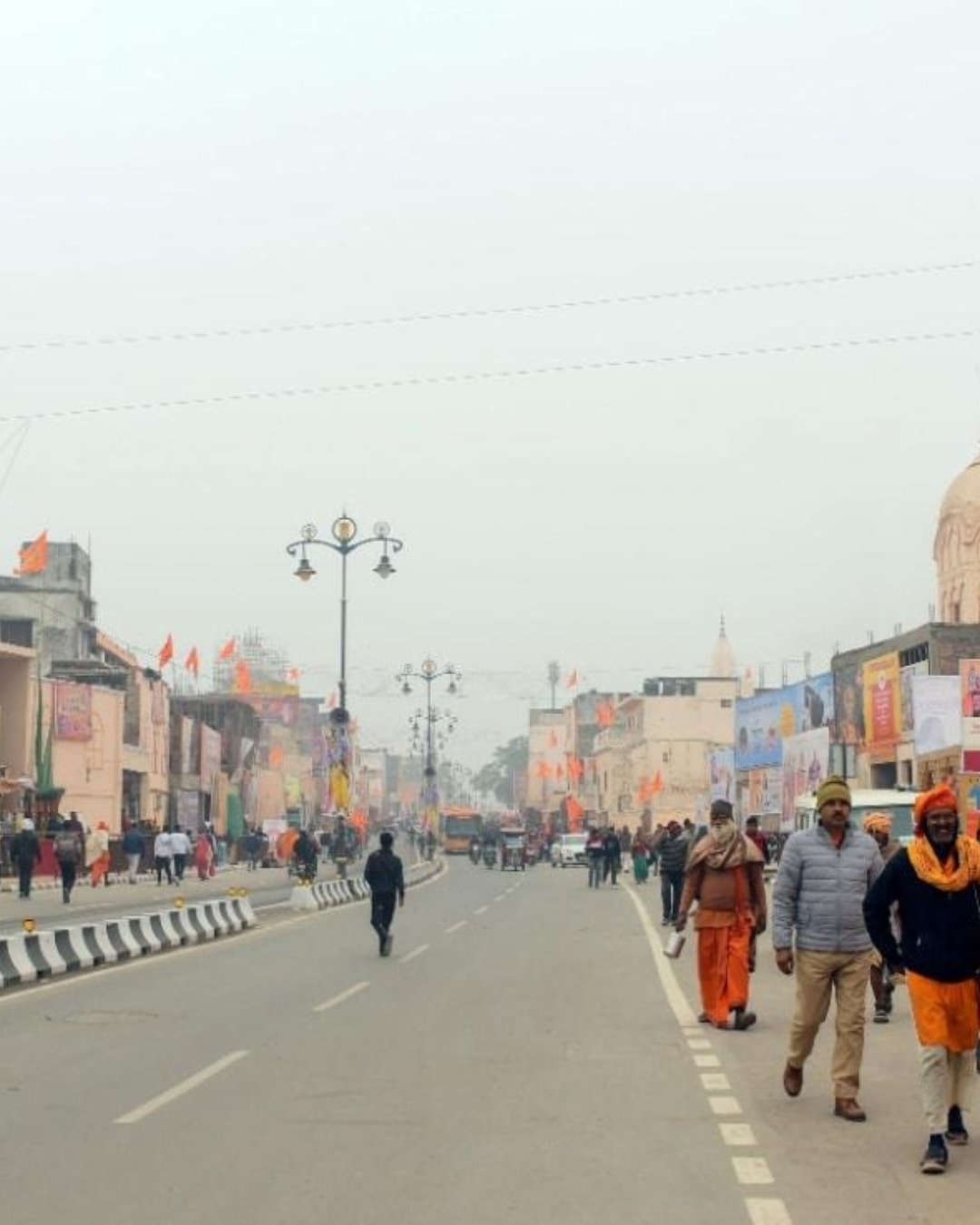
Walking It Outside the Season
The routes are open all year, and outside Kartik you will have them almost to yourself.
•Nothing closes between festivals. The Panchkosi route in particular can be walked on any ordinary day.
•October to March is the comfortable window, with cool mornings that suit an early start.
•Avoid May and June. Ayodhya reaches 45°C, and fifteen kilometres on foot in that heat is genuinely dangerous rather than merely uncomfortable.
•The monsoon is walkable but harder, with some unpaved sections turning muddy.
•Outside the festival window there are far fewer facilities along the route, so carry what you need rather than expecting to buy it.
•A quiet Panchkosi walk in January is a completely different experience from the same route in Kartik, and both are worth having.
Pro tip: Walk the Panchkosi route on an ordinary winter morning if you can. You get the same circuit with none of the crowd, and it is the closest most visitors will come to seeing how the town works when nobody is watching.
The mistakes that ruin it:
•Assuming the routes are only walkable during the festival.
•Attempting any circuit in May or June.
•Relying on roadside facilities outside the season.
12
MomentKosi Parikrama Road, Ayodhya
What to Carry, and What Breaks People
Fifteen kilometres is not far until you are doing it on a hot road with nowhere to sit.
•Water is the thing people underestimate. Outside the festival window there is very little along the route.
•Start before first light. The difference between a 5 am start and an 8 am start is the difference between two walks.
•Footwear is a decision, not a default. If you walk barefoot by choice, walk a short stretch first to learn the surface.
•Carry cash in small notes. Stalls along the route during the season take nothing else.
•Sun cover matters more than warm clothing, even in December. Long stretches have no shade at all.
•Tell your accommodation you are walking and when you expect to be back, particularly if you are walking alone.
•Feet, not fitness, are what end most attempts. Broken-in shoes beat new ones every time.
Pro tip: Walk the first two kilometres the day before if you can. It tells you what the surface is like, where the route actually starts, and whether your footwear is going to survive the day.
The mistakes that ruin it:
•Carrying one small bottle of water.
•Wearing new shoes.
•Starting late and running out of daylight on the final stretch.
16
MomentShri Hanuman Garhi Mandir, Ayodhya
Where the Parikrama Fits in Your Trip
A parikrama is not something you fit around a temple visit. It is the reason to stay longer.
•Panchkosi takes a full day, so it needs its own day in the itinerary rather than a spare morning.
•Walking it changes the shape of the rest of your trip — most people want a slow evening at the ghats afterwards, not another temple.
•It pairs naturally with an early darshan the following morning, once your legs have recovered.
•Chaudah Kosi effectively takes two days, counting the night walked and the day lost to sleep.
•For the Kartik window, accommodation matters more than anything else in the plan, and the near-temple zone goes first.
•If you are walking, stay close to your start point rather than close to the temple.
Pro tip: Give the Panchkosi its own day and keep the evening after it completely free. The walk is the experience; trying to add darshan and the aarti to the same day turns it into an endurance exercise.
The mistakes that ruin it:
•Squeezing a parikrama into a two-day trip built around darshan.
•Booking accommodation near the temple when your walk starts at the river.
•Planning anything demanding for the day after Chaudah Kosi.
Destination
Ayodhya, Uttar Pradesh, India
Common questions
01Question
What is the Ayodhya Parikrama?
A sacred walking circuit around Ayodhya. There are three: Panchkosi at about fifteen kilometres, Chaudah Kosi at about forty, and Chaurasi Kosi at between roughly 240 and 280. Kos is an old unit of distance of about three kilometres, so each circuit is named for its length rather than for anything it circles.
02Question
What is the Panchkosi Parikrama?
The fifteen-kilometre inner circuit, completed in a single day and the one most visitors can realistically walk. It traditionally starts at Swargadwar near the Saryu riverfront, though some pilgrims begin at Ram Ki Paidi. There is no fee, no booking, and many devotees walk it barefoot by choice.
03Question
How many people walk the Chaudah Kosi Parikrama?
Around three million walked it in a single night in a recent year. It covers about forty kilometres, is walked on Kartik Akshaya Navami inside a ritual window announced annually, and the district arranges traffic diversions, parking and reserved hospital beds in advance.
04Question
How long is the 84 Kosi Parikrama?
Between roughly 240 and 280 kilometres depending on the route measured, walked over weeks across several districts. It is held to trace the boundary of the ancient Kosala kingdom and touches as many as 148 sacred sites. The route is designated NH 227B and is being built and upgraded in sections.
05Question
When is the Ayodhya Parikrama?
In the lunar month of Kartik, which falls between October and November, so the dates move every year. Chaudah Kosi is walked on Kartik Akshaya Navami, Panchkosi follows a few days later, and Kartik Purnima Snan closes the season. Start and end times are announced each year.
06Question
Can you walk the parikrama outside the festival season?
Yes. Nothing closes between festivals, and the Panchkosi route in particular can be walked on any ordinary day. October to March is comfortable. Avoid May and June, when Ayodhya reaches 45°C and a fifteen-kilometre walk becomes genuinely dangerous.
07Question
Do you have to walk barefoot?
No. Many devotees choose to, and it is part of the tradition, but it is not a requirement. If you intend to, walk a short stretch first to learn the surface — fifteen kilometres barefoot on an unfamiliar road is a very different undertaking from the same distance in shoes.
08Question
What should I carry on the parikrama?
Water above everything, since there is very little along the route outside the festival window. Cash in small notes, sun cover even in winter, and footwear you have already broken in. Start before first light: the difference between a five o'clock start and an eight o'clock one is the difference between two walks.
More to explore
Go further into one part of this trip.