


Around Ayodhya: Day Trips & Where to Go Next
Vrindavan, Chitrakoot, Sravasti and the Nepal border — what is genuinely a day trip
from Ayodhya, what needs its own night, and what nobody tells you about.
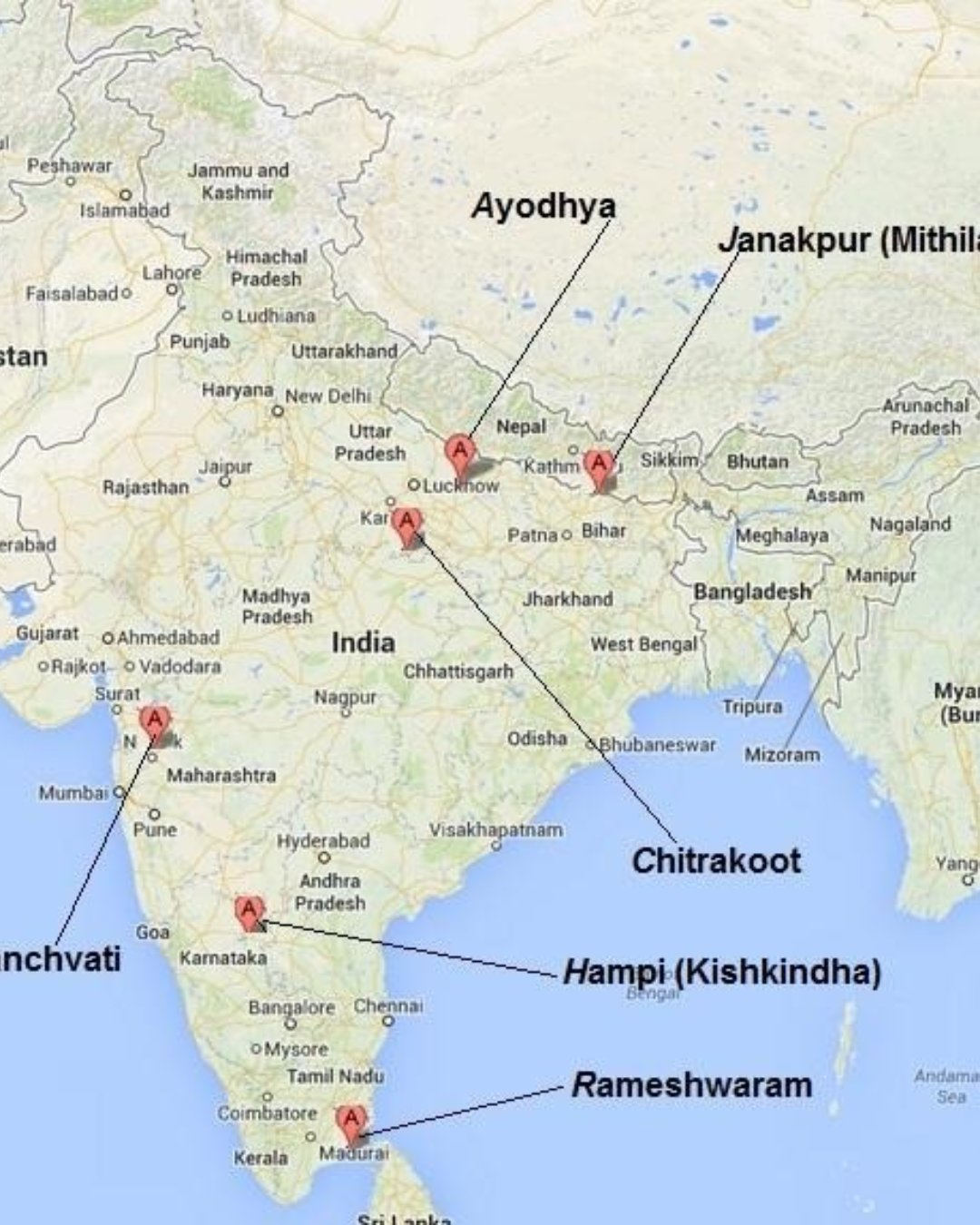
Ayodhya is a powerful base for exploring a much wider spiritual landscape, but the map can be misleading. Nandigram and nearby sites work comfortably as short extensions, while Chitrakoot is a much longer road journey and is better experienced with an overnight stay rather than being squeezed into one exhausting day. Current route estimates put Ayodhya–Chitrakoot at roughly 240–270+ km by road, with journey times varying significantly by route and traffic.
Vrindavan and Mathura belong to an entirely different Braj circuit and are not practical day trips from Ayodhya if you want to experience them properly. Treat them as a separate multi-day extension rather than trying to connect two major pilgrimage regions in a single rushed day.
Sravasti can work as a longer regional excursion, particularly if you are interested in Buddhist heritage, but it deserves realistic road-time planning. And when you head towards Nepal, remember that “Nepal” is not one destination: the nearest border crossing, Lumbini, Janakpur and Kathmandu are completely different journeys. The Sunauli/Bhairahawa route is considerably different from travelling onward to Janakpur or Kathmandu.
The smartest way to build your trip is to think in layers: explore Ayodhya and its immediate surroundings first, give Chitrakoot and Sravasti their own time, and reserve Vrindavan or Nepal for a longer circuit. That way, you are not spending your pilgrimage staring through a car window—you actually have time to stop, explore, pray, walk the ghats and experience each place.
Stops
Home
MomentAyodhya
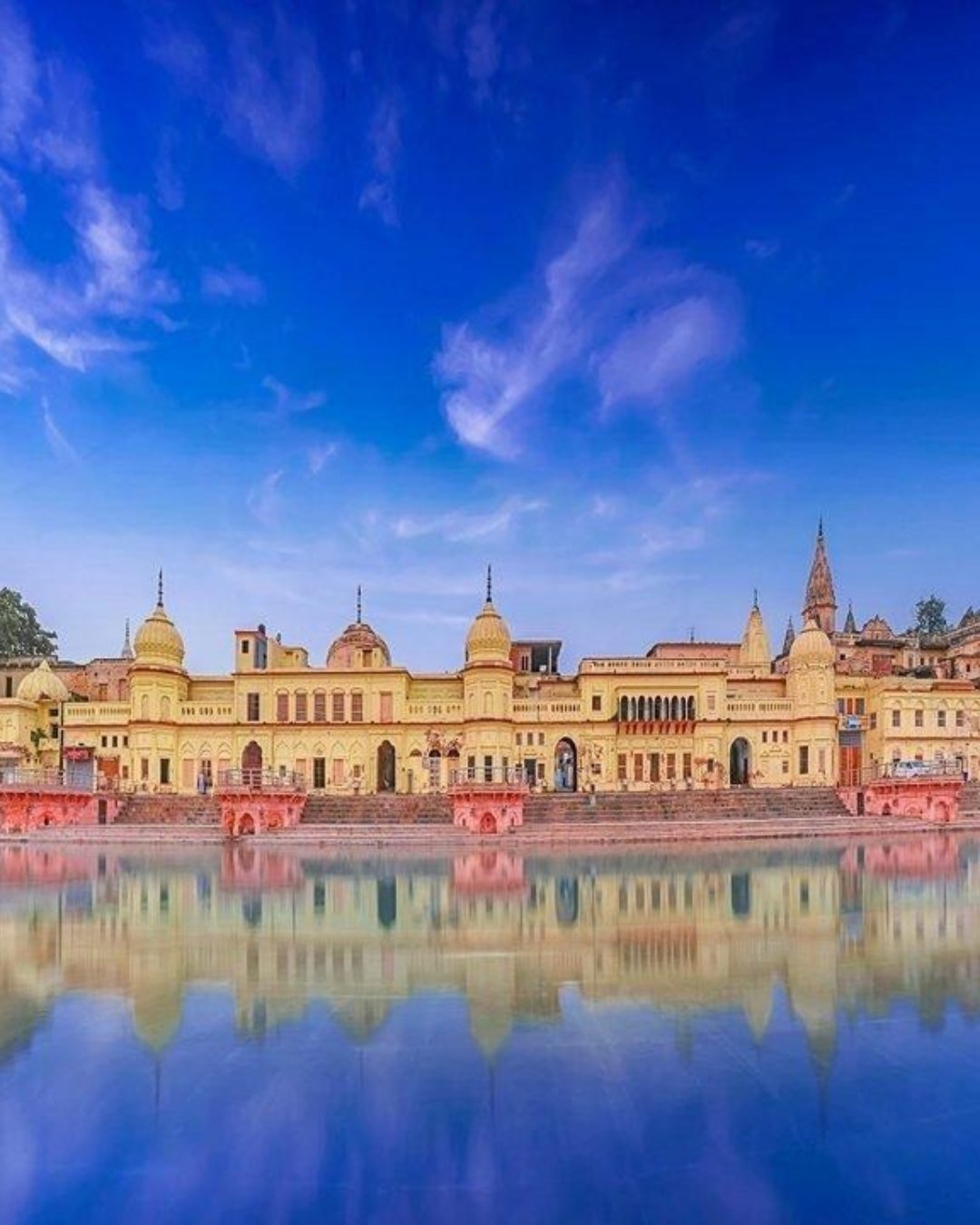
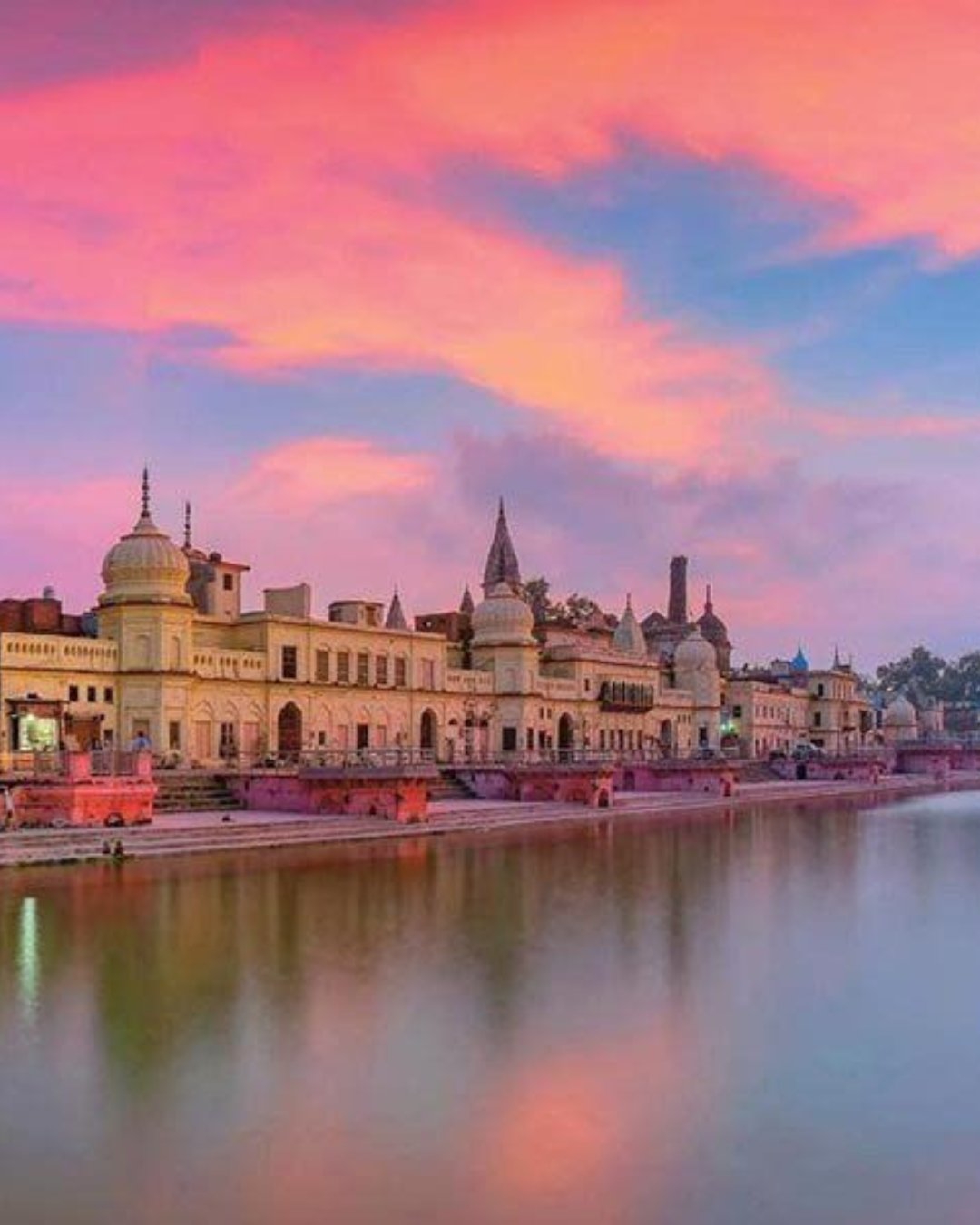
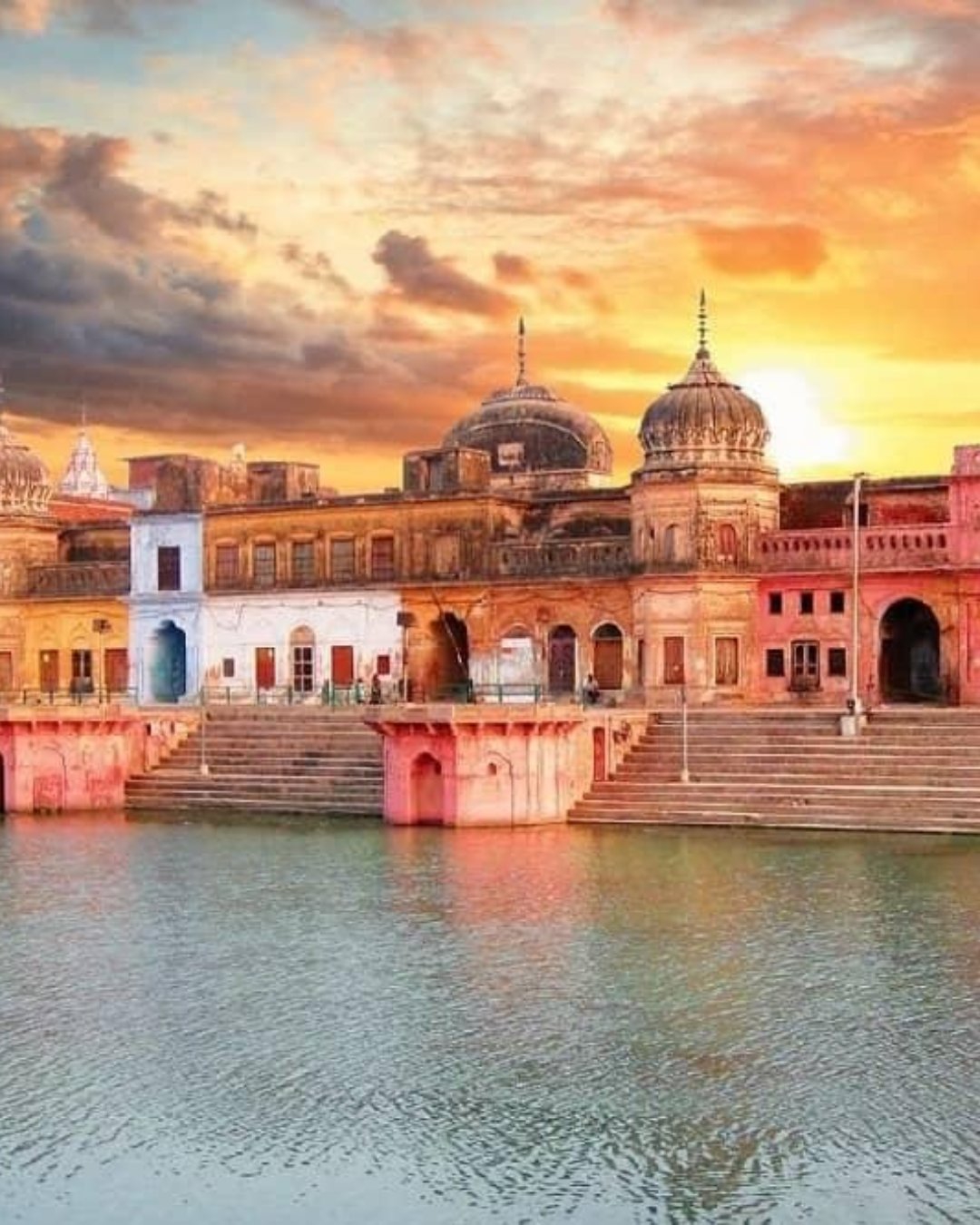
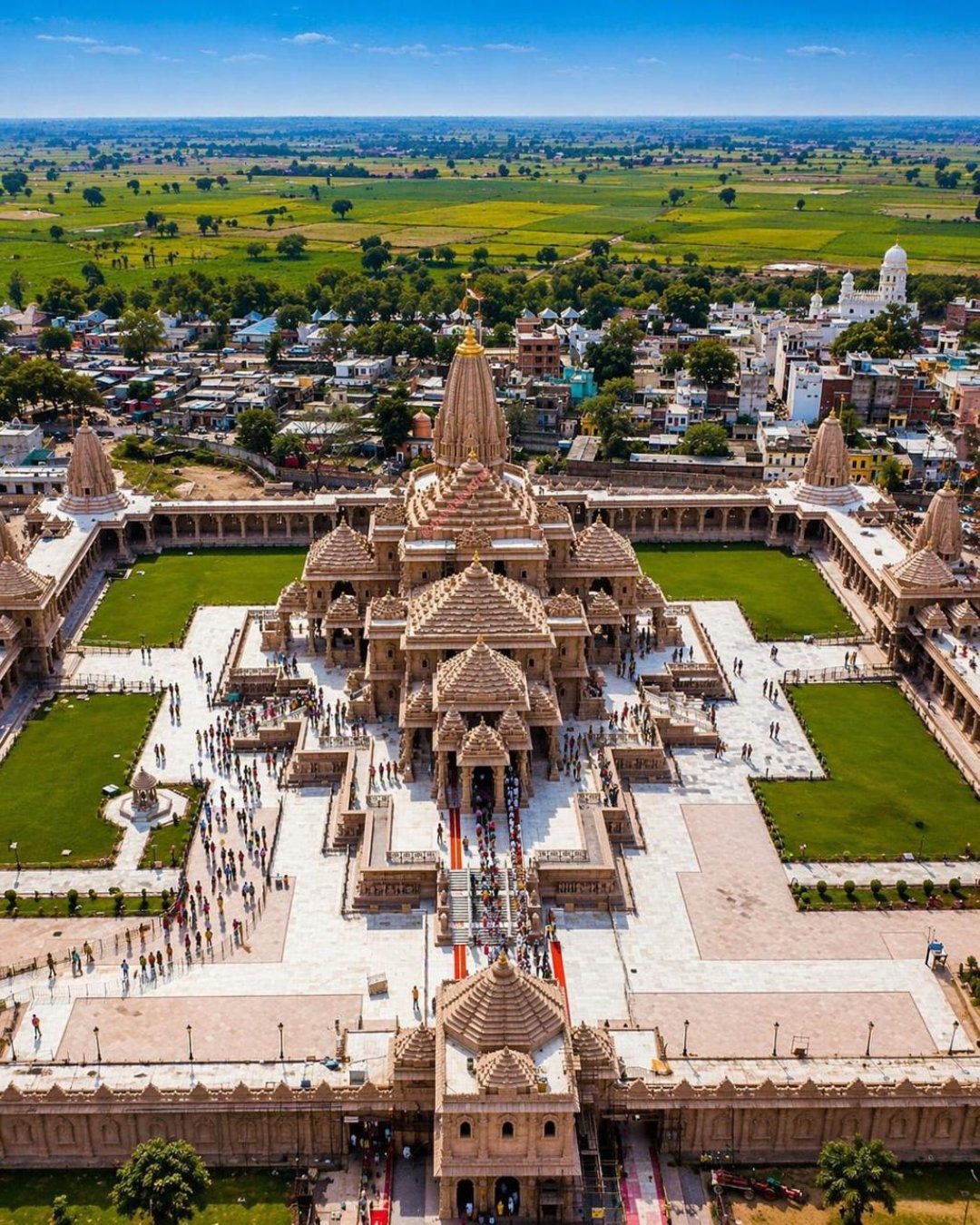
Two Kinds of “Near”, and They Need Different Days
Everything around Ayodhya falls into an afternoon or an overnight, and confusing the two wrecks more itineraries than bad weather does.
•Inside about an hour: Faizabad, Guptar Ghat, Nandigram and Bharat Kund, Ratnapuri. Half-day trips by car or auto, back in time for the evening aarti.
•Two to four hours: Lucknow, Prayagraj, Gorakhpur, Varanasi, Naimisharanya, Sravasti. These are circuit legs with their own nights, not excursions.
•Beyond that: Chitrakoot, Mathura and Vrindavan, Agra, Jaipur, Haridwar. Real distance — separate destinations that happen to share a pilgrimage logic.
•The common error is treating a four-hour city as an afternoon trip and losing a day to the road in each direction.
•Devotional proximity and physical proximity are not the same thing here, and the western sites are where that gap is widest.
Pro tip: Decide the tier before you decide the place. An hour out is a day trip. Three hours out is your next destination, and planning it as a detour costs you a day you did not budget.
The mistakes that ruin it:
•Attempting Varanasi, Chitrakoot or Mathura as a day trip from Ayodhya.
•Leaving the genuine half-day sites unseen while chasing distant ones.
•Assuming that because two places belong to the same story they are close together.
24
MomentVrindavan, Sunrakh Bangar
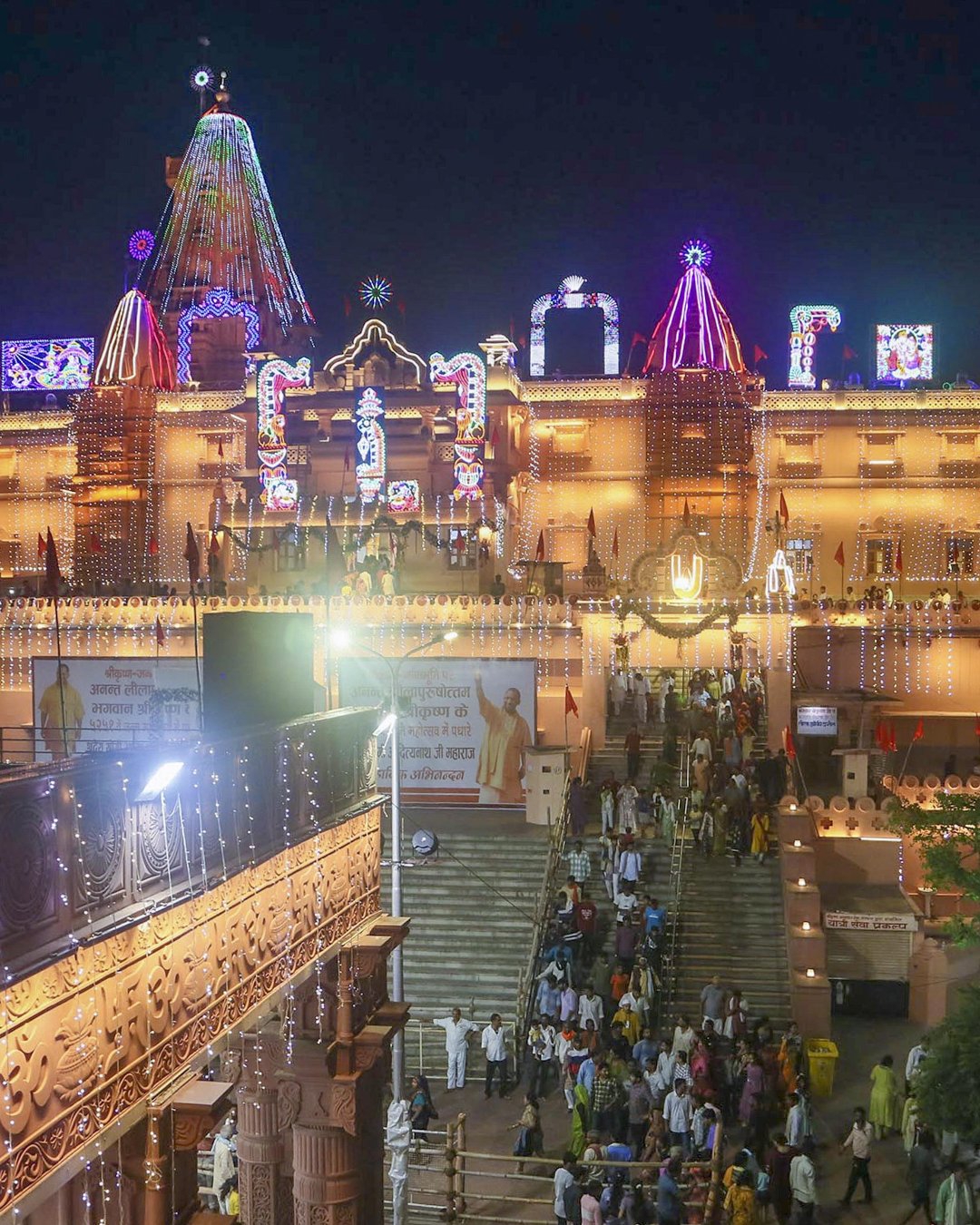
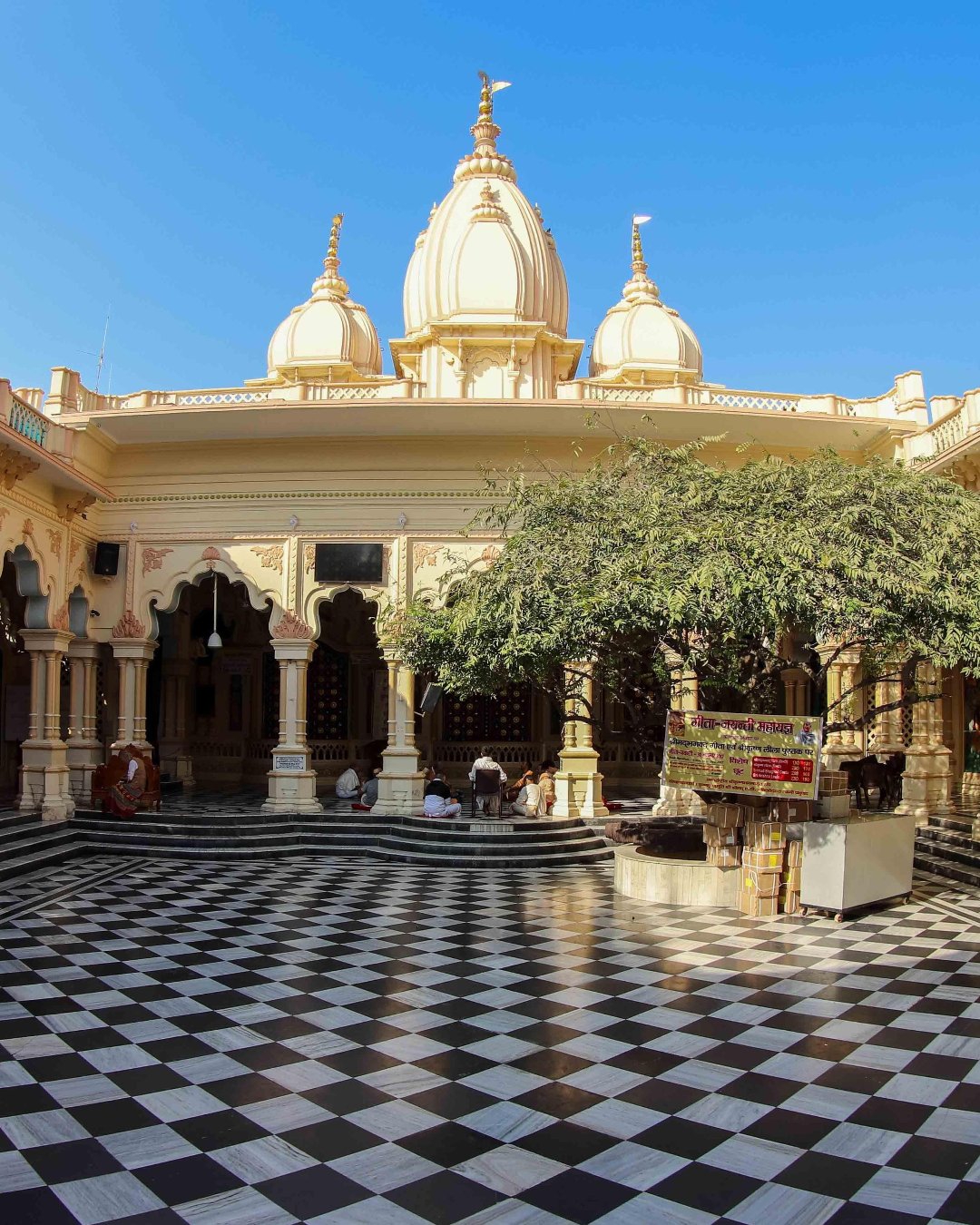
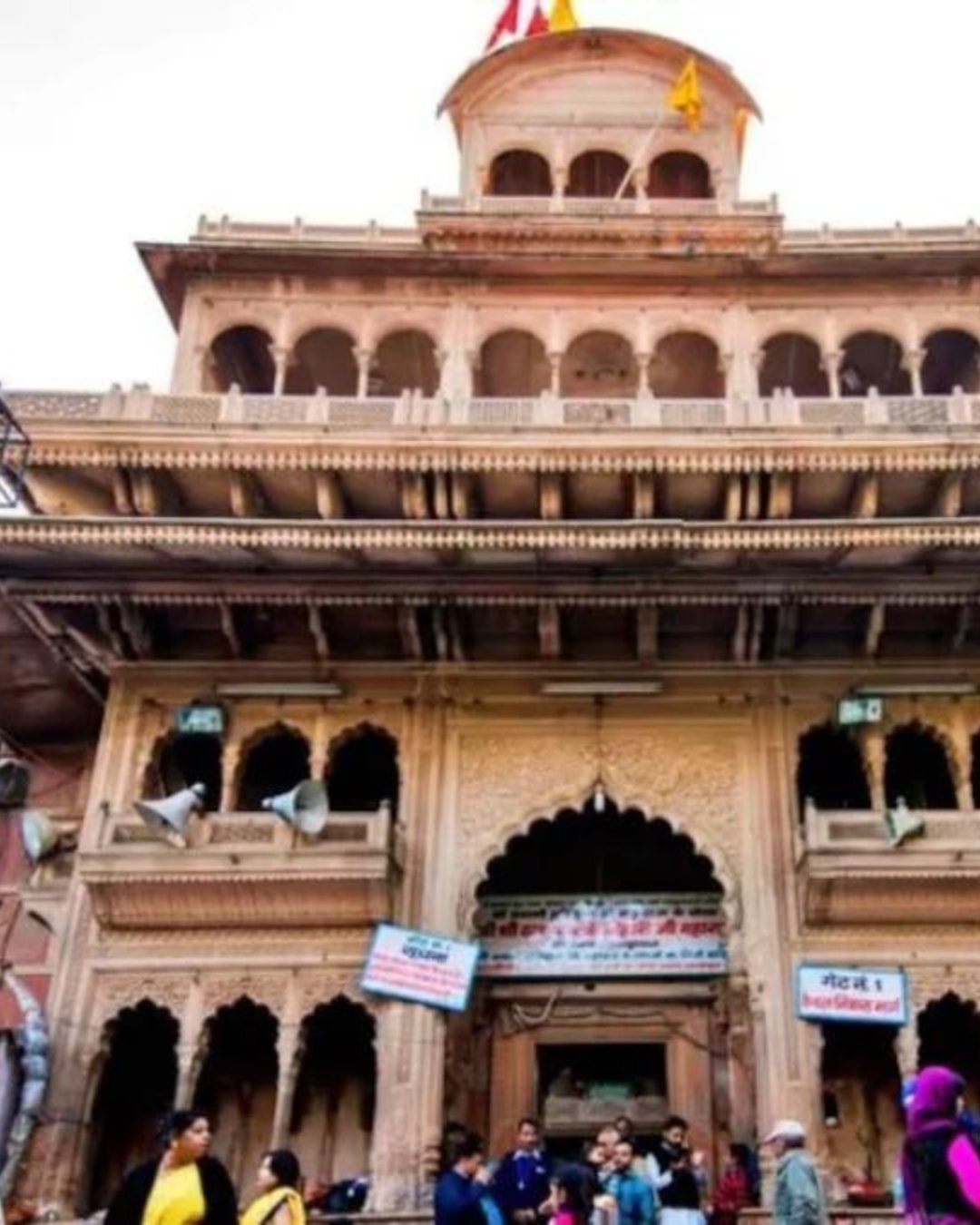
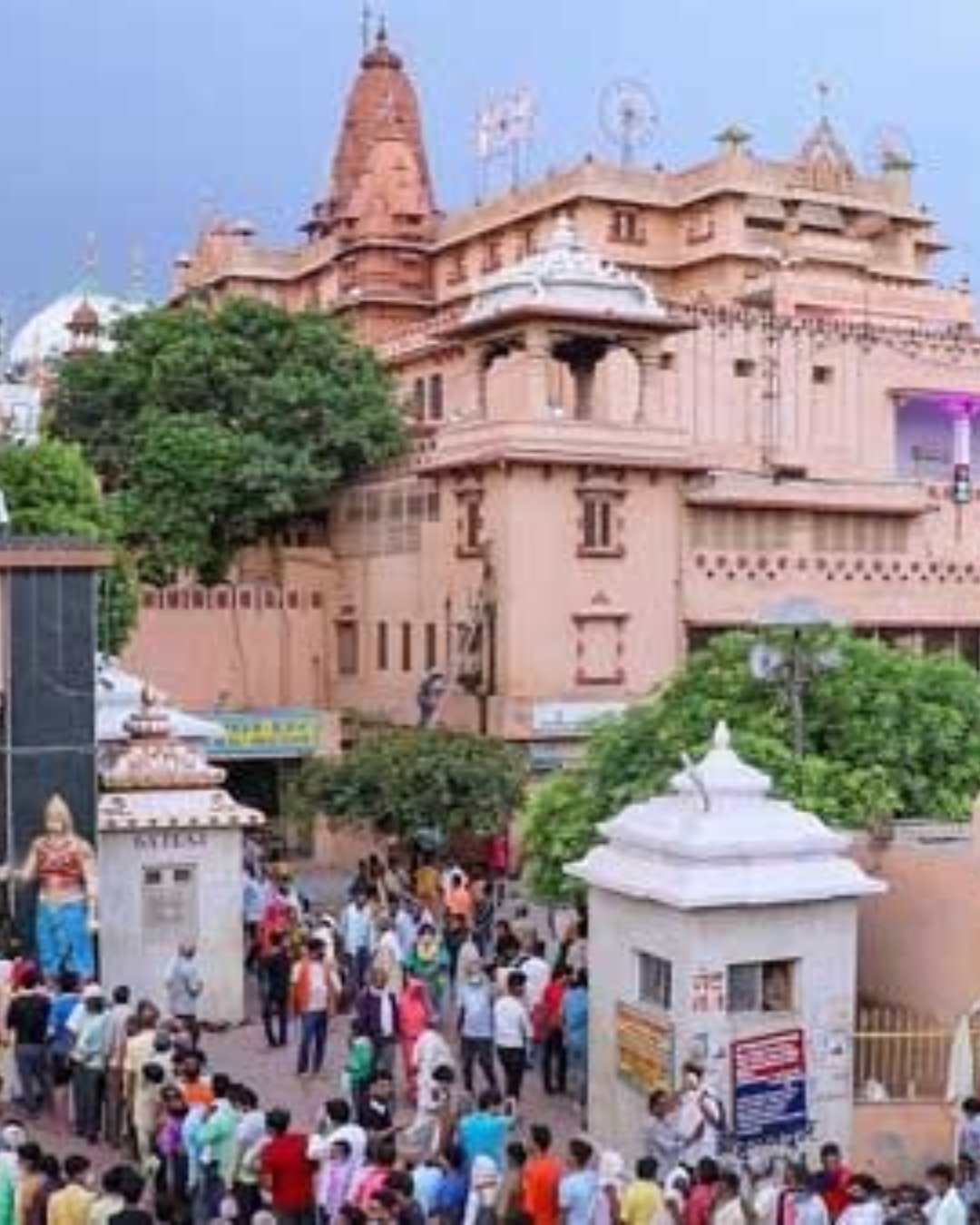
Vrindavan and Mathura: Further Than the Devotion Suggests
These two come up constantly in Ayodhya searches and they are very much further away than people assume.
•Mathura and Vrindavan sit roughly 500 to 650 km west of Ayodhya — an overnight train, or a flight via Delhi or Lucknow.
•The pull is narrative rather than geographic: Ram’s Ayodhya and Krishna’s Braj are the two poles of north Indian devotional travel, and people plan them together for that reason.
•Direct rail exists on the corridor and is the sane option. A drive is ten to twelve hours and buys you nothing.
•Mathura and Vrindavan are ten to fifteen kilometres apart and should be treated as one stop, not two.
•If you are doing both ends of this, allow a week rather than a long weekend, and put a night in Lucknow or Delhi between them.
Pro tip: Take an overnight train rather than a daytime one. The distance is the problem and sleeping through it is the only way to stop it eating a day of your trip.
The mistakes that ruin it:
•Reading 500 km as a day drive.
•Booking Mathura and Vrindavan as separate stops.
•Chaining Ayodhya and Braj across one weekend.
16
MomentAgra Fort, Agra
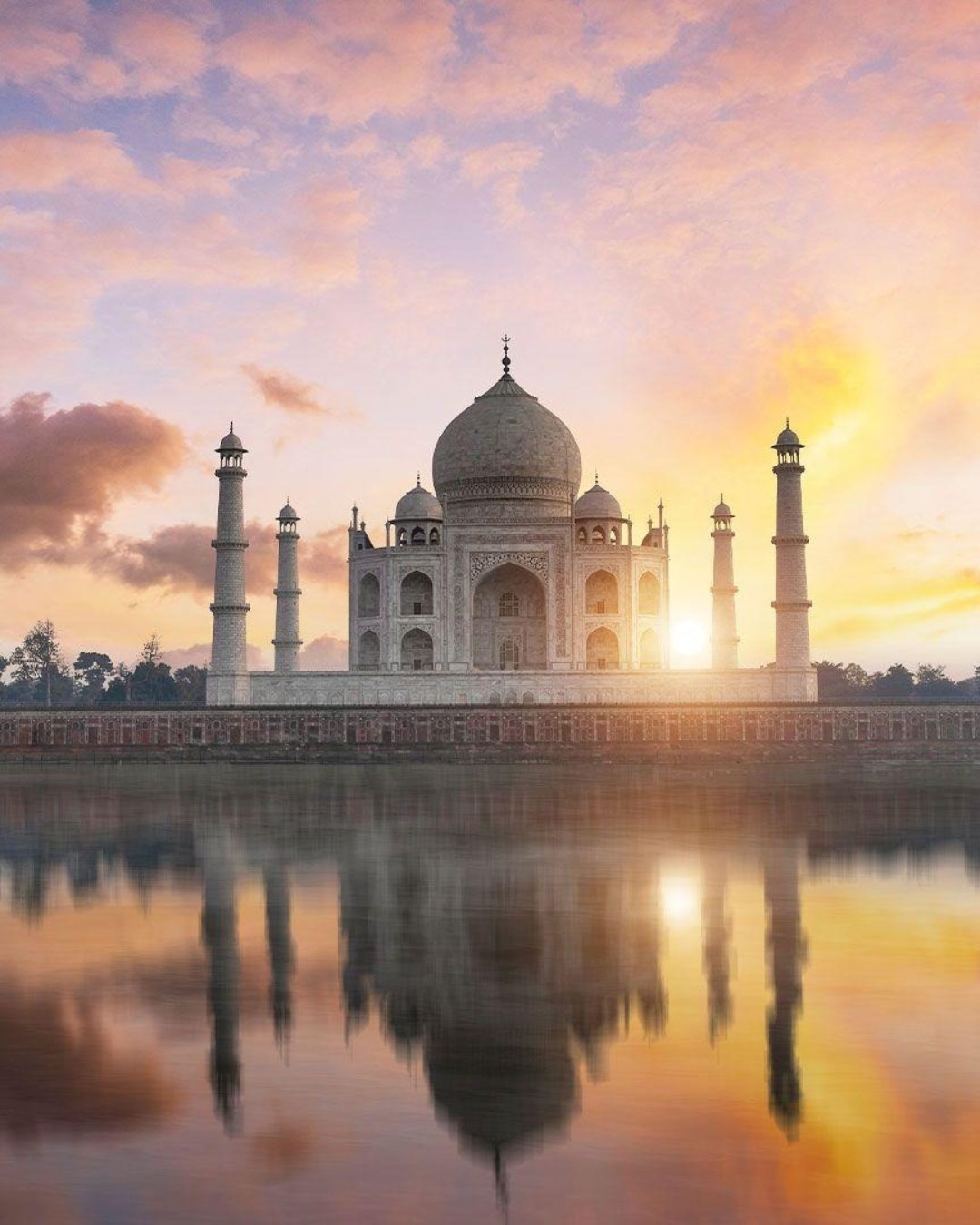
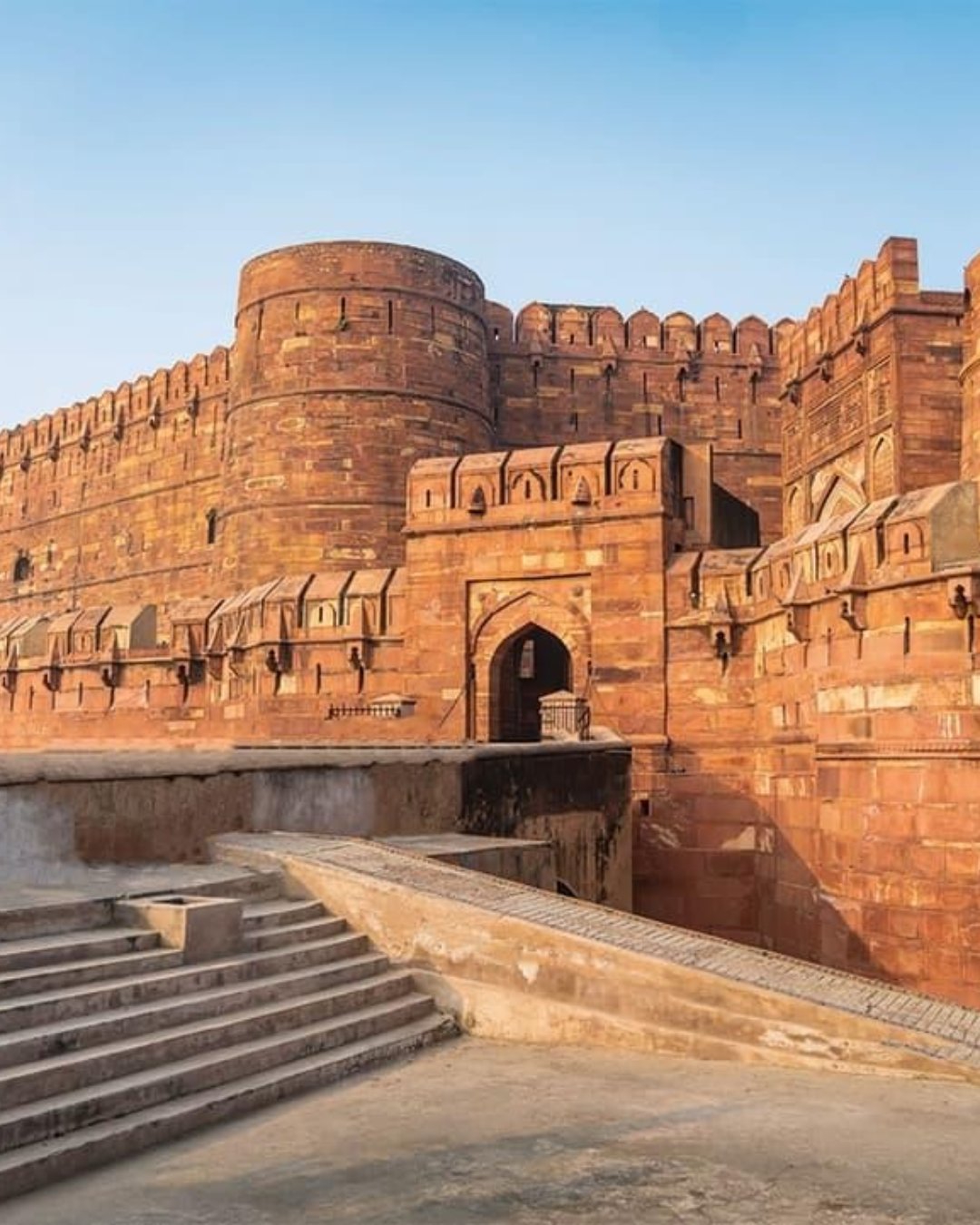
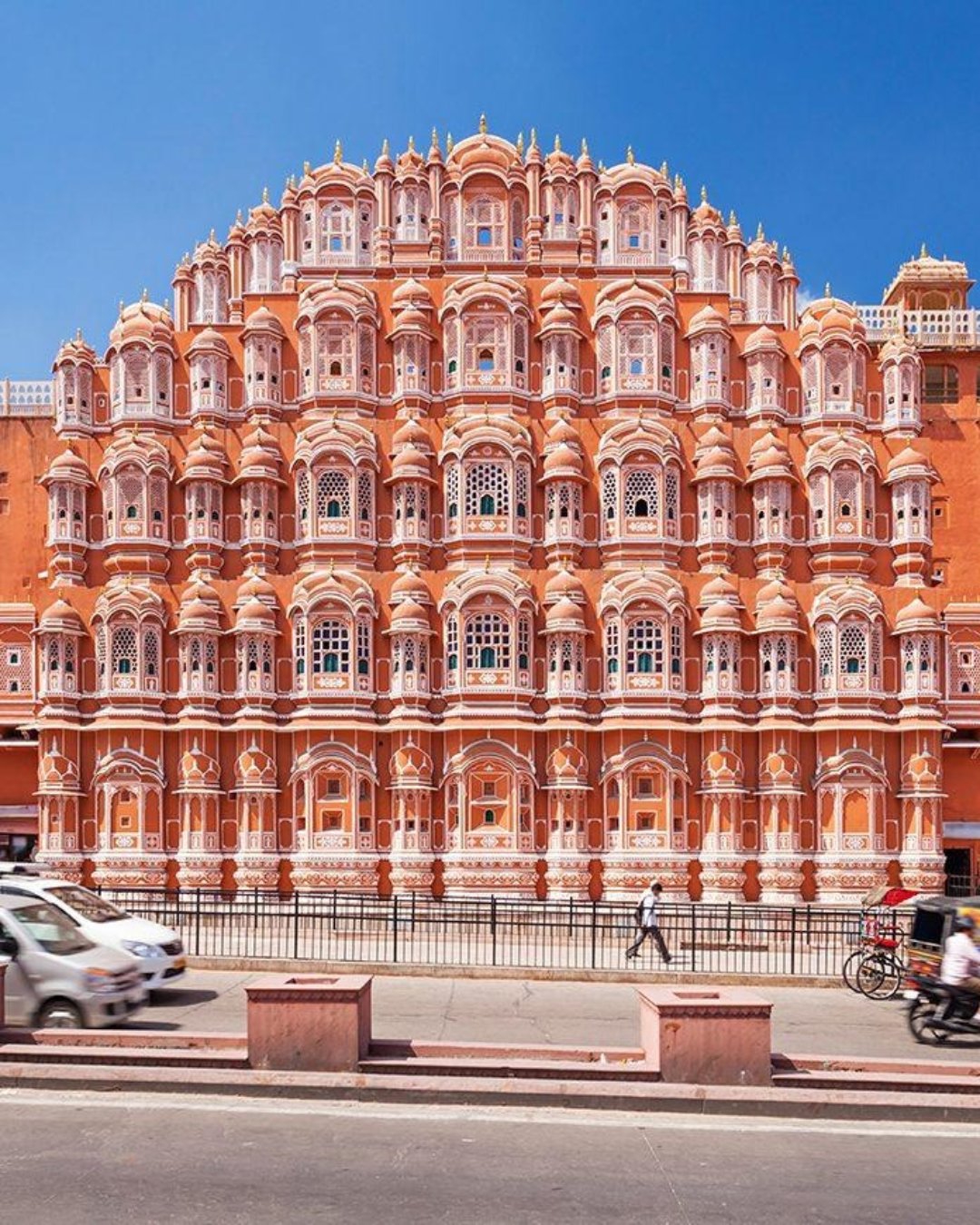
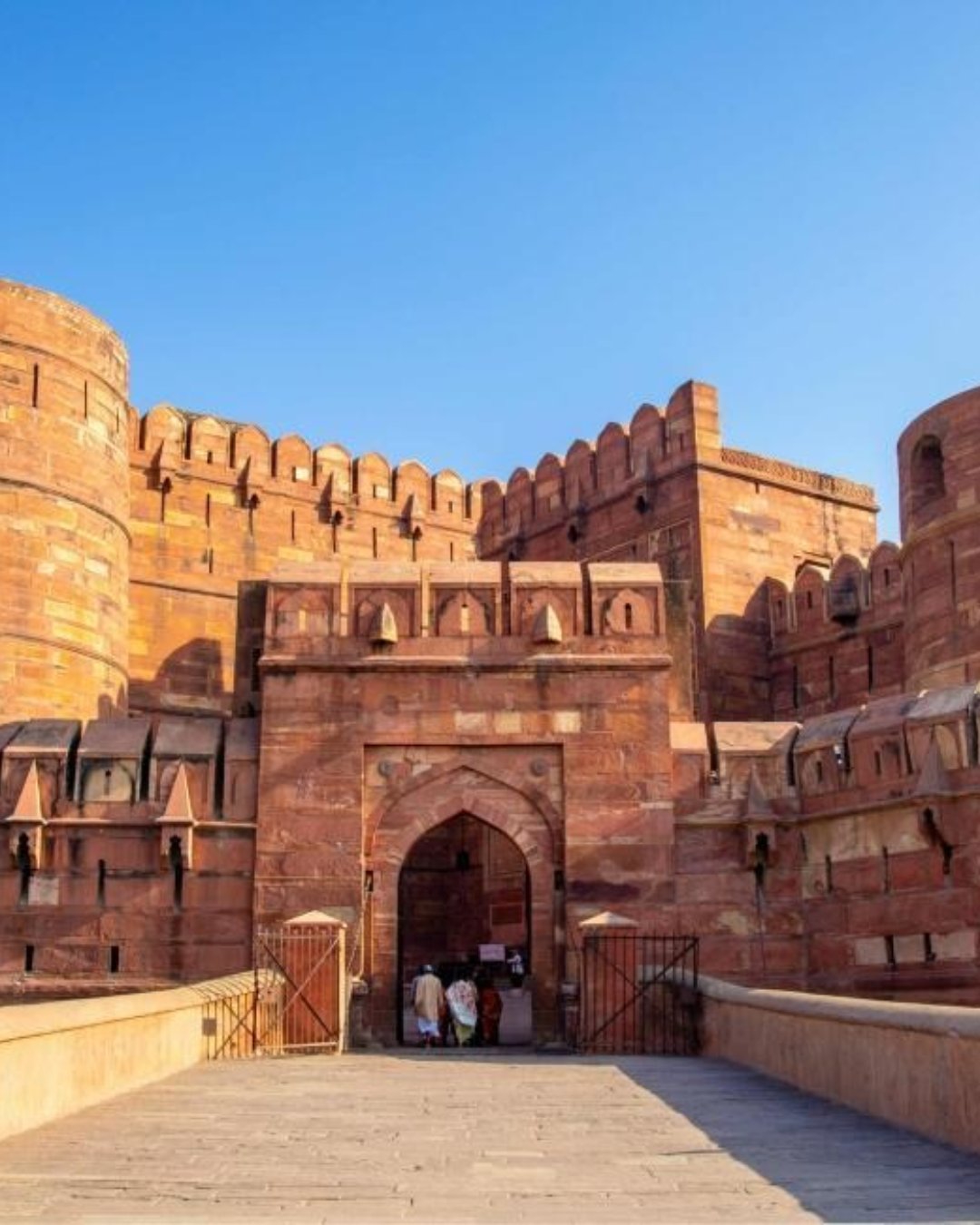
Agra, Jaipur and the Golden Triangle Question
A lot of people want to know whether Ayodhya fits onto the Delhi, Agra and Jaipur run, and the honest answer is: awkwardly.
•Agra is roughly 500 km and Jaipur further still. Both are overnight rail rather than day drives.
•The Golden Triangle runs west of Delhi; Ayodhya sits well east of it. Adding it is a genuine extension, not a detour.
•Direct trains exist to both, and there are flight options via Delhi or Lucknow for Jaipur.
•The practical shape is Delhi as the hinge: Golden Triangle first, back through Delhi, then east to Ayodhya — or the reverse.
•Haridwar comes up on the same axis at around 1,900 searches and behaves identically: overnight, not a day trip.
•If your trip is primarily the Golden Triangle, Ayodhya adds two or three days. Decide whether that is what you want before booking.
Pro tip: Route through Delhi rather than trying to travel cross-country between the two circuits. The rail and air networks both radiate from Delhi, and fighting that geometry costs you a day.
The mistakes that ruin it:
•Assuming Ayodhya slots into a standard Golden Triangle week.
•Planning a cross-country drive between Jaipur and Ayodhya.
•Underestimating how far east Ayodhya sits.
11
MomentChitrakoot Dham
Chitrakoot, Naimisharanya and the Ram Circuit Proper
There is a Ram circuit that has nothing to do with convenience, and these are the stops on it.
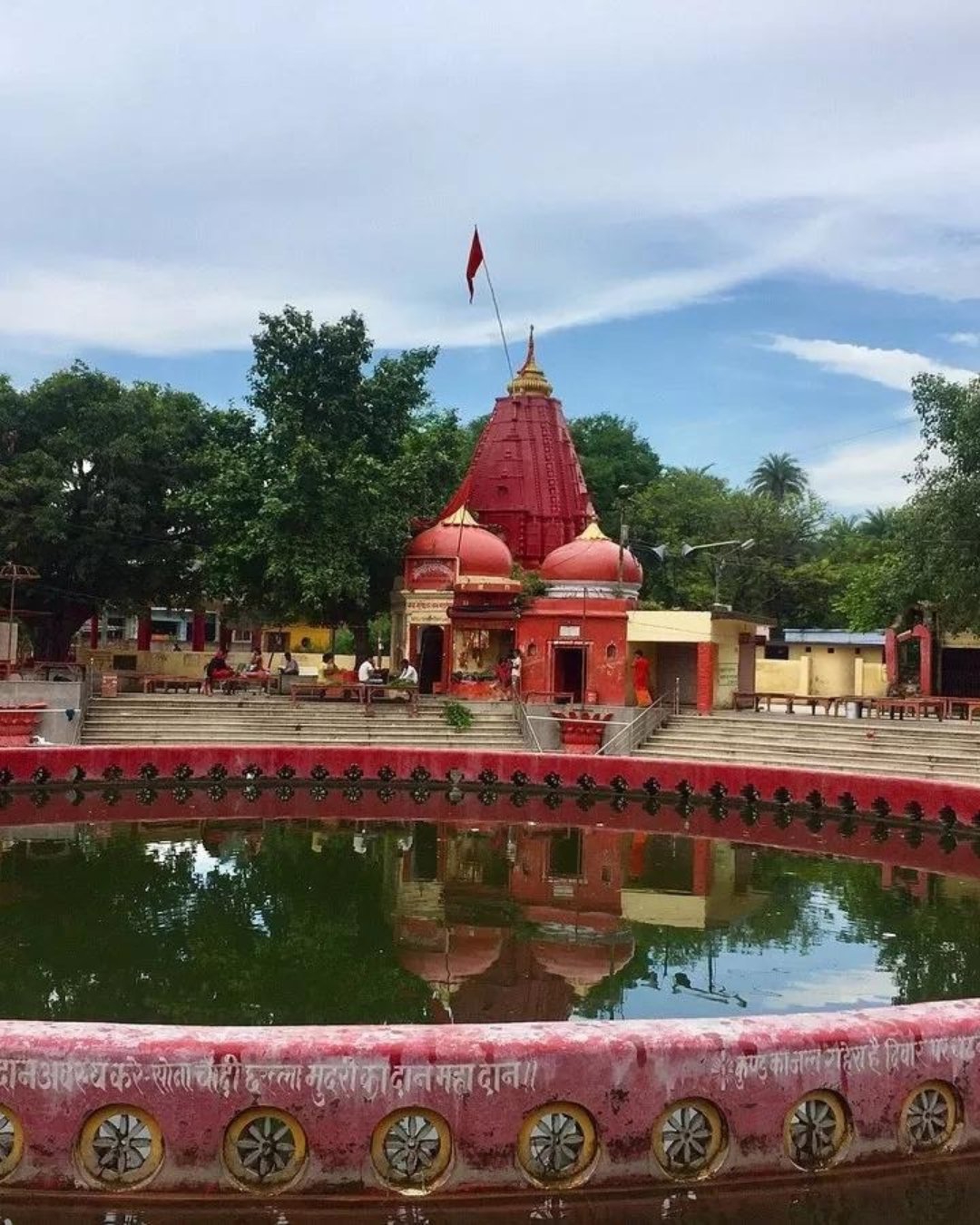
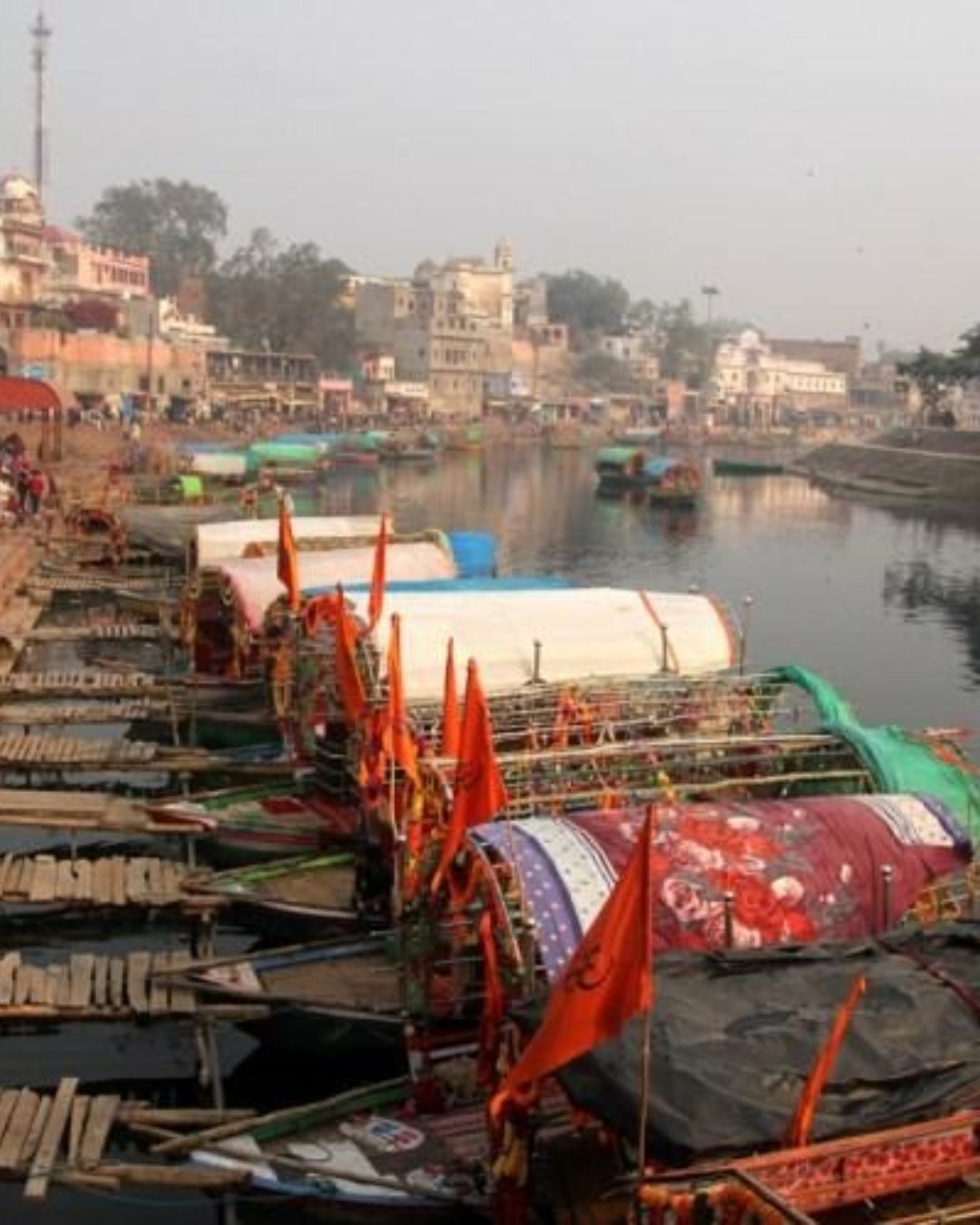
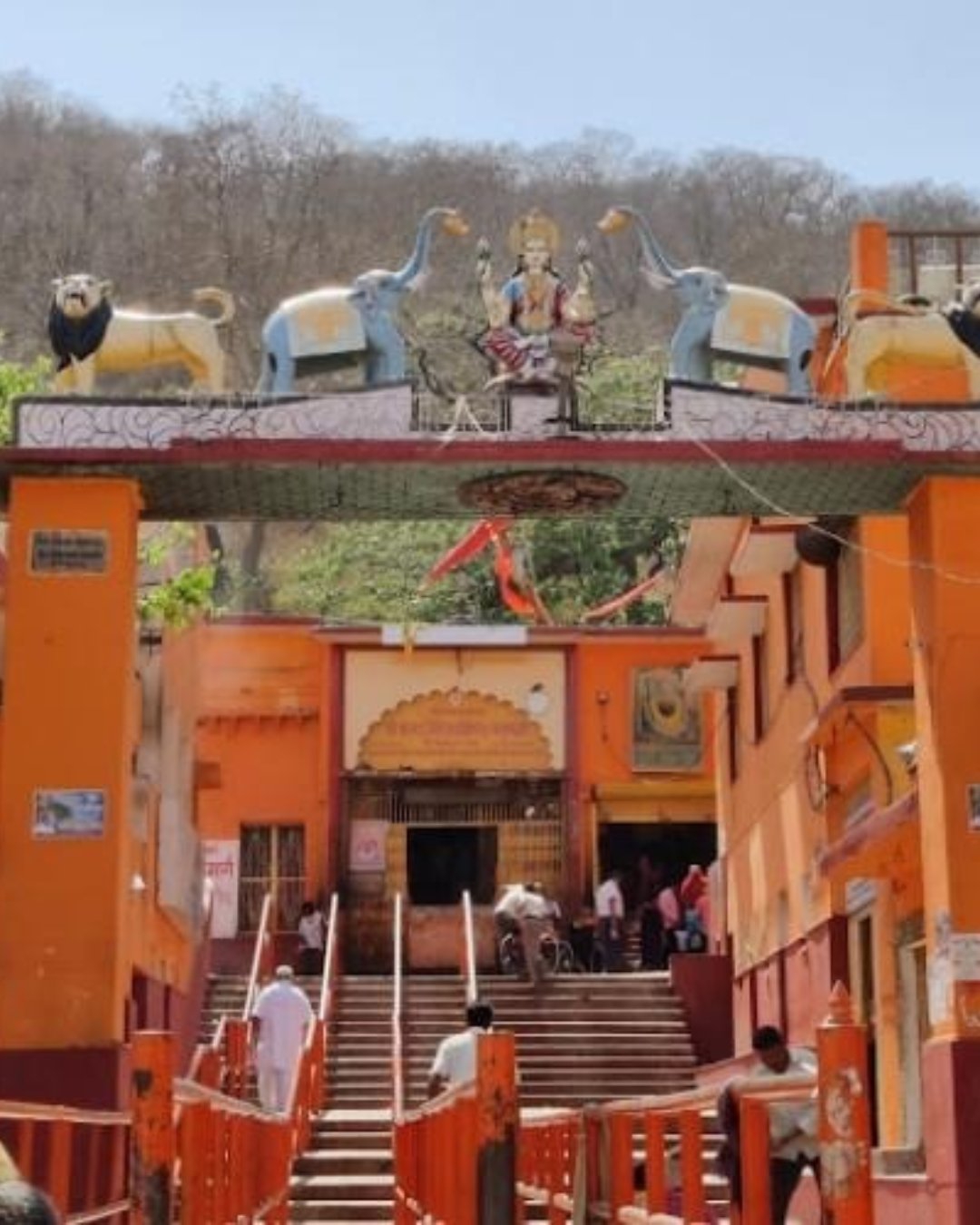
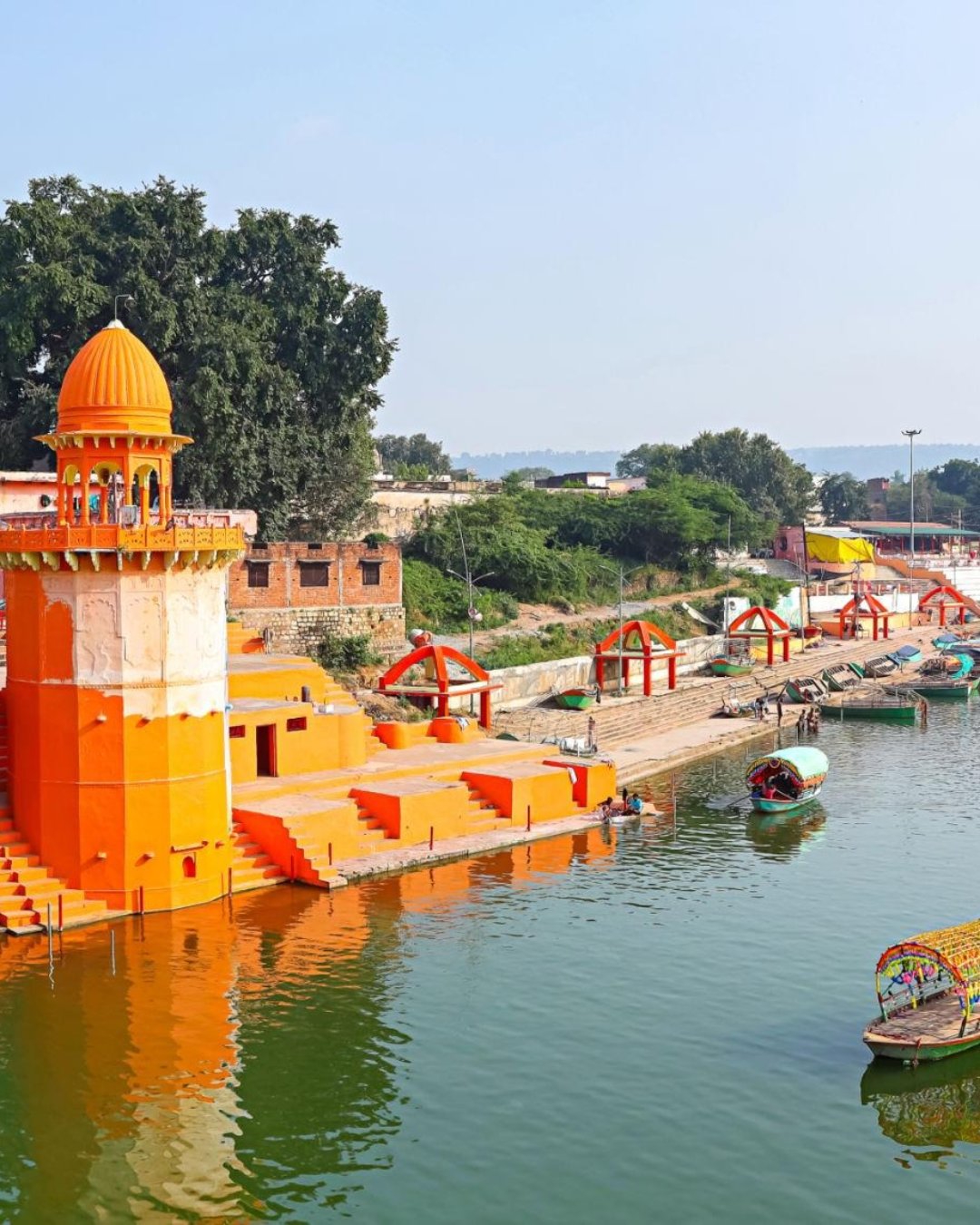
•Chitrakoot is associated with a long stretch of Ram’s exile and is a genuine journey from Ayodhya rather than an excursion — plan a night there.
•Naimisharanya lies a few hours west toward Sitapur and is one of the most significant Puranic sites in the region, traditionally where the Puranas were recited.
•Both are far quieter than Ayodhya and neither is set up for large tourist volumes, which is much of the appeal.
•These stops make sense if the story is your reason for travelling. If you are here for one temple, they will feel like a long way to go.
•Local transport thins out considerably at both — arrange the return leg before you set off rather than on arrival.
Pro tip: Give Naimisharanya an overnight rather than a day return. Arriving in the afternoon and leaving at dawn is the only way to see it without the road dominating the day.
The mistakes that ruin it:
•Attempting either as a same-day return from Ayodhya.
•Arriving without the return leg arranged.
•Expecting Ayodhya-level facilities at either.
15
MomentShravasti
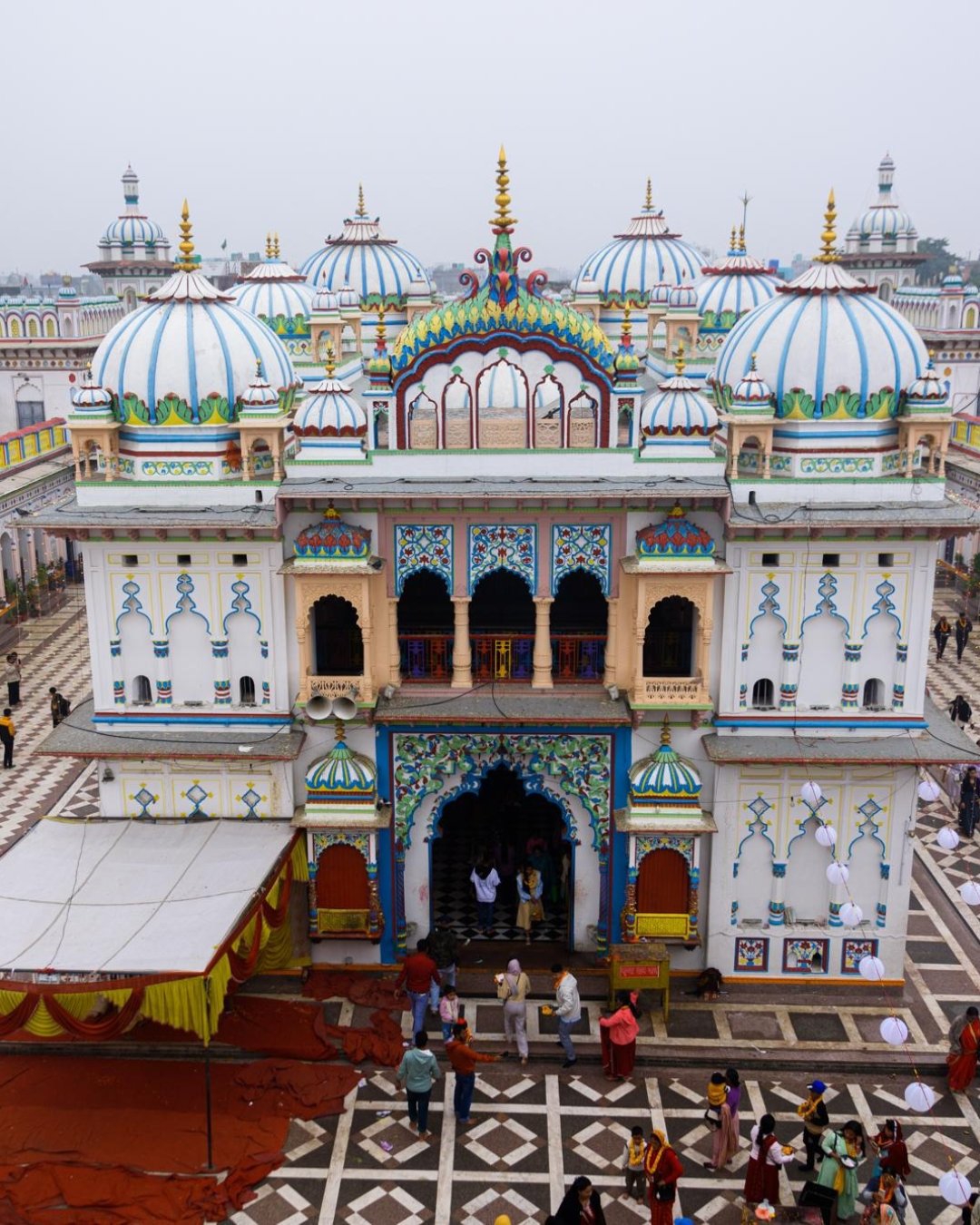
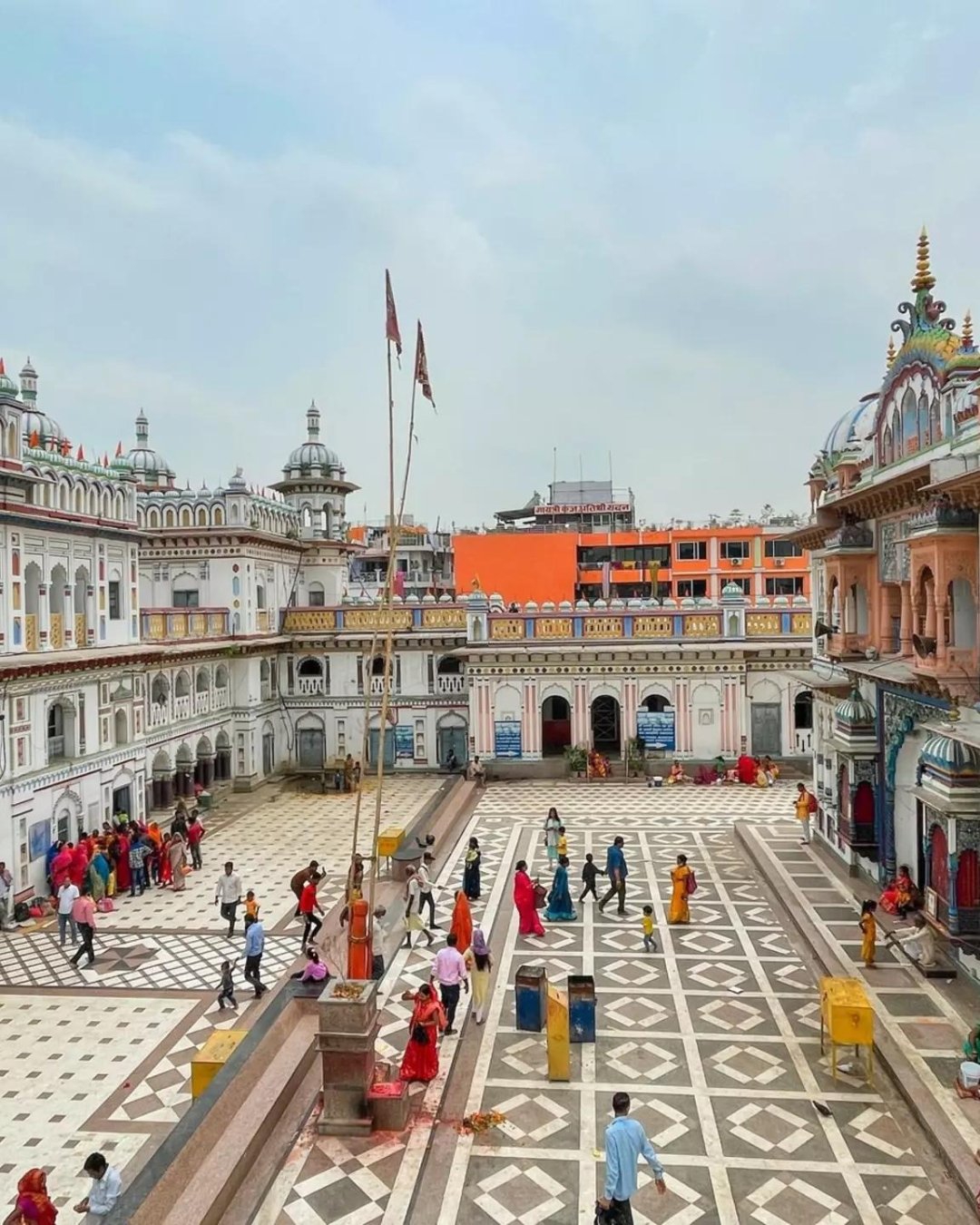
Toward Nepal, and the Buddhist Crossing
Ayodhya sits closer to the Nepal border and the Buddhist circuit than almost anyone planning a Ram trip realises.
•Gorakhpur, a few hours east, is the practical gateway both to the Nepal border and to the Buddhist sites.
•Sravasti lies roughly 110 km north of Ayodhya and is among the most significant Buddhist sites in India — the Jetavana monastery, where the Buddha is said to have spent many rainy seasons.
•Kushinagar and, across the border, Lumbini follow on the same line.
•The border crossing is a full day from Ayodhya rather than an afternoon, and requires the usual documentation — check current requirements rather than trusting a travel blog.
•For international visitors already doing the Buddhist circuit, Ayodhya and Sravasti combine unusually well and almost nobody plans it that way.
•Sravasti is the single most under-visited significant site within easy reach of Ayodhya.
Pro tip: If you have three days in the region, give one to Sravasti. It is the strongest counterweight to Ayodhya anywhere nearby — a completely different tradition, an hour and a half away, and almost empty.
The mistakes that ruin it:
•Treating the Nepal border as a day trip.
•Missing the Buddhist connection entirely while heading to Gorakhpur anyway.
•Relying on old information for border requirements.
14
MomentFaizabad
Half a Day Out: Faizabad, Guptar Ghat and Nandigram
The genuinely close things are the ones nobody searches for, which is exactly why they stay quiet.
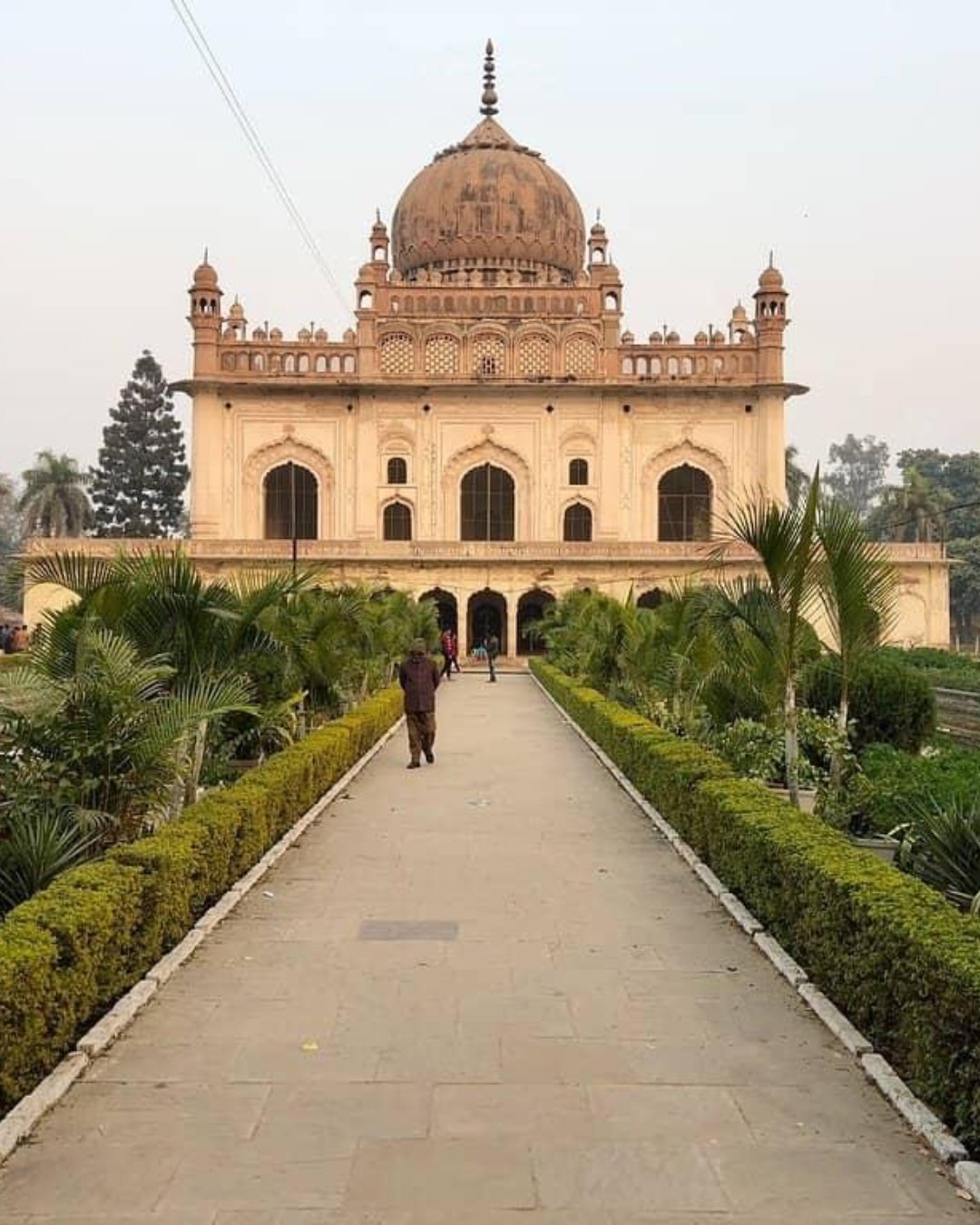
•Faizabad is the adjacent twin city, roughly 7 to 10 km away, and was the Nawabi capital of Awadh — Gulab Bari and Bahu Begum ka Maqbara are Mughal and colonial rather than temple architecture.
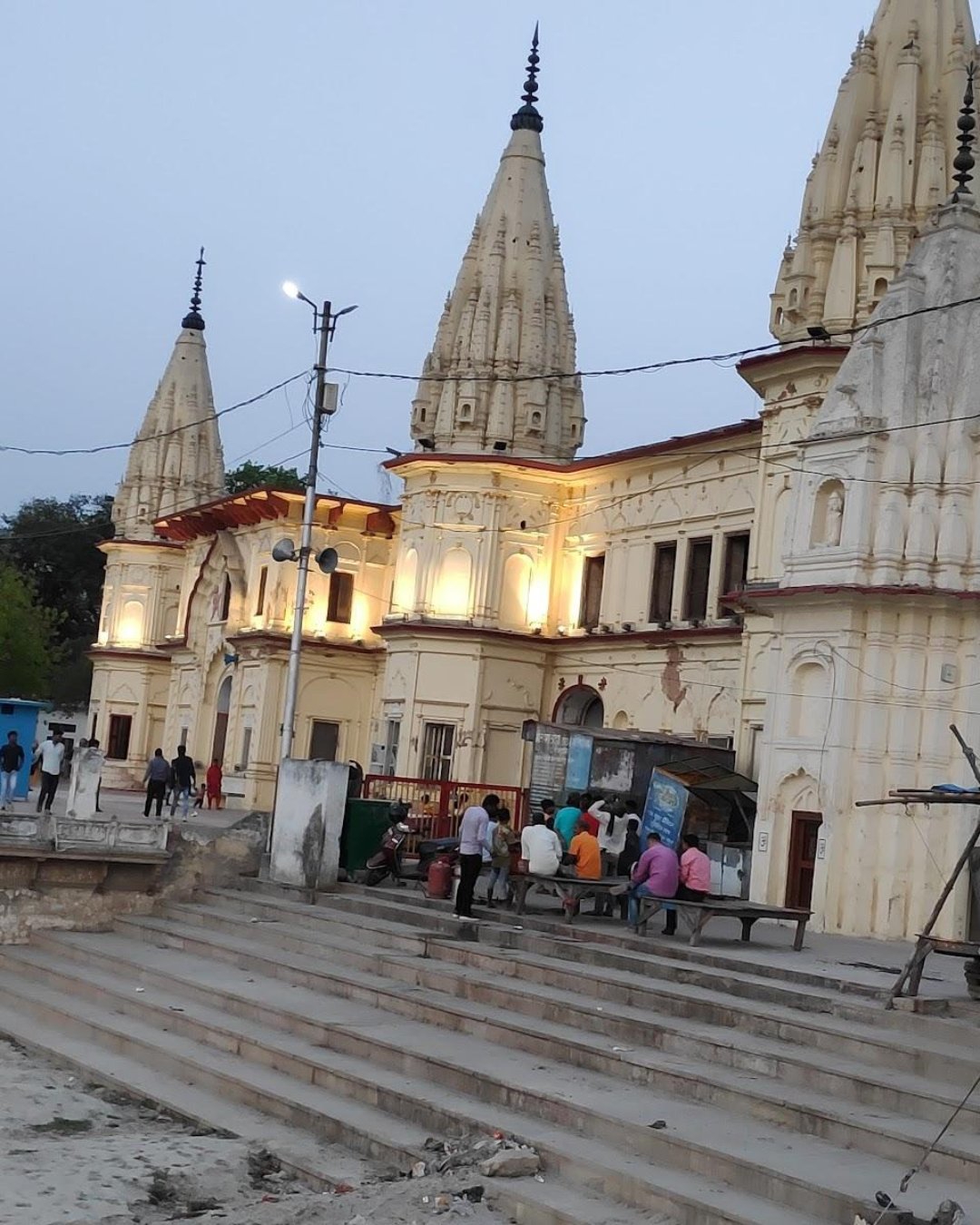
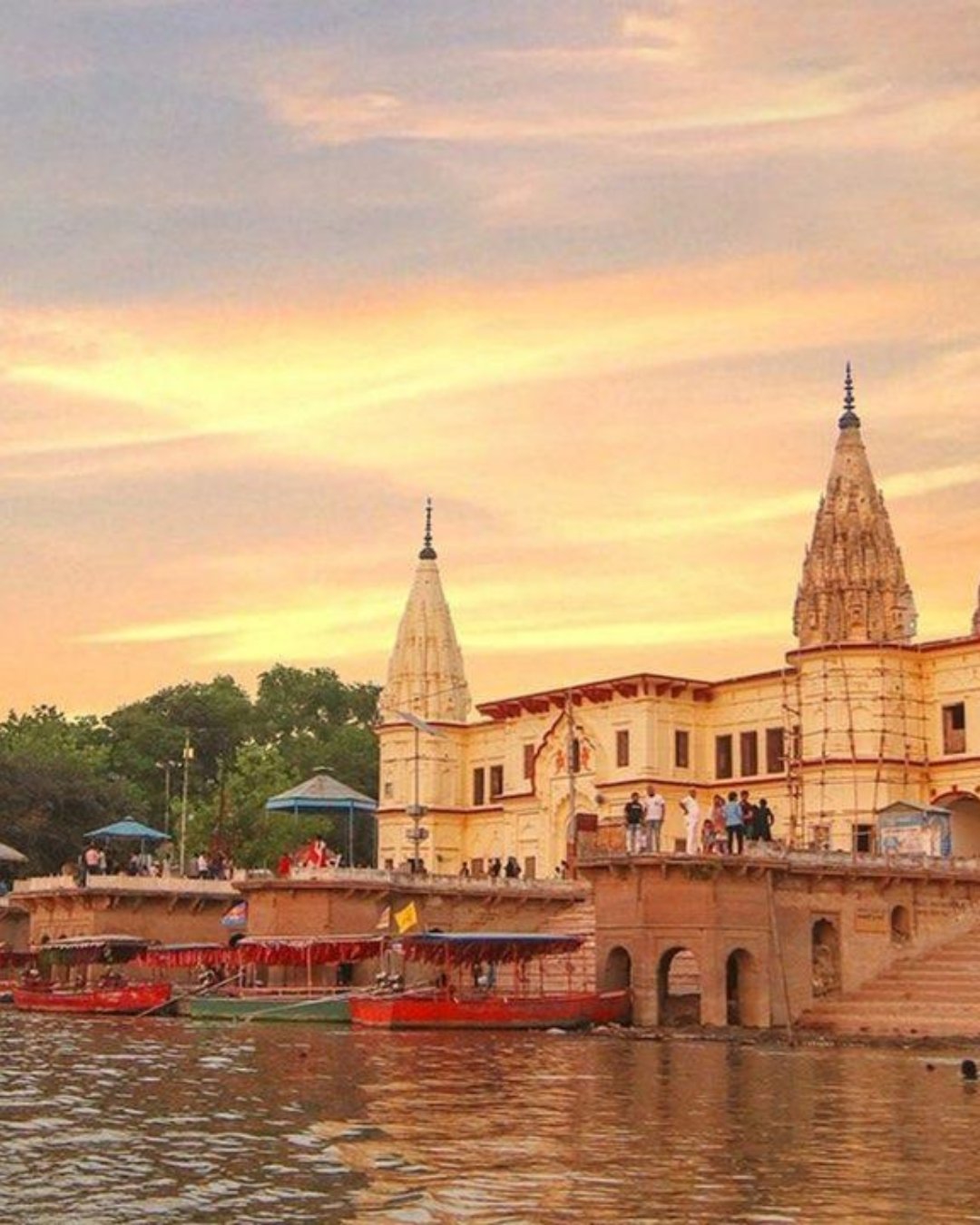
•Guptar Ghat sits on the same side and pairs naturally with it for one afternoon.
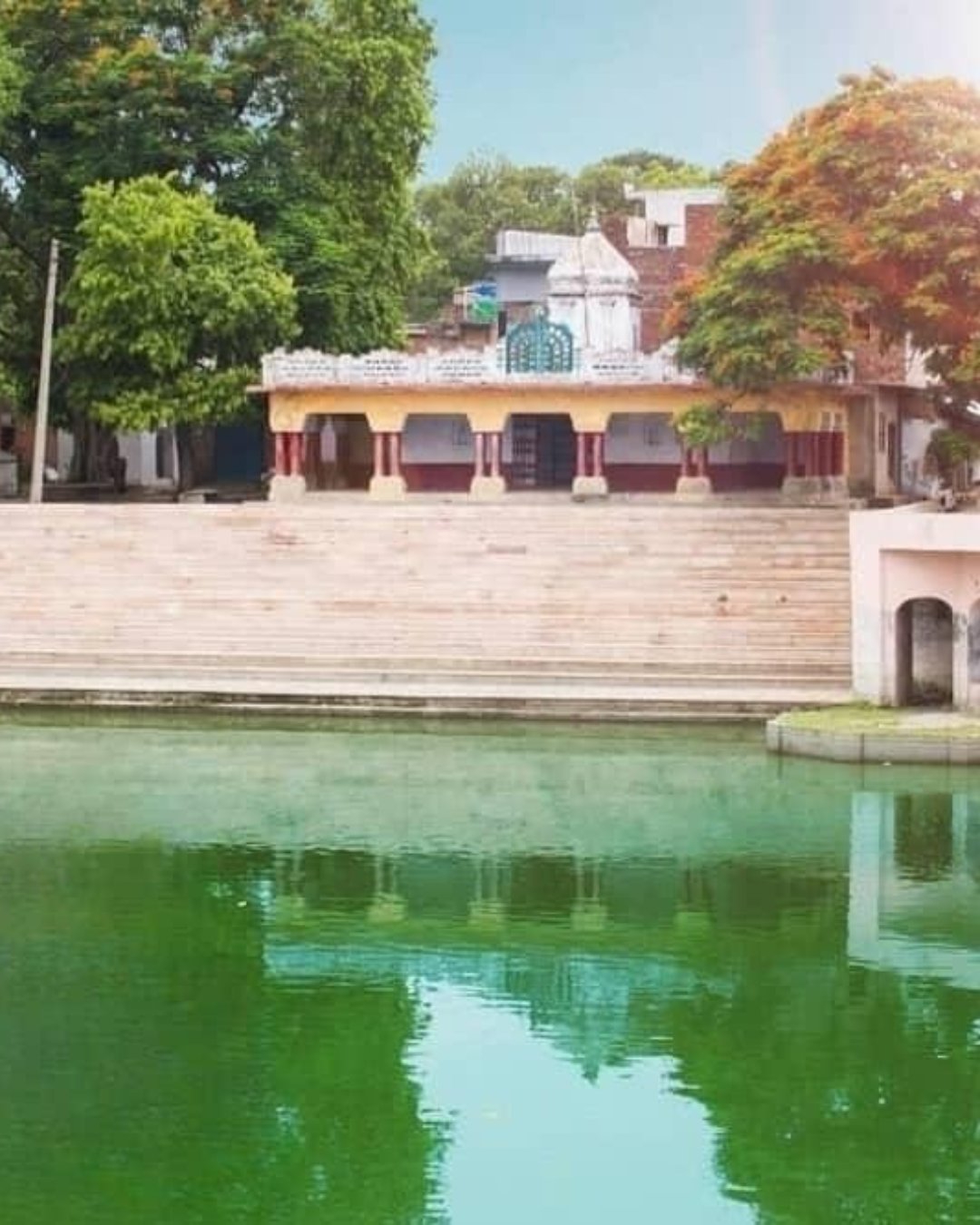
•Nandigram, roughly 15 to 20 km south, is where tradition holds Bharat ruled during Ram’s exile, governing in his brother’s name from outside the city. Bharat Kund is the focal point.
•Nandigram has its own railway station, though road is easier from the city.
•All of these are a fraction as busy as Ayodhya at any time of year.
•Together they make the best non-temple half-day available, and they are twenty minutes from your hotel.
Pro tip: Pair Faizabad with Guptar Ghat in a single afternoon. The change of architectural register — from temple town to Nawabi capital in ten kilometres — is the most surprising thing in the area.
The mistakes that ruin it:
•Assuming Faizabad is a different town needing a separate trip.
•Skipping it because it is not part of the pilgrimage.
•Rushing Nandigram between darshan windows — it is rural and deliberately undeveloped.
12
MomentSri Dharmanath Bhagwan Shwetambar Jain Tirth - Ratnapuri Kalyanak bhumi Raunahi Bazar, Dinkar Pur
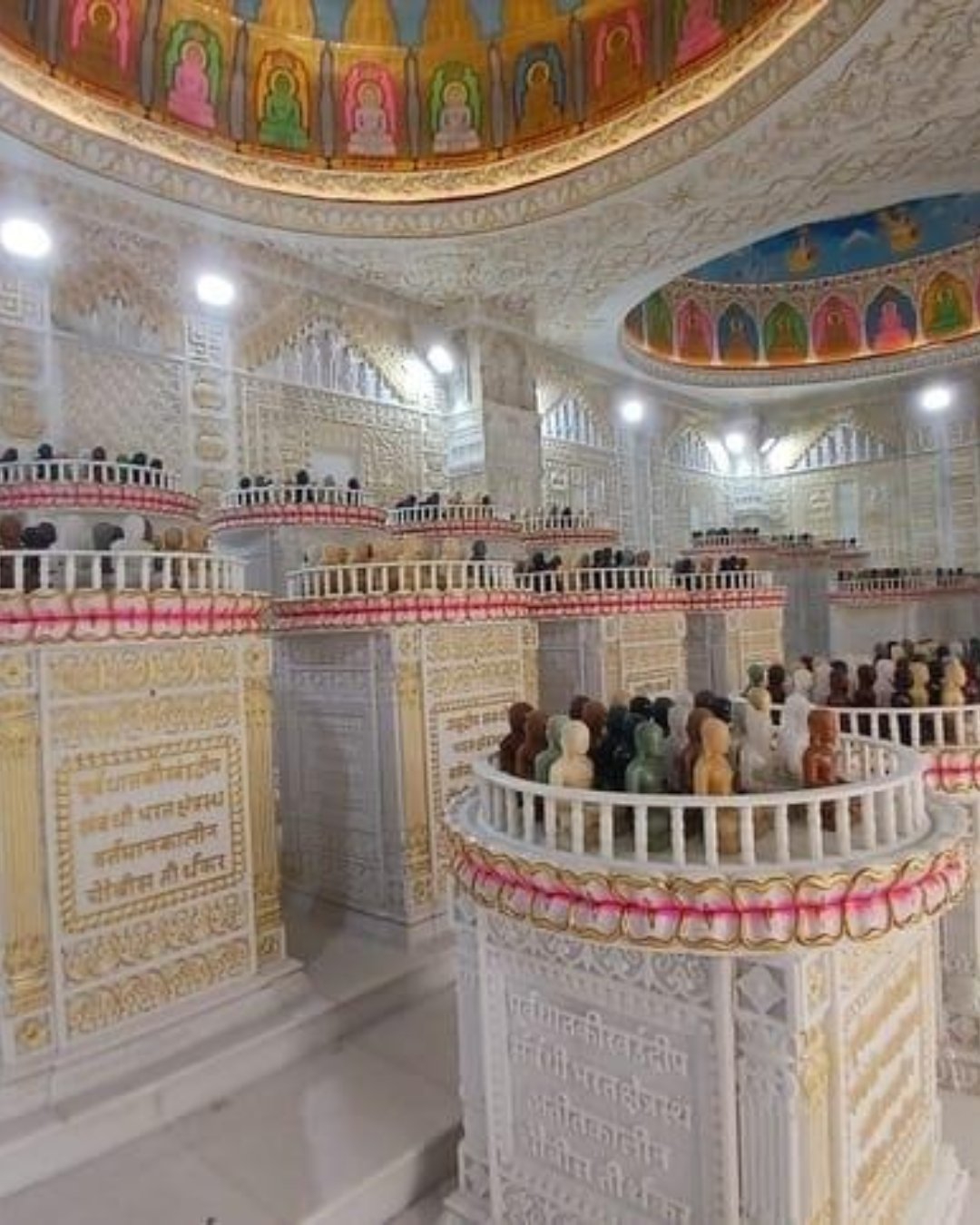
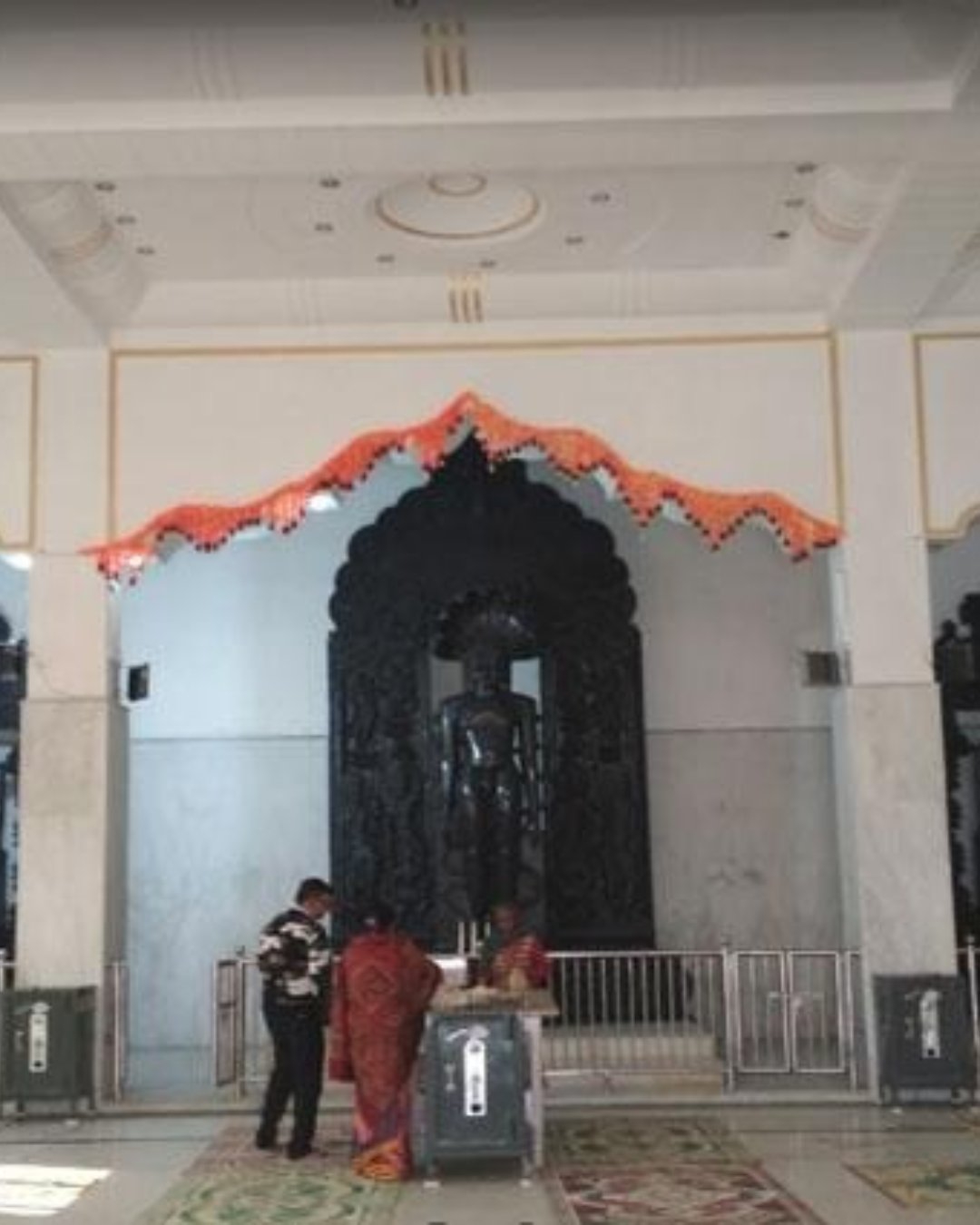
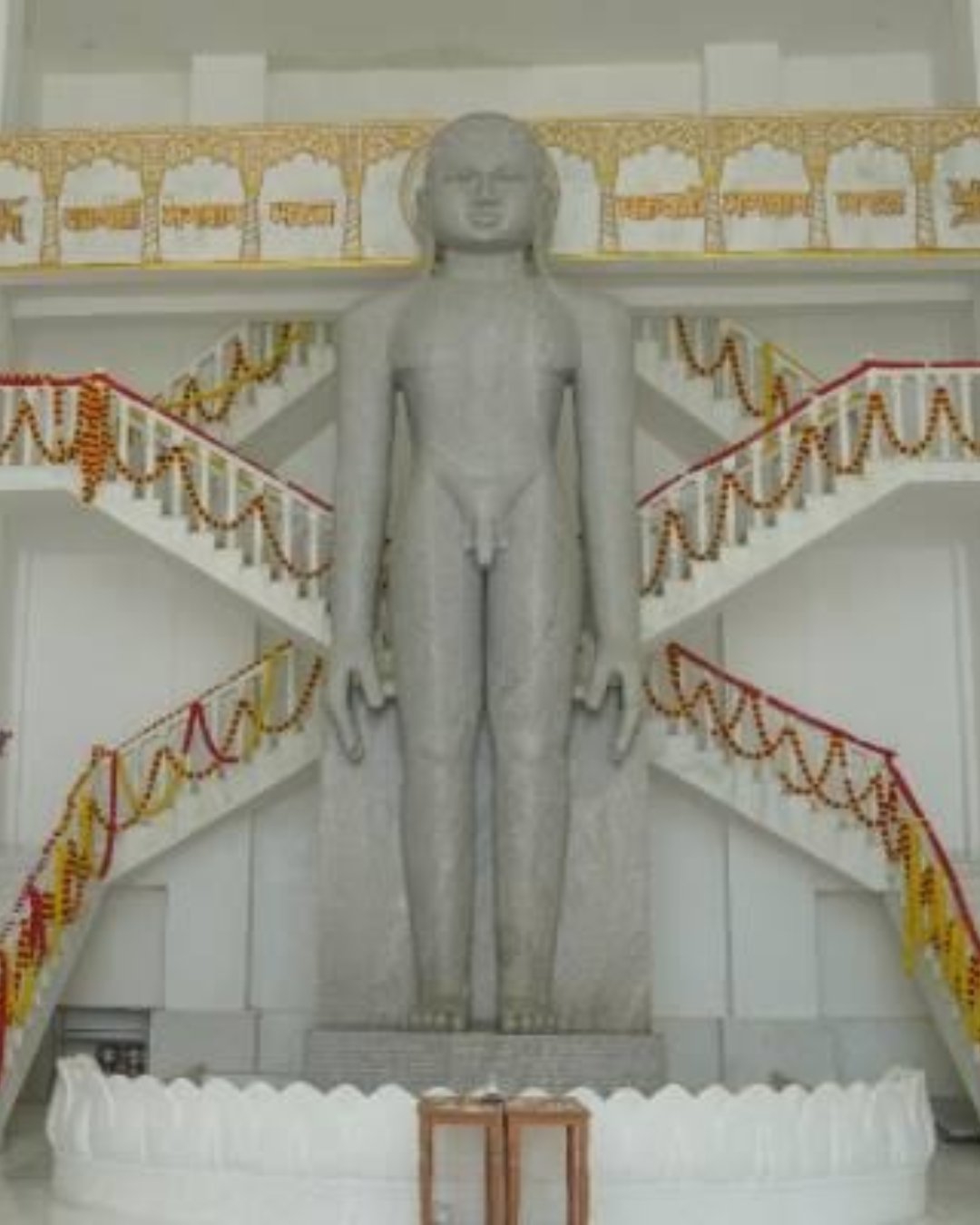
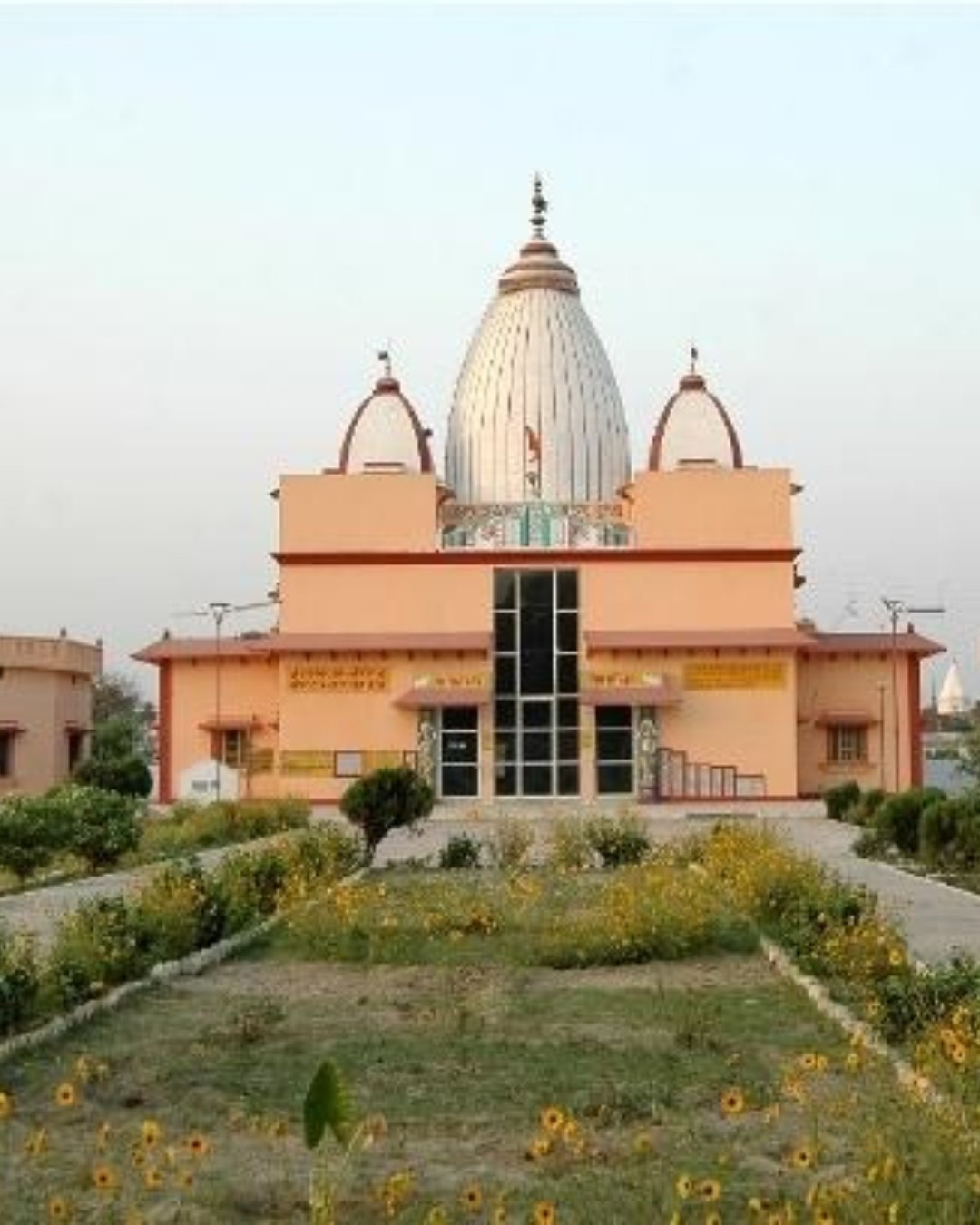
Ratnapuri, and the Jain Ayodhya Nobody Mentions
Ayodhya is a significant Jain pilgrimage site, and almost no travel guide in English says so.
•Ratnapuri lies about 24 km west of Ayodhya on the Lucknow road, near Ronahi, and is the traditional birthplace of Dharmanath, the fifteenth Tirthankara.
•It holds two temples, one Digambar and one Shwetambar, both maintained as pilgrimage sites.
•Ayodhya itself is held in Jain tradition to be the birthplace of five Tirthankaras — Rishabhanatha, Ajitanatha, Abhinandananatha, Sumatinatha and Anantanatha — more than almost anywhere else.
•Sravasti is the traditional birthplace of Sambhavanatha, the third, which makes the Buddhist crossing a Jain one as well.
Pro tip: Go in the morning and take the reframing with you. Knowing Ayodhya belongs to more than one tradition changes how the rest of the town reads for the remainder of your trip.
The mistakes that ruin it:
•Assuming Ayodhya is significant in one tradition only.
•Going in afternoon heat — there is little shade on the approach.
•Expecting crowds or facilities. There are neither, and that is the point.
29
MomentShree Ramjanmbhumi Temple Ayodhya, Ayodhya
How to Use Your Second and Third Day
Most people have more time in Ayodhya than the town strictly needs, and this is the decision that uses it well.
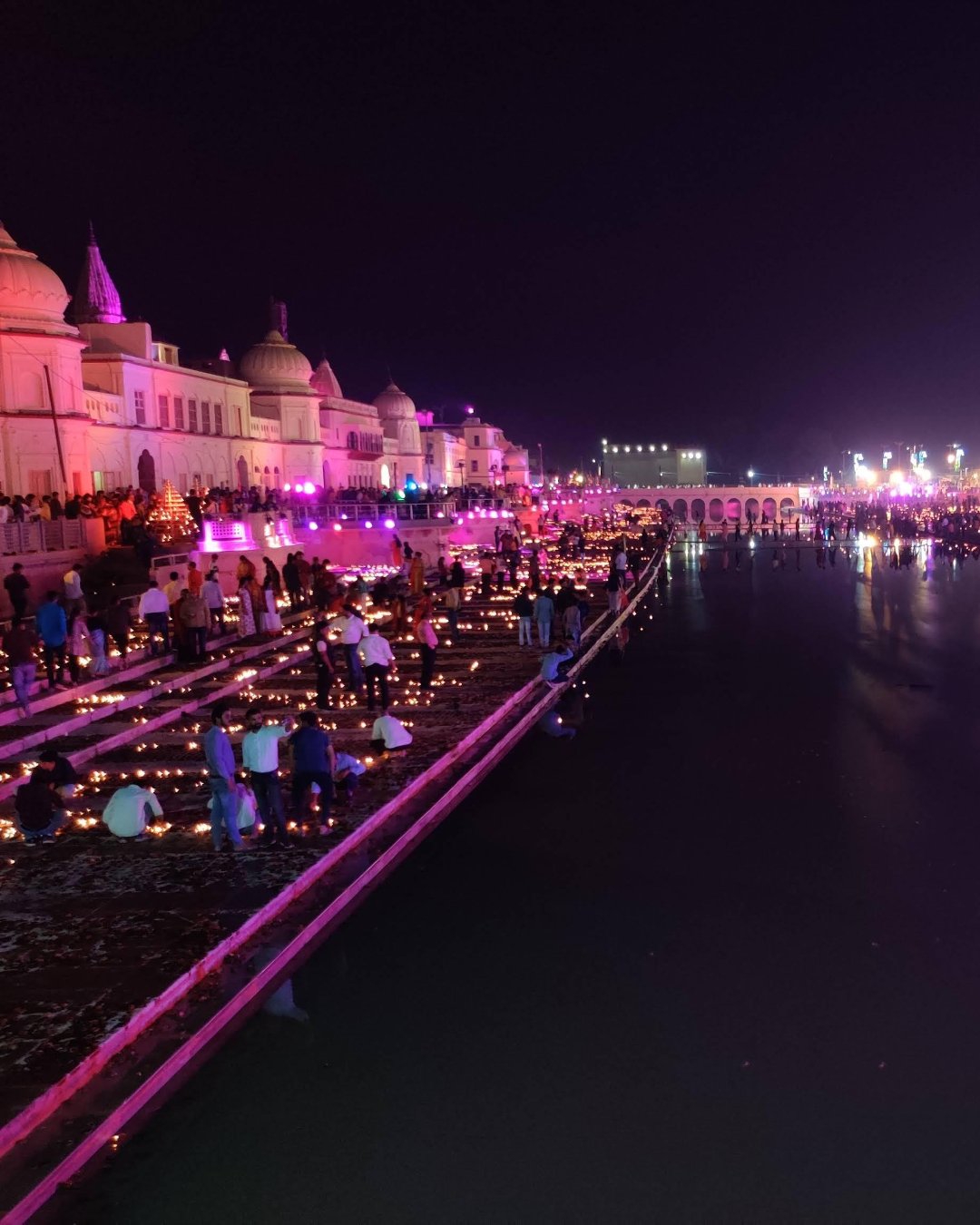
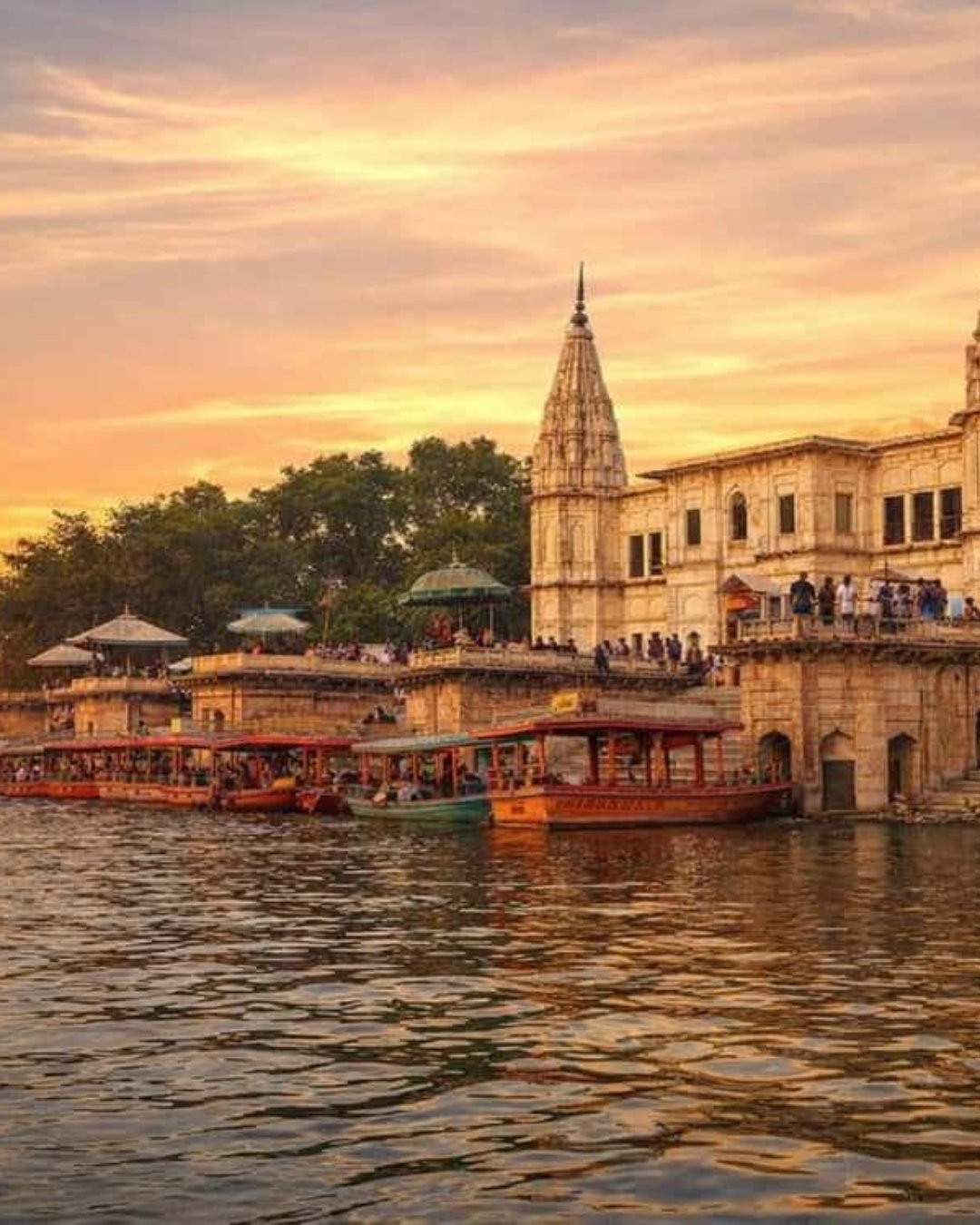
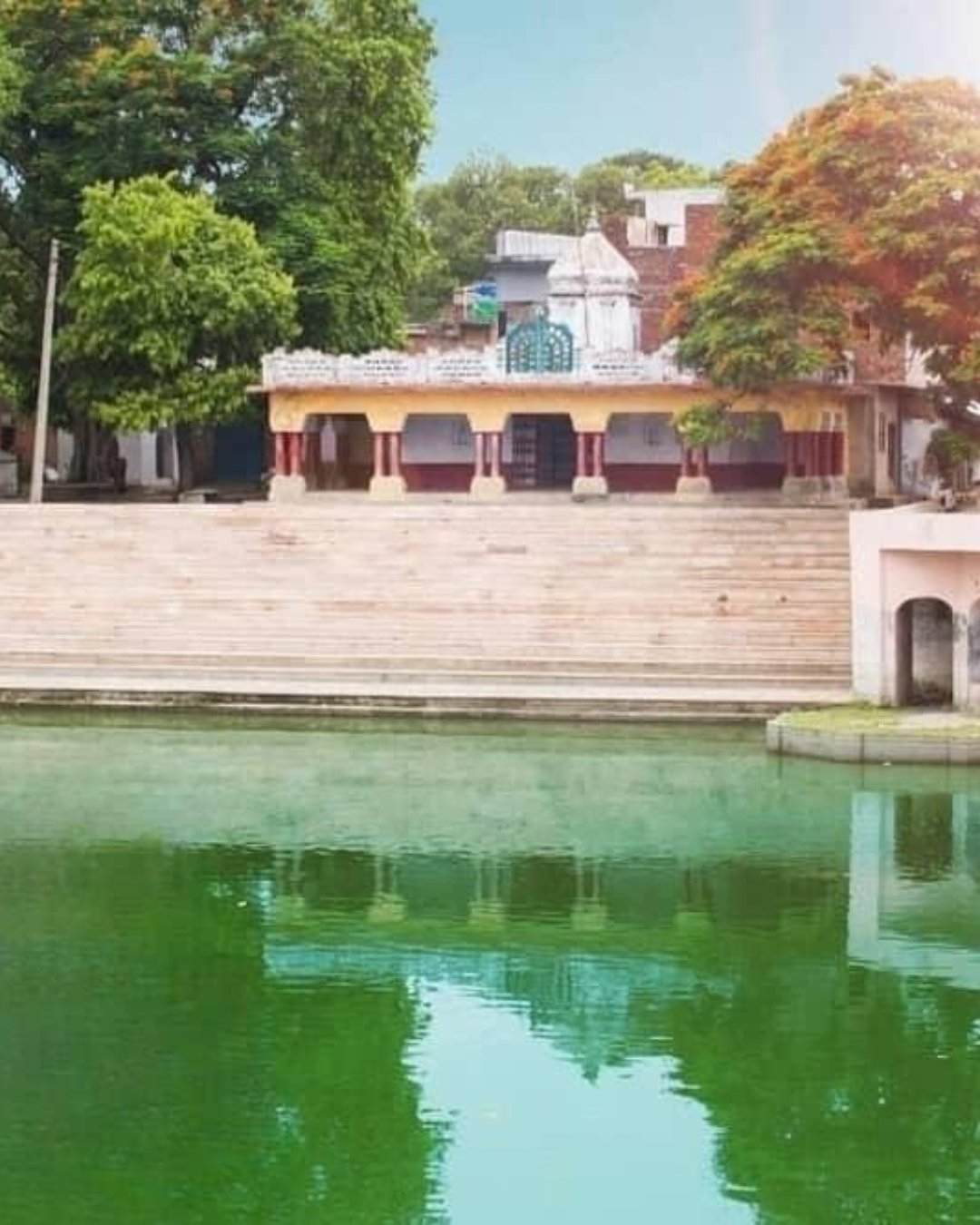
•Second day in town: the older temples in the morning, Guptar Ghat and Faizabad in the afternoon.
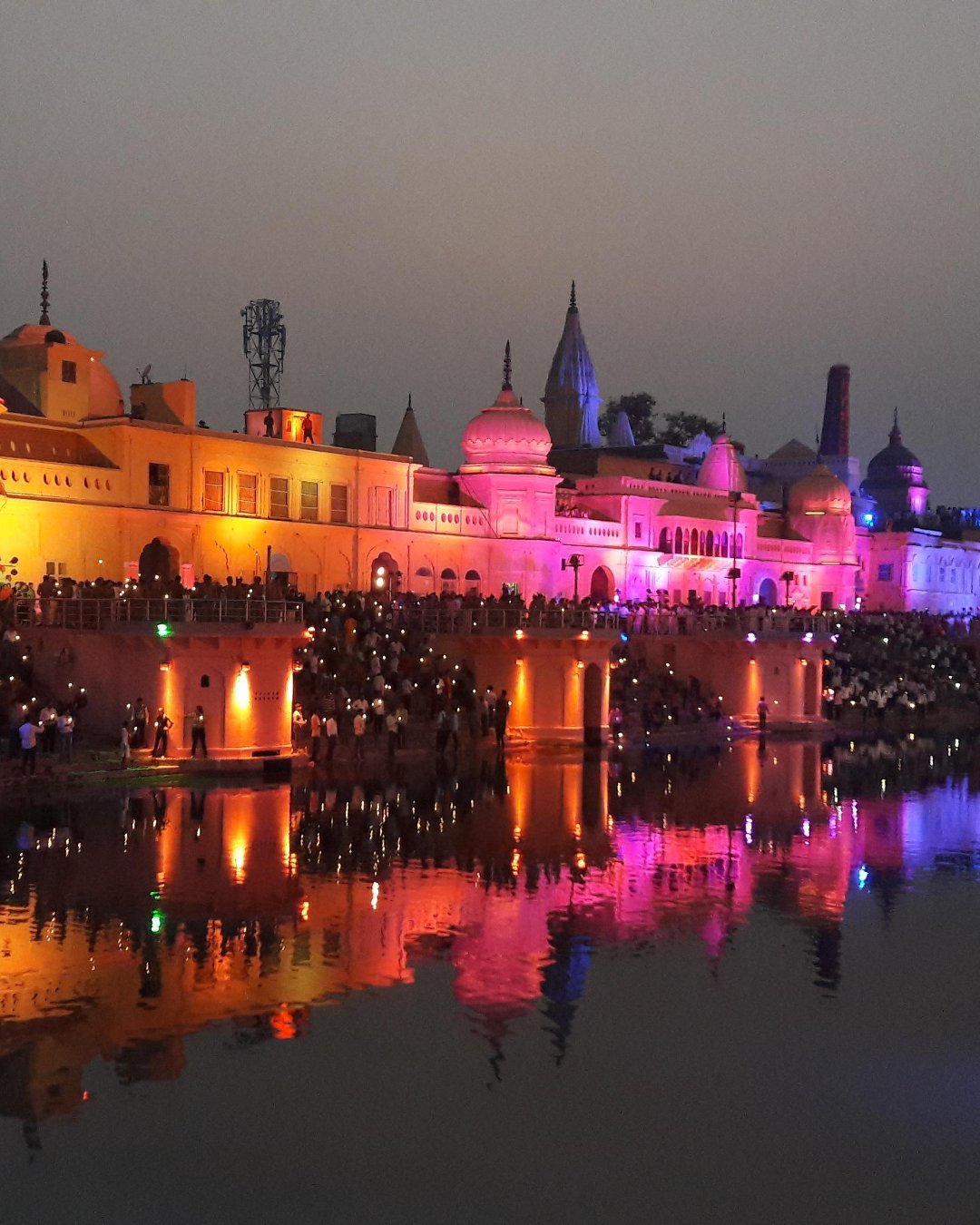
•Second day out of town: Nandigram and Ratnapuri together, back for the Saryu aarti at sunset.
•Third day: move on properly — Sravasti or Naimisharanya, or start the circuit toward Prayagraj and Varanasi.
•Returning pilgrims often use the extra day for a second darshan with an aarti pass rather than more sightseeing.
•Whatever you add, keep one sunset free at the ghats. It is the thing people regret missing.
•The pattern that works: one day in town, one day around it, then travel on. Three days is the shape that suits Ayodhya.
Pro tip: Build day two around one decision — in town or out of it. Trying to do both is how people end up doing neither properly and remembering neither at all.
The mistakes that ruin it:
•Treating extra days as more temples rather than a different experience.
•Leaving on day two and missing everything on this page.
•Planning the onward leg on the morning you travel.
Destination
Sri Ram Janmabhoomi Path
Common questions
01Question
What are the best places to visit near Ayodhya?
Within about an hour: Faizabad and its Nawabi architecture, Guptar Ghat, Nandigram and Bharat Kund, and Ratnapuri for the Jain connection. Further out: Sravasti, Naimisharanya, and the Prayagraj and Varanasi circuit. The first group are half-day trips; the second need their own nights.
02Question
How far is Vrindavan from Ayodhya?
Roughly 500 to 650 km west, along with Mathura — an overnight train or a flight via Delhi or Lucknow, not a day trip. The two cities are close enough to each other to treat as one stop. The devotional logic of combining them with Ayodhya is sound; the geography is not co-operative.
03Question
Can I visit Agra or Jaipur from Ayodhya?
Both are overnight rail rather than day trips, and both sit west of Delhi while Ayodhya sits well east of it. The practical route uses Delhi as the hinge rather than travelling cross-country. Adding Ayodhya to a Golden
Triangle trip is a genuine two or three day extension.
04Question
How far is Chitrakoot or Naimisharanya from Ayodhya?
Both are real journeys rather than excursions. Naimisharanya lies a few hours west toward Sitapur and is one of the most significant Puranic sites in the region. Chitrakoot, associated with Ram's exile, deserves a night of its own. Neither works as a same-day return.
05Question
How far is Ayodhya from the Nepal border?
The crossing is reached via Gorakhpur, a few hours east of Ayodhya, and the journey is a full day rather than an afternoon. Documentation requirements apply and should be checked against current official guidance. Kushinagar and Lumbini follow on the same line.
06Question
Is Sravasti worth visiting from Ayodhya?
Roughly 110 km north, Sravasti is among the most significant Buddhist sites in India — including the Jetavana monastery, where the Buddha is said to have spent many rainy seasons. It is the most under-visited significant site within easy reach and deserves an overnight rather than a dash.
07Question
Is Ayodhya important in Jainism?
Yes, and very few travel guides mention it. Jain tradition holds Ayodhya
to be the birthplace of five Tirthankaras, including Rishabhanatha, the first. Ratnapuri, about 24 km west on the Lucknow road, is the birthplace of Dharmanath, the fifteenth, and has both Digambar and Shwetambar temples.
08Question
Is Faizabad worth visiting from Ayodhya?
Yes, and it is only 7 to 10 km away. Faizabad was the Nawabi capital of Awadh, and Gulab Bari and Bahu Begum ka Maqbara offer Mughal and colonial architecture rather than temples — a genuine change of register. It pairs well with Guptar Ghat for a single afternoon.
More to explore
Go further into one part of this trip.