

Buying Direct from the Weavers
Madanpura, Varanasi, India
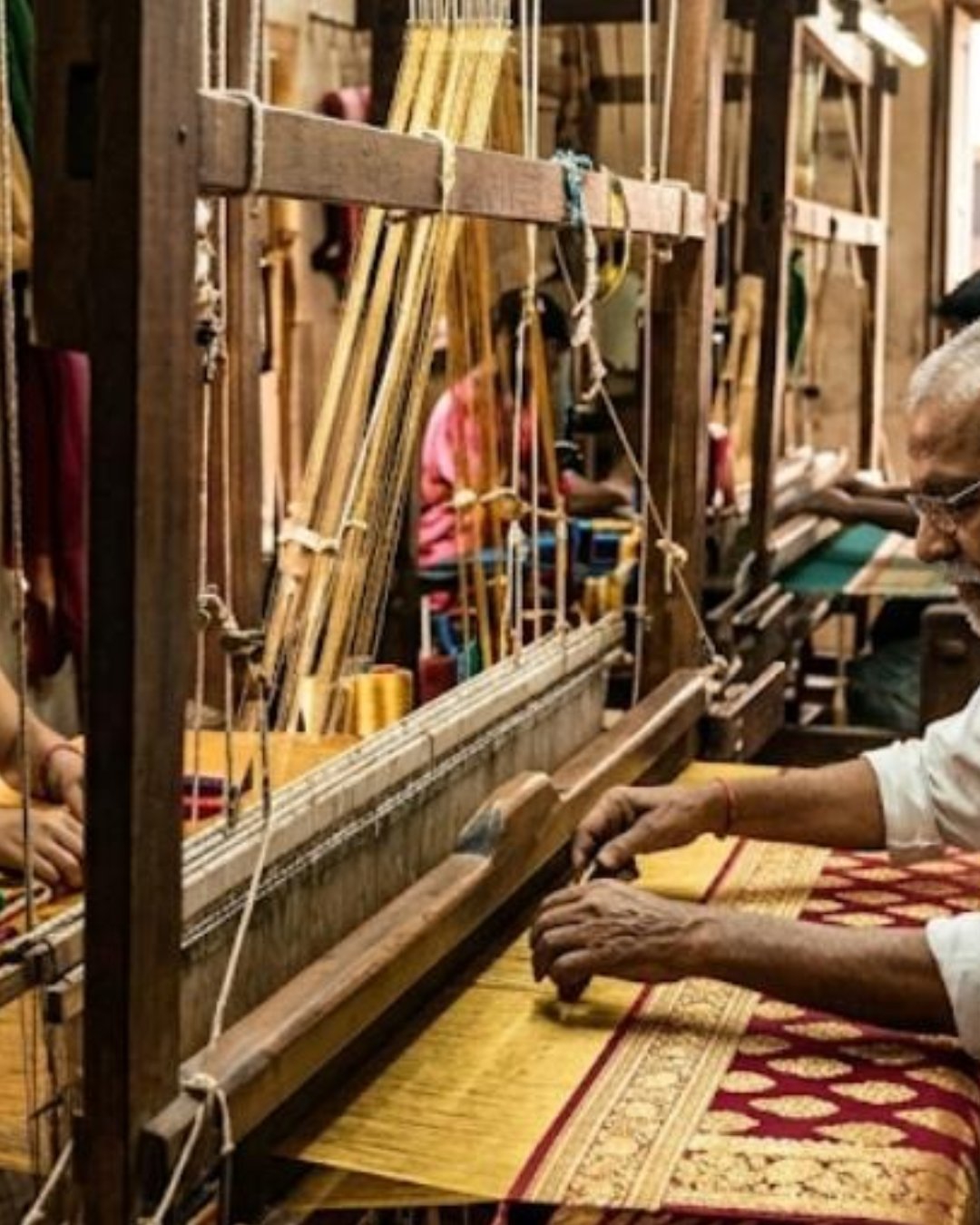
Somewhere behind the showrooms, in a lane you'd never turn down on your own, two men are working a pit loom that has been in their family longer than anyone can date.
Who weaves it, and where
Most of Varanasi's handloom Banarasi silk comes from the city's Ansari weaver families, a community that has carried this craft for generations. They're concentrated in a handful of weaving mohallas — Madanpura, Lallapura and Peeli Kothi among them — where the looms aren't a tourist attraction but the ordinary work of the household. Walk these lanes in the morning and the sound gives it away: the rhythmic clack of the shuttle through open doorways, a sari taking shape a few threads at a time.
The pit loom and the jala
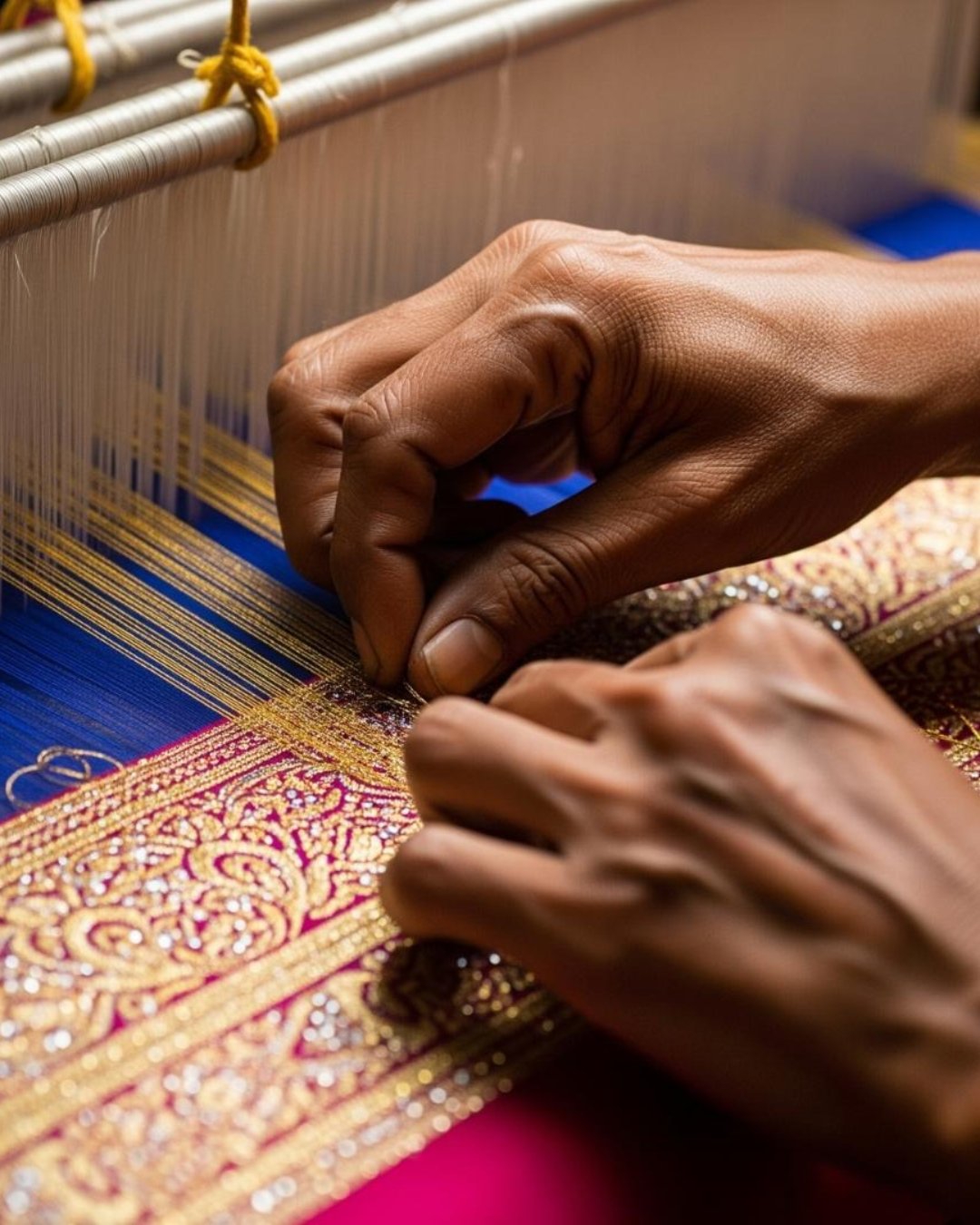
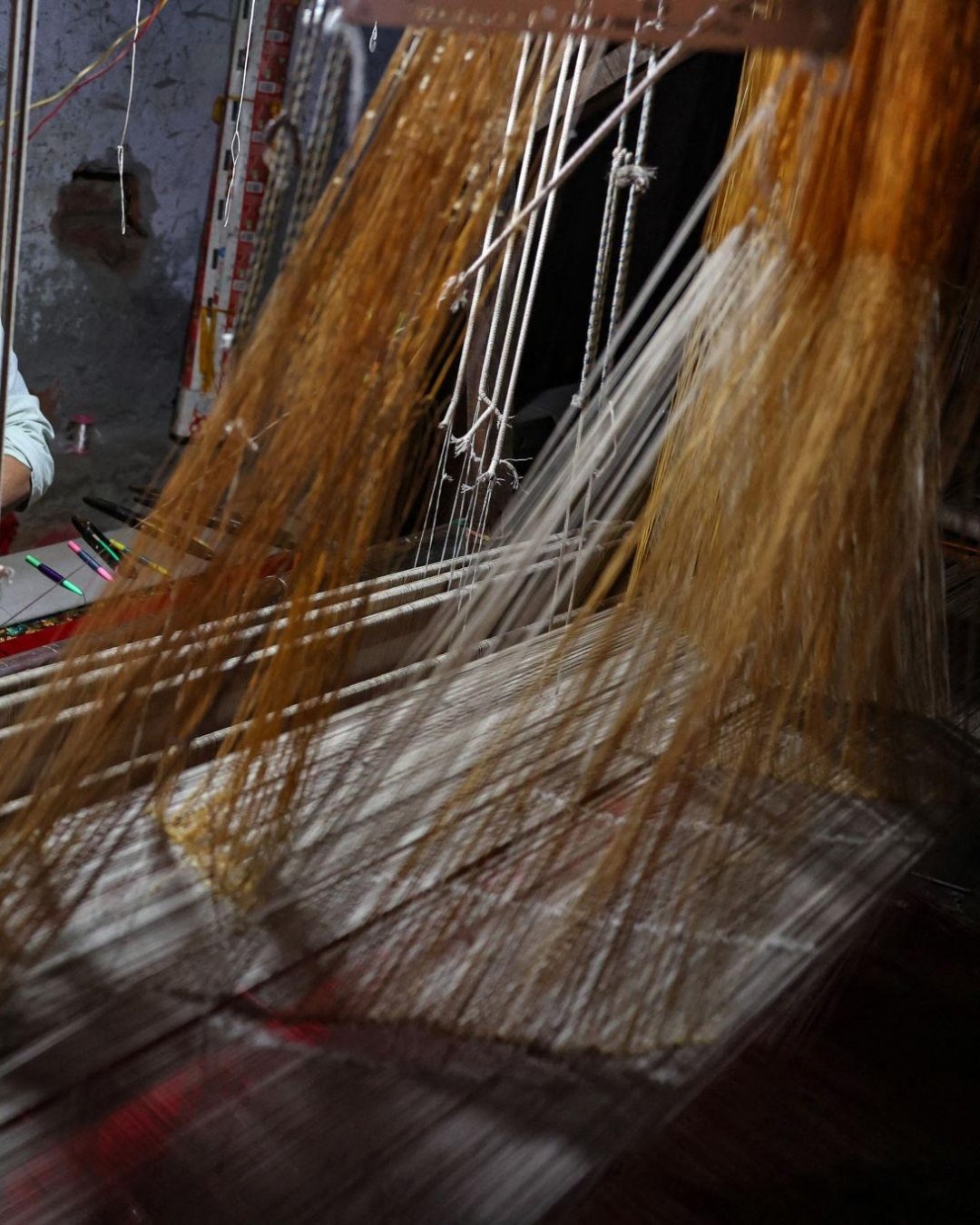
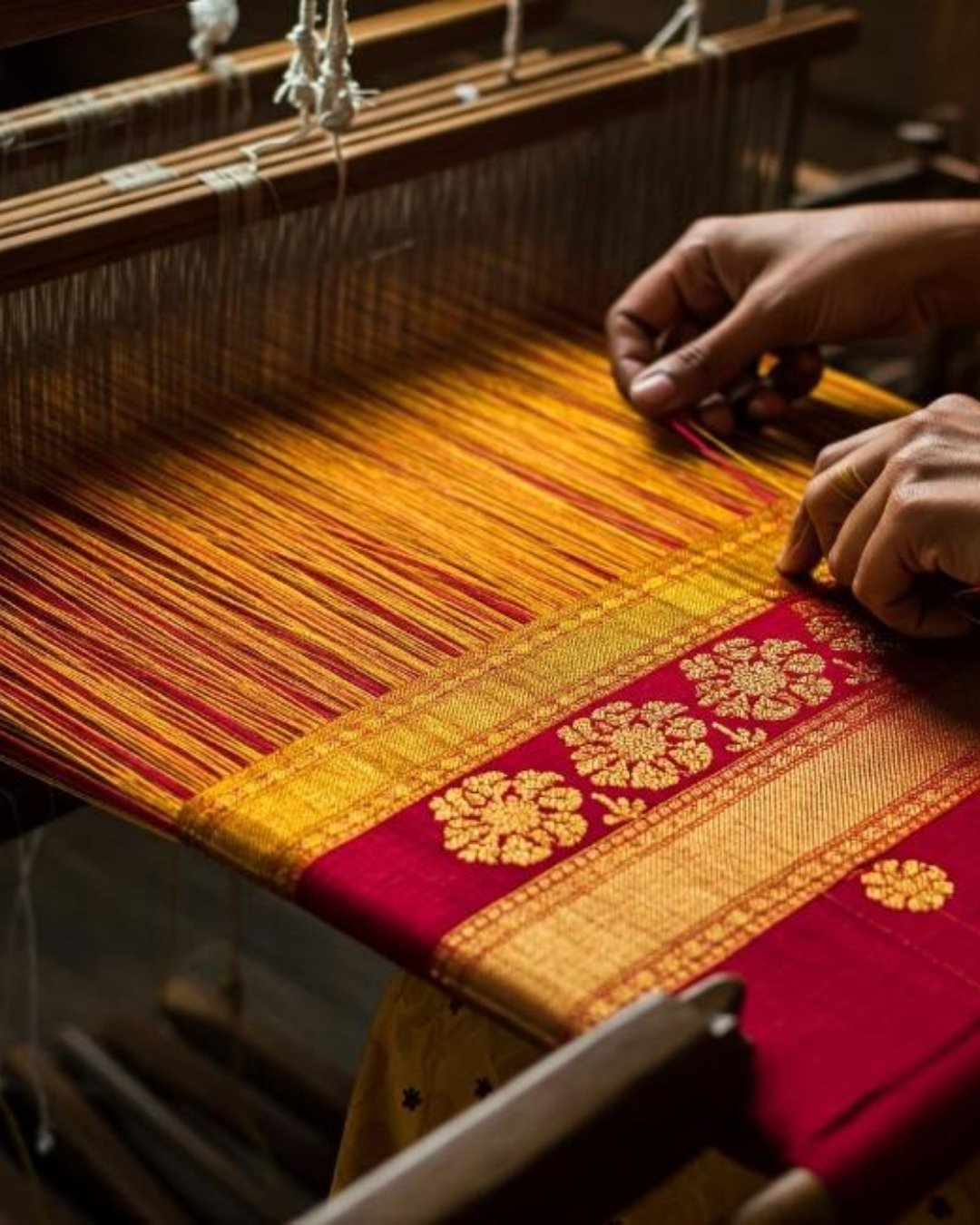
The work happens on a pit loom — the weaver sits at floor level with their legs in a pit dug beneath the frame, feet working the treadles while the hands throw the shuttle and beat each row of weft into place. The elaborate brocade is set by the jala, the older Banarasi pattern system: a lattice of knotted threads, designed by a specialist, that lifts exactly the right warp threads on each pass so the motif is built into the cloth rather than added on top. Many looms now use a jacquard mechanism for the same job, but the jala is the tradition the city is known for, and a few families still work it. Depending on how dense the pattern is, a single sari can take anywhere from a few days to several weeks on one of these looms.
What the weaver actually earns
This is the part the retail price hides. The person at the loom is usually paid by the piece, and their share is a small fraction of what the sari finally sells for in a showroom — the gap widens with every hand the piece passes through between the loom and the shop window. A sari carrying a five-figure tag downtown may have earned its weaver a modest piece-wage for days of work. It's the single strongest reason to buy as close to the loom as you can: more of what you pay reaches the person who made it, and you see with your own eyes what you're paying for.
Visiting a working home-workshop — the etiquette
If you're invited into one of these workshops, remember it's someone's home as much as their livelihood:
Ask first — before you step in, and again before you photograph anyone or their loom. A working weaver is not a photo op.
Follow the household — take your shoes off where they do, and dress modestly; many of these are observant Muslim families.
Carry cash. Small workshops rarely take cards, and cash keeps the money in the family's hands.
Give it time. A real visit is unhurried — the weaver may set a sari on the loom to show you the work — and that pace is part of what you came for.
Come with genuine interest, not to treat the home as a free museum. Look to buy, or at least to learn, and thank them for their time.
Buy this way and the story about the family who wove your sari isn't something a salesman told you — it's something you watched happen.