

Banarasi Silk: The Real Thing
Alaipura, Varanasi, India
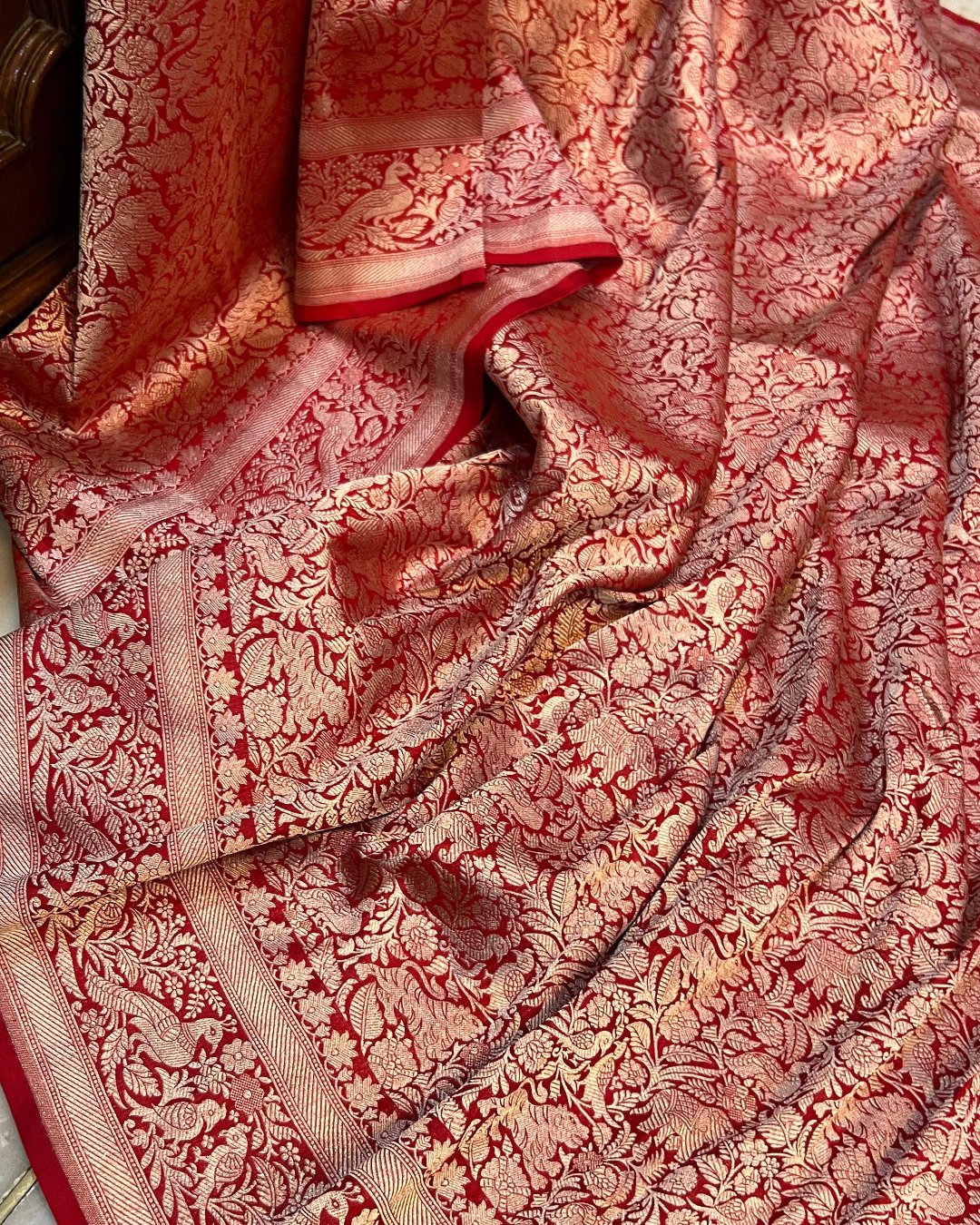
Everyone in Varanasi seems to know "a genuine weaver's showroom, no middleman, special price for you" — a driver, a guide, a friendly man at the ghats. Before you follow any of them anywhere, it's worth knowing what you'd actually be buying. Because a real Banarasi sari isn't a length of cloth. It's a month of one weaver's life on a handloom.
Why a real one takes a month
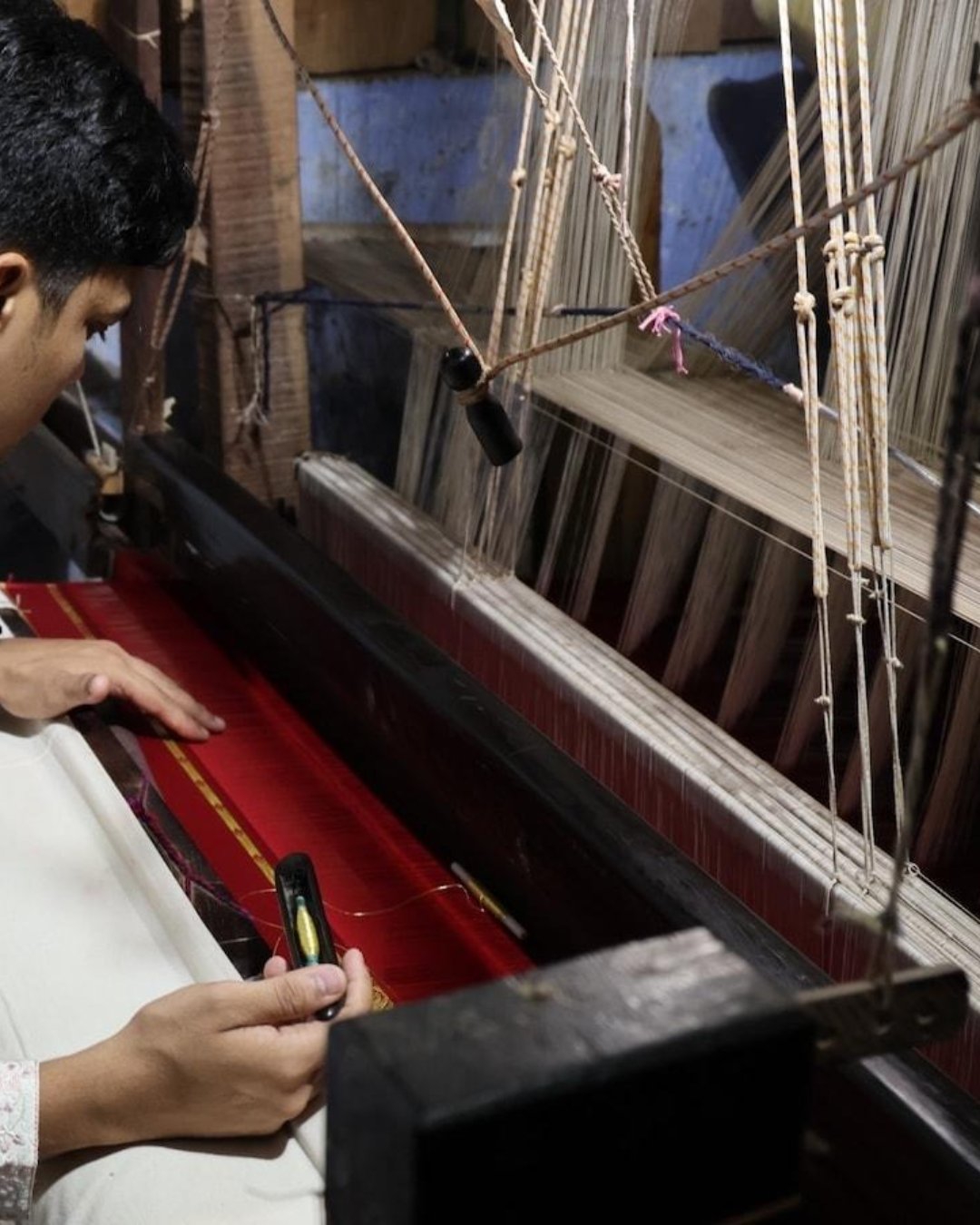
A handwoven Banarasi sari isn't a fabric, it's a build. Two weavers work a pit loom for anywhere from fifteen days to six months, depending on the density of the brocade. The pattern is set on a jacquard or the older jala system, which lifts individual warp threads so the design is woven into the cloth rather than printed onto it.
What you're paying for
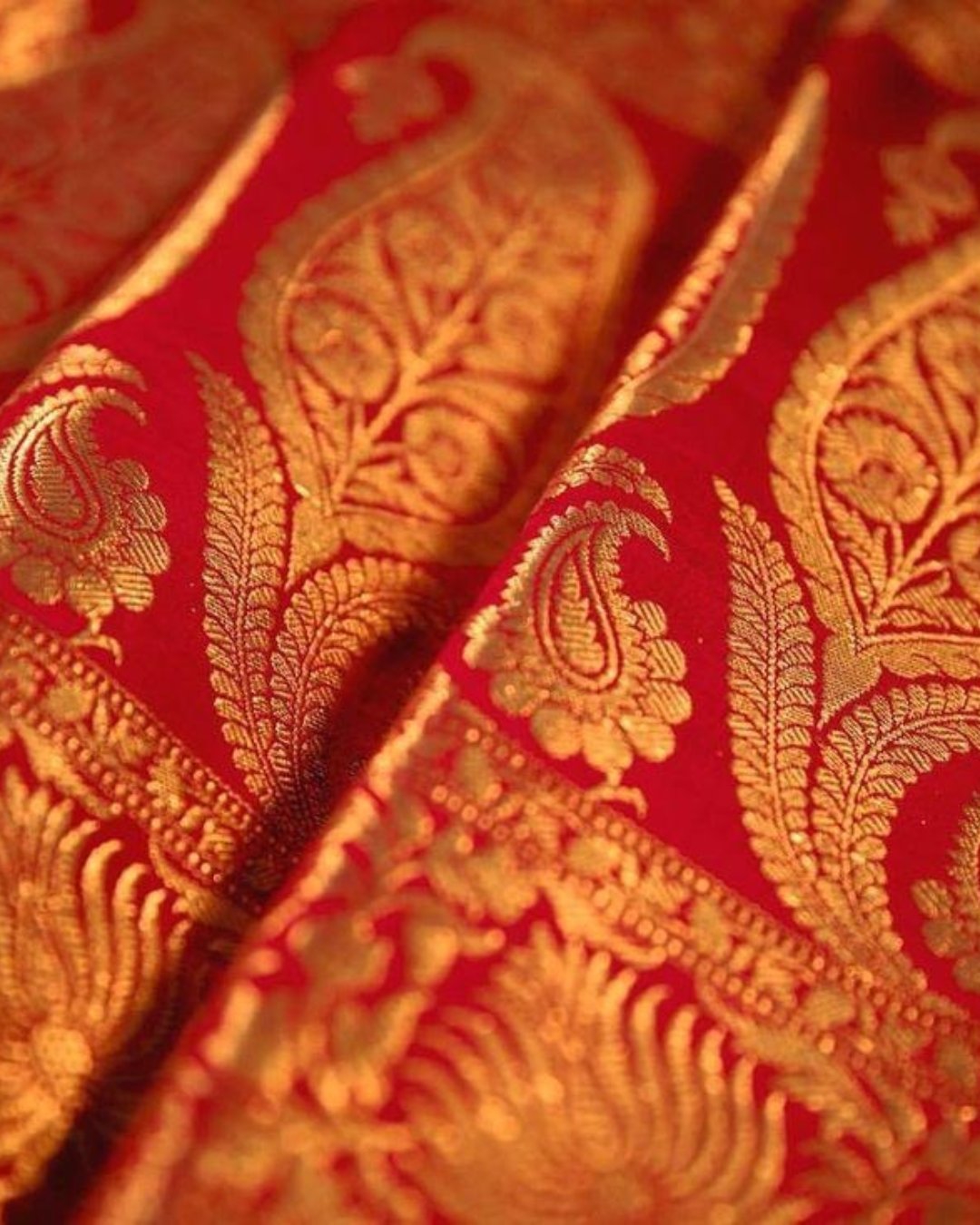
The zari — traditionally silver thread gilded with gold, which is why weight and price move together.
Kadhua vs cutwork — kadhua motifs are woven individually and cost more; cutwork is faster and cheaper, with threads trimmed on the back.
The mulberry silk — real yarn, not viscose or "art silk."
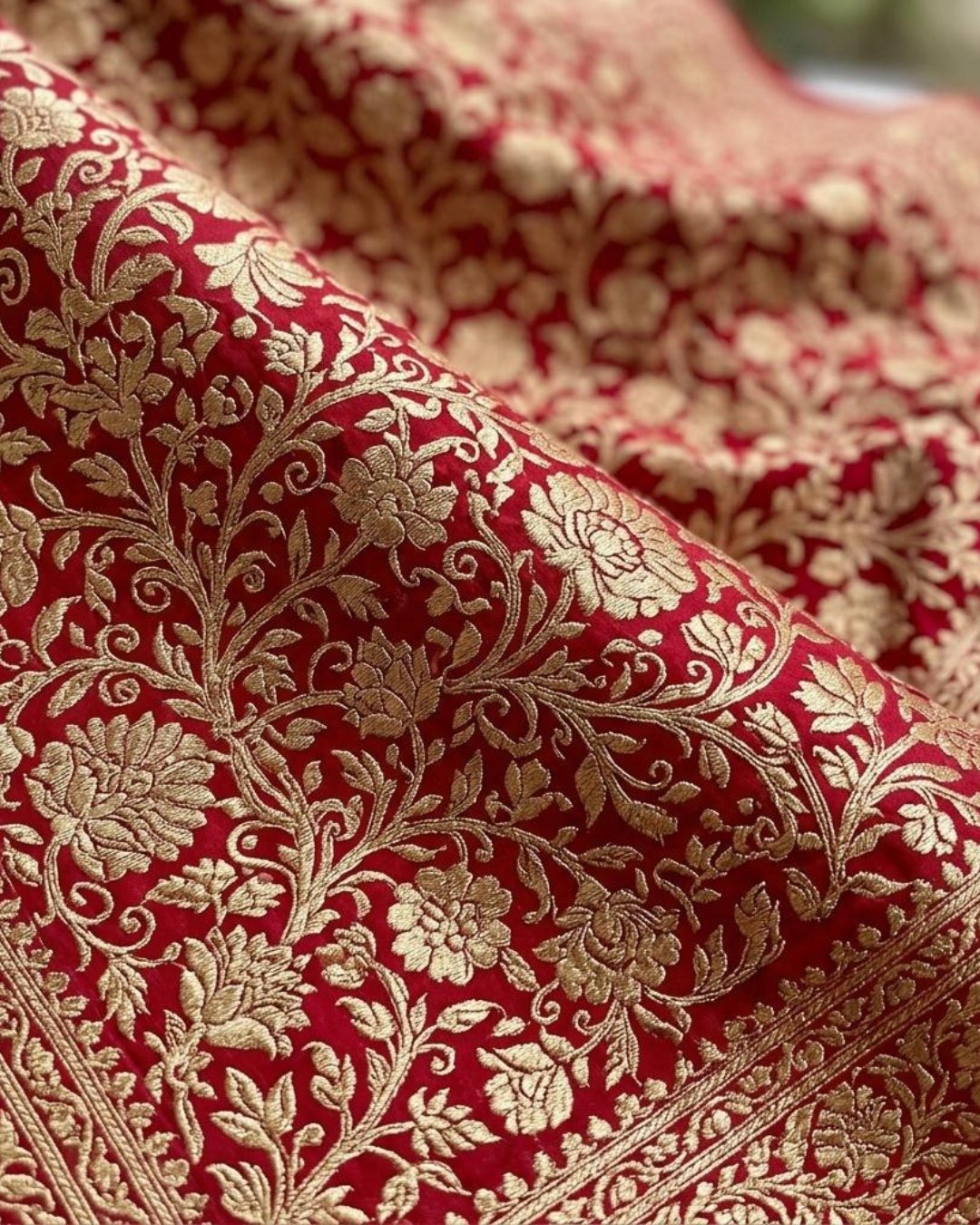
The design lineage — Mughal-era floral and butidar motifs the city has carried for centuries.
Knowing that is what makes the next part — telling a real one from a fake — take about two minutes.