


What to Buy in Ayodhya: Craft, Brass & Bazaars
How to tell a real rudraksha, why solid brass feels cold, and which market is worth
the walk — what to actually bring home from Ayodhya.
When you shop in Ayodhya, look beyond ordinary souvenirs and choose things that actually connect you to the city’s devotional and craft traditions. Around Ram Path, Hanuman Garhi, Kanak Bhawan, Naya Ghat and the older market lanes, you can look for rudraksha, brass and wooden devotional pieces, religious books, prints and traditional textiles. Your best approach is to compare a few shops instead of buying from the first stall you pass, especially in the busy temple-market areas.
If you want to bring home a rudraksha, slow down and check what you are actually buying. Look at the natural mukhi lines and ask about its origin, type and any documentation rather than relying on floating, water or other popular “tests” as proof of authenticity. For brass, remember that genuine solid metal can feel cold because it conducts heat away from your hand quickly, but that feeling alone does not prove the object is solid brass. Compare weight, finish, seams and workmanship, and ask clearly about the material before paying.
For Ram Darbar figures, wooden carvings, books and textiles, choose quality over decoration. Examine carving and paintwork on wooden pieces, check the publisher and language of religious books, and inspect fabric composition, stitching and care requirements before buying. If you find something valuable or unusually expensive, ask for a bill and written details. Be especially cautious when a seller makes strong claims about rarity, age, religious powers or precious materials without evidence.
Make your shopping part of the journey: explore the temple-side markets first, continue through Hanuman Garhi and Kanak Bhawan, and finish around Naya Ghat or Ram Ki Paidi if you want to combine shopping with the Saryu atmosphere. Compare prices and workmanship, avoid pressure to buy immediately, and keep fragile purchases safely packed. By the time you leave, choose a few meaningful things—a carefully checked rudraksha, a brass or wooden devotional piece, a book or a useful textile—so what you bring home feels like a memory of Ayodhya itself, not simply something purchased there.
82
Route
Home
MomentTedhi Bazar Road, Ayodhya
Craft, Not Souvenirs
Most of what is sold along the temple approach could have come from anywhere, and a small part of it could only have come from here.
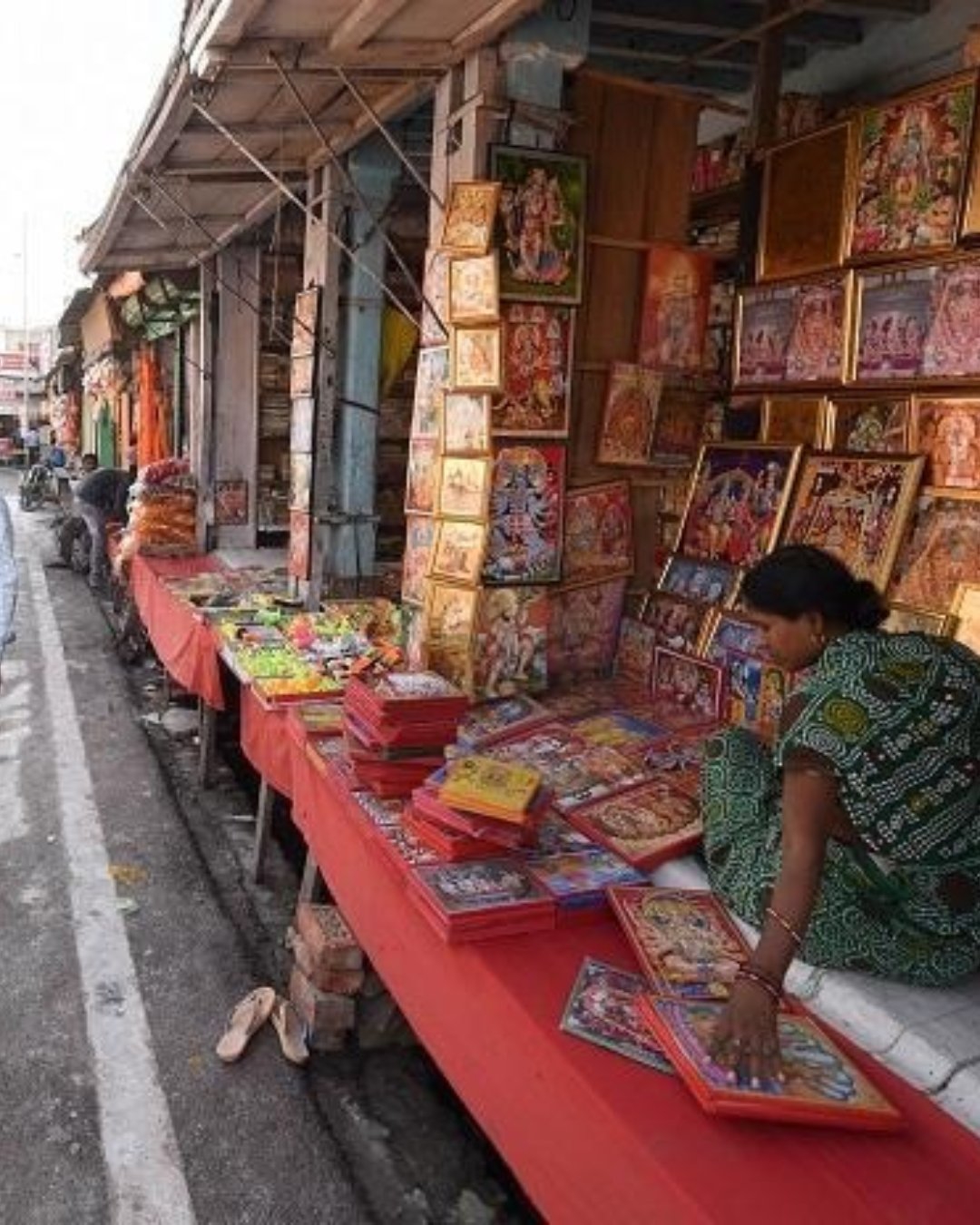
•The stalls nearest the temple carry the highest volume of key chains,magnets, printed shirts and framed photographs, most of it mass-produced elsewhere.
•Behind that, and a few streets back, sit the things actually made in and around Ayodhya — carved wood, brass casting, hand-stitched textiles and devotional books.
•The artisan trade here expanded sharply after 2024, so a good deal of the craft on sale is being made by people who returned to the work recently.
•The distinction matters practically: mass-produced items are cheap, consistent and everywhere, while craft varies in quality and rewards looking closely.
•Prices sit far apart as a result. Small printed souvenirs are inexpensive; a well-carved wooden piece or a heavy brass idol is a different purchase entirely.
•Nothing here is bought for scarcity. It is bought because it was made where you are standing.
Pro tip: Walk the length of the shopping street once before buying anything. The first stalls you meet are the most convenient and the least interesting, and the craft is almost always further in.
The mistakes that ruin it:
•Buying at the first stall by the gate because it is there.
•Assuming everything on sale in Ayodhya is made in Ayodhya.
•Judging craft by the price of the mass-produced version next to it.
28
MomentKanak Bhawan Road, Ayodhya
Rudraksha, and How to Tell a Real One
Rudraksha is the purchase most visitors make and the one most often sold badly.
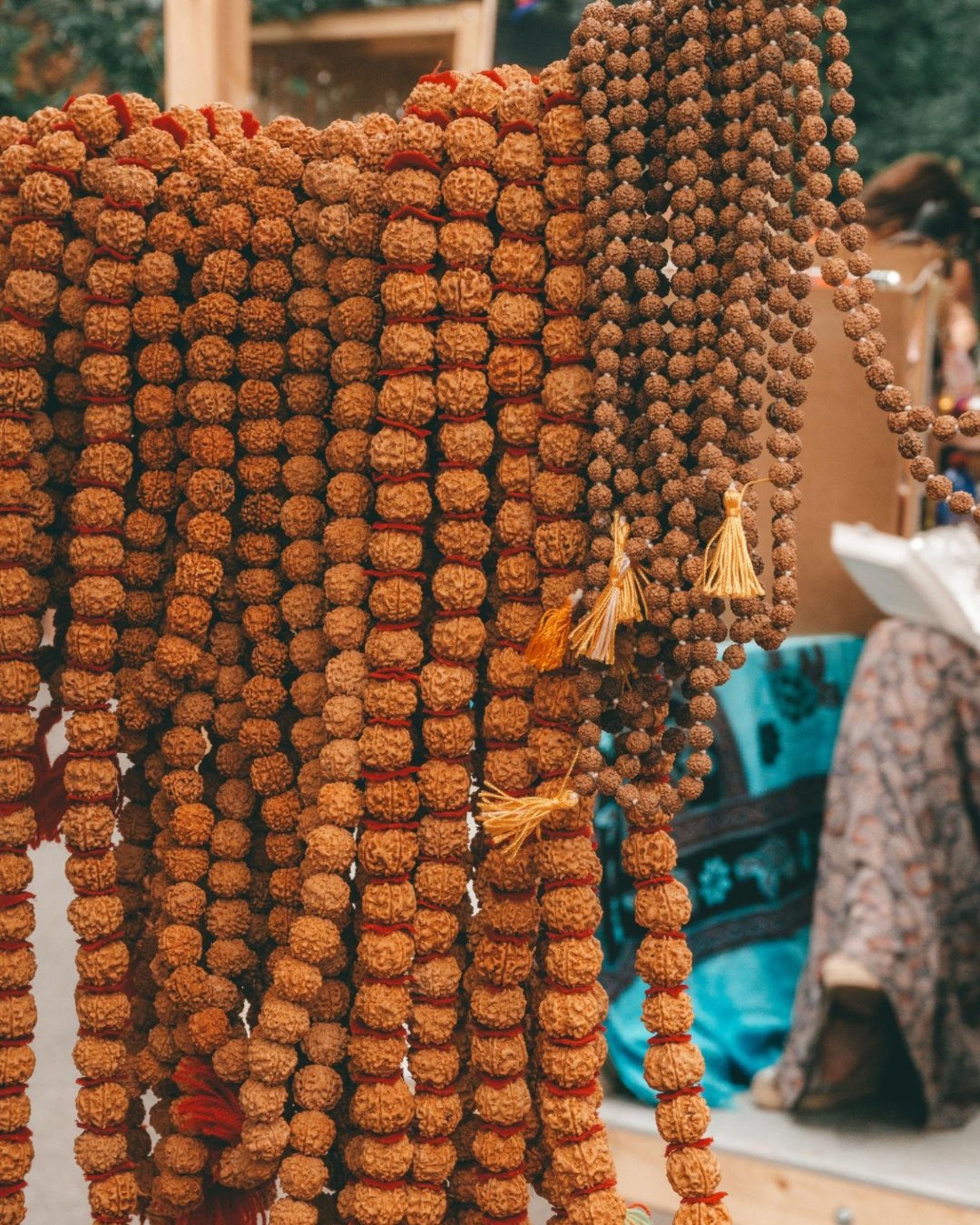
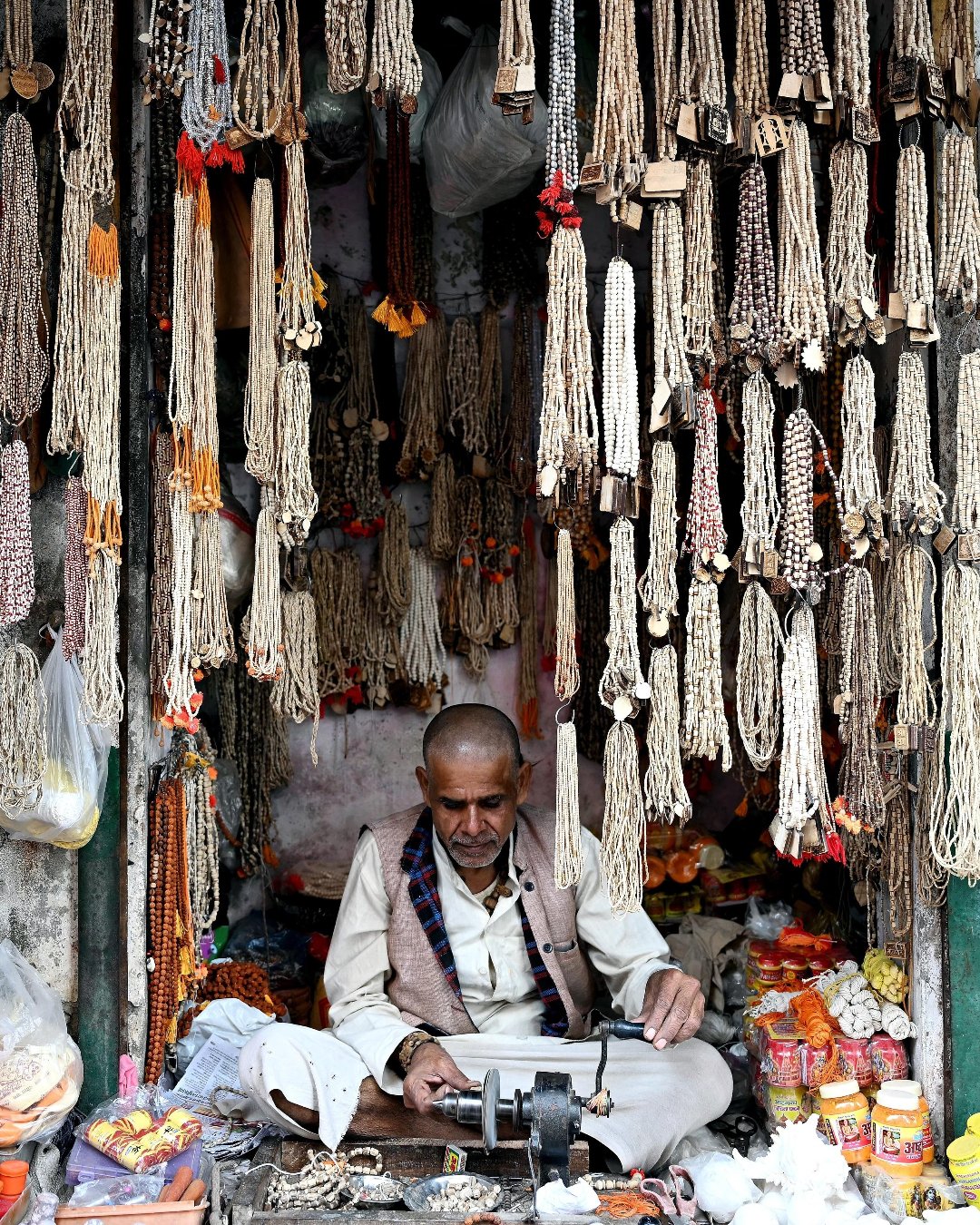
•Rudraksha beads come from the seed of Elaeocarpus ganitrus, grown in the Himalayan foothills and strung into malas across India.
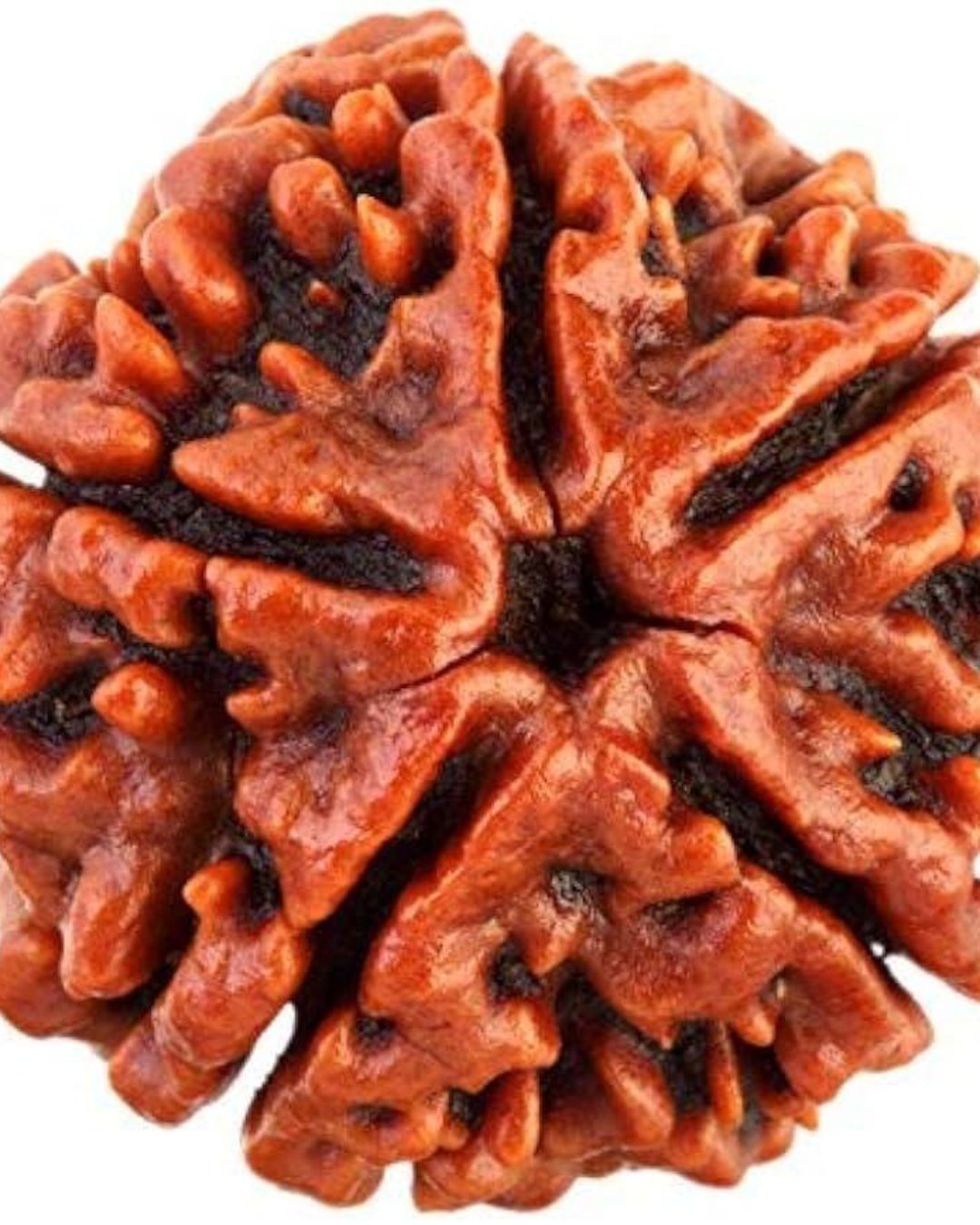
•A genuine bead carries natural furrows running from top to bottom — the mukhi, or faces — and they are visibly irregular rather than machine-even.
•Bead counts and mukhi counts both carry meaning, and sellers will explain their own; the physical check is the part you can do yourself.
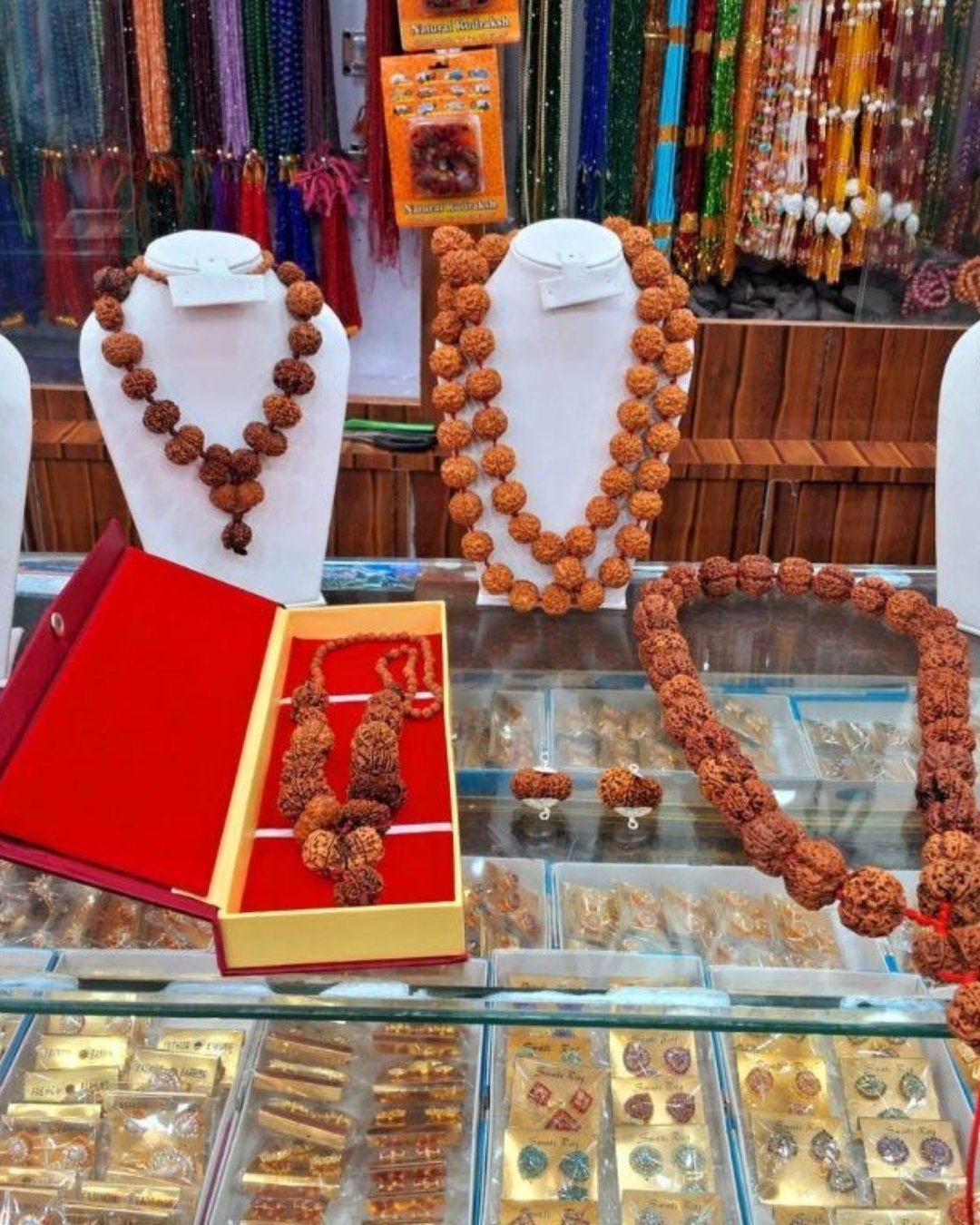
•Prayer malas, single pendant beads and silver-mounted versions are all widely sold, at prices that rise steeply with rarity claims.
•Established shops near the temples generally handle these better than mobile vendors, and are easier to return to if something is wrong.
•Ask what the bead is and where it came from before asking what it costs.
Pro tip: Look at the furrows in daylight before you talk about price. Irregular, natural grooves are the one thing that is hard to fake cheaply, and checking visibly changes how the conversation goes.
The mistakes that ruin it:
•Paying a rarity premium without examining the bead.
•Buying a mala from a mobile vendor you cannot find again.
•Leading with the price question rather than the provenance one.
22
MomentDashrath Mahal Ayodhya, Ayodhya
Brass, Wood and the Ram Darbar Workshops
The brass and wooden pieces are what people mean when they say they bought something from Ayodhya.
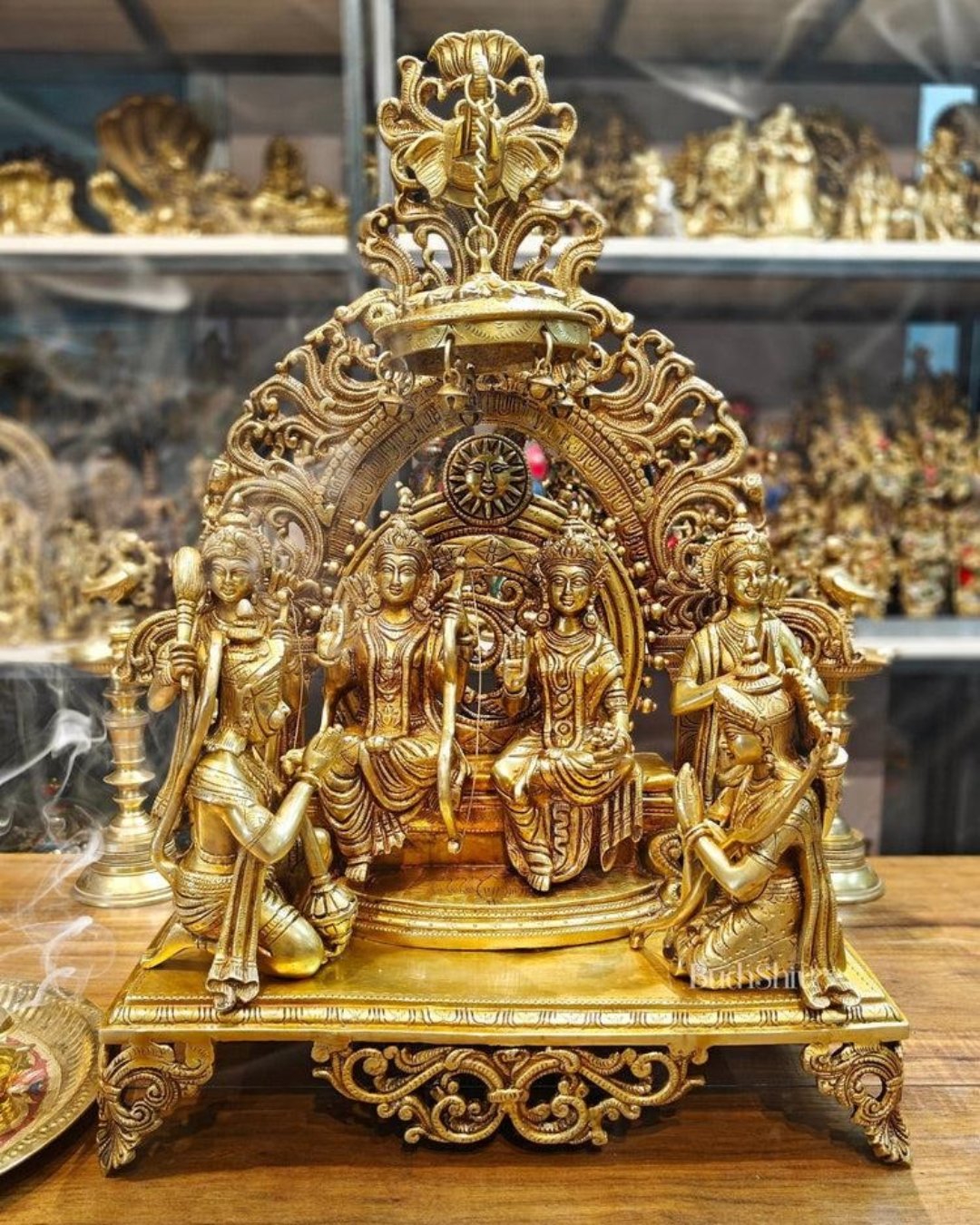
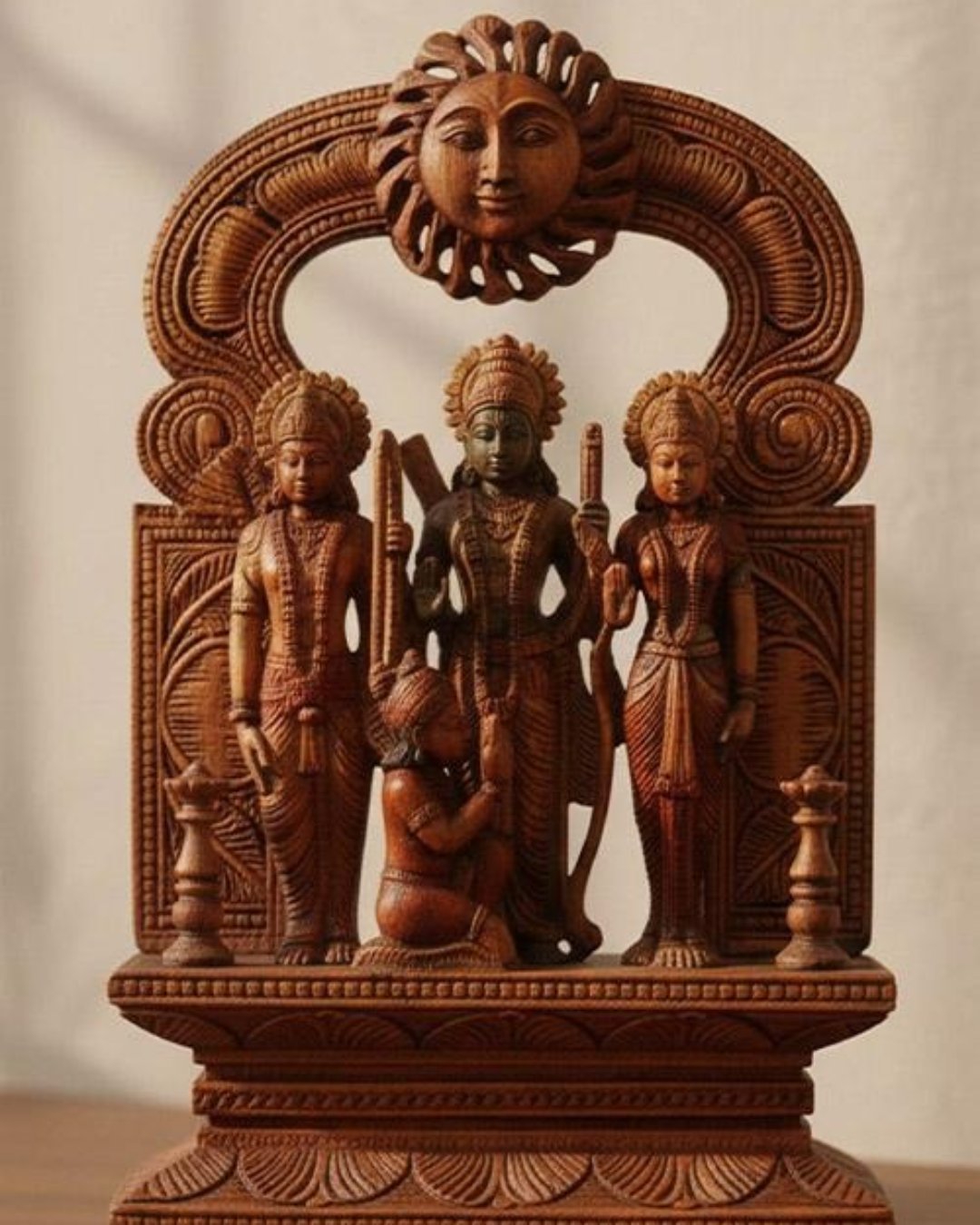
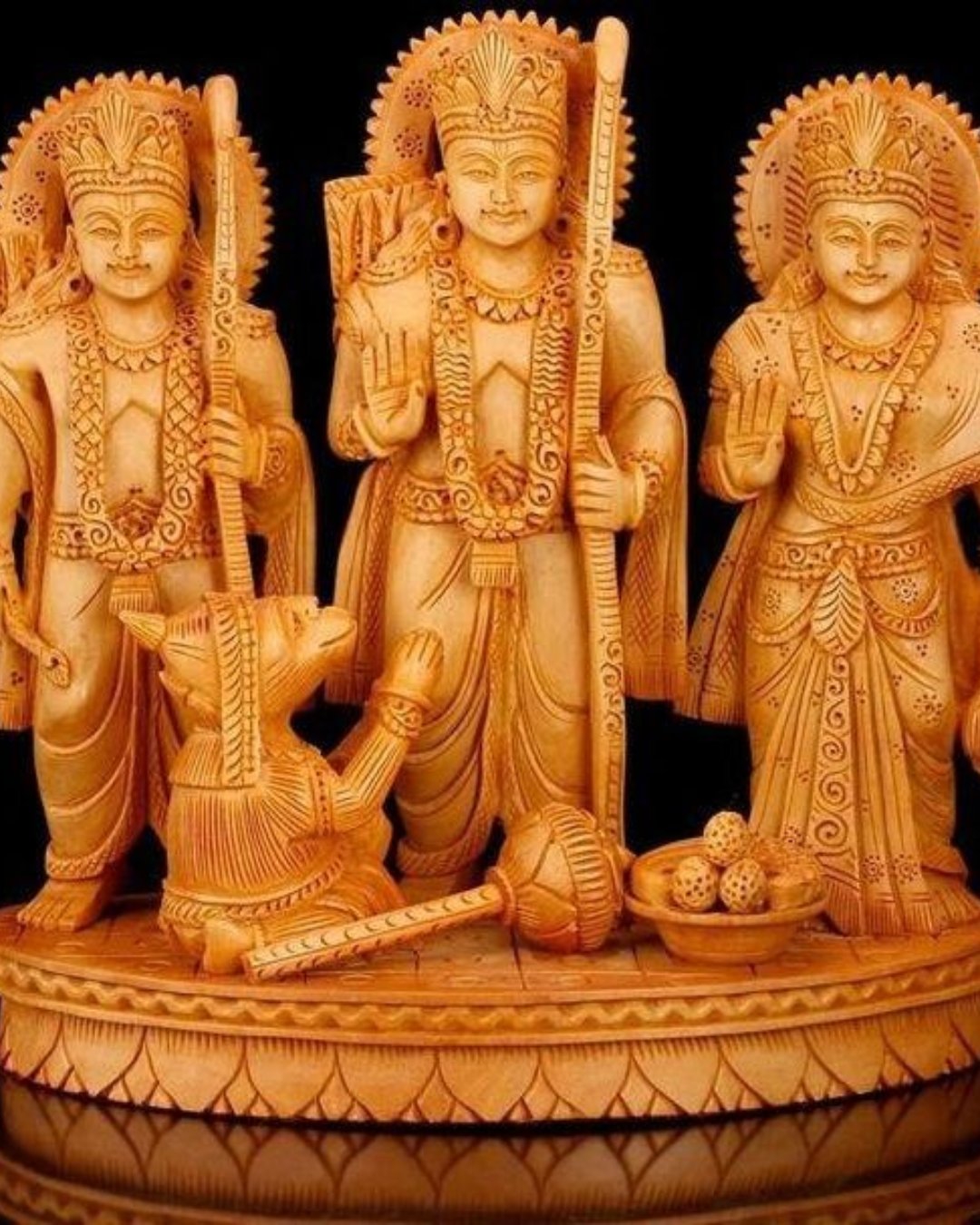
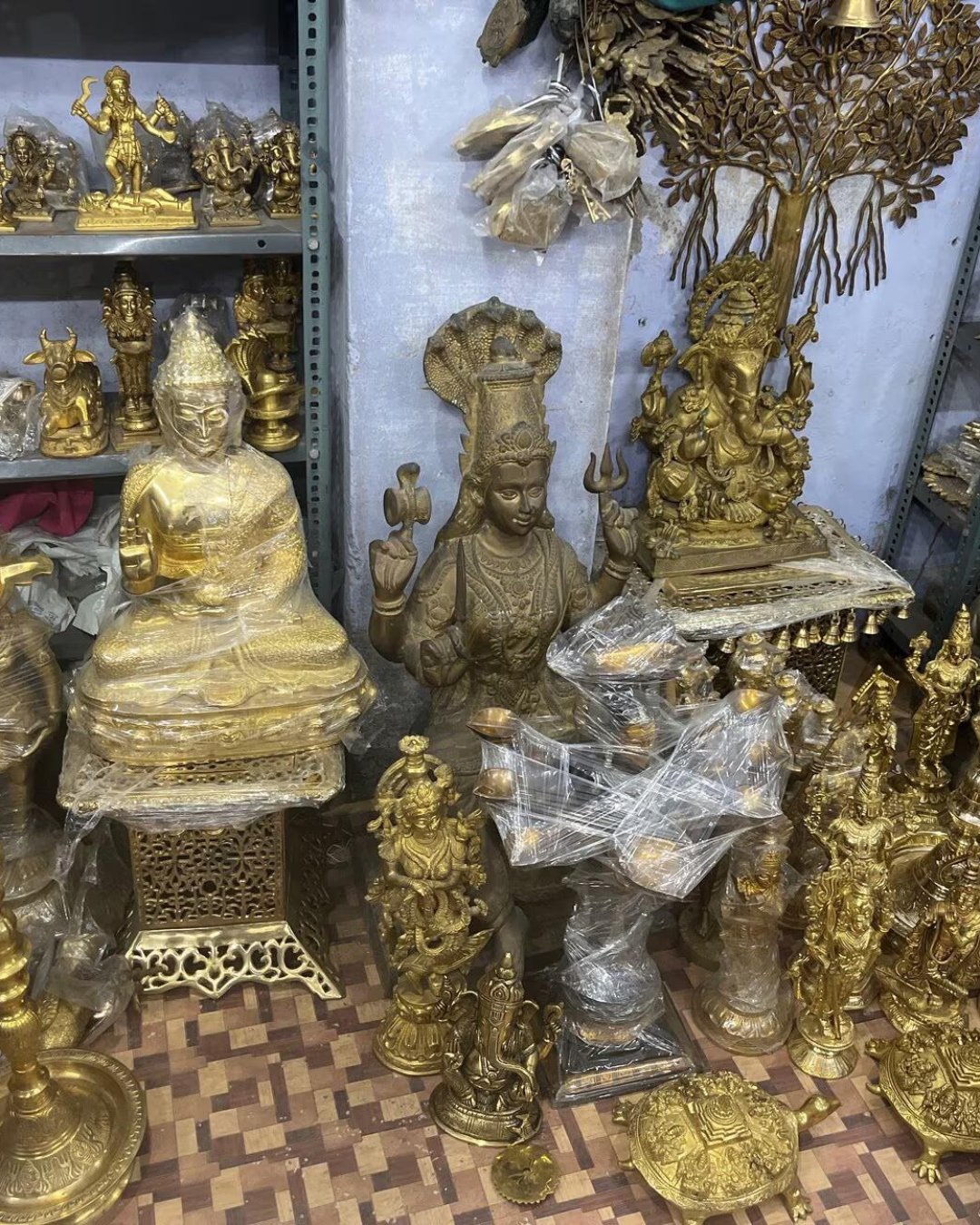
•Brass idols of Ram, Sita, Lakshman and Hanuman — the Ram darbar — are the signature purchase, alongside temple bells and ritual lamps.
•Carved wooden work runs from small figurines to boxes, frames, masks and miniature rath replicas, much of it drawing directly on Ramayana scenes.
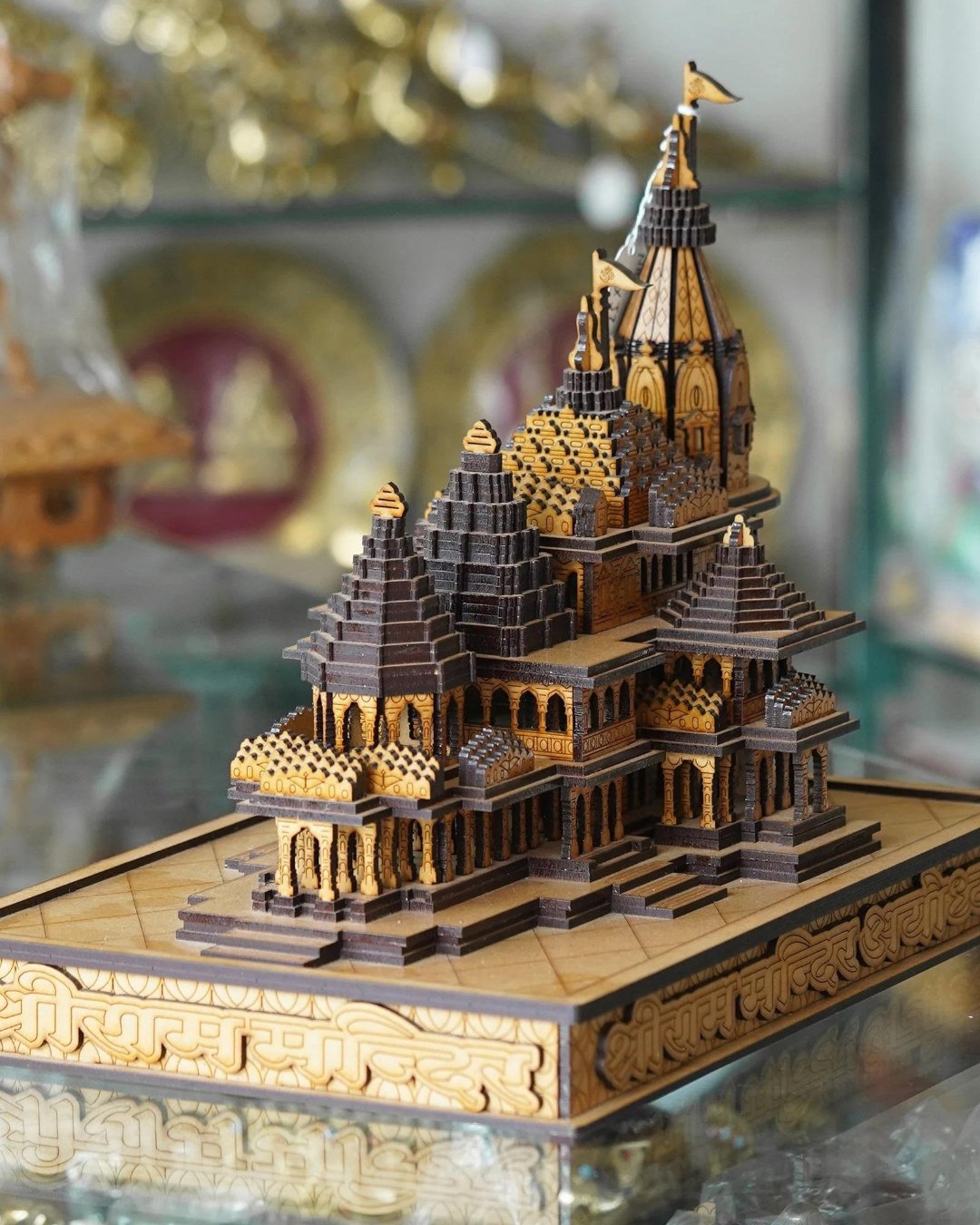
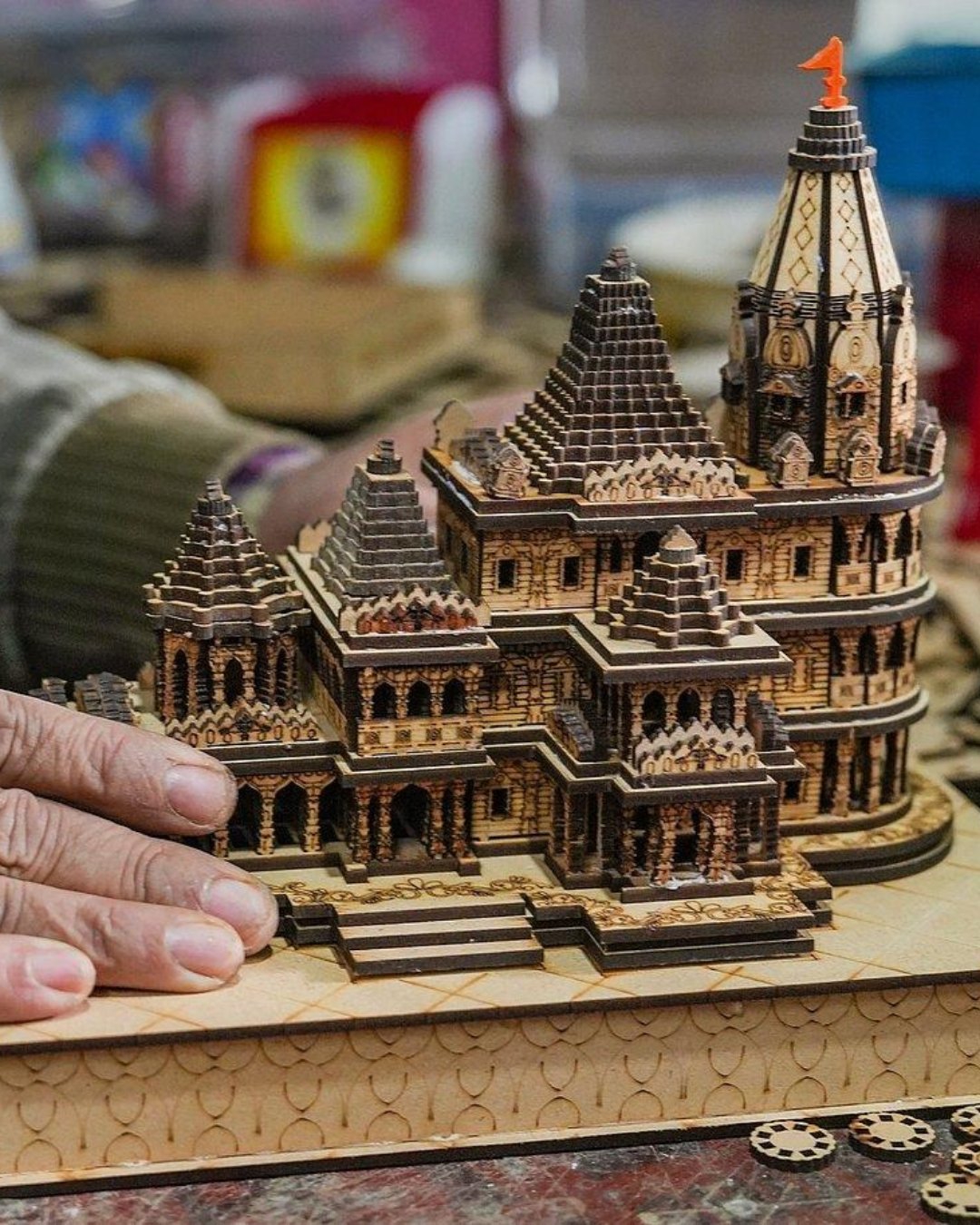
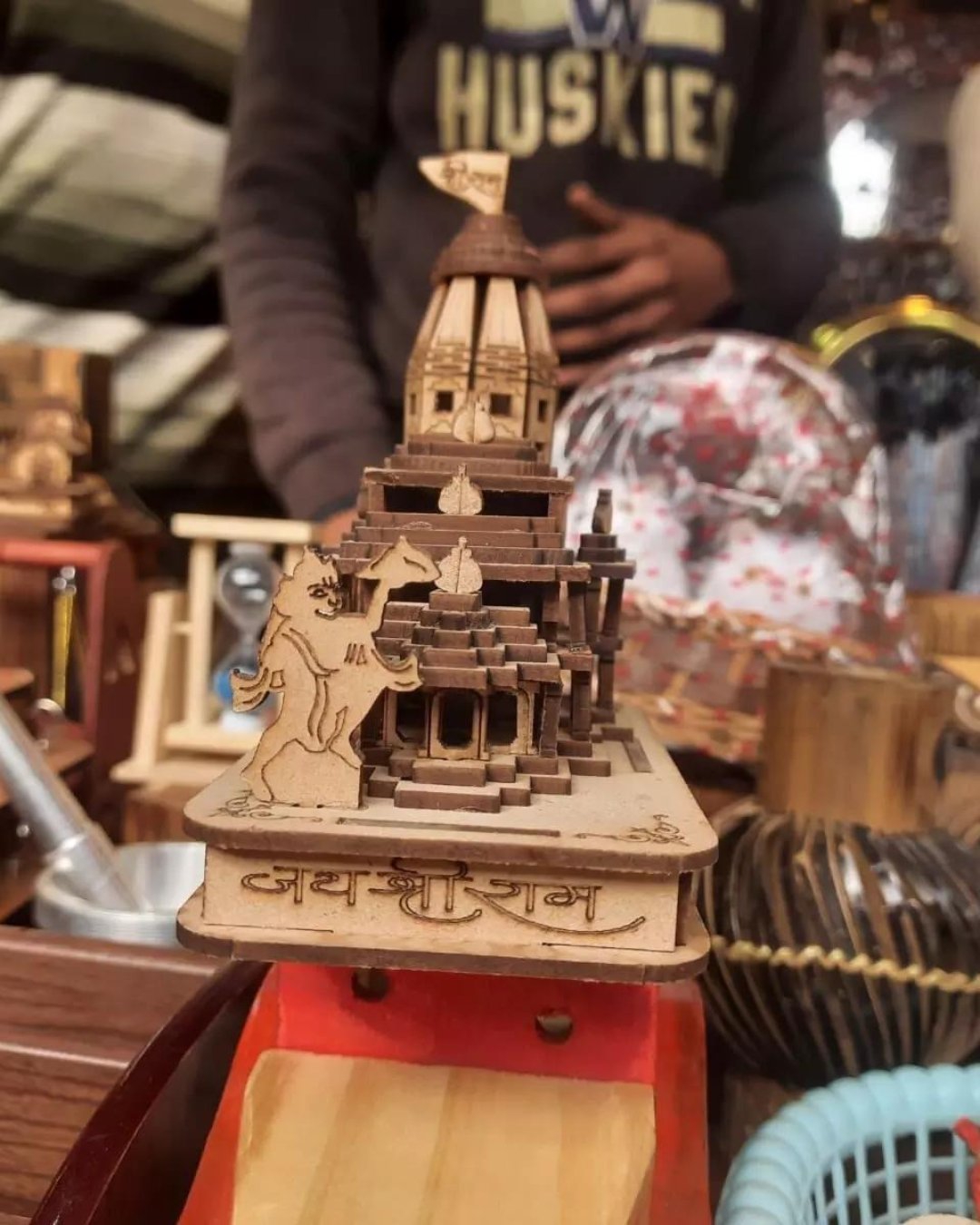
•Wooden models of the Ram Mandir itself have become the defining post-2024 souvenir and are sold in every size.
•Weight tells you most of what you need to know about a brass piece. Solid casting is heavy and cold to the hand; hollow or plated work is neither.
•Ask what the material actually is before buying. Brass, bronze and plated alloys are all sold, and they are not the same purchase.
•Copper ritual utensils and earthen diyas sit alongside these and travel much better than they look.
Pro tip: Pick the piece up before you discuss it. A solid brass idol is surprisingly heavy and stays cool in the hand — that single test separates the real casting from the plated version beside it.
The mistakes that ruin it:
•Buying a large brass piece without thinking about luggage weight.
•Accepting “brass” without asking whether it is solid or plated.
•Choosing a wooden model by size rather than by the quality of the carving.
22
MomentRam Path Road, Ayodhya
Books, Prints and the Geeta Press Editions
The cheapest thing worth carrying home from Ayodhya is a book.
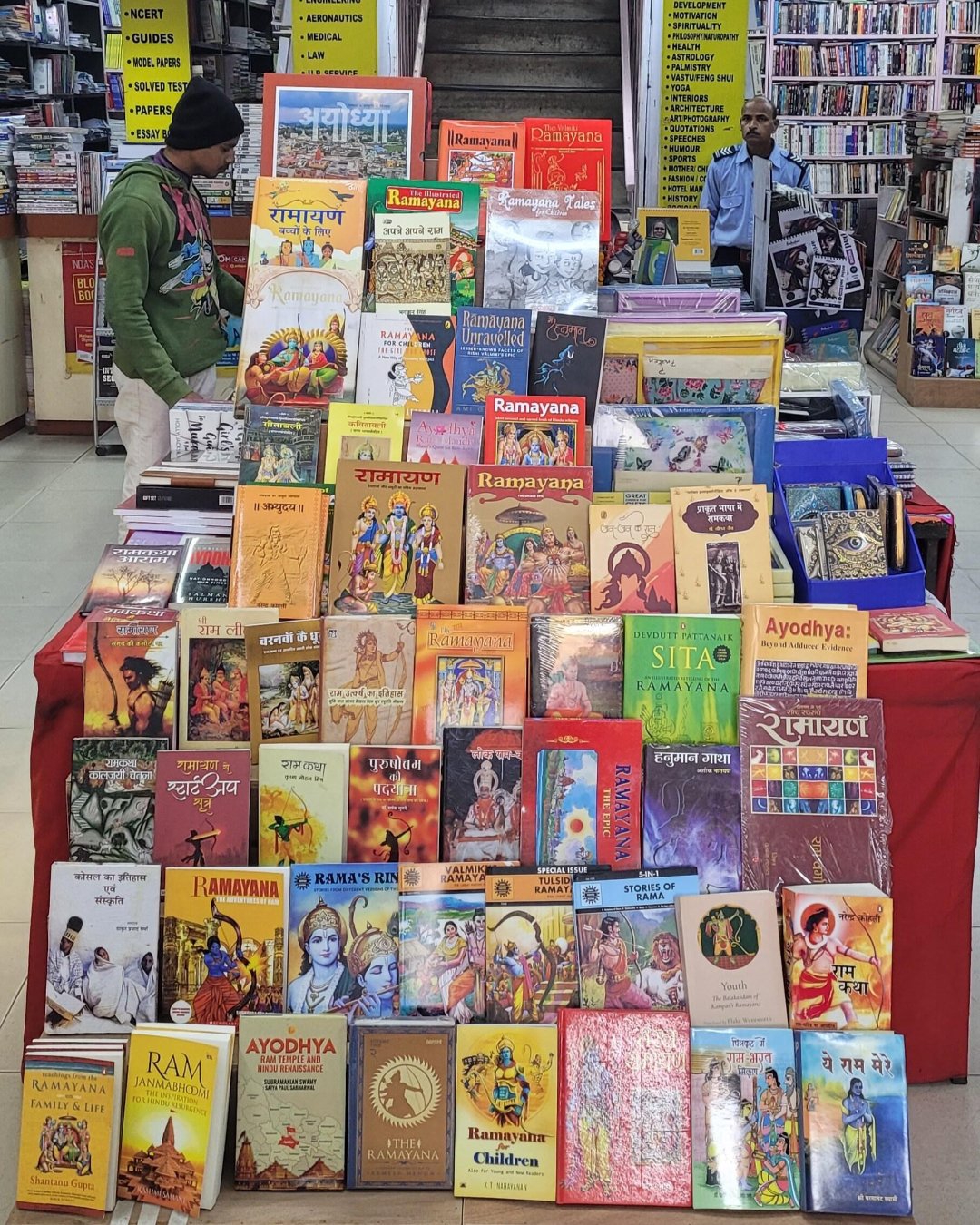
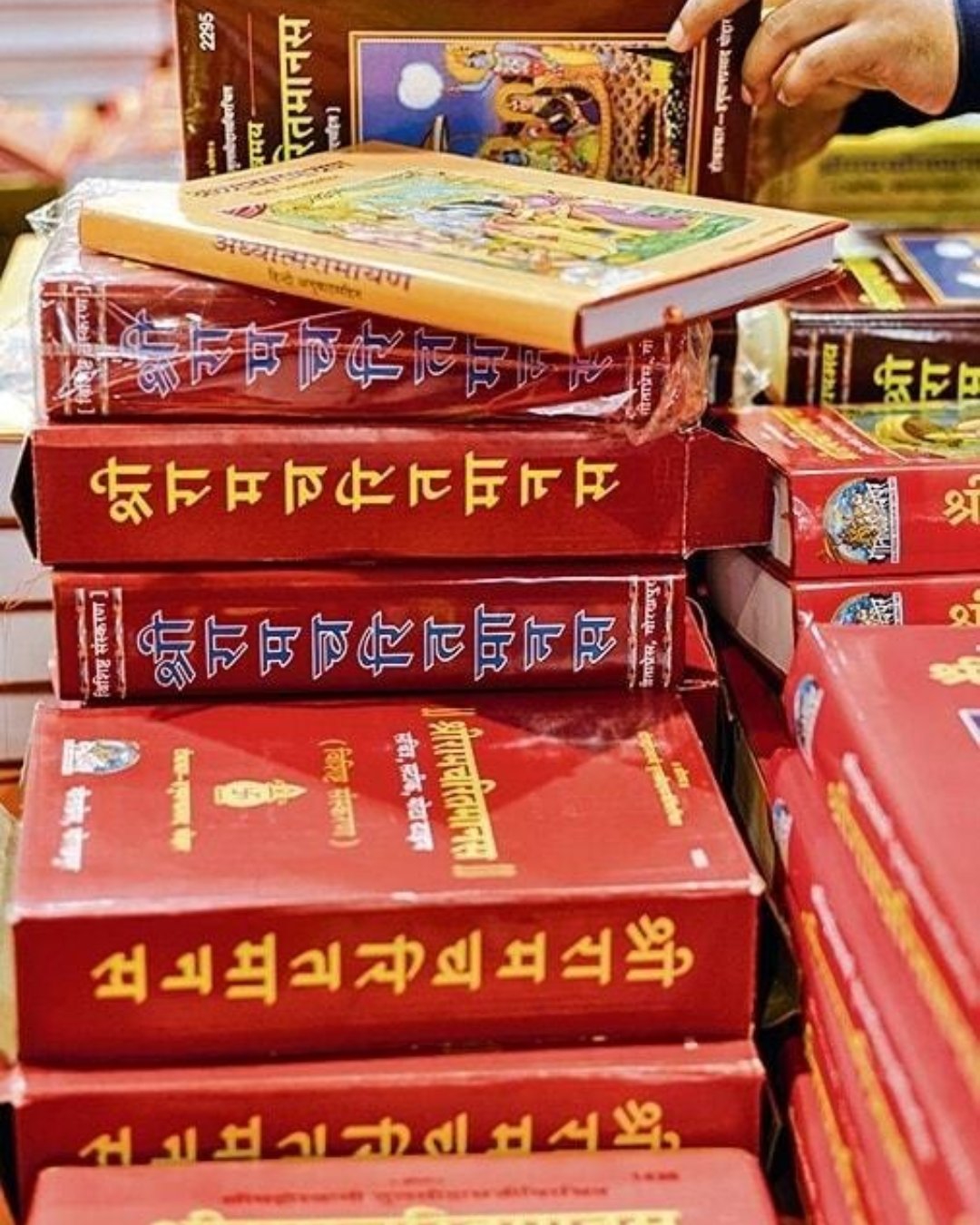
•Ramcharitmanas and Ramayana editions are sold everywhere in town, in a wide range of translations and bindings.
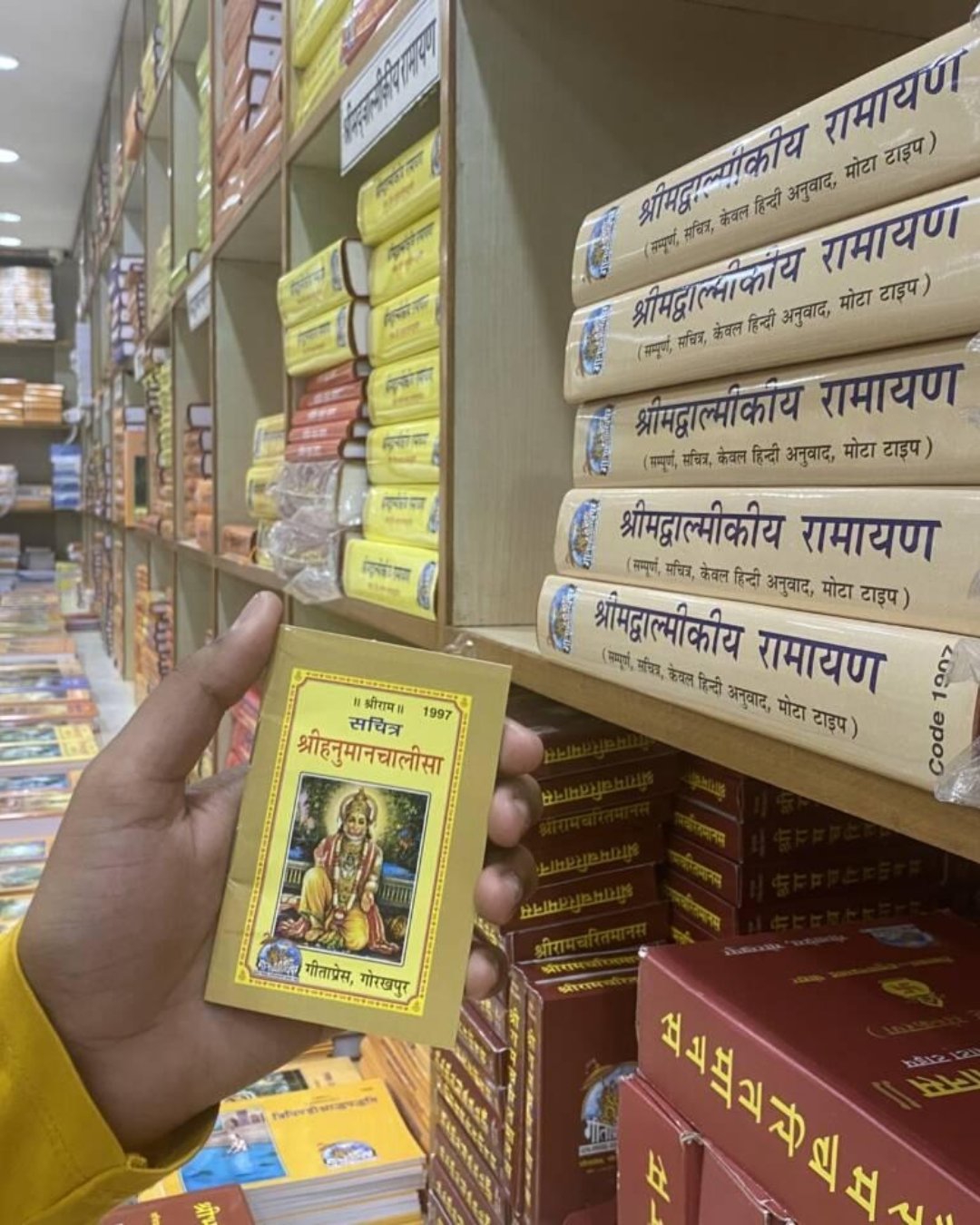
•Geeta Press editions, printed at Gorakhpur a few hours away, are the standard inexpensive versions and are what most households here actually own.
•Pocket Hanuman Chalisa booklets cost very little and are the most common small gift.
•Books on Tulsidas, who composed the Ramcharitmanas, are widely available and connect the town to the text rather than only to the epic.
•Ramayana scrolls, art prints and framed illustrations are sold in the same shops, and the hand-painted work is worth separating from the printed.
•Books survive a journey home better than anything else on this page and weigh less than a single brass lamp.
Pro tip: Buy the book you will actually read rather than the most ornate edition. The inexpensive Geeta Press printings are the ones people here use, and that is a better souvenir than a boxed set.
The mistakes that ruin it:
•Paying for an ornamental binding of a text you will not open.
•Missing the hand-painted prints among the machine-printed ones.
21
MomentCivil Lines, Faizabad
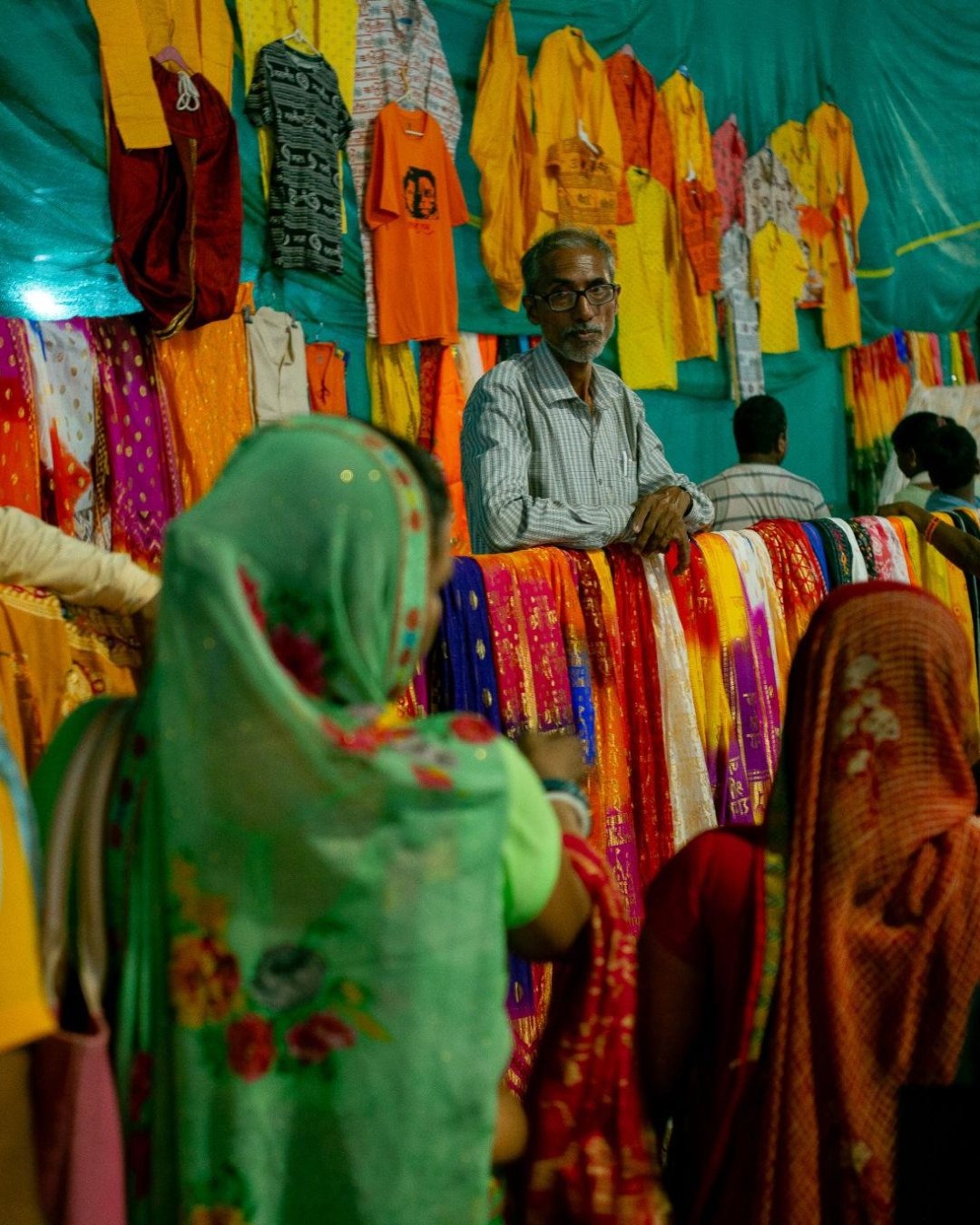
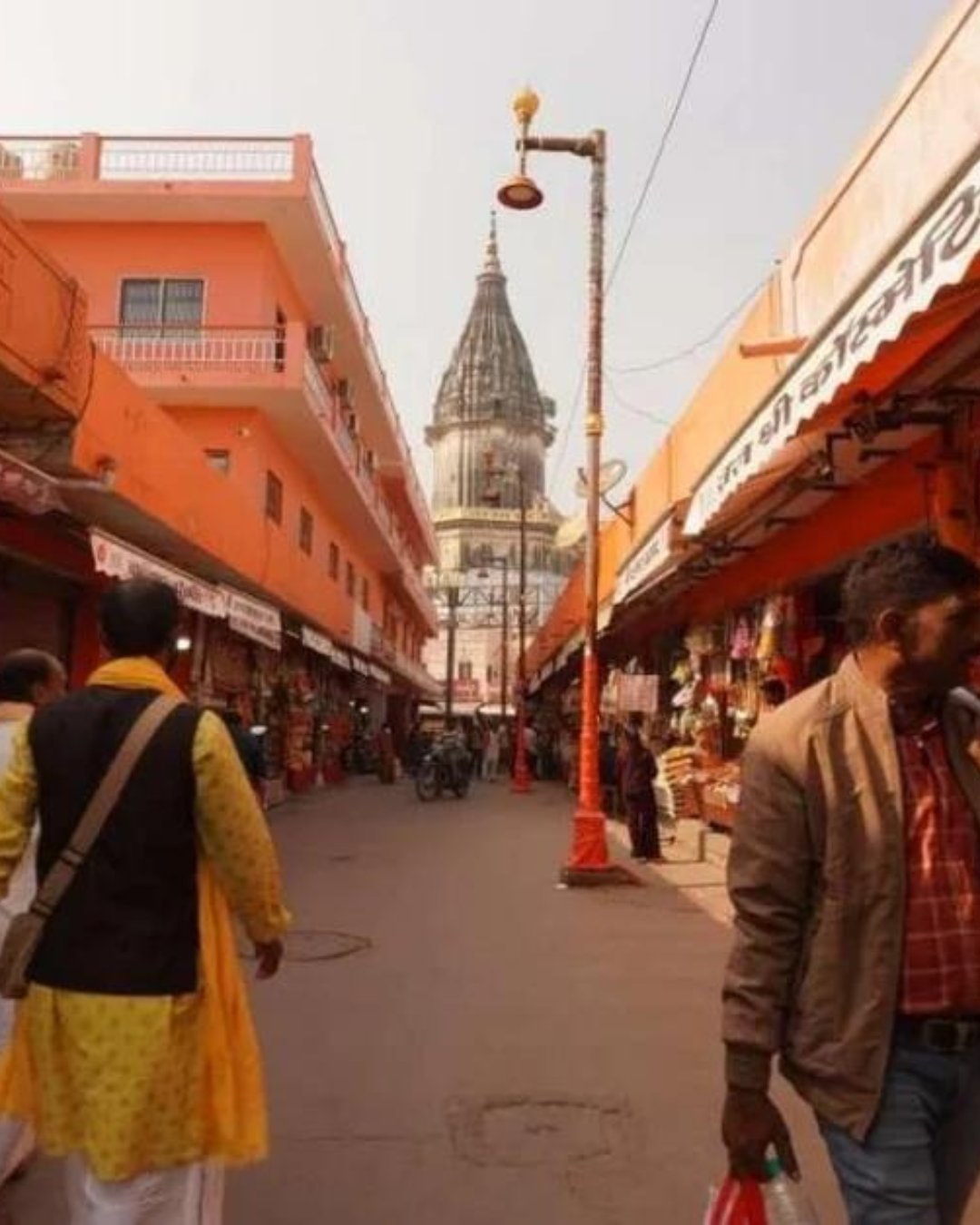
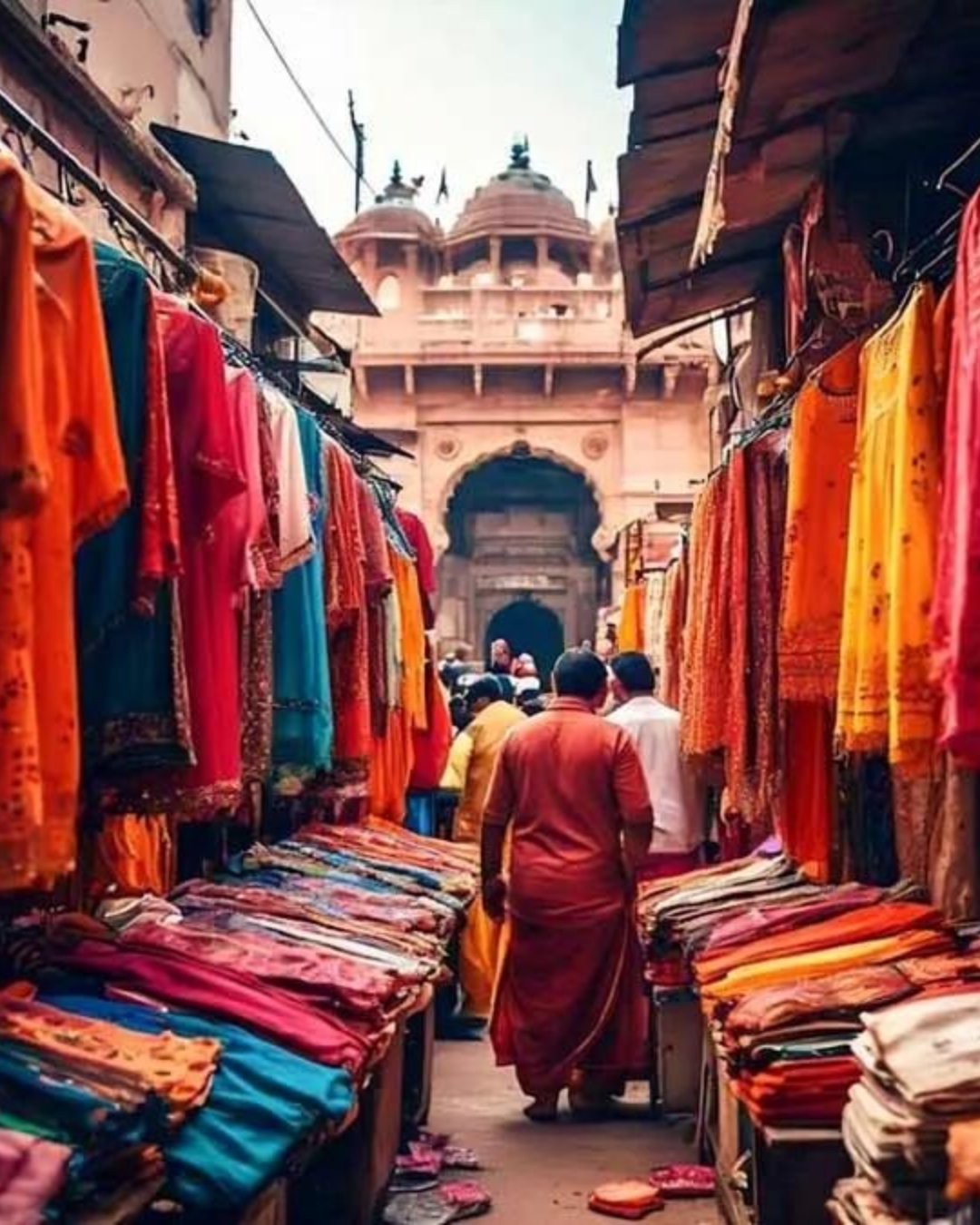
Textiles, and Where They Are Actually Cheaper
Fabric is the one thing in Ayodhya that is meaningfully better bought away from the temple.
•Handwoven saris, dupattas, kurtas and scarves are sold across the town in cotton, silk and handloom.
•Hand-stitched dupattas and embroidered pieces are the ones worth examining closely, since the machine-made versions sit right beside them.
•Ramnami shawls and cloths printed with the name of Ram are the distinctly local textile and are widely worn by pilgrims.
•Zari work appears in the older market lanes, alongside the plainer everyday cloth the town actually buys.
•The Faizabad side has the broader and cheaper fabric selection, because it is a working market rather than a pilgrimage one.
•Fabric packs flat, survives any journey, and is the easiest category here to buy well.
Pro tip: Buy fabric on the Faizabad side rather than on the temple approach. It is a working market with a wider
range, and the same cloth costs noticeably less a few kilometres from the gate.
The mistakes that ruin it:
•Buying textiles at the first stall on the temple approach.
•Taking hand-stitched at face value without looking at the reverse of the work.
25
MomentRam ki Paidi, Ayodhya
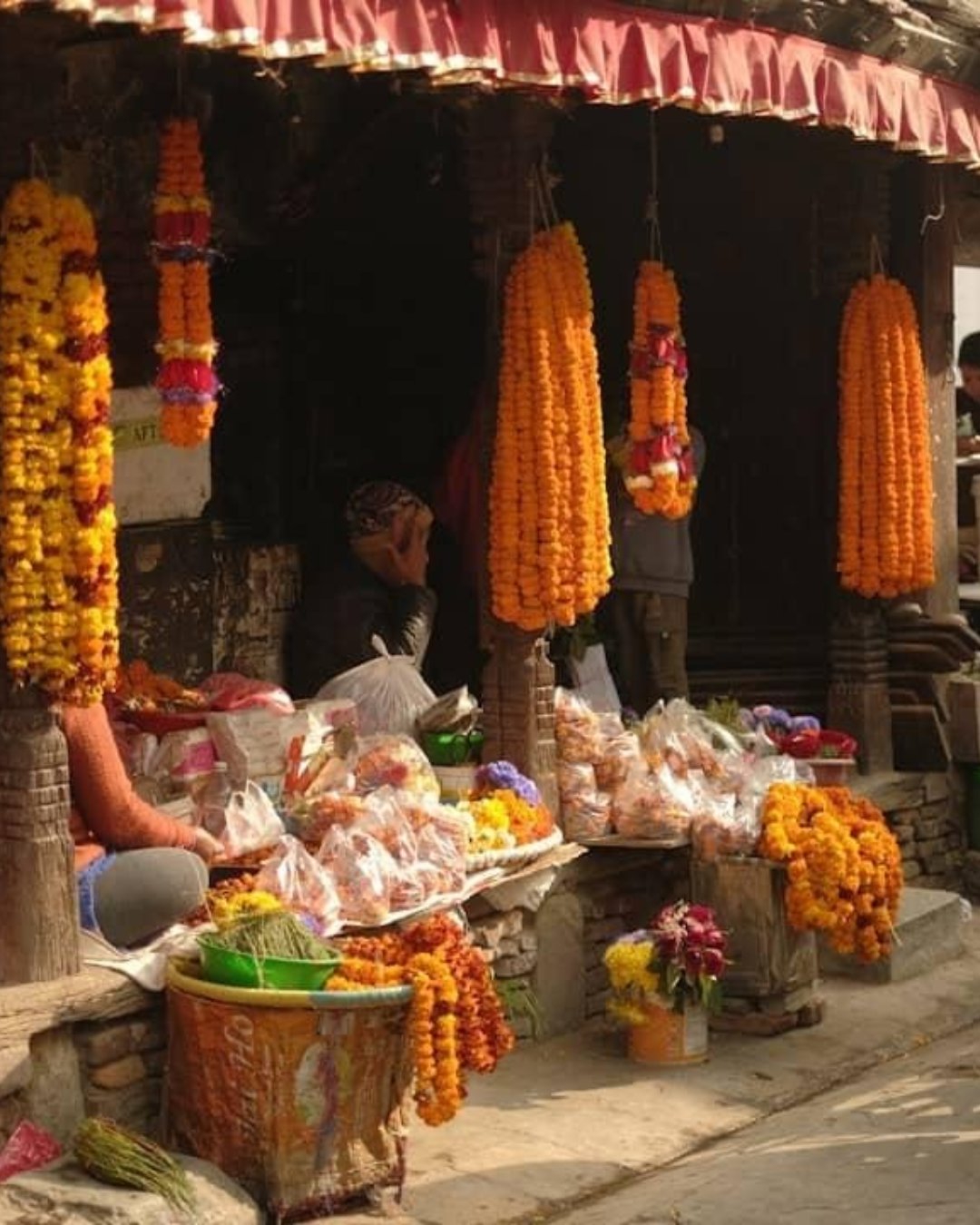
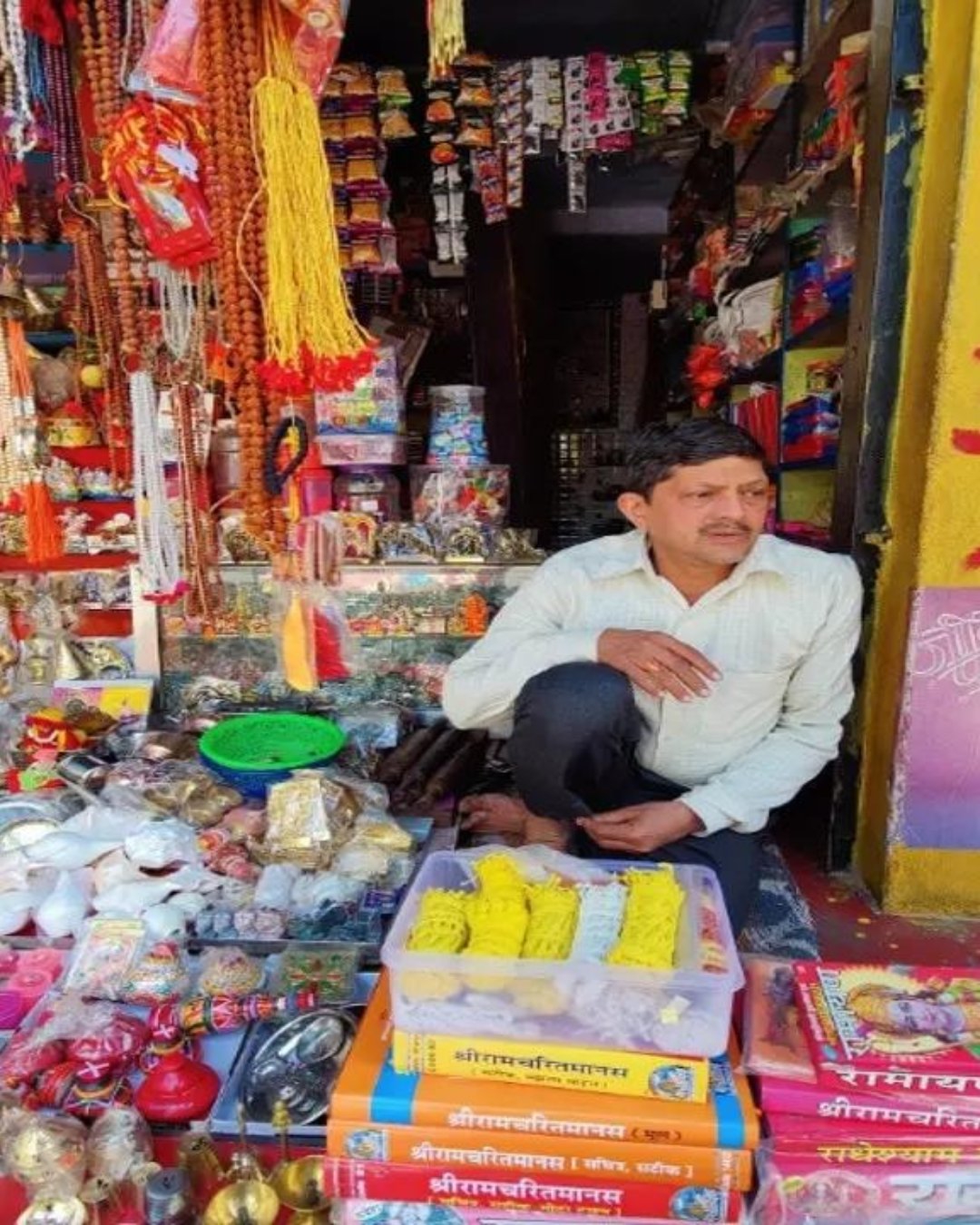
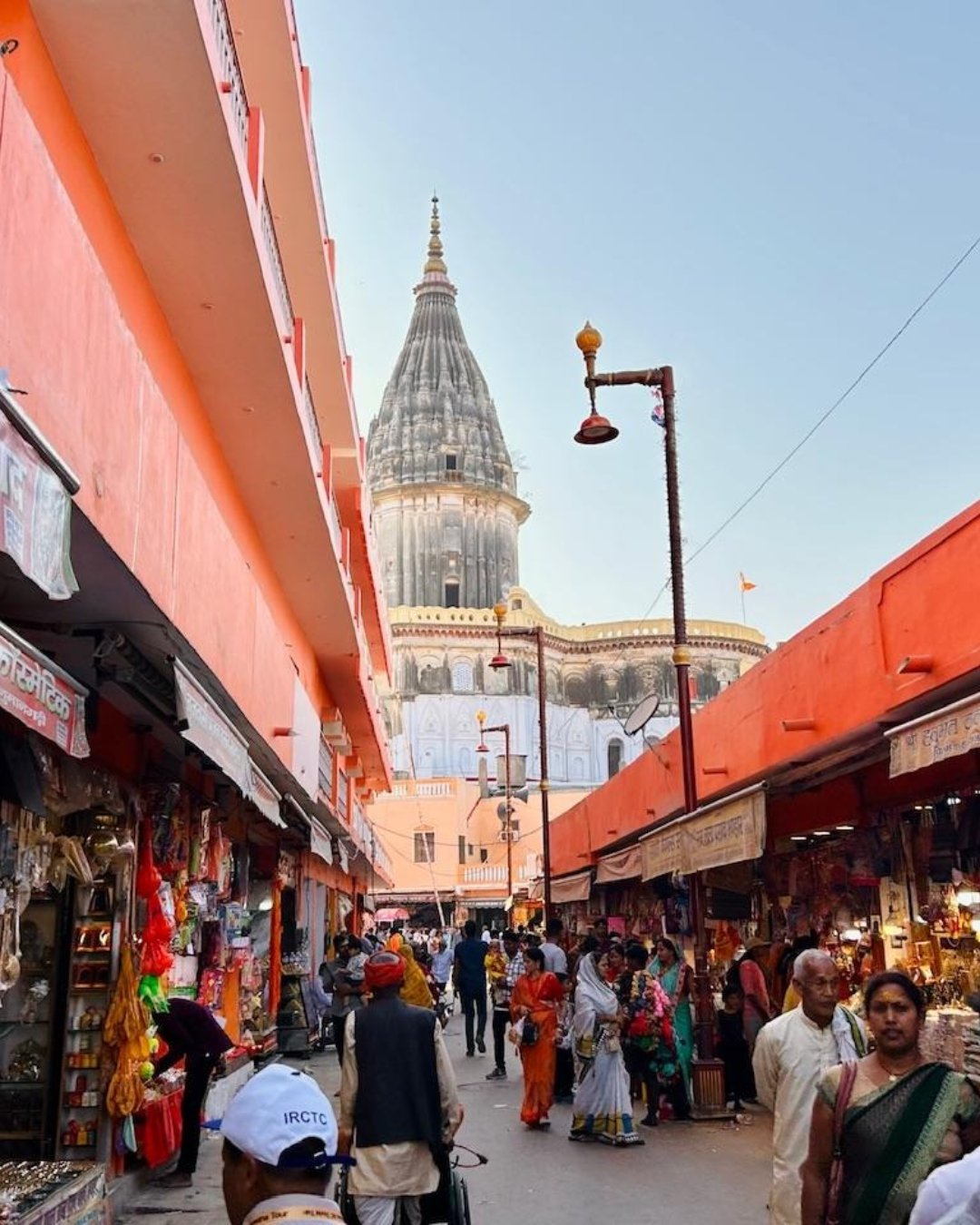
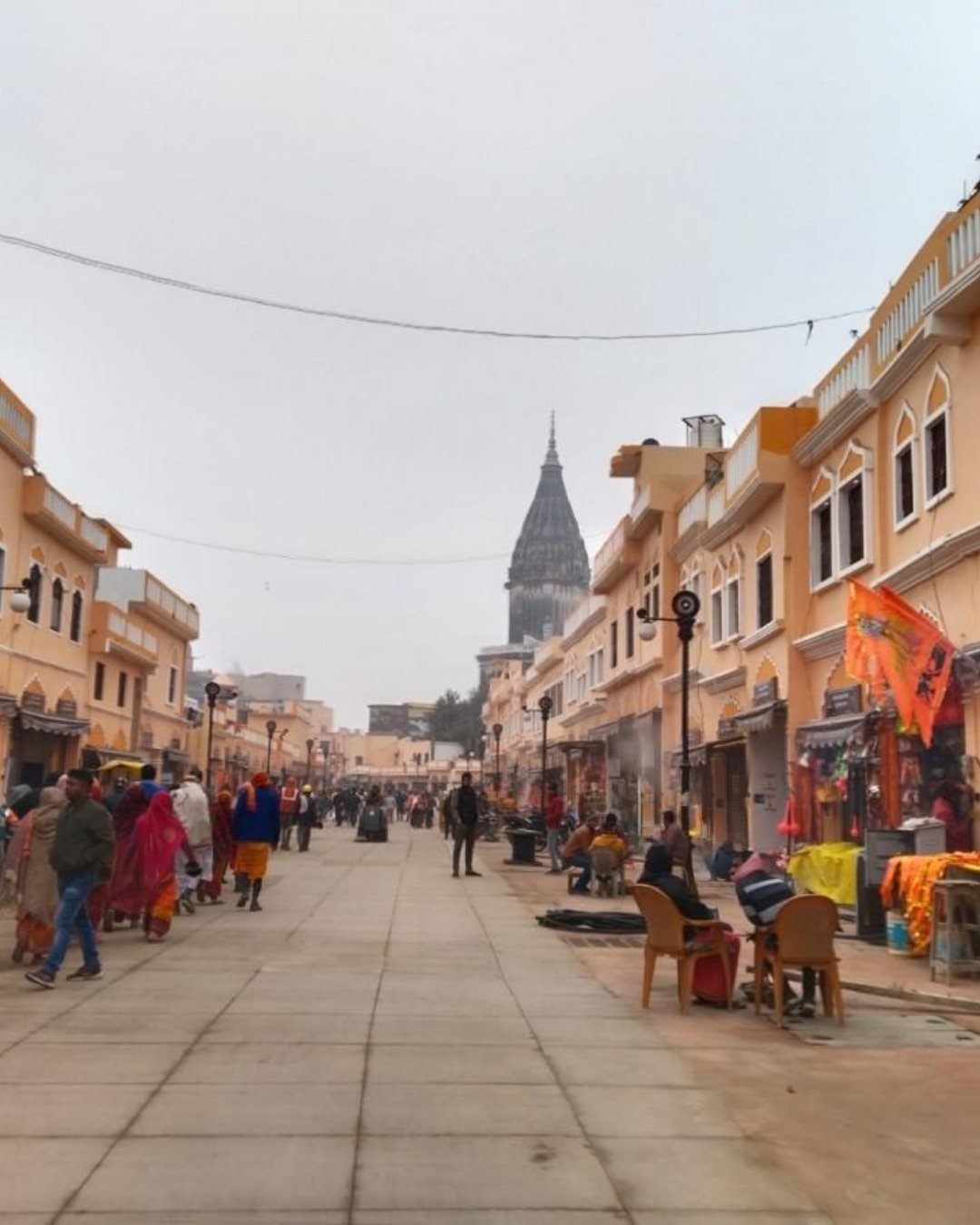
Where to Shop, and When
Ayodhya has four shopping areas and they are not interchangeable.
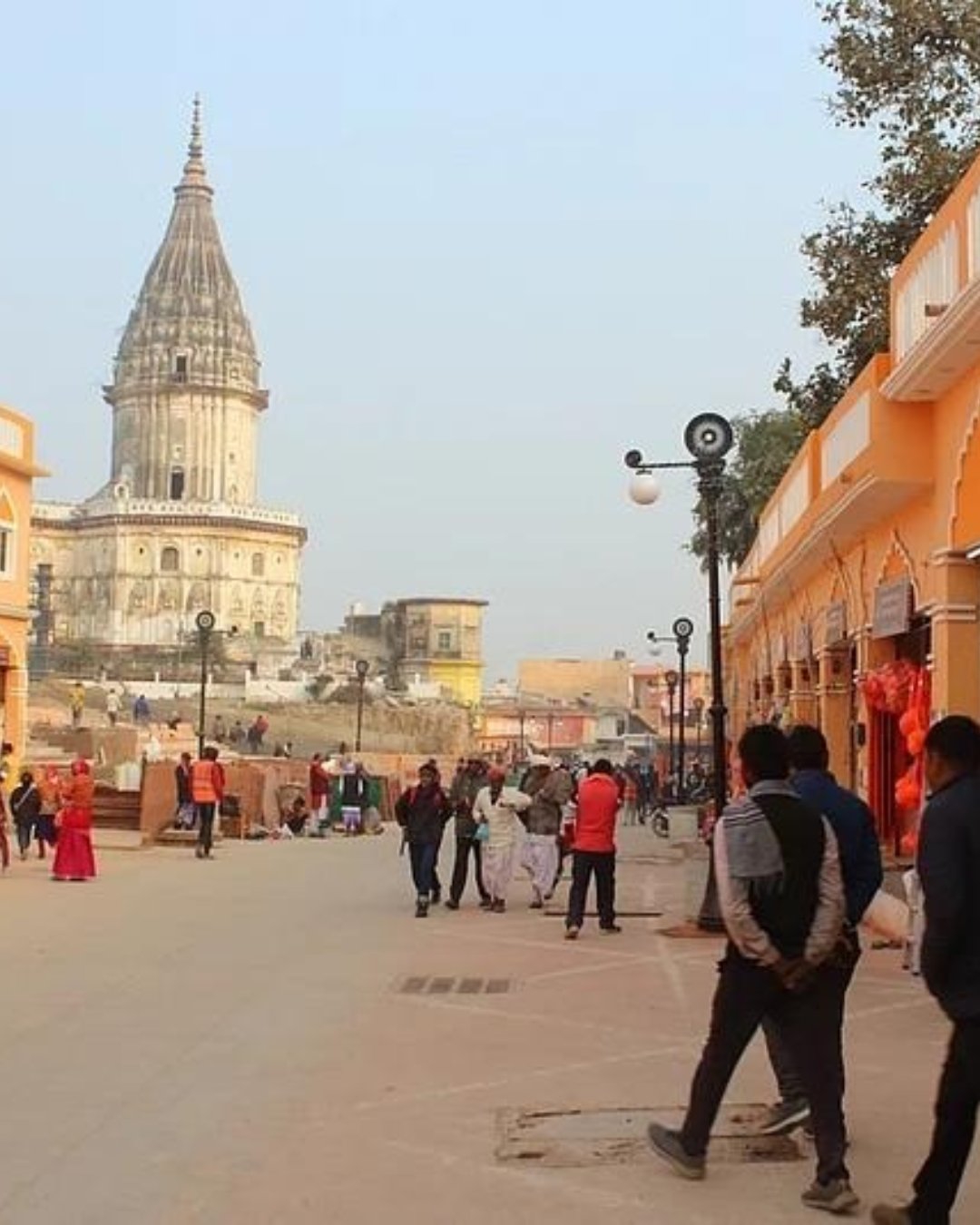
•The Ram Path corridor is the main modern stretch, running between the temple approach and Naya Ghat, and it is open from morning until late evening.
•Naya Bazaar sits closest to the temple complex and carries rudraksha, malas, small brass idols and religious books.
•Chowk Bazaar is the oldest market in town, with the rustic lanes, the textile stalls and the antique sellers.
•The stalls around Kanak Bhawan sell temple souvenirs, spiritual books and Ramayana scrolls, and are quieter than the main approach.
•The Faizabad side, a few kilometres out, is the working market — better for fabric, jewellery, dry fruit and anything you want a choice of.
•Bargaining is expected in the local markets and not in the fixed-price shops. Negotiate politely and expect the quoted opening price to have room in it.
•Carry cash. Many smaller stalls take nothing else.
•Shop after your darshan, not before. Bags cannot go into the temple complex, so anything bought first goes into a locker and comes back out again.
Pro tip: Do the temple approach for convenience and Chowk Bazaar or the Faizabad side for anything you actually care about. Two streets back from the gate is where the prices change.
The mistakes that ruin it:
•Shopping before darshan and queueing twice for a locker.
•Assuming cards or UPI will work at a stall.
•Bargaining in a fixed-price shop, or failing to in a market.
21
Destination
Ayodhya, Uttar Pradesh, India
People also ask
01Question
What should I buy in Ayodhya?
The things actually made here: cast brass idols of the Ram darbar, carved wooden pieces and mandir models, rudraksha malas, hand-stitched dupattas and Ramnami cloth, and inexpensive Ramcharitmanas editions. The stalls nearest the gate carry mostly mass-produced souvenirs, so walk a little further in.
02Question
How can I tell if a rudraksha is genuine?
A real bead carries natural furrows running from top to bottom — the mukhi, or faces — and they are visibly irregular rather than machine-even. Check them in daylight before discussing price. Established shops near the temples are easier to return to than mobile vendors if something turns out to be wrong.
03Question
How do I know if a brass idol is solid?
Pick it up. Solid casting is noticeably heavy and stays cold in the hand; hollow or plated work is lighter and warms quickly. Ask directly whether the piece is brass, bronze or a plated alloy, because all three are sold and they are not the same purchase.
04Question
Where is the best market in Ayodhya?
It depends what you want. Naya Bazaar is closest to the temple and good for rudraksha and brass. Chowk Bazaar is the oldest and best for textiles and older lanes. The Ram Path corridor is the most convenient. For fabric, jewellery and general shopping, the Faizabad side has the wider range and the better prices.
05Question
Is bargaining expected in Ayodhya?
In the local markets, yes, and the quoted opening price usually has room in it. Fixed-price shops also exist and bargaining there is out of place. Negotiate politely either way, and carry cash — many smaller stalls take nothing else.
06Question
When should I do my shopping in Ayodhya?
After your darshan rather than before it. Bags cannot be taken into the temple complex, so anything bought first has to go into a locker and be collected again afterwards. The markets stay open into the evening, so there is no advantage to shopping early.
Experience layers
Go further into one part of this trip.