Best Time to Visit Ayodhya: Weather, Festivals & Crowd Guide
Planning your first Ayodhya trip? Learn what each season feels like, when Ram Mandir crowds peak, how hotel prices change, and the best months for a comfortable visit.
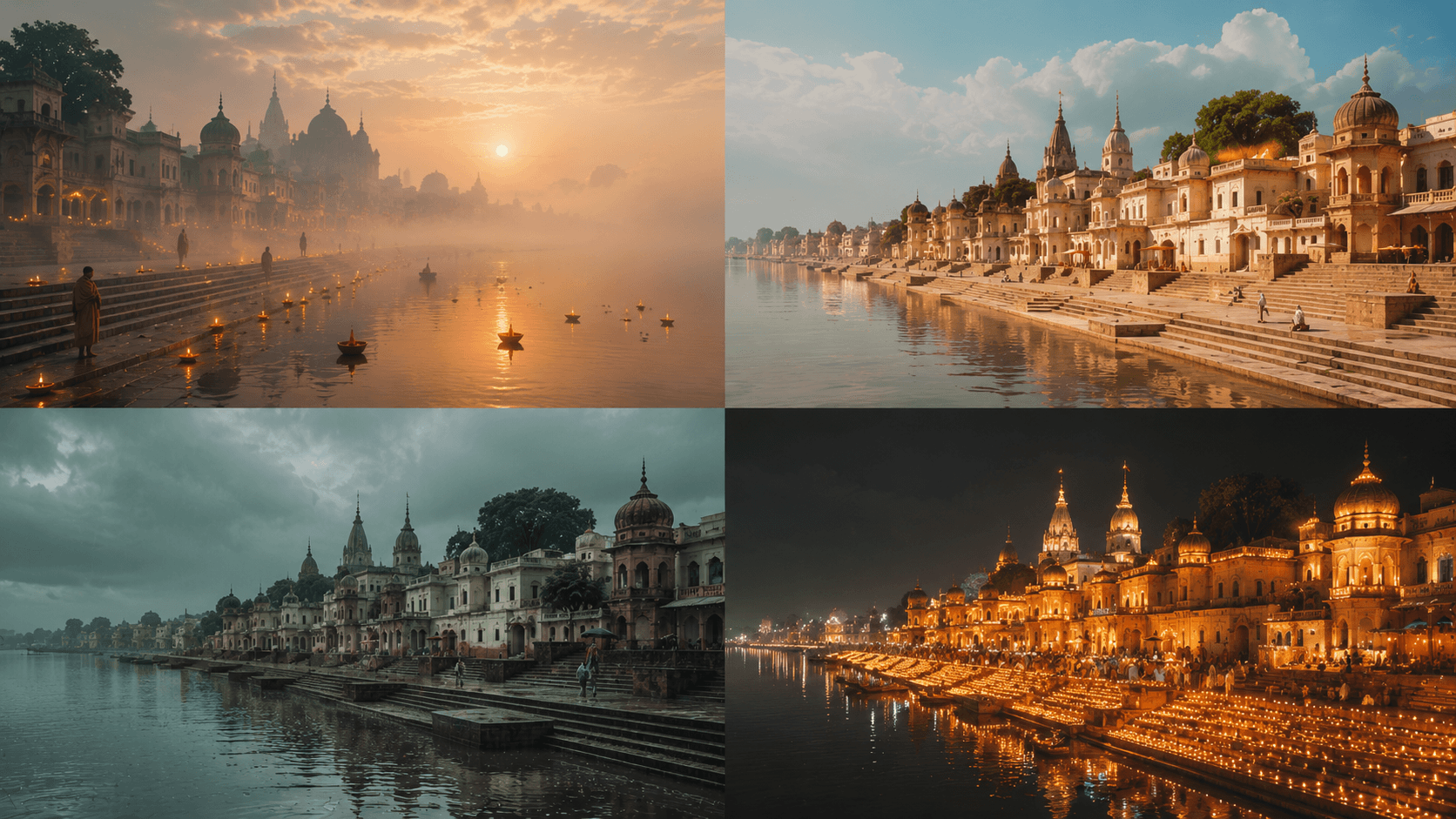
You've booked your Ayodhya weekend. Itinerary printed. Then you open the hotel app to confirm and the price has doubled overnight. You refresh. Tripled. Other hotels — same story. That's when someone tells you it's Deepotsav weekend.
Two weeks earlier or one week later, you'd have walked into a calm city at a third of the price. The best time to visit Ayodhya isn't one month — it depends on what you actually want from the trip. This guide sorts it out fast.
- Best overall: Late November to mid-February. Cool, calm, comfortable.
- Best for atmosphere: Deepotsav (Oct-Nov, dates vary). Book 3 months ahead.
- Best for quiet: Mid-week in July or September. Light rain, empty temples.
- Avoid: May and June peak afternoons. The heat is real.
Found your season — lock in Ayodhya dates.

Ayodhya Weather by Season
Winter (October to February)
This is peak season for a reason. Daytime sits between 12 and 25°C. Mornings near the Sarayu can dip to single digits with a slow fog rolling over the ghats — which is exactly what most photographers come for.
- Comfortable for long temple walks and barefoot stretches
- Evening Sarayu aarti at Ram Ki Paidi has its best atmosphere
- Deepotsav (Oct-Nov) and Ram Navami (March-April) draw the heaviest crowds
- Hotel prices climb 2-4x during festival weeks; book early
- Weekends fill up fast — mid-week is the calmer choice
Summer (March to June)
March is still pleasant. By mid-April it tips uphill. May and June are tough — afternoons regularly cross 40°C and the marble pathways around Ram Mandir radiate heat back at you.
- Fewer crowds outside of Ram Navami week
- Hotel rates drop to their lowest of the year — good for budget travelers
- Carry cotton socks; the floors are unforgiving by 10 AM
- Schedule darshan before 9 AM or after 5 PM — afternoon visits are draining
Monsoon (July to September)
Quietly, monsoon is when Ayodhya looks its most beautiful. The Sarayu runs full, the ghats turn green at the edges, and the temple courtyards feel unhurried.
- Lightest crowds of the year, easiest darshan queues
- Humidity is high — pack quick-dry fabrics
- Rain is unpredictable; keep an umbrella in your daypack
- Stone steps near the ghats get slippery — careful footwear matters
Best Month to Visit Ayodhya for Different Travelers
- First-time visitors: November to early February. Easiest weather and most welcoming pace.
- Peaceful darshan: Mid-week in late November or January. 6:30 AM slot. You'll have time to actually look up.
- Festivals and energy: Deepotsav for diyas, Ram Navami for scale. Both require advance hotel booking.
- Photographers: December and January mornings. Fog on the Sarayu, golden light on sandstone.
- Families with elderly travelers: Late October to early February. Skip Deepotsav week — crowds are heavy for older pilgrims.
- Budget travel: April or September. Off-peak rates, fewer queues.
When Not to Visit Ayodhya
It depends on what you're hoping to feel. A few cases where the timing will work against you:
- If you can't handle heat: Skip mid-April through late June.
- If you want quiet darshan: Skip Deepotsav, Ram Navami, and the week between Christmas and New Year.
- If you're on a strict 2-day plan: Avoid late monsoon — heavy rain can wipe out a sunrise.
- If you're booking last-minute: Don't try to visit during a major festival week. Hotels triple in price within hours.
Festival Season in Ayodhya: Worth It or Too Crowded?
The honest answer: depends on what you want.
Deepotsav, just before Diwali, lights up the Sarayu with lakhs of diyas. The ghats glow. The chants carry across the river. People who've seen it rarely forget it. The trade-off is real — hotel prices spike 3-4x, darshan queues run 4-6 hours, and you'll move slowly between temples.
Ram Navami in March-April is the other major moment. More pilgrim-heavy, less spectacle-heavy. If you're here for spiritual scale rather than visual atmosphere, this is your week.
For everyone else — most weekend tourists, families with elderly parents, and travelers who want slow temple mornings — festival weeks are too intense. Pick the two weeks on either side instead.
Month-by-Month Quick Guide
| Month | Crowd | Weather | Verdict |
|---|---|---|---|
| January | Low to medium | 8-20°C, foggy mornings | Excellent |
| February | Low | 11-25°C, mild | Excellent |
| March | Medium (Ram Navami late) | 16-32°C, warming up | Good |
| April | Very high (Ram Navami) | 22-38°C, hot | Mixed — festival only |
| May | Low | 27-43°C, intense heat | Avoid afternoons |
| June | Low | 28-42°C, dry heat | Avoid |
| July | Very low | 25-35°C, humid, rainy | Good for quiet trips |
| August | Very low | 25-33°C, monsoon peak | Quiet but rain-risk |
| September | Low | 24-32°C, cooling down | Underrated month |
| October | High (Deepotsav late) | 18-30°C, comfortable | Great except festival week |
| November | Medium | 13-26°C, clear | Best overall |
| December | Medium (peaks NYE week) | 8-22°C, cool | Best overall |
Month picked? Get Ayodhya trip quotes now.
Practical Travel Tips by Season
- Winter: Layers. Mornings near the ghats are cold. Carry a light shawl for early aartis.
- Summer: Cotton kurtas, full sleeves, a cap, electrolytes. Schedule temples before 9 AM and after 5 PM.
- Monsoon: Quick-dry fabrics, sandals with grip, a small umbrella. Phone in a ziplock for the ghat walks.
- Footwear: Year-round, slip-ons. You'll remove them often.
- Hotels: Book 3 months ahead for Deepotsav and Ram Navami, 2 weeks ahead for any winter weekend, day-of usually works for July-August.
- Photography: December mornings for fog, October evenings for Deepotsav lighting, September for greens.
Best Time to Visit Ayodhya: FAQs
Which month is best for an Ayodhya trip?
November to February. Cool, comfortable, and the most atmospheric Sarayu mornings of the year.
Is Ayodhya too hot in summer?
May and June afternoons regularly cross 40°C. Marble floors get hot. March and early April are still manageable with early-morning planning.
Is monsoon a good time to visit Ayodhya?
Yes for quiet trips — light crowds, green surroundings, peaceful temples. No for tight 2-day itineraries that can't handle rain delays.
When is Ayodhya most crowded?
Deepotsav (Oct-Nov), Ram Navami (March-April), and the week between Christmas and New Year. Mid-week visits in November or January are the quietest in peak season.
Is Deepotsav worth visiting?
Yes, at least once. Book your hotel 3 months in advance, expect 4-6 hour darshan queues, and arrive ready for the kind of crowd most cities never see.
How many days are enough for Ayodhya?
Two days. Day 1 for Ram Mandir and the evening aarti, Day 2 for sunrise at the Sarayu and quieter temples.
What is the best weather for visiting Ayodhya?
Around 12-22°C, which Ayodhya sees from late November through early February. Cool enough for long walks, with morning fog over the Sarayu.
Check the best time to visit Ayodhya now!
Get tailored quotes from verified operators on WhatsApp — or explore the full journey first.